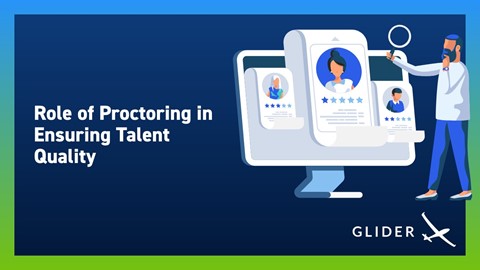
Make talent quality your leading analytic with skills-based hiring solution.
There is no single winning formula for finding the right talent, but recent advances in recruitment software have made it far easier to separate genuinely qualified candidates from those who simply look good on paper. AI proctoring is one of the biggest reasons why.
James C. Johnson of Johnson Recruiting Group has argued that hiring data holds the key to winning the talent war, pointing recruiters toward questions like: How many qualified candidates does a role actually attract? How many candidates get interviewed before one is hired? How long does the process take on average? What is the interview to offer acceptance rate? Every one of those numbers depends on trusting that the assessment data behind them is genuine, and that is exactly the job AI proctoring does.
Proctoring has existed for as long as testing itself. Anyone who has sat a school or university exam remembers the invigilator checking identification before the test and watching the room throughout to prevent cheating. AI proctoring brings that same test security into remote hiring, using software instead of a person in the room.
The shift to remote and online hiring has made this kind of verification essential rather than optional. Proctoring tools are now used across entrance exams, skills assessments, certifications, and full recruitment pipelines, for a simple reason: remote assessments without any oversight are far easier to cheat on than in person ones. A Walters People survey found a 67 percent jump in video interviews industry wide, and a PwC survey found that 78 percent of employers now treat remote collaboration as core to their long term hiring strategy. Both trends increase the volume of unsupervised, remote assessment activity that recruiters need to trust.
Most AI proctoring software monitors a candidate’s screen, webcam video, and audio during a test, then sends that data to recruiters for review. Beyond being built to comply with data regulations like GDPR, proctoring tools typically require candidates to install the proctoring software, verify their identity, close other running programs, follow stated test environment rules, and in some cases keep a phone nearby in case technical support is needed.
Online proctoring generally falls into three categories:
Given the chance, people take advantage of unsupervised systems, and cheating is a well documented problem in remote assessments. Research on online testing has found cheating rates ranging anywhere from about 7 to 50 percent when no proctoring is in place, driven by the classic fraud triangle of pressure, opportunity, and rationalization.
Candidate authentication is really about answering one question: is this person’s assessment performance genuinely their own? It covers identity verification (is this the person who applied), behavioral integrity (are they completing the test honestly), and content integrity (is the submitted work actually theirs). AI proctoring platforms use data across all three to distinguish authentic performance from staged or assisted performance, flagging issues like:
None of this is about distrusting candidates by default. It exists to protect the honest majority from being undercut by the small share of applicants willing to cheat, and to give recruiters assessment data they can actually act on.
Beyond fraud prevention, AI proctoring delivers a practical set of operational benefits for hiring teams:
Glider AI’s proctoring suite is built specifically for digital hiring, and is used by employers, staffing vendors, and recruitment agencies across full time hiring, contingent staffing, campus recruiting, and lateral hiring. It works across technical and non technical roles alike, from software engineering to sales, customer support, and entry level positions.
What sets Glider’s approach apart is that it stays simple for candidates while still assessing them across the dimensions that matter: core job skills, cognitive ability, and behavioral fit. Every session is backed by AI powered monitoring that builds a full audit trail from screen capture, webcam video, and audio, including:
Teams using Glider’s assessment and proctoring platform consistently report gains in ease of use, hiring efficiency, quality of hire, time to hire, and cost of hiring, along with a stronger ability to catch fake candidates and improve the interview to offer ratio.
Demand for AI proctoring is only going to grow as remote and hybrid hiring becomes permanent rather than temporary. Authenticity itself cannot be automated away, but it can be watched, measured, and flagged, and that is the role proctoring plays. Among everything that goes into talent quality, authenticity sits at the top, and candidates do their best work when that authenticity is protected rather than left to chance.
AI proctoring is not designed to police candidates or invade their privacy. Its job is to create a fair, secure environment for completing assessments and to protect the integrity of the process for everyone in it, and AI only makes that easier to do at scale.
AI proctoring is software that monitors a candidate’s screen, webcam, and audio during a remote assessment to confirm their identity and flag cheating or impersonation, so recruiters can trust the results.
By verifying that assessment scores reflect a candidate’s own genuine performance, proctoring reduces the risk of hiring someone based on inflated or fraudulent test results.
Yes. Modern automated proctoring combines face detection, behavior analysis, and plagiarism checks to flag suspicious activity with far more consistency than an unmonitored remote test.
Live proctoring uses a human monitor in real time, recorded proctoring captures the session on video for later review, and automated proctoring relies on algorithms to detect and flag issues with minimal human involvement.
Reputable proctoring tools, including Glider AI’s, are built to comply with data regulations like GDPR and are scoped specifically to assessment integrity, not general surveillance of a candidate’s device or life.
Any role hired at volume or remotely benefits, but proctoring is especially valuable for technical, sales, and customer facing roles where skills assessments carry real weight in the hiring decision.
Proctoring is only as valuable as the assessment platform it protects. Glider AI’s AI Proctoring suite pairs automated monitoring, cheating detection, and a full audit trail with Glider’s broader skill assessment platform, so every score your team sees reflects a candidate’s genuine ability. If your hiring process depends on trusting assessment results at scale, Glider AI gives recruiters the tools to verify authenticity without slowing candidates down.
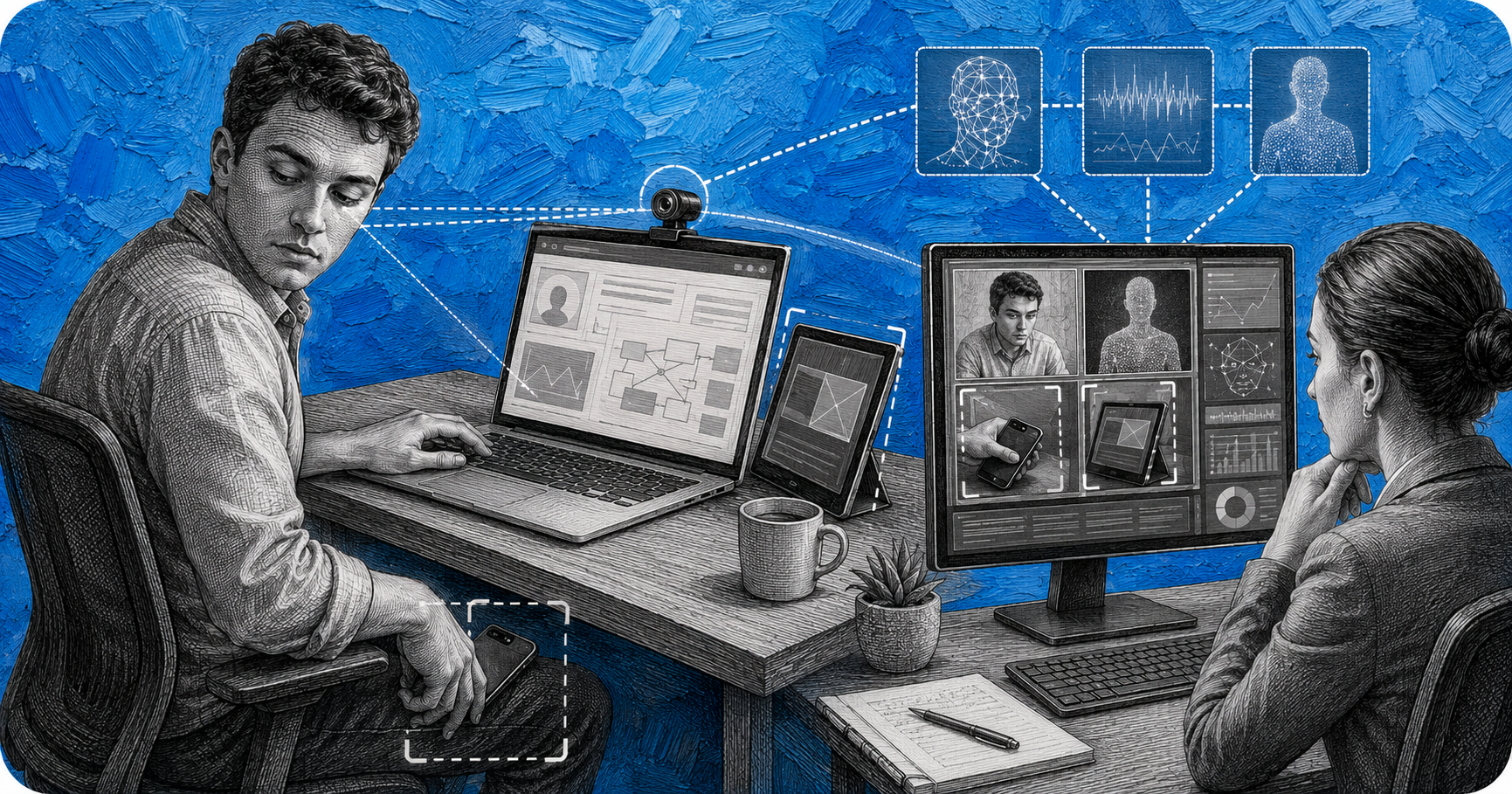
Second device cheating is when a candidate uses a phone, tablet, or second monitor outside the webcam’s view during a proctored online assessment to look up answers, message someone for help, or mirror their screen to a helper. It is one of the hardest forms of assessment fraud to stop with software alone, because the […]
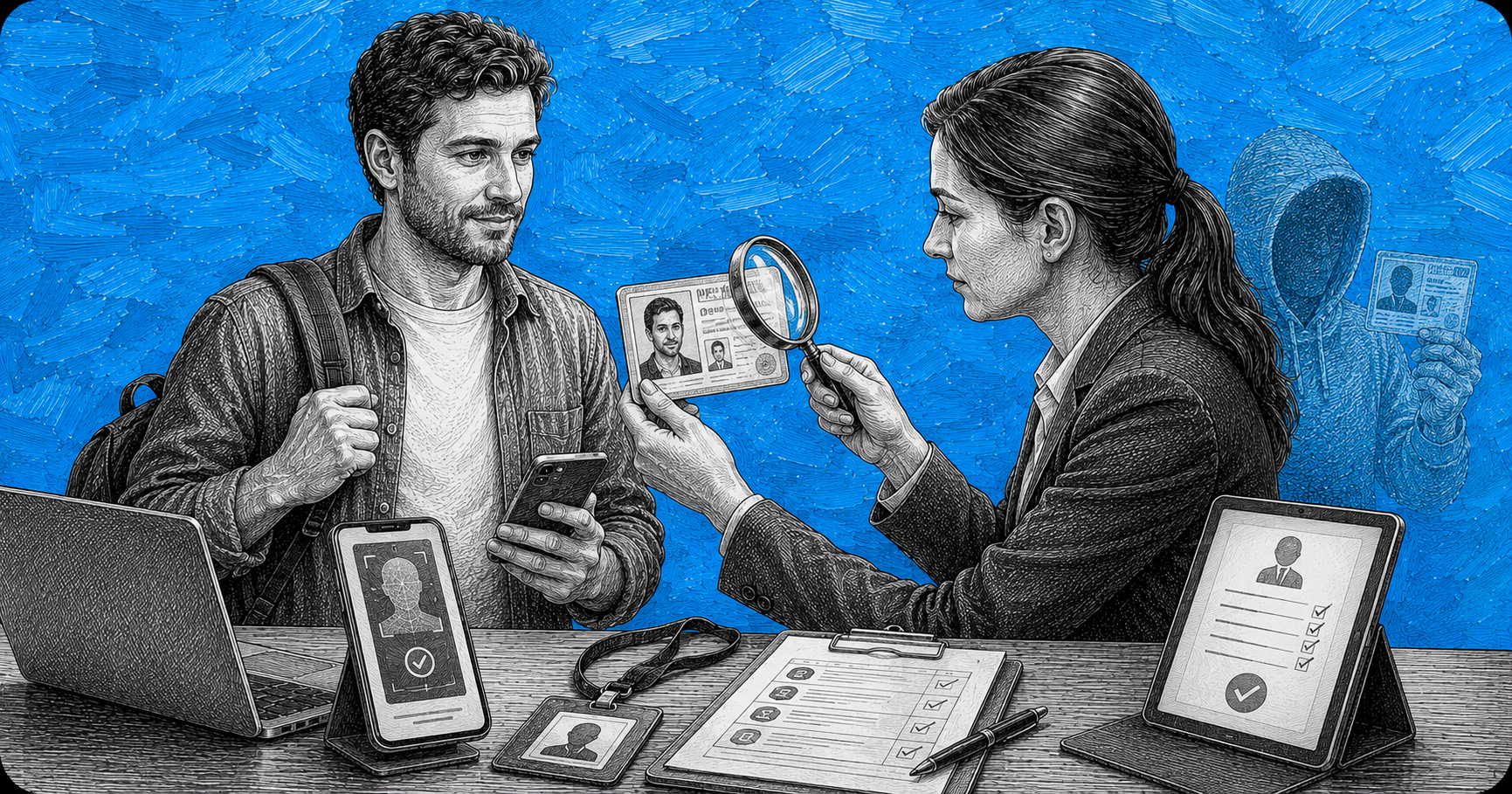
Contingent worker identity verification is the practice of confirming that a freelancer, contractor, or gig worker is who they claim to be before they are onboarded, not just screened on paper. Most companies apply this scrutiny to full time employees and skip or shortcut it for contingent talent, which is exactly the gap fraud actors […]

A structured interview scorecard is a standardized form that lists the specific competencies a role requires, gives every interviewer the same rating scale to judge candidate answers against, and forces a written justification for each score. It exists to replace gut feeling with evidence, so five interviewers evaluating the same candidate land on comparable, defensible […]