


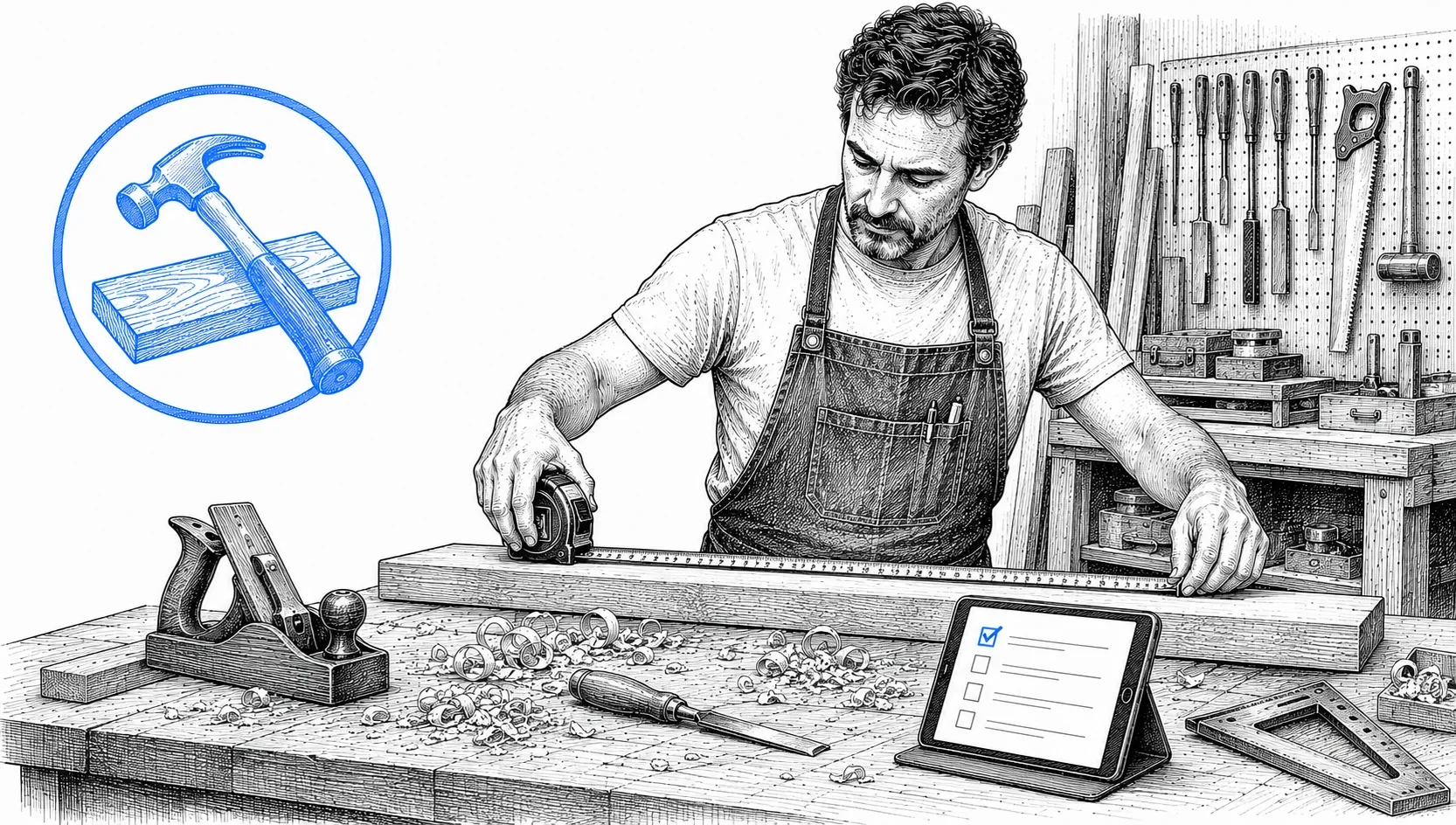
This guide is for construction employers, general contractors, facilities teams and staffing firms hiring carpenters as employees or contract workers.
What a carpenter does
Carpenters build, install and repair structures and fixtures made from wood and other materials. Depending on specialty, the work can include:
- Reading blueprints and building plans
- Measuring, cutting and shaping materials
- Framing walls, floors and roofs
- Installing doors, windows, cabinets, trim and stairs
- Repairing damaged structures
- Following safety rules and building codes on every job
Types of carpenters and what to emphasize
| Type | Typical work | Interview emphasis |
|---|---|---|
| Rough or framing carpenter | Structural framing, formwork | Layout accuracy, speed, safety at height |
| Finish carpenter | Trim, cabinets, millwork | Precision, attention to detail, customer facing manner |
| Commercial carpenter | Large projects, metal studs, formwork | Code knowledge, coordination with other trades |
| Maintenance carpenter | Repairs in facilities | Troubleshooting, versatility, working in occupied spaces |
Match the questions to the role. A finish carpenter and a framing carpenter use different skills even when the title is the same.
Skills to look for
- Blueprint reading and accurate measurement
- Safe use of hand and power tools
- Knowledge of materials, fasteners and adhesives
- Basic math for layout and estimating
- Physical stamina and safe lifting practices
- Clear communication with supervisors and other trades
- Reliability: showing up on time, finishing punch list items
Operational and situational questions
- How do you decide which wood or material to use for a specific job?
- Walk me through how you maintain your tools and when you replace them.
- You notice a measurement on the plans does not match the site. What do you do?
- A delivery arrives with warped or poor quality material. How do you handle it?
- How do you manage your time when you are assigned to two jobs in the same week?
- A coworker skips fall protection to save time. What do you do?
What to listen for: candidates who stop and verify before cutting, who raise problems early, and who treat safety as non negotiable.
Role specific questions
- What type of carpentry do you specialize in, and what projects best show it?
- How do you read and check a set of blueprints before starting work?
- How do you estimate materials and time for a job?
- Tell me about a project with a tight deadline. How did you keep quality up?
- How do you make sure your work meets code and inspection requirements?
- How do you coordinate with electricians, plumbers and other trades on site?
What to listen for: concrete details about tools, materials and sequence of work. Experienced carpenters describe the order of operations naturally.
Behavioral questions
- Tell me about a mistake you made on a job. How did you fix it?
- Describe a time you dealt with a difficult client or supervisor.
- Tell me about a time you helped train a less experienced worker.
- Describe an unexpected problem on a job and how you solved it.
- Tell me about a time you had to explain a technical issue to someone outside the trade.
- Describe a time you stopped work because of a safety concern.
Score answers with the same rubric for every candidate, so hiring decisions rest on comparable evidence.
Red flags when interviewing carpenters
- Vague or dismissive answers about safety
- No examples of catching or fixing their own mistakes
- Unable to describe how they read plans or check measurements
- Blaming other trades for every past problem
- Overstating experience with a specialty they cannot describe in detail
Why test skills before the site visit
Carpentry is hands on work, and interviews only show how well someone talks about it. A short skills test can check blueprint reading, measurement math, tool knowledge and safety judgment before a supervisor spends time on a working interview. For staffing firms filling many trade roles, this also keeps screening consistent across recruiters and locations.
How Glider AI helps you hire carpenters
Glider AI Job Based Skill Tests include use cases for real estate and construction roles. Teams can use prebuilt functional tests or create custom ones with 30+ question types, including video responses, so candidates can show how they would handle a scenario. Results are auto scored and shared with hiring managers for review.
For high volume trade hiring, One Way Video Interviews let candidates answer structured questions on their own schedule, which suits workers who are on a job site during business hours. Staffing teams can learn more on the staffing firms solutions page, and the interview questions library covers other skilled trades.
Frequently asked questions
What questions should you ask a carpenter in an interview?
Ask about their specialty, how they read blueprints, how they check measurements, how they handle poor materials, how they work with other trades and how they respond to unsafe situations on site. Ask for real examples.
What skills should a carpenter have?
A carpenter should read blueprints accurately, measure and cut precisely, use hand and power tools safely, understand materials and building codes, do basic layout math and communicate clearly with supervisors and other trades.
How do you test a carpenter’s skills before hiring?
Use a short skills test covering blueprint reading, measurement and safety scenarios, then follow with a working interview or practical task on site for finalists.
What safety questions should you ask carpenters?
Ask how they handle fall protection, power tool safety, lifting and site hazards, and what they do when a coworker ignores a safety rule. Strong candidates give specific examples.
What is the difference between a rough carpenter and a finish carpenter?
A rough carpenter builds the structure, such as framing and formwork. A finish carpenter installs visible elements such as trim, cabinets and stairs, where precision and appearance matter most.
What are red flags when hiring a carpenter?
Watch for casual attitudes about safety, vague descriptions of past work, inability to explain how they read plans and a habit of blaming others for problems.
Hire carpenters with confidence
A good carpenter interview tells you how a candidate thinks. A skills test shows whether they can do the work. Use Glider AI Job Based Skill Tests to screen carpenters on safety and technical skill before the site visit, so supervisors spend time only with candidates who are ready to work.