Make talent quality your leading analytic with skills-based hiring solution.
If 2025 proved anything, it is that the old way of hiring does not survive economic pressure. Budgets stayed tight. Headcount stayed constrained. Every hire had to justify itself quickly. At the same time, AI adoption accelerated faster than trust, governance, or data quality could keep up.
For HR, TA, and procurement leaders, the mandate was simple. Move faster. Reduce risk. Prove ROI. Stop guessing. That reality shaped everything we built at Glider AI this year.
Instead of chasing AI for novelty, we focused on one thing: helping organizations make defensible decisions based on what people can actually do. Here is how the year unfolded.
In February, Glider AI became available on the SAP Store with native integration into SAP SuccessFactors, embedding skills validation directly into the system of record.
For enterprise teams already overloaded with tools, this mattered. Skills validation stopped being an add-on and became part of the hiring workflow itself.
We followed with the release of the 2025 Skills Report, grounded in real assessment data rather than resumes, job titles, or self-reported proficiency.
The conclusions were hard to ignore. Job titles are unreliable. Skills decay faster than most organizations track. And AI only scales bad decisions when data is weak.
In a year where every hire had to be justified, the report helped shift conversations from opinion to evidence.
March marked the launch of Talented, Glider AI’s podcast series focused on how real organizations are navigating hiring, skills, and AI in practice. No theory. No vendor fluff. Just practitioners dealing with pressure.Featured episodes included:
Across industries, the pattern was consistent. Skills-based hiring moved from experimentation to necessity the moment markets tightened.
Global hiring did not slow in 2025. It became harder to manage. With the launch of CEFR-aligned language assessments, organizations gained a consistent way to measure communication skills across regions and roles. No more vague definitions of fluency. No more regional interpretation gaps. Read more
Our partnership with Kyle & Co’s AI Council reflected a broader shift across the market. Leaders stopped asking whether they could use AI and started asking how to govern it responsibly.Trust, transparency, and explainability moved from side conversations to executive priorities. AI was no longer a feature. It was infrastructure.
In May, Glider AI launched Agentic AI Video Interviews to address a growing problem. Early-stage interviews were inconsistent, slow, and often biased by noise rather than signal. The goal was not to replace recruiters. It was to introduce structure where chaos had become normal. Candidates experienced role-relevant interviews. Teams gained comparable, skills-based insights. Speed improved without lowering standards. Read the announcement.
By midyear, candidate fraud was no longer an edge case. It was an operational risk.
With the launch of ID Verify, Glider AI addressed increasingly sophisticated fraud patterns that traditional checks fail to detect. This was especially critical for regulated industries and national security-adjacent roles. Read the release.
In July, we introduced AI Role Play, shifting skills development from passive learning to active practice through real-world scenarios and immediate feedback. Read more.
In August, the AI Assistant for technical hiring followed, helping recruiters evaluate skills with context while giving candidates fairer, more consistent assessments. Hiring and learning finally started speaking the same language. Read more.
By October, phone screens were overdue for reinvention. The AI Voice Recruiter streamlined early conversations, handled volume, and captured signal without sacrificing candidate experience. Teams gained speed without compromising quality. Read more.
The partnership with Findem closed a long-standing gap in hiring.
Findem brought structured, labeled talent data. Glider AI brought validated, real-world skills. Together, organizations could move from assumptions about potential to evidence of capability. Read the announcement.
2025 forced clarity. Economic pressure exposed brittle hiring models. AI hype exposed weak data. Candidates demanded fairness. Leaders demanded accountability.
Skills-based hiring and development stopped being aspirational and became operational. This year was about building the foundation. Less noise. More proof. 2026 is about scale.
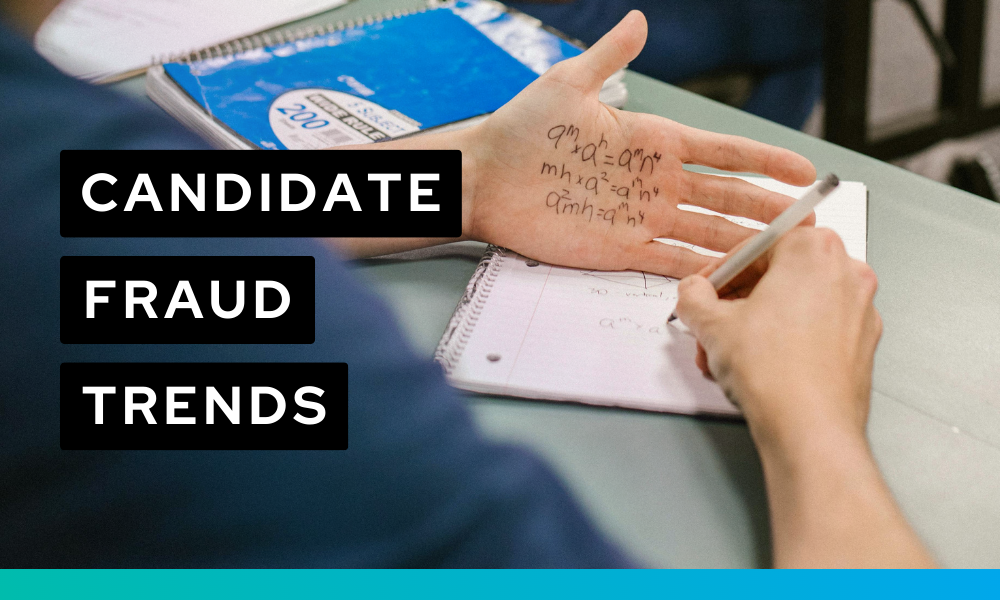
Fraud in hiring doesn’t fade because you catch it. It fades when you make it pointless. Across millions of Glider AI validated technical assessments conducted over multiple years, one pattern stands out: And it matters now. Investigations by The Wall Street Journal and Bloomberg recently exposed how remote workers using stolen identities embedded themselves inside […]
[Cupertino, California] — November 6, 2025 — Glider AI, the Skills Validation Platform™, and Findem, the only talent-acquisition and management solution powered by 3D data, today announced a strategic partnership to elevate accuracy and trust in hiring. By combining Findem’s expert-labeled data with Glider AI’s real-world skills validation, enterprises now have a new foundation for […]
Artificial Intelligence is now woven into nearly every talent operation, from sourcing to interviewing. According to SHRM, about 70% of HR and TA teams using AI report challenges with data privacy, trust or oversight. (SHRM) At the same time: What’s the pattern? Speed and scale matter, but not at the cost of accuracy, fairness, or […]