Make talent quality your leading analytic with skills-based hiring solution.
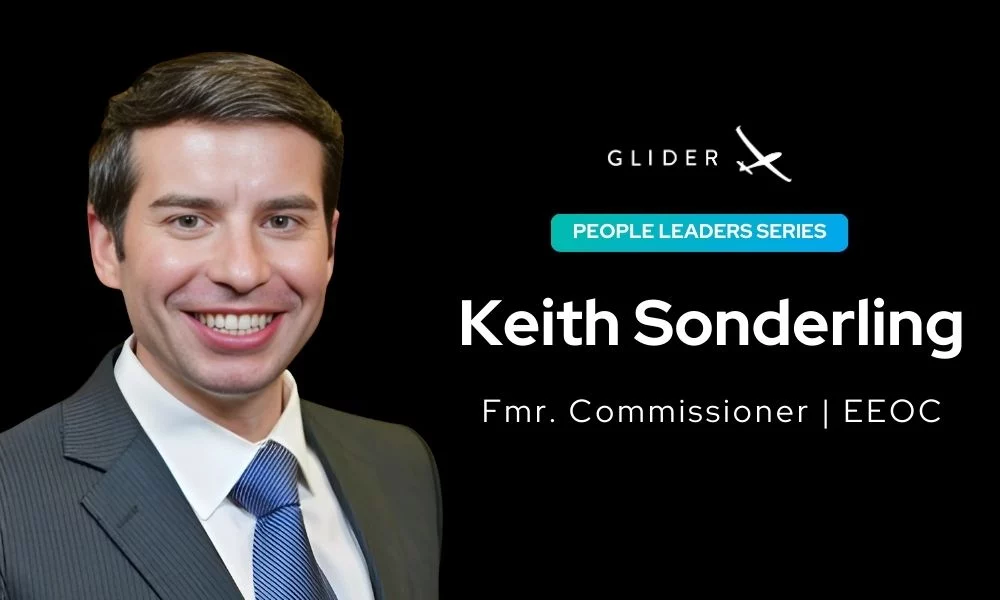
In a Glider AI sponsored podcast of Transformation Realness, host Kyle Lagunas interviews Keith Sonderling, the former Commissioner of the Equal Employment Opportunity Commission (EEOC), to gain perspective on AI in HR from the lens of a government leader.
Keith is renowned for his work on bridging innovation and regulation, in particular, for the responsible use of AI in the workplace. Keith’s leadership has influenced how organizations navigate compliance and technological innovation.
AI is here, it’s not a concept, and it’s reshaping HR. Keith’s perspective is that AI is not revolutionizing the decisions we make; it’s refining how we make them. As Keith explains, AI hasn’t created new employment decisions. Instead, it enhances existing processes by providing better data and improved transparency.
“At the end of the day, AI has not created a new employment decision. All AI is doing is either making those decisions for you or giving you more data to augment them.” – Keith Sonderling
HR has always been a high-stakes field, navigating regulations and managing life-impacting decisions. As we enter the era of AI, HR professionals must step into a new role: the stewards of AI. This means ensuring that AI aligns with organizational values, ethics, and compliance—not just leaving the tech to IT or legal teams.
Keith underscores the importance of this responsibility, saying,
“You’ve been dealing with a much higher-risk area your entire career than other parts of your business because you’re dealing with people’s ability to provide for their families, to enter and thrive in the workforce.”
Keith’s time at the EEOC highlighted the power of dialogue between government regulators and HR professionals. By engaging stakeholders from venture capitalists to HR leaders, Keith demonstrated the importance of collaboration in shaping the future of workplace technology and keeping humans at the center.
“Most companies want to do the right thing,” Keith shared. “But they need guidance and partnership to navigate the complex intersection of innovation and compliance.”
The future of HR lies in responsible AI adoption. By embracing AI literacy and stepping into leadership roles, HR professionals can ensure that AI is used to create fairer, more effective workplaces. Keith’s message is clear: “HR isn’t just about compliance anymore—it’s about being leaders in this new era of work.” He concludes with an empowering challenge: “We have a unique opportunity to be the stewards of trust in our organizations, to ensure AI is used responsibly to build a better workplace for everyone.”
As highlighted on Transformation Realness, HR has the power to redefine its role in the AI-driven future. By leaning in, acquiring AI knowledge, and actively shaping its use, HR can lead organizations toward more equitable and effective workplaces.
AI Is Transforming Recruitment. Here’s What HR Leaders Need to Know. Hiring is no longer about speed and scale alone. It’s about precision, experience, and knowing what AI should and shouldn’t decide. On a recent episode of the Talented podcast, host Joseph Cole interviewed Anshu Uppal, an HR transformation leader based in India with two […]
How AI Is Redefining HR Roles, Not Just Supporting Them When Joseph Cole from Glider AI spoke with Deeraj Malhotra, VP of HR at Birlasoft, the conversation quickly moved beyond AI hype to something more practical: how HR roles are actually evolving inside organizations. For a long time, HR was designed to keep things running […]
AI Has Changed Hiring Forever: HR Must Become a Security Function Hiring is undergoing a transformation that few HR teams are prepared for. What once felt like a talent challenge has rapidly evolved into a cybersecurity challenge unfolding inside the hiring process itself. That shift came into focus during a recent episode of The Talented […]