

Make talent quality your leading analytic with skills-based hiring solution.
The job interview feels like a fixed part of hiring, but it is a fairly recent invention. For most of human history, work was inherited or assigned by a local employer who already knew the candidate personally. There was no test, no panel, and no resume. The formal, structured job interview as we know it today is barely a century old, and it has changed shape again and again as technology and workplace needs shifted.
Understanding the history of the job interview is more than trivia. It explains why so many of today’s hiring habits, from written tests to structured questions to skills based assessments, exist in the first place, and it points toward where hiring is headed next.
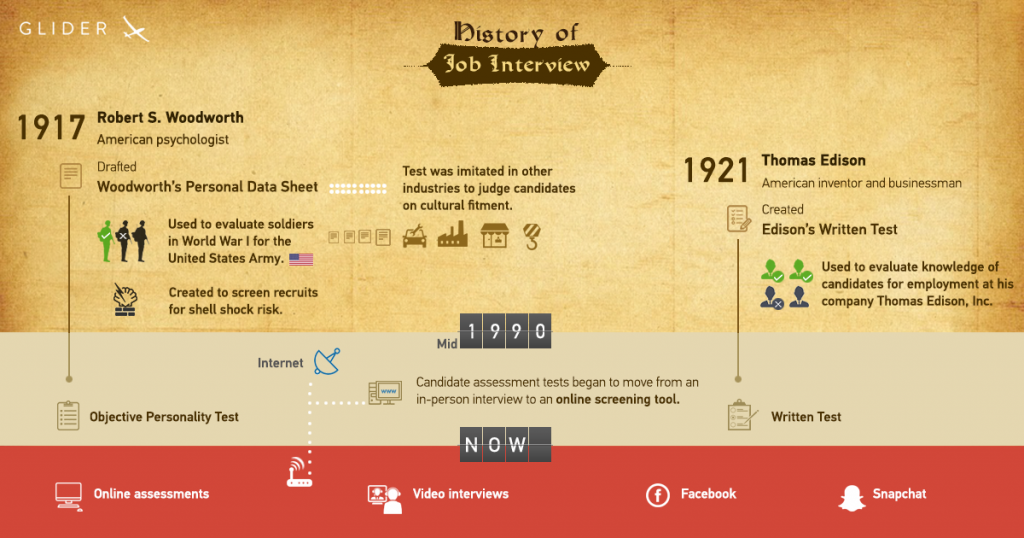
Before the twentieth century, most jobs were filled through family connection, apprenticeship, or simple observation. A candidate did not sit across a desk answering questions. Employers hired people they already knew, or people who had learned a trade by working alongside someone else for years. There was little need for a formal evaluation because the employer already had firsthand evidence of a person’s ability and character.
That changed with industrialization. As factories and large companies grew, employers needed to hire strangers at scale, and personal reputation alone could no longer carry the process. This gap created the conditions for the first real hiring tests.
The modern history of the job interview really begins during World War I. In 1917, American psychologist Robert S. Woodworth created the Woodworth Personal Data Sheet, a written questionnaire built to screen soldiers for shell shock risk before they were sent to the front. It is widely cited as the first objective personality test ever used at scale, and it proved that a standardized written instrument could predict something about how a person would perform under pressure.
The idea moved quickly from the military into business. Employers began adapting similar questionnaires to screen out workers who might not adjust well to a new workplace, largely framed around cultural fit rather than skill.
A few years later, in 1921, Thomas Edison took a different approach. He created a written knowledge test to evaluate candidates applying for executive roles at his company. The Edison test asked candidates general knowledge and technical questions, and it is considered a direct precursor to the modern pre employment screening test. Between Woodworth’s personality instrument and Edison’s knowledge test, the two core ingredients of today’s hiring process, behavioral evaluation and skill evaluation, were already in place by the early 1920s.
Through the middle of the twentieth century, the face to face interview became the default hiring step across most industries. Large companies built out formal human resources departments, and the interview evolved from an occasional experiment into a standard, expected part of getting hired. Structured interview guides, reference checks, and written applications became common practice, though the process still relied heavily on a hiring manager’s subjective judgment.
The next major shift in the evolution of job interviews came with the internet. In the mid 1990s, candidate assessments began moving online, letting companies screen large applicant pools without scheduling an in person meeting for every candidate. Online job boards changed how people found openings in the first place, and applicant tracking systems gave employers a way to manage hundreds of applications instead of a stack of paper resumes.
By the mid 2000s, the rise of professional networks added another layer. Recruiters could research a candidate’s background before ever picking up the phone, and candidates could research a company’s culture and interview style in return. Hiring became a two way research process for the first time.
The 2010s brought video interviewing into the mainstream, driven by remote and distributed teams that could no longer rely on flying every candidate in for an in person conversation. Mobile devices reshaped candidate behavior as well, with most job seekers browsing and applying to roles from a phone rather than a desktop computer. Speed became a competitive advantage: candidates expected fast responses, and employers who took weeks to schedule a first conversation started losing strong applicants to faster competitors.
The current chapter in the history of the job interview is being written by AI. Instead of relying only on a resume or an unstructured conversation, employers now use AI interview software and skill assessments to evaluate what a candidate can actually do, not just what their resume claims. This is often called skills based hiring, and it flips the traditional model: skill comes first, and background becomes secondary context rather than the primary filter.
Tools built for this shift, including structured skill tests and AI driven interview platforms, aim to reduce bias and give every candidate a fair, consistent evaluation regardless of where they went to school or who they know. In many ways, this brings hiring back to something closer to Edison’s original goal in 1921: judge the candidate on demonstrated ability, not on personal connections.
Who invented the job interview?
No single person invented the job interview, but Robert S. Woodworth’s 1917 personality questionnaire and Thomas Edison’s 1921 written knowledge test are widely credited as the earliest formal, standardized hiring evaluations that resemble what we now call a job interview.
When did job interviews start?
Structured hiring evaluations date back to 1917, when Woodworth developed his personal data sheet for the U.S. Army. Edison’s written employment test followed in 1921, and face to face interviews became a widespread business practice through the following decades.
How have job interviews changed over time?
Job interviews moved from informal, relationship based hiring, to written personality and knowledge tests in the 1920s, to standardized in person interviews by mid century, to online and video based screening from the 1990s onward, and now to AI powered, skills based assessments.
What is the future of the job interview?
Hiring is trending toward skills based evaluation, where AI interview software and structured skill tests measure what a candidate can actually do before a human interview ever happens, reducing reliance on resumes and reducing bias in the early stages of hiring.
Ready to modernize how your team evaluates candidates? See how AI interview software and skill based assessments help you hire on proven ability instead of guesswork. Learn more about making the case for skills based hiring and how an AI recruiter can speed up your process without sacrificing quality.
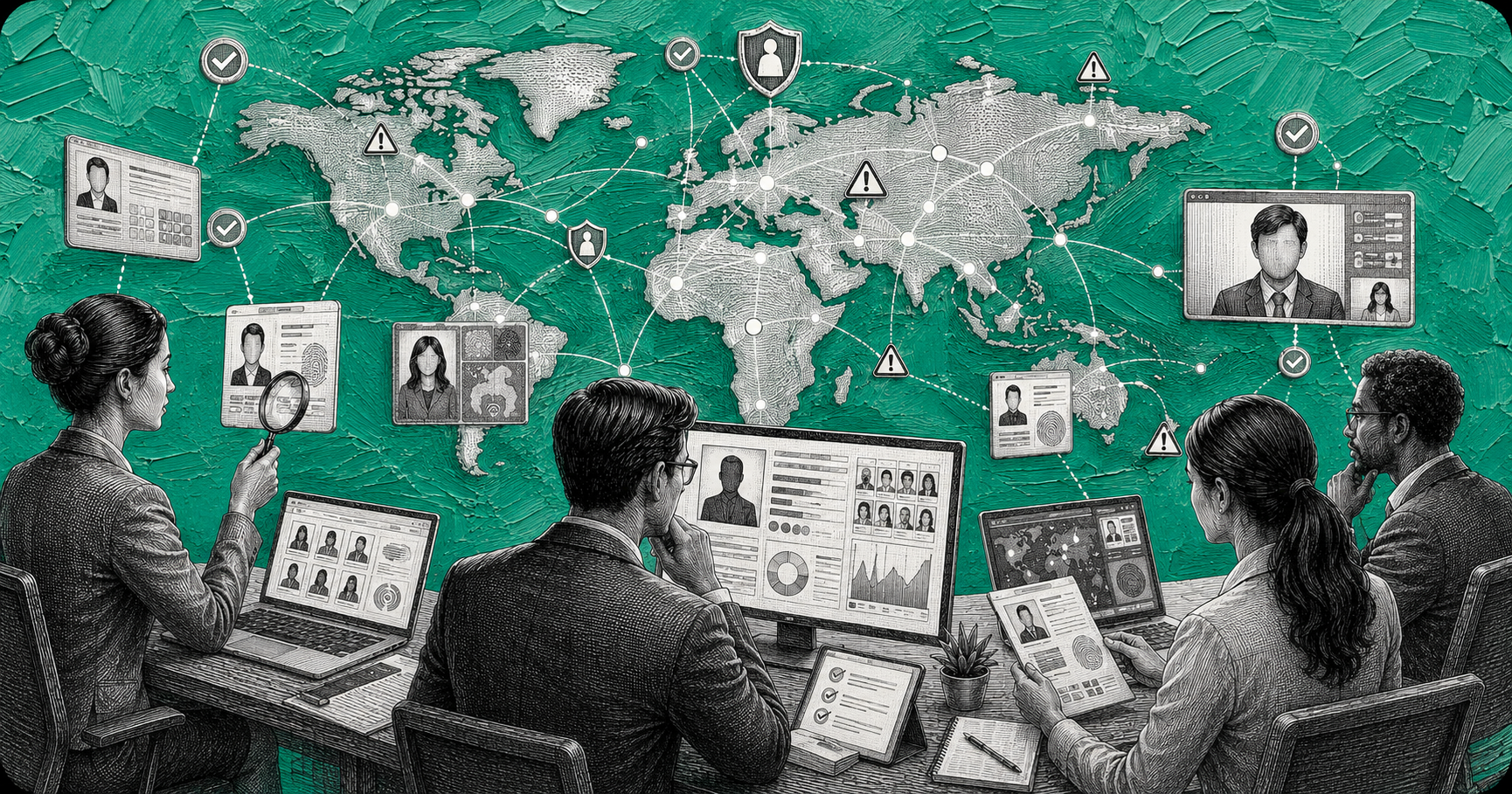
Global hiring fraud hotspots are the countries and regions where documented candidate fraud and identity verification risk run highest, based on named industry indices rather than assumption. In 2026, that data points consistently in one direction: fraud vulnerability is concentrated in markets with weaker centralized identity infrastructure and fast growing digital hiring volume, led by […]
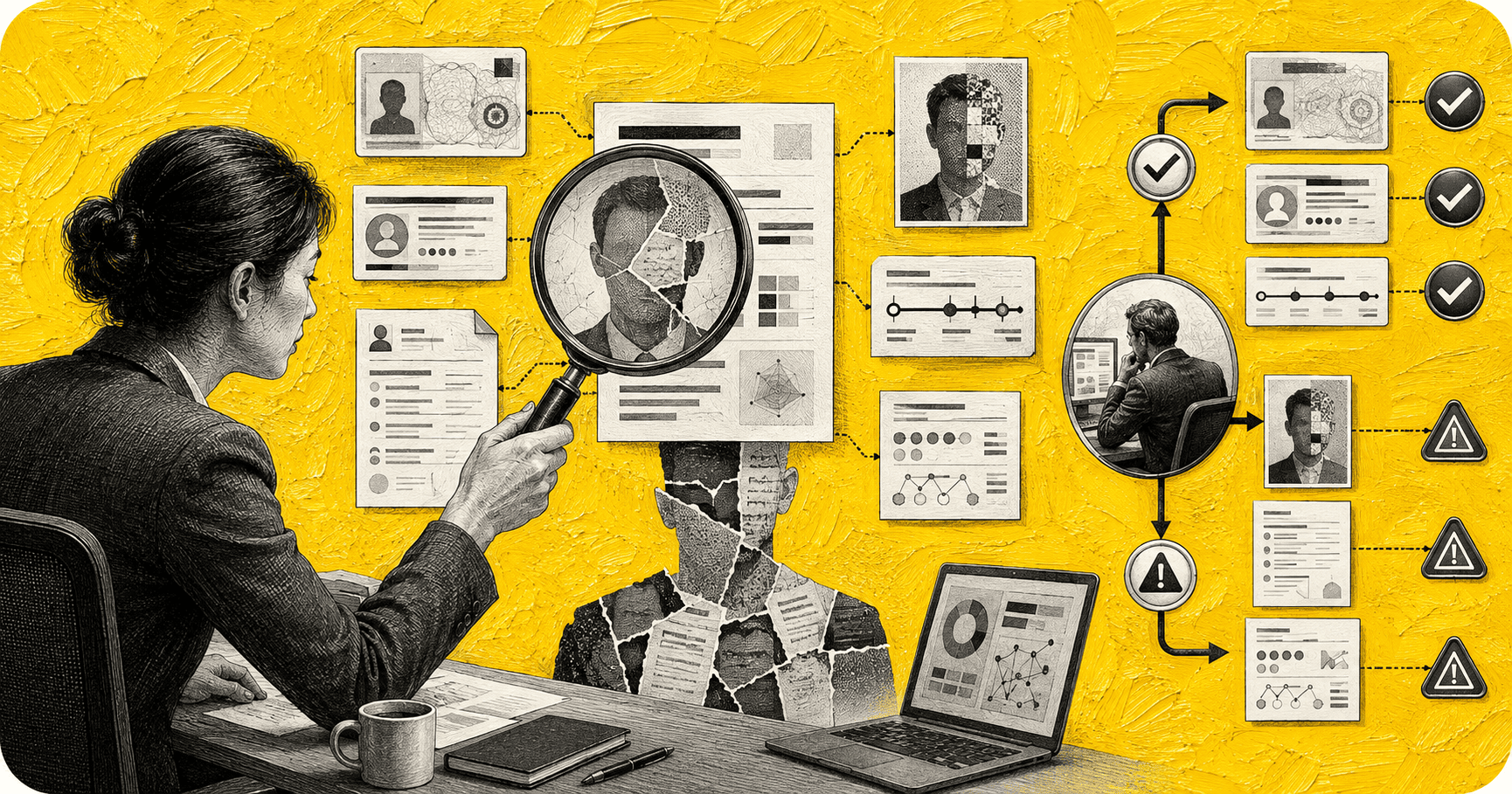
A synthetic candidate is a job applicant who does not exist as a single real person at all. The persona is assembled, usually by combining stolen or purchased personally identifiable information (PII) with an AI generated resume, an AI generated or composite photo, and an invented work history, into a package that looks, on paper […]
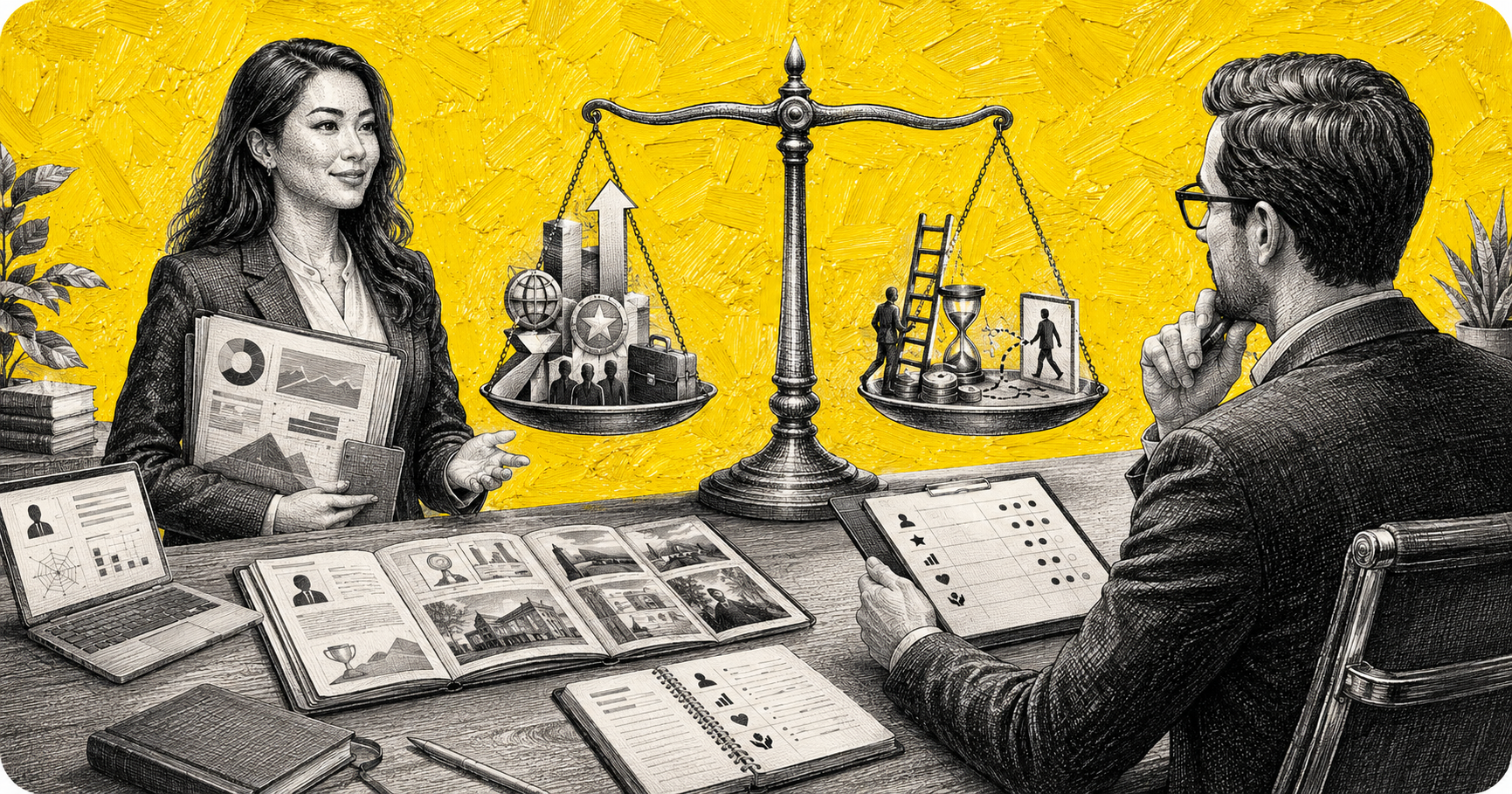
Hiring overqualified candidates is not automatically a mistake, but it is a decision that carries real, well documented risk if the role and the offer are not restructured around it. Recent survey data shows most employers already do this regularly: 70 percent of hiring managers say they typically consider candidates who are overqualified for the […]