Make talent quality your leading analytic with skills-based hiring solution.
Every online skills assessment your company runs is only as trustworthy as the conditions it was taken under. A candidate can ace a coding test, a language assessment, or a cognitive reasoning exam, but if someone else was typing the answers, a second screen had the solutions open, or an AI tool was quietly generating responses in another tab, the score tells you nothing real about that person’s ability. Remote proctoring for online assessments is the set of technologies and processes that closes that gap, giving hiring teams the same confidence in a remote test that a supervised, in person exam used to provide, without dragging candidates into a testing center.
For talent acquisition and HR leaders, this is not an academic concern. Unproctored tests are an open invitation for proxy test takers, AI assisted cheating, and inflated scores that lead to bad hires and wasted onboarding budget. Remote proctoring turns an unsupervised test into a monitored, verifiable one, and it does it at scale, across time zones, without a human proctor watching every session live.
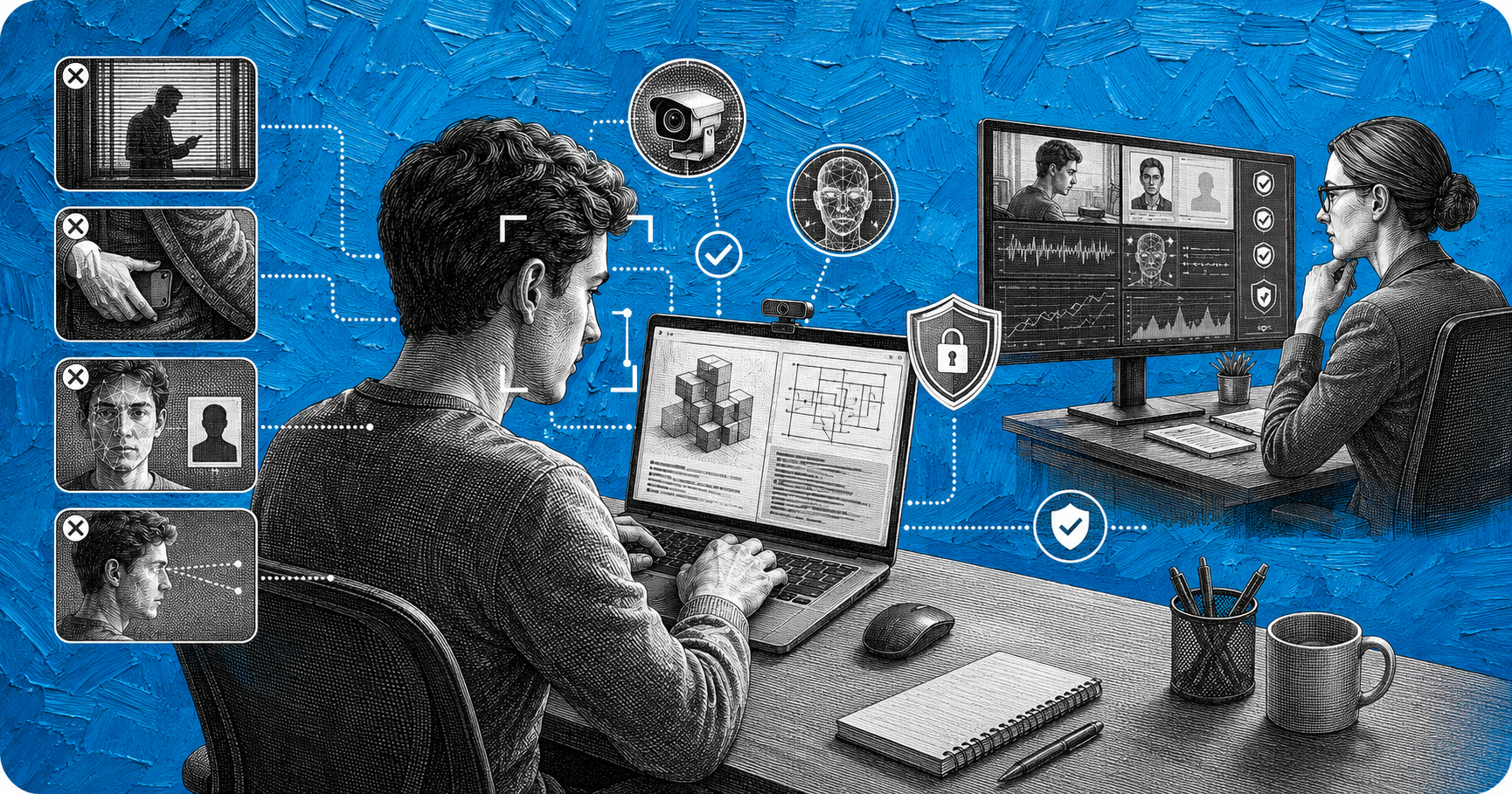
Remote proctoring is the use of software, and in many cases AI, to monitor a candidate during an online assessment and confirm that the person taking the test is who they claim to be, is working alone, and is not using unauthorized resources. Instead of a person physically watching a test taker in a room, the system watches through the candidate’s own webcam, microphone, and browser, then flags anything that looks like a rule violation for a human reviewer to check.
This matters most in remote and hybrid hiring, where a recruiter has no way to visually confirm who is actually sitting at the keyboard. A proctored assessment closes that blind spot at exactly the point in the hiring funnel where it causes the most damage: before an offer is made, not after a bad hire is already on payroll.
Modern remote proctoring for hiring assessments layers several distinct technologies together. Understanding each layer helps HR and TA teams evaluate whether a vendor’s “proctoring” claim is substantive or superficial.
The most visible layer is video and audio capture through the candidate’s own device camera and microphone, paired with screen activity recording. This creates a record of what the candidate saw, said, and did during the test, and it is the first line of evidence if a dispute or an audit comes up later.
Raw video is only useful if someone reviews it, and no recruiting team has time to watch every session live. AI behavioral analysis solves that by scoring behavior against known cheating patterns: a face leaving the frame, multiple faces appearing, eyes repeatedly looking off screen toward a second monitor, unusual typing pauses, or a different voice answering questions. Instead of a proctor watching hours of footage, the system surfaces only the sessions and moments worth a human look.
Browser lockdown, sometimes called a secure or locked browser, restricts what a candidate can do on their device during the test. It blocks new tabs, disables copy and paste, prevents switching to another application, and can detect virtual machines or remote access software that would let someone else control the session. This closes off the most common low effort cheating method: quietly opening a search engine or an AI chatbot in another tab.
Identity verification confirms that the person who was invited to test is the same person actually taking it, typically through a government ID scan matched against a live selfie or webcam capture, sometimes reinforced with periodic re verification checks during longer assessments. This step alone eliminates a large share of proxy test taking, where someone more qualified sits in for the actual applicant.
Not all proctoring is equal, and the difference between a checkbox feature and a real integrity layer usually shows up in these areas:
The value of proctoring is best understood against how candidates actually attempt to cheat on hiring assessments: having someone else complete the test, using a second device or split screen to search for answers, running AI tools to generate responses in real time, or coordinating answers with someone who took the same test earlier.
A properly proctored assessment addresses each of these directly. Identity verification stops proxy test takers before the test begins. Browser lockdown and screen monitoring remove the second device and second tab as an option. AI behavioral analysis catches subtler tells, like reading answers off screen or a voice prompting from off camera. These layers do not just catch cheating after the fact, they make attempting it far less appealing in the first place, which is often the bigger effect. For more on how these techniques apply across the wider threat landscape, see candidate fraud detection and prevention and remote hiring fraud risks and prevention.
Remote proctoring is often associated with coding tests, but the need for assessment integrity applies just as much outside engineering roles.
Technical hiring. Software engineering, data science, and IT assessments are frequent targets for AI assisted cheating, since a candidate can paste a problem into a chatbot in seconds if the browser is not locked down. Proctoring paired with a live coding environment closes that gap while candidates still work in a realistic setting.
Non technical hiring. Customer support, sales, finance, and operations roles increasingly use skills based assessments for language proficiency, situational judgment, and role specific knowledge. These roles are just as exposed to proxy test taking, and proctoring protects score integrity the same way it does for a technical test.
High volume and campus hiring. When thousands of candidates test in a short window, human review of every session is not realistic. This is where AI flagged review queues matter most, letting a small integrity team focus only on the sessions that actually warrant a closer look.
Regulated and high trust roles. Healthcare, financial services, and government adjacent hiring often carry compliance requirements around how skills and credentials are verified. Proctoring with identity verification and a retained evidence trail gives these teams documentation they can point to if a hiring decision is questioned. Teams building broader safeguards may also want to review this recruitment fraud prevention guide and the wider hiring fraud prevention guide.
Glider AI builds remote proctoring directly into its AI powered skills assessment and video interviewing platform, rather than treating it as an add on. Every assessment run through Glider can include live webcam and screen monitoring, AI behavioral analysis that automatically flags irregular activity for review, and browser lockdown that blocks tab switching, copy paste, and unauthorized applications during the test window.
Identity verification is built into the same flow, confirming that the candidate who shows up for the assessment matches the person who was invited, and Glider’s AI models continuously improve at distinguishing genuine test taking behavior from patterns associated with cheating and proxy test takers. Because proctoring, skills testing, and video interviewing all run on one platform, hiring teams get a single, verifiable record of a candidate’s real ability instead of piecing evidence together from disconnected tools. Organizations facing more sophisticated schemes can pair this with Glider’s guidance on fake candidate profiles and how to spot them for a fuller picture of end to end hiring integrity.
Remote proctoring in hiring is the use of software and AI to monitor a candidate through their webcam, microphone, and screen while they complete an online skills assessment. It verifies the candidate’s identity and flags behavior that suggests cheating, giving employers confidence in test results without requiring an in person testing center.
AI proctoring analyzes webcam, audio, and screen activity in real time and compares it against known cheating patterns, such as a face leaving the frame, a second voice, unusual eye movement, or switching applications. It automatically flags suspicious moments for a human reviewer instead of requiring someone to watch every session live.
Yes, remote proctoring is legal in most jurisdictions when employers disclose what is being monitored and obtain candidate consent before the assessment begins. Employers should still follow applicable data privacy and biometric information laws for how video, audio, and identity data are collected, stored, and eventually deleted.
Look for multi factor identity verification, AI flagged review queues, browser lockdown with virtual machine detection, audio as well as video monitoring, and a documented, timestamped record of each session. Data privacy compliance and a low friction candidate experience matter just as much as the detection technology itself.
Most remote proctoring solutions do record webcam, audio, and screen activity for the full duration of the assessment, but the recording exists to support flagged review and dispute resolution, not constant live human viewing. Retention periods are typically limited and governed by the employer’s data privacy policy.
A second device is harder to use successfully under strong proctoring, because AI behavioral analysis flags the eye movement and pauses associated with looking away to check another screen, and audio monitoring can catch a second person prompting answers. It is not impossible, but it is far riskier and more likely to be caught than on an unproctored test.
Remote proctoring recreates the supervision of in person testing using webcam monitoring, identity verification, and browser lockdown instead of a physical proctor in the room. It scales to thousands of candidates testing simultaneously across locations and time zones, something in person supervision cannot practically do for most hiring volumes.
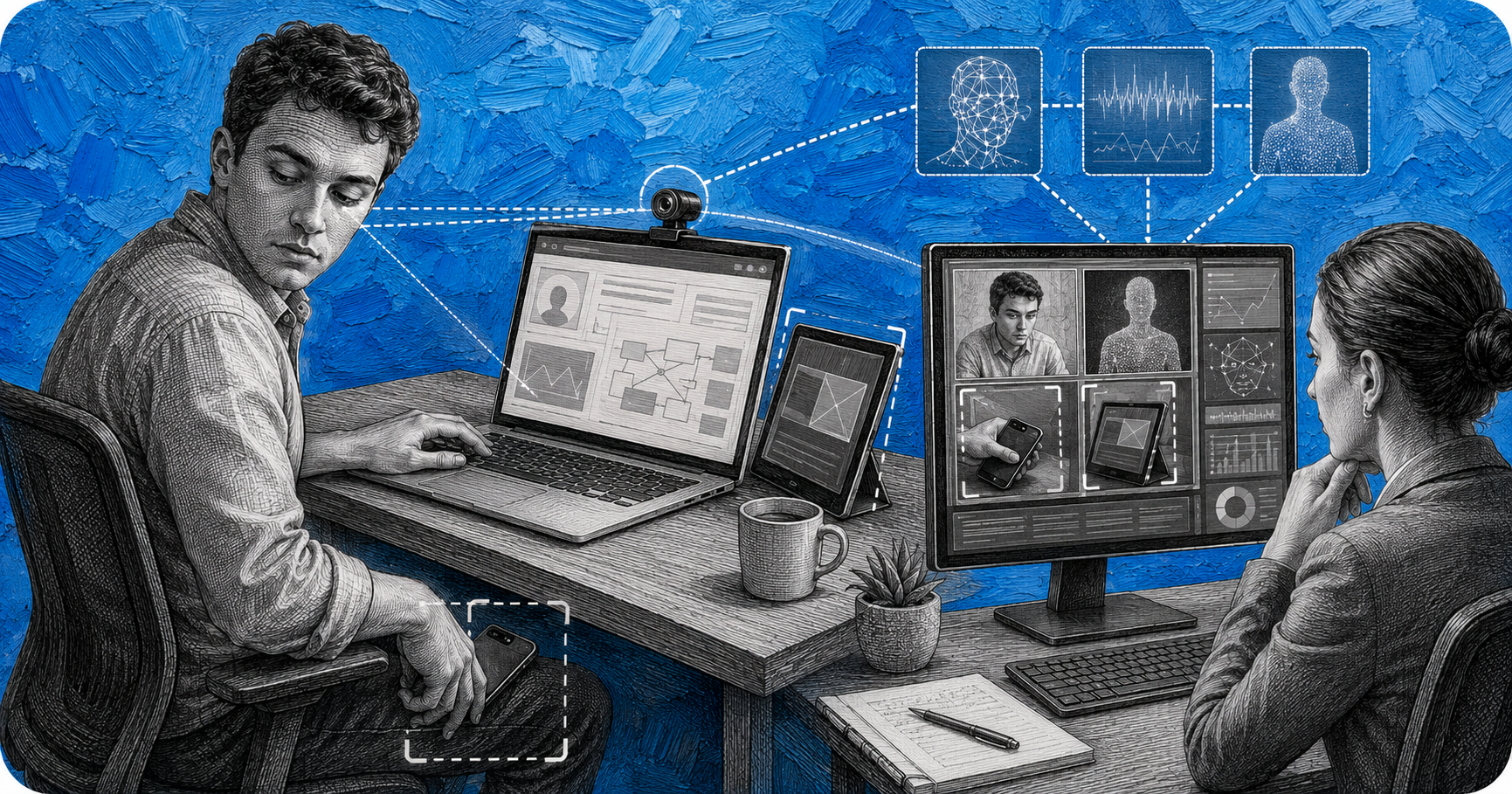
Second device cheating is when a candidate uses a phone, tablet, or second monitor outside the webcam’s view during a proctored online assessment to look up answers, message someone for help, or mirror their screen to a helper. It is one of the hardest forms of assessment fraud to stop with software alone, because the […]
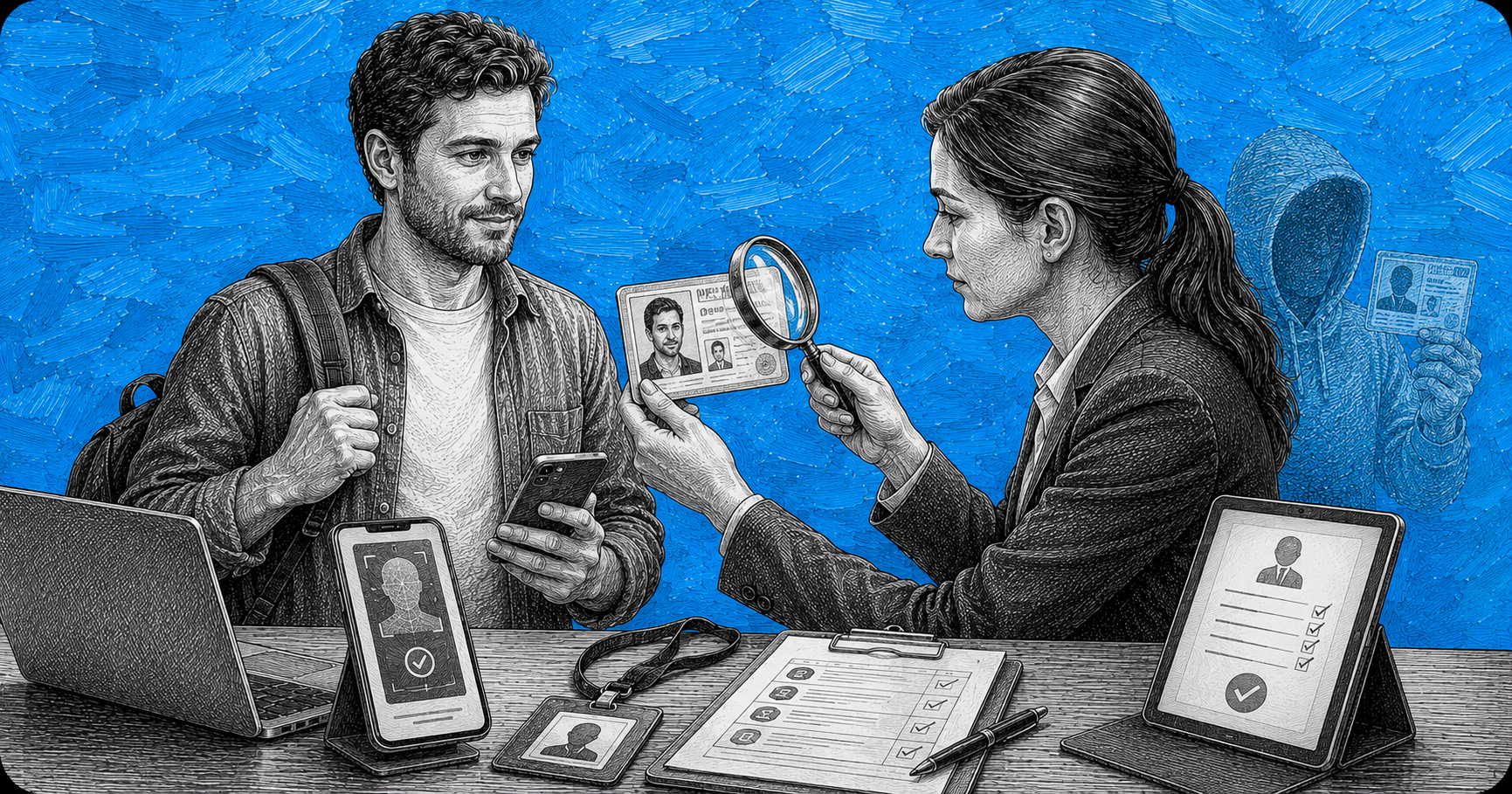
Contingent worker identity verification is the practice of confirming that a freelancer, contractor, or gig worker is who they claim to be before they are onboarded, not just screened on paper. Most companies apply this scrutiny to full time employees and skip or shortcut it for contingent talent, which is exactly the gap fraud actors […]

A structured interview scorecard is a standardized form that lists the specific competencies a role requires, gives every interviewer the same rating scale to judge candidate answers against, and forces a written justification for each score. It exists to replace gut feeling with evidence, so five interviewers evaluating the same candidate land on comparable, defensible […]