Make talent quality your leading analytic with skills-based hiring solution.
Hiring fraud used to mean an exaggerated resume or a borrowed reference. In 2026 it means AI generated interview answers, deepfake video calls, stolen identities used to pass background checks, and fraud rings that place the same fake candidate into multiple companies at once. Hiring fraud prevention is the set of policies, checks, and technologies that HR and talent acquisition teams use to catch these schemes before an offer letter goes out, and before real damage is done to payroll, data security, or compliance.
This guide covers what hiring fraud looks like today, why it has accelerated so quickly, the vectors recruiters need to watch for, and the concrete steps, including AI powered screening and identity verification, that reduce risk at every stage of the pipeline.
Hiring fraud is any deliberate misrepresentation by a job applicant, or by a third party acting on an applicant’s behalf, intended to secure a job the person is not truly qualified for or not truly entitled to hold. That covers a wide range of behavior:
The common thread is intent to deceive at the point of hire, which is what separates hiring fraud from an honest resume gap or a nervous interview performance.
Three forces have converged to make this a board level issue rather than a background screening footnote. Remote and hybrid hiring removed the in person checkpoints that used to make impersonation difficult, letting a candidate interview, get onboarded, and start working without ever meeting a recruiter face to face. Generative AI lowered the skill required to fake competence, with tools that write flawless cover letters, generate realistic headshots, clone voices, and feed live answers during a video interview now widely available and cheap. And the stakes have grown: a fraudulent hire is not just a productivity problem, it can mean payroll fraud, data exfiltration, sanctioned entity risk, or a compromised credential inside sensitive systems. Multiple 2025 and 2026 surveys of hiring managers found that a large share had personally encountered a candidate using AI to fabricate qualifications or a stand in for a live interview, and most expect the problem to get worse before it gets better.
For a deeper look at how these risks concentrate specifically in distributed teams, see this breakdown of remote hiring fraud risks and prevention.
Inflated titles, fabricated degrees, and invented employers remain the most common form of fraud, precisely because they are the easiest to attempt and least likely to be checked thoroughly under hiring pressure.
A skilled accomplice takes the technical or video interview on the applicant’s behalf, then hands the role back to the original person once hired. This is especially common in high volume technical hiring where interviewer familiarity with the candidate is low.
Real time face swapping tools and AI generated speech can now convincingly alter appearance or voice during a live video interview, and separate AI tools can whisper or type answers for a candidate to read in real time. Recognizing the subtle tells of these fake interviews is quickly becoming a core recruiter skill; this fake candidate profiles guide covers the warning signs in detail.
Stolen or synthetic identities are used to pass identity checks and background screens, sometimes tied to organized fraud rings rather than an individual applicant acting alone.
Candidates use a second device, a hidden collaborator, or an AI assistant to complete coding tests or written assessments, producing a skills score that has nothing to do with the person who will actually show up to work.
Fraud also includes scammers impersonating employers to defraud job seekers, and coordinated actors gaming the entire funnel with volume, applying to hundreds of roles with fabricated profiles to see what gets through. This broader funnel view is covered in recruitment fraud and pipeline protection.
Effective hiring fraud prevention is layered. No single check catches everything, but each layer removes a class of fraud the others miss.
1. Verify identity early and consistently. Require government issued ID verification tied to a live selfie or short video at the point of application, so the person interviewing is provably the person who applied.
2. Standardize and record interviews. Structured, recorded video interviews with consistent questions make it far easier to spot inconsistencies between an early screening call and a later technical round, a common sign of proxy interviewing.
3. Use proctored, monitored skills assessments. Any technical test or written assessment should run through a proctored environment that flags tab switching, secondary devices, or a mismatch between the person on camera and the person who applied. See how remote proctoring closes this gap for online assessments.
4. Cross check credentials against source records. Verify degrees, certifications, and employment history directly with issuing institutions and past employers rather than relying on self reported documents alone.
5. Watch for behavioral red flags in real time. Latency before a suspiciously polished answer, a voice that does not match lip movement, refusal to turn on a camera, or reluctance to do a live coding exercise after acing an asynchronous one are all signals worth a second look.
6. Train recruiters to recognize fraud patterns. Frontline interviewers are the first line of defense; short, recurring training on current tactics, deepfakes, proxy interviews, coached answers, catches far more than a policy nobody reads.
7. Centralize fraud signals across the pipeline. A single suspicious signal, an odd IP location, a reused phone number, may look minor alone but becomes a clear pattern when tracked across every stage of the funnel rather than siloed by team.
Ironically, the same AI advances that made hiring fraud easier to commit have also made it easier to catch, provided the right tools are in place. Modern hiring fraud prevention increasingly relies on:
This is precisely where Glider AI’s platform is built to help. Glider AI combines AI powered skills assessments, structured video interviewing, remote proctoring, and identity and skill verification into one workflow, so a candidate’s claimed skills, their identity, and their actual interview behavior are all checked against each other rather than taken on faith. Proctoring flags device switching and behavioral anomalies during assessments, verified video interviews confirm the person assessed is the person who shows up on day one, and skill verification benchmarks real ability against the role rather than a resume claim. Teams focused specifically on fabricated resumes and misrepresented experience can start with this guide to candidate fraud detection.
A written policy turns ad hoc vigilance into a repeatable process. At minimum it should define:
Hiring fraud is any deliberate misrepresentation by a job applicant, or someone acting for them, meant to secure a job under false pretenses. It includes fabricated credentials, identity theft, proxy interviewing, and the use of deepfakes or AI to fake qualifications or presence during the hiring process.
Hiring fraud has grown sharply since 2023, driven largely by generative AI. Multiple 2025 and 2026 hiring manager surveys report that a majority have personally encountered a candidate using AI to fabricate answers, credentials, or an interview appearance.
Companies prevent hiring fraud with layered controls: identity verification at application, structured and recorded interviews, proctored skills assessments, direct verification of credentials with issuing institutions, recruiter training on fraud patterns, and centralized tracking of suspicious signals across the pipeline.
Common red flags include inconsistent answers between screening and later interview rounds, refusal to enable a camera, a voice or appearance that does not quite match across calls, unusually polished answers with a delay before speaking, and reluctance to complete a live, proctored assessment after doing well on an unmonitored one.
Remote identity verification typically pairs a government issued ID scan with a live selfie, checked against biometric matching software, along with liveness detection during video interviews to confirm a real person is present rather than a recorded or synthetic feed.
Yes. AI powered proctoring, liveness detection, and behavioral analytics can catch fraud signals, secondary devices, mismatched voice and lip movement, unnatural answer timing, at a speed no manual review can match, making AI one of the most effective tools against AI enabled fraud.
Interview fraud, often called proxy interviewing, happens when a more qualified accomplice takes an interview or assessment on an applicant’s behalf, then hands the resulting job back to the original applicant. Structured, recorded, proctored interviews make this much harder to pull off undetected.
Costs vary by fraud type but include wasted onboarding spend, lost productivity from an unqualified hire, legal and compliance exposure, and in serious cases, data security incidents or payroll fraud tied to a fraudulent employee, expenses that consistently outweigh the cost of prevention tools.
For related reading on the specific fraud patterns behind these questions, see the guides on candidate fraud detection, fake candidate profiles, and remote hiring fraud.
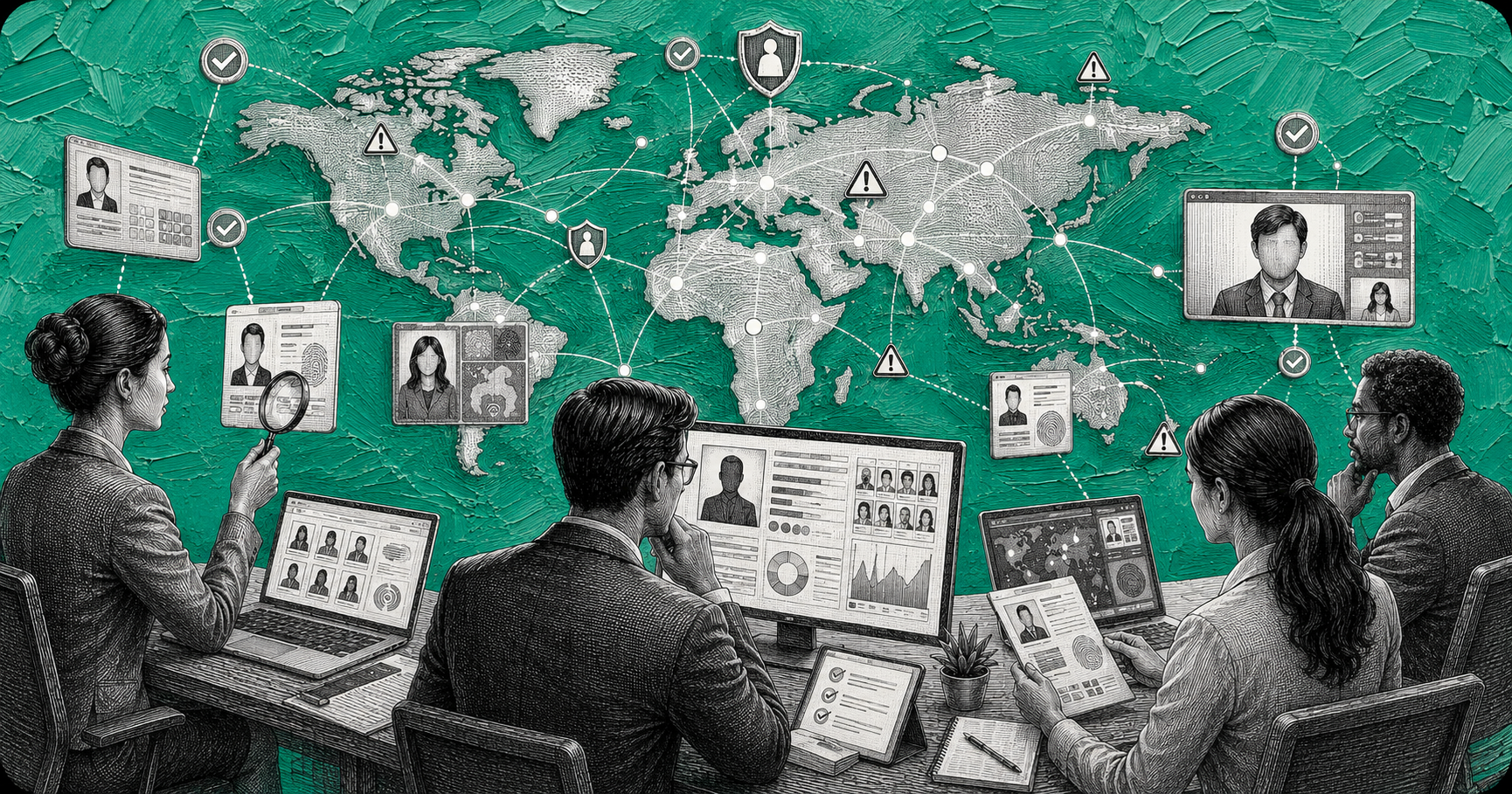
Global hiring fraud hotspots are the countries and regions where documented candidate fraud and identity verification risk run highest, based on named industry indices rather than assumption. In 2026, that data points consistently in one direction: fraud vulnerability is concentrated in markets with weaker centralized identity infrastructure and fast growing digital hiring volume, led by […]
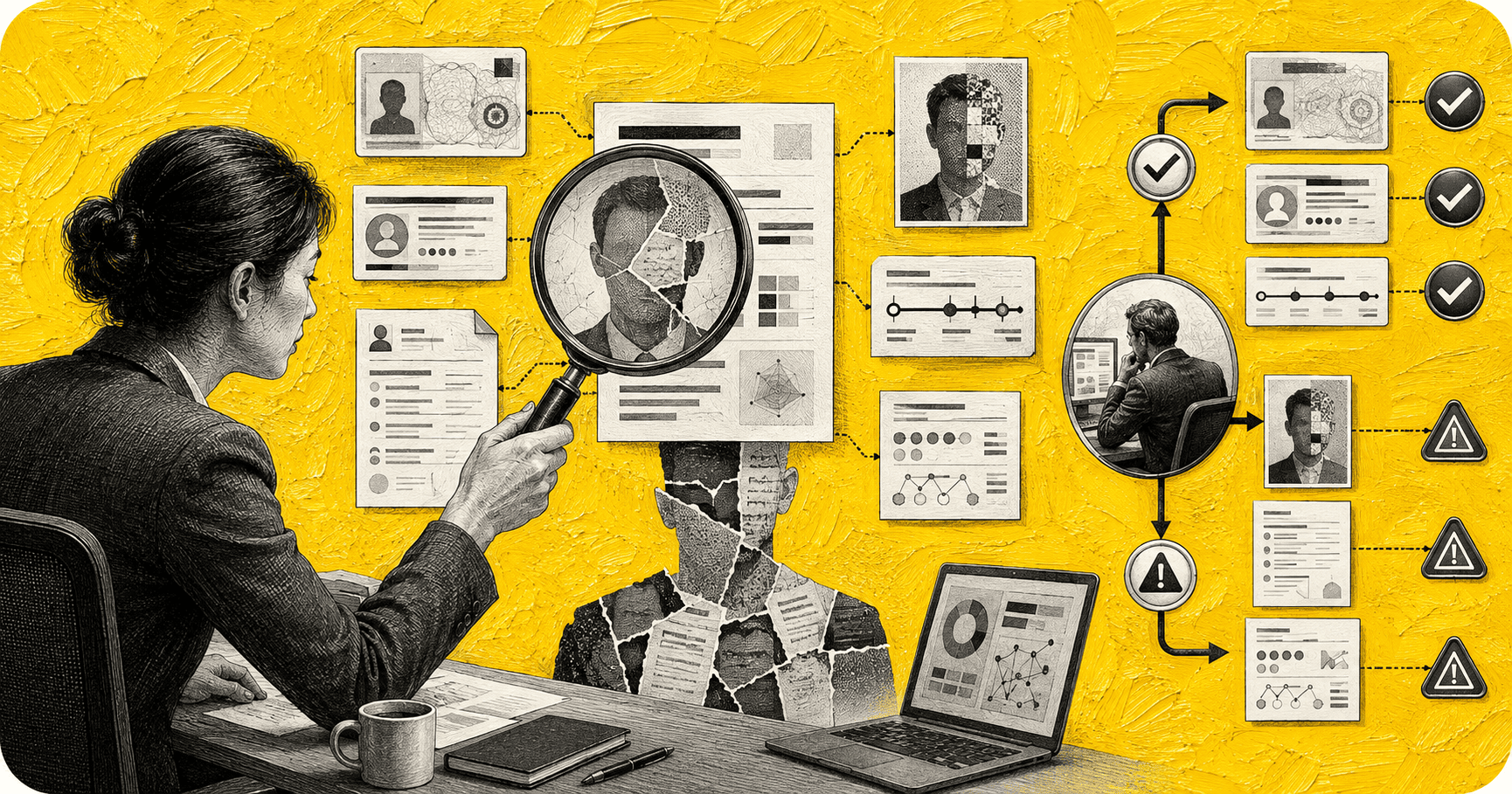
A synthetic candidate is a job applicant who does not exist as a single real person at all. The persona is assembled, usually by combining stolen or purchased personally identifiable information (PII) with an AI generated resume, an AI generated or composite photo, and an invented work history, into a package that looks, on paper […]

Hiring overqualified candidates is not automatically a mistake, but it is a decision that carries real, well documented risk if the role and the offer are not restructured around it. Recent survey data shows most employers already do this regularly: 70 percent of hiring managers say they typically consider candidates who are overqualified for the […]