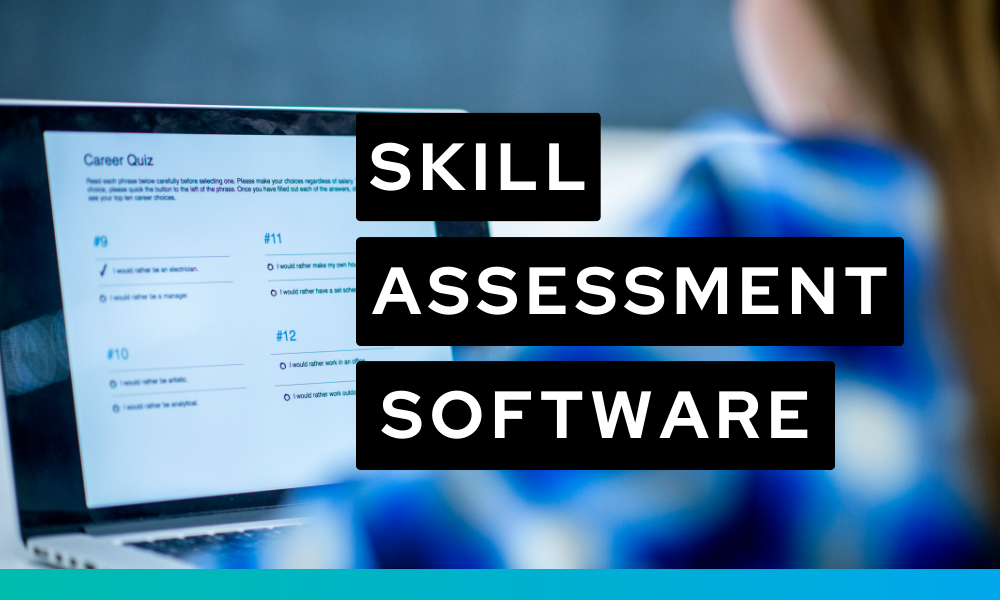
Make talent quality your leading analytic with skills-based hiring solution.
Test Skills, Not Resumes
Recruiters today face a common challenge: how to separate real skills from resume claims. A SHRM study found that 78% of recruiters believe candidates exaggerate their skills. This leads to hiring bias, wasted time, and costly mis-hires.
That’s where skill assessment software comes in. By testing candidates on the actual skills required for the role, organizations can make hiring decisions based on proven ability not just credentials. With Glider AI, hiring teams go beyond resumes to validate skills, build a reliable skills inventory, and create a more effective talent assessment process that improves quality of hire.
Skill assessment software exists to:
Skill assessment platforms follow a straightforward process that mirrors real-world hiring needs:
Not all jobs require the same kind of evaluation. To get the best results, organizations use different types of skill assessments based on role requirements and candidate experience.
Together, these form the foundation of a comprehensive talent assessment program.
| AI Proctoring | Detects malpractice using webcam, screen, and audio monitoring; without disrupting the candidate’s flow. |
| AI Assistant | Helps recruiters select the right test, analyze results, and make data-driven hiring decisions. |
| Candidate-Friendly Design | Mobile-friendly and simple interfaces reduce test anxiety and drop-offs. |
| Role-Based Libraries | Hundreds of functional roles and 250+ technologies, from sales and customer service to data science. |
| Simulation-Based Testing | Real-world tasks replace generic multiple-choice, ensuring accurate skill validation. |
| CEFR Language Assessments | Validates candidate communication skills across global markets, aligned with the Common European Framework of Reference (CEFR) for consistent and reliable benchmarking. |
| Scalable Reporting | Auto-grading and customizable dashboards provide instant insights at scale. |
Skill assessment platforms provide tangible benefits for both recruiters and candidates:
With so many vendors in the market, choosing the right solution requires careful consideration. The best talent assessment tools balance recruiter efficiency with candidate fairness while providing the flexibility to scale.
When evaluating solutions, look for:
Skill assessments are no longer a “nice-to-have.” They’re a core strategy for modern hiring helping organizations reduce bias, improve efficiency, and focus on what matters most: proven skills. Whether you’re building a stronger skills inventory for workforce planning or investing in a modern talent assessment platform, skill assessment software gives you the foundation to hire and grow with confidence.
Technical, non-technical, skill-based and behavioral skills across 250+ technologies and hundreds of job roles. These assessments form a key part of a broader talent assessment process.
No. Automated grading and shortlisting reduce hiring time by up to 40%.
Research shows that 67% of diverse candidates prefer skills-based assessments to traditional hiring because they feel fairer. This improves candidate trust in the overall talent assessment system.
Yes. Glider AI integrates with leading ATS and HR platforms for seamless workflows.
Not exactly. Skill assessments focus on specific abilities required for a role, while talent assessment takes a broader view combining skills, behavior, and potential to ensure the right long-term fit. The two approaches complement each other.
Recruiting has always been a field built on learning. Markets shift, candidate behavior changes, and hiring strategies evolve faster than most teams can document. That is one reason the HR podcast format has become valuable for recruiters looking to stay sharp. The best HR podcast for recruiters does more than fill time during a commute. […]
Recruiters often see change before it gets labeled a trend. A shift in candidate expectations. A hiring manager asking for different skills. Questions about AI, flexibility, or internal mobility showing up more often than they did a year ago. That is the future of work arriving in practical form. A strong HR podcast can help […]
Employee engagement is often framed as something that matters after hiring. Recruiters know it starts much earlier. It begins in the way roles are positioned, how expectations are set, and whether candidates are matched to the realities of the job. That is why an HR podcast about employee engagement can be surprisingly valuable for recruiting […]