Painter Interview Questions and Answers

Abinayasree C

Updated on February 27, 2023

Painter Interview Questions and Answers

Abinayasree C

Updated on February 27, 2023

In this post

CREATE YOUR ACCOUNT

Accelerate the hiring of top talent

Make talent quality your leading analytic with skills-based hiring solution.

Get started

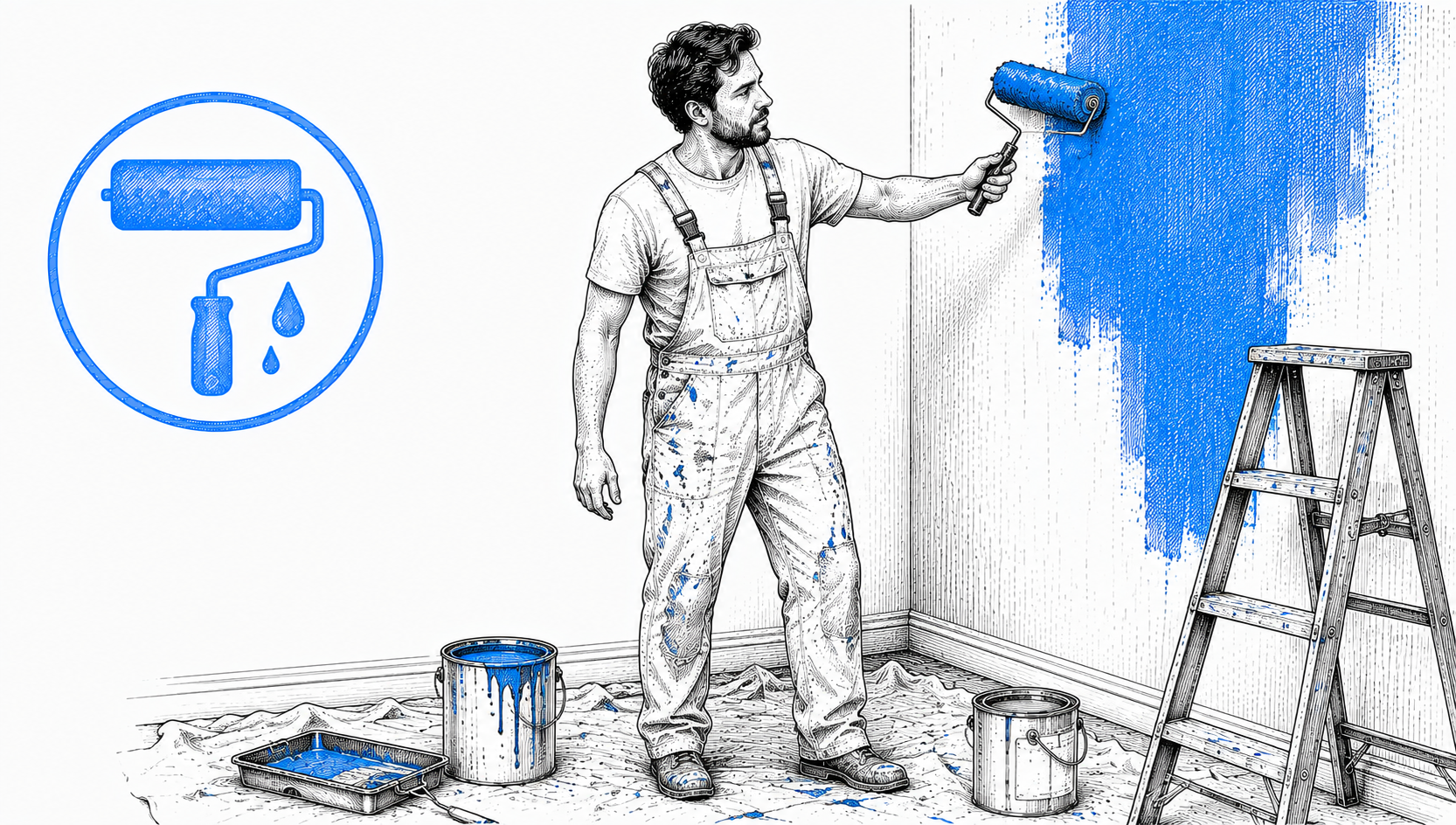
A painter prepares surfaces and applies paint, stain, or other finishes to walls, ceilings, furniture, trim, and entire buildings, both inside and out. Because a rushed prep job or the wrong finish can mean redoing an entire room, or worse, a costly comeback on a commercial job, a confident sounding resume is not enough on its own. That is why well structured painter interview questions matter so much. The right painter interview questions help a hiring manager tell apart a candidate who can talk about painting from one who can actually prep a cracked wall, mix a consistent color batch, and finish a room to a professional standard on schedule.

This guide organizes painter interview questions into four groups: background and experience, technical and situational knowledge, role specific questions, and behavioral questions, along with notes on what a strong answer typically sounds like for a few of the more revealing ones.

First, What Are You Really Hiring For

Before running through the question list, decide what kind of painter the role actually needs. Are you hiring a residential painter for interior repaints and touch ups, a commercial painter working on larger sites and tighter deadlines, or a specialist who handles historical restoration, faux finishes, or spray application on cabinetry and trim. Each of those calls for a different mix of questions and a different weight given to speed versus fine detail work.

This is also where painter hiring often turns into a gut call instead of a structured process, since candidates can describe painting technique far more confidently in an interview than they can demonstrate a clean cut line or an even coat on an actual wall. Pairing your interview questions with a documented job description and a consistent skill assessment or competency assessment step brings structure to how candidates are evaluated, which matters when comparing painters across multiple interviewers or a high volume of applicants.

General Roles and Responsibilities

Before getting into specific questions, it helps to confirm the candidate understands what the job actually involves day to day: preparing surfaces (cleaning, sanding, filling, and priming), selecting the right paint or finish for the surface and environment, mixing colors and adjusting consistency, applying paint evenly with brushes, rollers, or sprayers, protecting floors and furniture, cleaning up and disposing of waste properly, and communicating clearly with clients or supervisors about scope, timeline, and any changes.

For a closer look at typical pay, projected job growth, and the physical demands of the role, see the BLS Occupational Outlook Handbook entry for painting and coating workers.

Background and Experience Questions

These questions establish what a candidate has actually painted and worked with, not just what they claim to know.

  1. Have you worked on similar projects to this one before? Can you describe your experience with similar jobs and the challenges you faced?
  2. Can you describe your experience with different types of surfaces, such as wood, metal, drywall, or brick? How do you adapt your technique for each type of surface?
  3. Can you describe your experience with different paint application tools, such as sprayers, rollers, or brushes? Do you have a preference for a specific tool or technique?
  4. Do you have experience working on historical or heritage buildings, or with restoring and repainting older structures?

What a good answer looks like: for question 1, listen for specifics about the type of buildings, surfaces, and scale worked on, not a generic “I have done a bit of everything.” A strong candidate will name the actual challenge (a tricky trim detail, a tight deadline, a difficult color match) and explain exactly how they solved it, rather than only describing the outcome.

Technical and Situational Knowledge Questions

Surface prep, product knowledge, and problem solving under real job conditions separate a careful painter from one who is only fast.

  1. How do you handle a situation where the surface to be painted has imperfections, such as cracks or holes? What steps do you take to prepare the surface?
  2. How do you select the appropriate type of paint or finish for a specific job? What factors do you consider when making this decision?
  3. Can you explain your approach to mixing paint colors? What techniques do you use to ensure the colors are consistent and accurate across a job?
  4. Can you describe your process for protecting furniture, floors, and other surfaces while painting? What materials and techniques do you use to prevent damage?
  5. How do you handle a situation where the paint or finish is not drying or curing properly? What steps do you take to troubleshoot the issue?
  6. Do you have experience working with environmentally friendly or low VOC paints? How do you make sure these paints are applied safely and effectively?
  7. Are you familiar with different types of paint finishes, such as matte, satin, or gloss? How do you determine which finish is appropriate for a specific job?

What a good answer looks like: for question 5, a qualified painter should walk through a specific sequence, cleaning, sanding, filling, and priming, rather than jumping straight to “I just paint over it.” For question 9, listen for a candidate who can name a real cause (humidity, wrong primer, paint applied too thick) instead of a vague “sometimes it just happens.”

Role Specific and Client Handling Questions

These questions test how a candidate manages the parts of the job that involve judgment calls and client communication, not just technique.

  1. How do you handle a situation where the client requests a change in color or finish after the job has started? How do you communicate this change to your team or supervisor?
  2. How do you handle a situation where a client has specific requirements for the paint or finish, such as a particular brand or type? Are you familiar with different paint brands and their characteristics?
  3. How do you handle a situation where the surface to be painted has a complex or detailed design, such as trim or molding? Can you describe your approach to painting these types of surfaces?

What a good answer looks like: for question 12, a strong answer describes confirming the change and any cost or timeline impact in writing before proceeding, not just agreeing verbally and hoping it works out. This is also a good moment to gauge how a candidate handles scope creep on a job.

Behavioral Questions

These questions look at how a candidate has actually handled real situations on past jobs, which tends to predict future performance better than hypotheticals alone.

  1. Can you describe a time when you had to work under a tight deadline? How did you prioritize tasks and ensure the job was completed on time?
  2. Have you ever had a disagreement with a client or colleague about the scope or quality of a painting job? How did you handle it and resolve the conflict?
  3. Have you ever had to work on a job with limited resources or materials? How did you adapt your technique to compensate?
  4. Can you describe a time when you had to provide feedback or guidance to a less experienced painter or colleague? How did you approach it?

Screening a high volume of painter applicants with a consistent set of these questions, backed by a documented job description and a shared interview questions library entry, helps hiring teams compare candidates fairly rather than relying on interviewer memory.

For roles that involve screening painters across multiple job sites or crews before an in person interview, a phone screening step or an AI video interview can filter candidates efficiently, which matters for staffing firms and contractors running high volume hiring for seasonal or project based crews. Hiring teams evaluating candidates for related trades can also review Glider’s carpenter interview questions and electrician interview questions guides, since construction and maintenance teams frequently hire across all three trades together.

FAQs

What questions should I ask in a painter interview?

Cover four areas: background and experience with different surfaces and project types, technical and situational knowledge (surface prep, color mixing, troubleshooting drying issues), role specific and client handling judgment, and behavioral history (deadlines, conflict, feedback). The 18 questions above are organized in exactly that order.

What makes a good painter?

A good painter combines careful surface preparation habits with color and finish knowledge, physical stamina for standing, climbing, and reaching, attention to detail, and clear communication with clients or supervisors about scope, timeline, and any changes mid job.

 What skills should a painter have?

Core skills include knowledge of painting techniques (brushwork, rolling, spraying), attention to detail, color and design sense, familiarity with materials and tools, physical dexterity, and safety consciousness around ladders, scaffolding, and paint or solvent fumes.

How do you assess a painter’s technical skills before hiring?

Beyond interview questions, many hiring teams pair the conversation with a structured skill or competency assessment and, where relevant, a short practical test, so evaluation is not based on self reported experience alone.

What safety precautions should painters follow on the job?

Precautions include using proper ladder and scaffolding safety, wearing appropriate PPE such as respirators or masks when working with solvents or in poorly ventilated spaces, following manufacturer instructions for paint and chemical handling, and taking extra precautions, consistent with OSHA’s lead safety standards, when working on older buildings that may contain lead based paint.

What is the difference between a residential and a commercial painter?

Residential painters typically work on homes, often one room or one house at a time, with more client facing communication about color choices. Commercial painters usually work larger sites, tighter deadlines, and coordinate more closely with other trades and site supervisors.

What certifications or licenses does a painter need?

Requirements vary by state, municipality, and project type. Many jurisdictions do not require a general license for residential painting, but lead safe work practices certification is required in the United States for work on pre 1978 buildings that may contain lead based paint. Always confirm current local licensing and certification requirements, since they change by location and by project scope.

Benefits Specialist Interview Questions: What to Ask and What to Expect

Benefits Specialist Interview Questions A benefits specialist sits at the intersection of compliance, communication, and trust. They administer health, retirement, and leave programs, answer employee questions about coverage, manage vendor relationships, and make sure the company stays on the right side of regulations that change often and carry real financial risk when missed. That is […]

Underwriter Interview Questions: What to Ask and What to Expect

Underwriters review applications, whether for insurance policies or loans, and decide how much risk a company should take on. Get a clear snapshot of how to screen the ideal candidate for your organization with this set of underwriter interview questions. The job of an underwriter is to review insurance or loan applications and carry out […]

Tax Accountant Interview Questions

Are you looking a skilled contender for the profile of Tax Accountant? Try out these tax accountant interview questions that will ensure you make the right decision. Tax Accountant Interview Questions The task of tax accountant is to coordinate the payment of obligations as well as tax returns on a timely basis. Keeping track of […]

chevron-down