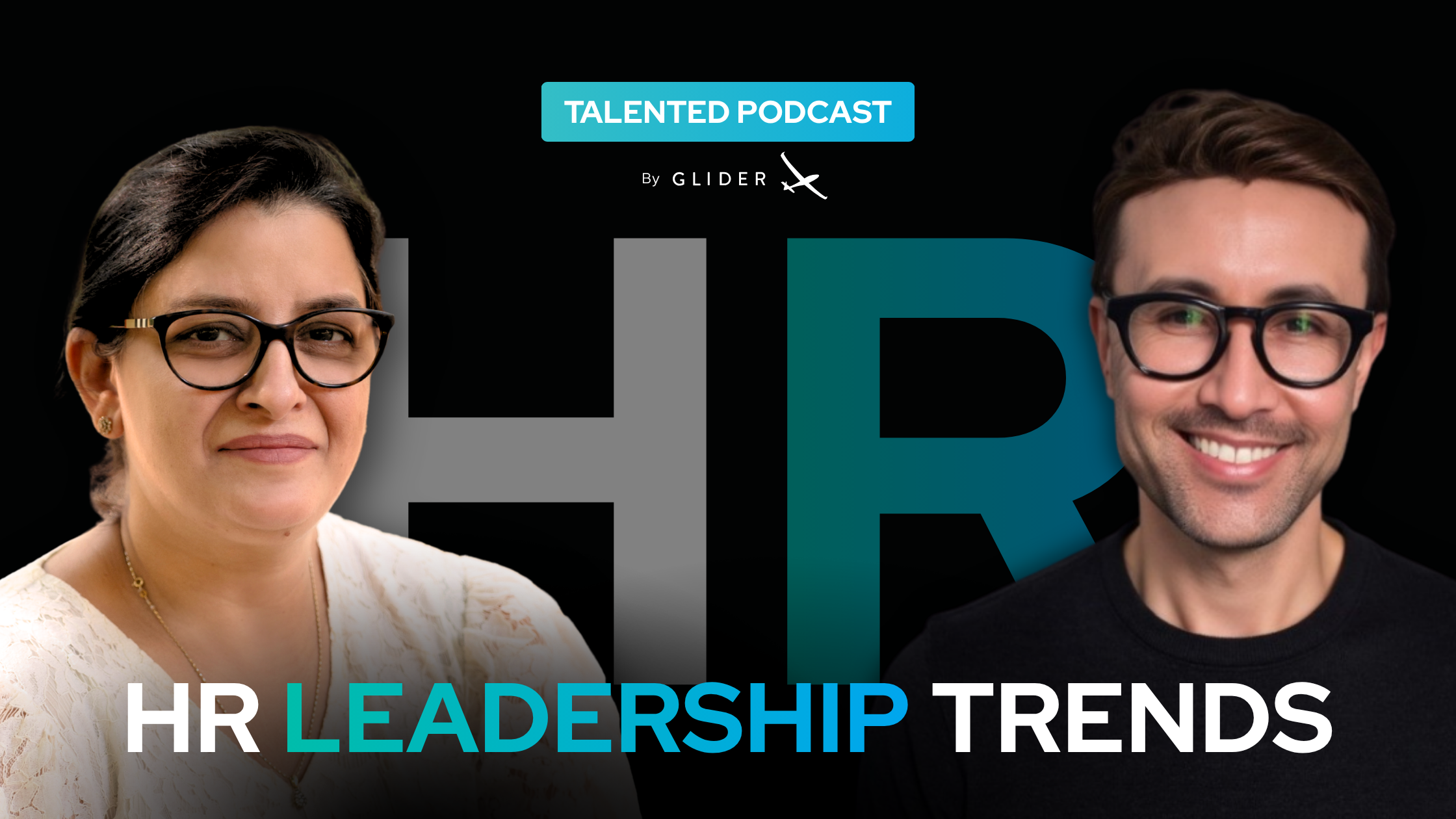
Make talent quality your leading analytic with skills-based hiring solution.
When Joseph Cole from Glider AI spoke with Deeraj Malhotra, VP of HR at Birlasoft, the conversation quickly moved beyond AI hype to something more practical: how HR roles are actually evolving inside organizations.
For a long time, HR was designed to keep things running rather than have a seat at the revenue table. Build processes. Maintain structure. Ensure compliance. That work still matters, but it is no longer enough.
Something deeper is changing.
AI is not just adding efficiency to HR roles. It is reshaping what those roles are expected to do. And in many organizations, that shift is happening faster than teams are ready for.
The most visible change is where HR sits in the organization.
It is no longer operating on the sidelines. It is moving closer to the core of business decisions.
This shift is not accidental. It is being driven by the kind of visibility AI brings. When HR roles have access to real-time data and patterns, they are no longer guessing. They can influence outcomes.
“AI is an advantage so that HR can really be a business leader… having a seat on the table to ensure strategy takes shape.”
That line captures the shift clearly.
HR roles are no longer just about implementing decisions. They are about shaping them. But that only works if HR understands how the business actually runs. Revenue, margins, growth priorities. Without that, even the best tools stay underused.
Most organizations assume transformation fails because communication is weak.
In reality, the bigger challenge is emotional.
When roles evolve, people are not just learning new tools. They are dealing with uncertainty. Sometimes even a quiet fear that what they know today may not matter tomorrow.
“The hardest part is the emotional transition… not operational execution.”
That insight is easy to overlook, but it explains why many change efforts stall.
You can launch new systems, roll out training, and still see resistance. Not because people do not understand the change, but because they are not comfortable with what it means for them.
This is where HR roles become critical. Not by pushing harder, but by staying closer. Helping people make sense of the shift. Giving them space to adjust. Turning something abstract into something they can actually work with.
AI is also bringing something that HR has struggled with for years. Consistency.
Traditional processes often depend on who is running them. Interviews vary. Evaluations differ. Outcomes are not always comparable.
Structured systems change that.
They bring a level of standardization that is hard to achieve manually. The same inputs. The same criteria. The same level of evaluation across candidates or employees.
That does not reduce the importance of HR roles. It changes it.
Instead of spending time on repetitive tasks, HR roles now focus on interpretation. Understanding what the data is saying. Making better decisions. Ensuring fairness is not just designed but maintained.
The work becomes more thoughtful, not less.
One of the most important changes happening right now is not always obvious.
Organizations are quietly moving away from fixed roles and toward skills.
“Gone are the times of just having competency models… Today what you sell in the market are skills.”
That statement has big implications.
Roles are static. Skills are flexible. And in a fast-changing environment, flexibility wins.
This means HR roles now have to think differently. It is no longer enough to fill positions. The focus shifts to understanding what skills exist, what skills are missing, and how quickly people can adapt.
This also connects directly to business performance. Skills determine what a company can deliver and how it competes. That makes them central to strategy, not just talent management.
Culture is one of those ideas every company talks about.
Very few actually make it real.
The difference is not in how culture is defined, but in how it is enforced.
“If leaders do not display the expected behavior and nothing happens, then culture does not stick.”
That is where HR roles play a quiet but powerful role.
Not by repeating values, but by embedding them into decisions. Who gets promoted? What behavior is rewarded? What gets ignored.
People do not learn culture from presentations. They learn it from patterns. What they see happening around them every day.
When those patterns are consistent, culture becomes real. When they are not, it fades quickly.
As AI takes over structured, repeatable work, something interesting happens.
The remaining work becomes more human.
Judgment. Empathy. Context.
These are harder to automate, and they are becoming more valuable.
“Curiosity and agility matter more than ever. The willingness to explore, to adapt, to try something new.”
Along with that comes emotional intelligence. The ability to step back, understand another perspective, and make decisions without losing trust.
These are not abstract skills. They show up in small, daily moments. A conversation handled well. A decision explained clearly. A pause before reacting.
Over time, those moments define the effectiveness of HR roles.
Many organizations speak confidently about inclusion and well-being.
But the reality often looks different.
The problem is not intent. It is execution.
“Unless you make it part of your culture… it’s just a program.”
That line is uncomfortable, but accurate.
Real impact does not come from initiatives alone. It comes from behavior. From how decisions are made, whose voices are heard, and whether people actually feel supported.
HR roles have to move beyond designing programs and focus on shaping habits. That is slower work, but it is the only kind that lasts.
Looking ahead, the direction is becoming clearer.
HR roles will need to think with an AI-first mindset, not in a reactive way, but as a starting point. Decision-making will need to be faster, even when information is incomplete.
At the same time, emotional intelligence will matter more, not less.
There is also a quieter skill that will define success. The ability to unlearn. To let go of what worked before and adapt to what works now.
“Organizations that can unlearn quickly and still act with empathy will move ahead.”
That combination is not easy to build. But it is what the next phase of HR roles will demand.
HR roles are not being replaced.
HR roles are being stretched.
AI is taking away repetitive work, but it is also exposing what really matters. Clear thinking. Strong judgment. The ability to work with people, not just processes.
And maybe the most honest takeaway comes from this simple line:
“People don’t become redundant because of technology… people become redundant if they don’t learn.”
That is the real shift.
Not just in tools or systems.
But in how people choose to grow with them.
Joseph Cole (00:01)
Hello everyone, I’m Joseph Cole with Glider AI and today I’m here with Deeraj Malhotra, hopefully I said your name correctly, who works for Birlasoft. So Deeraj, thanks so much for joining us today. Why don’t you give us a quick introduction about your professional life as well as maybe your personal life.
Deeraj (00:22)
Jo, morning. Thanks for having me. And yes, you pronounced my name absolutely right. So thanks for that. So I work with Birlasoft as a VPHR, people and culture function. It’s a global role which includes US, Canada, Mexico, India, all the geographies. And personally, I have been there for four plus years, done a lot of work in the rest of the industry for the past 22 years. So being here.
Joseph Cole (00:28)
Thanks, Ed. Thank you.
Deeraj (00:52)
I have worked on multiple processes in the HR span, so looking forward to discussion today along with you. Hope it helps people who are here. Personally, I am blessed with two girls. My husband is a good man. He’s dealing with the three ladies in the house, so we are having fun at home. So yeah, that’s about me personally.
Joseph Cole (01:15)
Awesome. And I understand you were recognized among the most 100 admired women by Advantage Club AI, and then also named 50 under 50 HR leaders by BW People. So you’ve got a lot of amazing credentials behind you.
Deeraj (01:22)
Yes. Thank you, Joe, for bringing that up. Yes, in the middle of all the work that you do, when you get such recognition, it just makes you feel great about what you’re doing. And everyone needs some recognition at some point in time, I believe. And it has helped. So thank you so much for bringing it up.
Joseph Cole (01:50)
Yeah, well, congratulations. I’m really looking forward to hearing your insight and expertise. So the first question for us today is, you’ve spent over two decades in HR across global organizations, including at BirlaSoft. What’s the biggest shift that you’ve seen in the role of HR leadership? With AI and everything coming into play, it’s almost like the value proposition has changed for HR and talent leaders.
Deeraj (02:17)
Absolutely. When I began working, it sounds like it’s ages ago. It’s been 22 plus years now. I think we used to worry more about what are the processes, what are the policies. And then there was a time where we said we need to standardize all of this. So we moved into that stage. We landed into systemization. So a lot of systems, and there was this drive of ERP, and everybody was implementing SAP and Workday and all of that.
And the most recent advantage that has come across for all of us is AI. I think a lot of people fear AI. My sense is it’s an advantage so that HR can really be a business leader, in the sense of having a seat at the table to ensure that strategy takes shape, watching that grow, ensuring productivity, resilience, and innovation happens on the table. That can happen only when you have data ready.
You are enabled and armed with tools in AI which are so powerful today that it really creates a lot of efficiency for today’s HR. And it’s like a daily conversation with my team as we move towards superimposing our HR strategy with AI strategy, an AI-first mindset.
Joseph Cole (03:35)
Right, that’s really interesting. I know a lot of concerns naturally surround AI, whether that’s HR or talent acquisition, including my role as a marketer. There’s fear about it, right? It sounds like your team has embraced it. Is there a way that you’ve helped the team understand the power of it?
Deeraj (04:03)
Absolutely. I believe shift doesn’t happen by telling people that this is how they should operate. I think when you do it yourself, today’s leaders need to embrace change as an individual contributor, showing your team the way and ensuring that they understand and literally holding their hands and moving forward.
Because whether we like it or not, the team members who are younger than us have brilliant minds and great adoption to technology. If leadership with more experience does not adopt and embrace this, it’s just going to run us out.
So it’s time to run from the front and enable the team. That’s where my energy goes.
Joseph Cole (05:05)
Excellent. You’ve led multiple large scale transformations. What is the hardest part of driving change that people don’t talk about enough?
Deeraj (05:22)
Change management is one of my favorite subjects. The hardest part is the emotional transition, not operational execution. A lot of times, communication becomes overrated. People think if they create awareness, it will happen.
While it’s important, really getting it to the heart and ensuring people execute with excitement is where the emotional transition takes the front seat.
Underestimating the loss of identity and uncertainty people feel is a mistake. Those are emotions we need to engage with to reduce resistance.
Joseph Cole (06:36)
I think that’s a really interesting point. With AI disrupting so many aspects, HR is truly equipped to help lead that transformation. One challenge I’ve seen is HR not always having a seat at the table. Is HR part of that decision-making in your organization?
Deeraj (07:36)
Any transformation has a people aspect attached to it. We will only delay failure if we don’t accept that faster. Change management is critical.
If you run a transformation and people are not aligned, it’s like reaching a destination with no one on the bus.
In our organization, HR absolutely has a seat at the table. When we created our HR strategy, we aligned it with business strategy. That’s when it works. Otherwise, standalone HR interventions don’t succeed.
HR must understand business, revenue, and how people processes impact growth.
Joseph Cole (10:28)
Culture transformation is often spoken about but rarely done well. What makes it stick?
Deeraj (10:40)
You hardwire culture into decisions. If leaders don’t display the behavior and nothing happens, culture won’t stick.
When people see leaders being held accountable, it works. Nobody is above the organization.
We embedded culture into the entire employee lifecycle. It has to show up in daily actions, not just messaging.
Joseph Cole (12:34)
What traits do the most effective leaders get right?
Deeraj (13:06)
Three things. Trust, clarity, and momentum.
Leaders must create a safe space where people feel heard. Listening is critical.
Also, context matters. Content without context leads to failure.
And staying calm in ambiguity is essential as you grow in leadership.
Joseph Cole (14:35)
How do you balance business performance with employee experience?
Deeraj (14:50)
Clearly explaining the why is essential. When people understand the context, performance and experience don’t compete. They support each other.
Joseph Cole (15:51)
What does a skills-based organization mean in practice?
Deeraj (16:23)
We built a Skill Transformation Initiative where employees track skills, see career paths, and learn what’s needed next.
Today, what you sell in the market are skills. That’s how organizations grow.
Joseph Cole (18:36)
What skills are critical for HR leaders now?
Deeraj (18:43)
Curiosity and agility. If you don’t use the tools available, investments are wasted.
Decision-making and adaptability are essential today.
Joseph Cole (19:35)
What works in leadership development?
Deeraj (19:47)
Contextual learning and small, on-demand learning works best. One-size-fits-all does not work anymore.
Joseph Cole (21:12)
How do organizations move from intent to impact in DEI and well-being?
Deeraj (21:35)
It must be measured, owned, and funded. But more importantly, it must become part of culture and daily behavior.
Joseph Cole (23:07)
What leadership lesson transcends geographies?
Deeraj (23:26)
People want to feel respected and heard. Trust and fairness are universal.
Joseph Cole (24:02)
What will define successful organizations in the future?
Deeraj (24:21)
AI-first mindset, speed in decision-making, emotional intelligence, and learning agility.
Organizations that can unlearn fast and act with empathy will outperform others.
Joseph Cole (25:18)
What advice would you give around balancing EQ and IQ in hiring?
Deeraj (26:04)
Always think from another person’s perspective. Emotional intelligence comes from daily practice.
Joseph Cole (27:16)
How do you stay anchored?
Deeraj (27:22)
Purpose and self-awareness. Leadership is about responsibility, not control. Learning from the team keeps me grounded.
Joseph Cole (28:35)
What advice would you give aspiring HR leaders?
Deeraj (29:15)
Build functional depth first. Then understand business and revenue.
When HR solves business problems, the seat at the table follows naturally.
Joseph Cole (30:24)
Any final thoughts?
Deeraj (30:35)
People don’t become redundant because of technology. People become redundant if they don’t learn.
So it’s time to unlearn and learn new skills.
Joseph Cole (31:13)
Likewise, thank you.
AI Is Transforming Recruitment. Here’s What HR Leaders Need to Know. Hiring is no longer about speed and scale alone. It’s about precision, experience, and knowing what AI should and shouldn’t decide. On a recent episode of the Talented podcast, host Joseph Cole interviewed Anshu Uppal, an HR transformation leader based in India with two […]
AI Has Changed Hiring Forever: HR Must Become a Security Function Hiring is undergoing a transformation that few HR teams are prepared for. What once felt like a talent challenge has rapidly evolved into a cybersecurity challenge unfolding inside the hiring process itself. That shift came into focus during a recent episode of The Talented […]
The Limits of AI in Hiring Why Human Judgment Still Matters Abhishek Nag is not a conventional HR leader. An engineer turned entrepreneur turned HR executive, he currently serves as Global Head of HR at Fornax, a multi-entity services organization with more than 40,000 employees across 16 countries. That cross-functional background gives him a systems-level […]