Make talent quality your leading analytic with skills-based hiring solution.
Hiring is no longer about speed and scale alone. It’s about precision, experience, and knowing what AI should and shouldn’t decide.
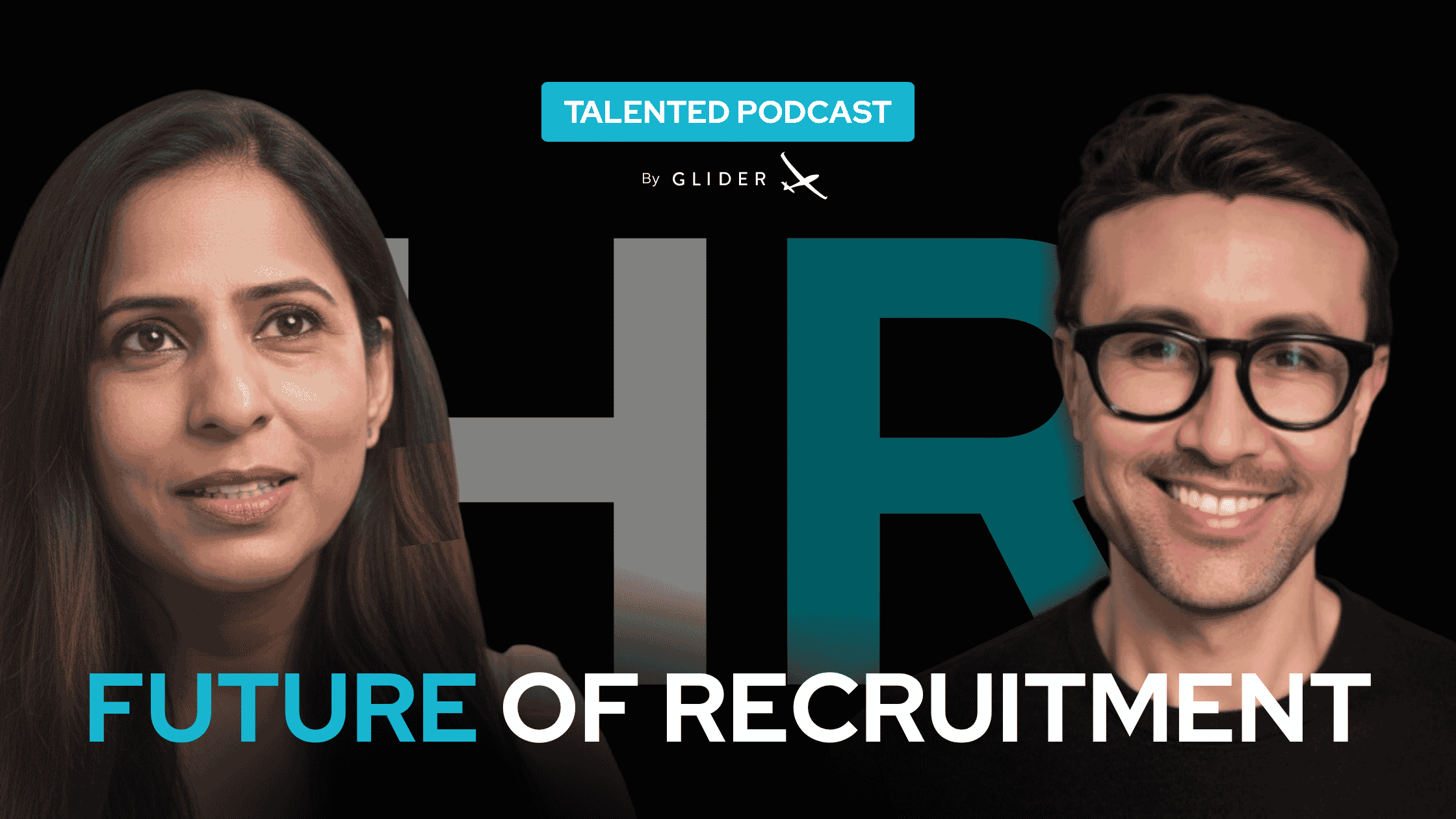
On a recent episode of the Talented podcast, host Joseph Cole interviewed Anshu Uppal, an HR transformation leader based in India with two decades of experience spanning learning and development, talent management, HR business partnering, and leadership development at one of the world’s largest global IT companies. Joseph has spent his career at the intersection of talent strategy and technology, and brings a practitioner’s eye to the conversations he leads on the show. Anshu started her HR journey back in 2002 and has more recently led her organization’s push to digitize corporate HR functions, giving her a front-row seat to what AI is actually doing inside large enterprises right now.
Their conversation covered a lot of ground. What follows is the most important of it.
By the time a recruiter sits down to interview a candidate today, artificial intelligence has already done a remarkable amount of work. It screened hundreds of resumes, inferred which skills actually match the role, scheduled the call, and possibly ran an early assessment. The human in the room is there for something AI still can’t replicate. Judgment, empathy, and the kind of cultural instinct that determines whether someone will thrive, not just perform.
This is the new reality of HR, and it’s arriving faster than most organizations are ready for.
“HR did not become less human because of AI. It became more accountable for being human”
That shift, from transactional to strategic and from manual to data-rich, is reshaping every layer of talent management. Here’s what’s actually changing, what the risks are, and what the best HR leaders are doing about it.
Three forces are colliding at once. Global talent pools are expanding. Hybrid workforce models are multiplying. And the sheer volume of applicants has made manual processes impossible to sustain.
AI addresses all three. It enables what practitioners call predictive matching, surfacing candidates whose skills genuinely align with a role rather than just whose resumes contain the right keywords. It automates scheduling, early screening, and repetitive coordination tasks. And it allows recruiters to engage with candidates at a scale and personalization level that simply wasn’t achievable before.
The result is that recruiters are no longer spending their days sorting through CVs. They’re spending their days on the work that actually requires a human. Building relationships, reading rooms, making judgment calls.
“Manual processes are something we cannot keep pace with, AI enables predictive matching and supports personalized engagement at scale, while humans remain accountable for the decision.”
AI is strongest at tasks that are high-volume, pattern-based, and time-consuming.
Resume screening and skills matching is one area. AI can parse thousands of applications against a job description in minutes, flagging relevant candidates that a human reviewer might miss and filtering out noise that wastes recruiter time.
Scheduling is another. Coordinating interviews across time zones and calendars is logistically painful and adds no strategic value. AI handles it cleanly.
Early assessments are also firmly in AI’s lane. Skills-based simulations and scenario tests can now be administered, evaluated, and summarized before a recruiter ever enters the picture.
Where AI consistently falls short is in assessing cultural fit, leadership potential, trust-building, and the capacity to handle ambiguity. These aren’t soft considerations. In most roles, they’re the deciding factors.
This is one of the most important and underappreciated challenges in modern hiring. With AI-enhanced resumes now commonplace, the gap between claimed skills and demonstrated ability has never been wider.
The most rigorous approach treats skills verification as a three-layer problem.
The first layer is claimed skills, or what the resume says. AI can match these against job requirements quickly, but claimed skills alone are a weak signal.
The second layer is demonstrated skills. This is where AI-powered simulations come in, building role-specific tasks or scenarios that candidates actually perform rather than just describe. Did they claim expertise in data analysis? Give them a dataset. Did they list strong communication skills? Put them in a simulated stakeholder scenario.
The third layer is applied judgment, which covers how a candidate reasons through ambiguity, makes tradeoffs, and handles situations where there’s no clear right answer. AI can administer these scenarios and capture responses at scale, surfacing patterns that help recruiters prioritize who to spend their limited time on.
“AI can build simulations for a specific skill and role, it gives scenarios, records responses. There’s no right and wrong answer, but it helps streamline assessment in a way that goes far beyond what a CV can tell you.”
This is where the governance conversation gets serious.
AI hiring tools can reduce bias, but only when they’re designed to. Left unchecked, systems trained on historical hiring data will reproduce the same biases those decisions contained. An algorithm that learns from a decade of hiring patterns at a company that consistently promoted a particular profile will simply optimize for that profile again.
The solution isn’t to avoid AI. It’s to build guardrails. Diverse training data, regular bias audits, clear accountability for outcomes, and transparency about how AI-driven recommendations are generated.
In high-volume hiring markets like India and Southeast Asia, where AI is being deployed at significant scale, getting this right isn’t a nice-to-have. It’s a necessity. Organizations that skip the governance step risk building discrimination into their processes at machine speed.
“If we put the right guardrails in place, the aspect of fairness will be addressed, but we have to be intentional about it. It requires diverse data, bias audits, and clear accountability.”
Over-automation is a real risk, and most organizations are underestimating it.
When candidates apply for a role, they’re making themselves vulnerable. They’re submitting personal information, investing time, and staking professional hope on an outcome. If that process feels opaque, mechanical, or dismissive, trust erodes. And trust, once lost at the application stage, doesn’t come back.
The most forward-thinking HR teams are using AI to make the candidate experience more personalized, not less. That means explaining clearly how AI is being used in the process. It means ensuring that humans still review meaningful decisions. And it means closing the feedback loop, even for candidates who don’t get the job.
“Candidates would like to know, if they haven’t made it for a certain role, what’s the feedback, sometimes that loop doesn’t get closed. AI can help us deliver a personalized experience even when someone doesn’t get selected, helping them understand what to work on and how to reassess in six months.”
This isn’t just a nice gesture. Research consistently shows that candidate experience shapes retention. Nearly 70% of employees across industries say their onboarding and hiring experience influences how long they stay with an organization.
The phrase most commonly used in this conversation is “super workers,” a term popularized by HR analyst Josh Bersin to describe professionals who don’t compete with AI but partner with it effectively.
The skills that matter most in this new environment aren’t technical. They’re deeply human.
Judgment is the first one. As AI surfaces more data and more candidates, the quality of human decision-making, who to hire, who to develop, what a team actually needs, becomes the differentiating variable.
Empathy and relationship-building matter just as much. These are the capabilities that candidates remember and that define culture. No algorithm builds trust the way a well-timed conversation does.
Creativity and problem-solving round out the picture. Complex workforce challenges require human imagination. Building a capability that doesn’t exist yet, navigating organizational change, designing a culture for hybrid teams. None of that gets handed to a machine.
“It’s more about evolving human capabilities, how do you partner with AI to become super productive? AI becomes your partner in the journey, but you have to continue to be great at people skills. Collaboration, creativity, problem-solving. Those skills will never stop being needed.”
Several trends are already accelerating toward a near-term future that looks meaningfully different from today.
Hiring will become skills-first. Job titles will matter less. Verified, demonstrated competencies will matter more. AI will match people to opportunities based on what they can actually do, not just the roles they’ve held.
Internal mobility will expand significantly. AI can identify adjacent skills within an existing workforce in ways that are humanly impossible to surface at scale. This will reduce external hiring costs and improve retention simultaneously.
Candidate experiences will become more predictive and personalized. The feedback loop will close. AI will tell candidates not just that they didn’t get a role, but what to specifically develop and when to reapply.
AI governance will also become a strategic priority. As regulatory frameworks catch up to AI adoption, particularly across different jurisdictions, organizations that haven’t built governance infrastructure will face real legal and reputational exposure.
“Recruitment will be more predictive, It will become skills-first and it will continue to evolve. AI will anticipate talent needs and enable internal mobility. The question is whether organizations are building toward that now, or waiting until they have to.”
AI is not replacing recruiters. It is replacing the version of recruiting that was mostly about volume, speed, and checkbox processes.
What’s left, and what’s increasingly valuable, is the work that requires real human presence. Building relationships with candidates, making nuanced judgments about potential, creating the kind of organizational culture where people want to stay.
The HR leaders who will thrive in this environment aren’t the ones who resist AI adoption. They’re the ones who understand that AI is giving them something back, time, capacity, insight, and are using that space to do the human work better than ever before.
The machines are handling the signals. The judgment still belongs to us.
Joseph Cole (00:01)
Hello, ⁓ Anshu, ⁓ really nice to meet you. Thank you for joining us today. ⁓ We are your HR transformation leader, two decades of experience. You’re based in India, I understand with a large global IT ⁓ company. Do you want to share a little bit about your background?
Anshu (00:03)
Thank you, of all, Joseph, for inviting me for this interaction. I’m super thrilled and excited to share my thoughts. And today, before we dive into the topic of the conversation, I want to kind of talk about my experience. actually started back in 2002 with a customer care company.
⁓ And then my experiences actually span across learning and development, HR business partnering, talent management, leadership development. recently I’ve kind of transitioned into HR transformation because in the past I was supporting one of the technology units in my organization and that’s where my relationship with technology started.
And obviously that also prepared me and begged me for this opportunity to help my internal corporate functions on digitization journey.
Joseph Cole (01:22)
Awesome. So what’s something about your career journey that has surprised you the most?
Anshu (01:29)
I think one of the biggest surprises has been how quickly technology has reshaped HR and how human our work has become as a result of that. I started, like I said, in learning and development and moved into different areas of HR. Earlier, success in HR meant scale and efficiency, but today success means precision and experience. ⁓ recently I was working with a lot of new hires and
you know how their onboarding experience has been. in, you know, because of that experience I realized nearly 70 % of the employees across different industries say that their onboarding and hiring experience shapes how long they stay with an organization. And AI has completely transformed that space, right? From a manual transactional process driven
experience to a data rich journey and that gives HR leaders or HR professionals a lot of time back for human capabilities like judgment, empathy, strategy, how you create signature experience. So if I were to put my point of view forward, HR did not become less human because of AI. I think it became more accountable for being human with this change.
Joseph Cole (02:55)
Yeah, that’s an interesting perspective. agree with that. It’s almost like the value proposition of HR and HR leaders like yourself has evolved, right? Because of AI and then you’re now becoming more more strategic and also, you know, the ability to truly focus on the human aspect. So AI and recruitment, what do you think AI or why do you think AI is becoming so crucial in recruitment and in talent management?
Anshu (03:24)
I think both of these areas, if I talk about what my experience has been in the last two decades, both of these areas were about scale, velocity and complexity. And AI has really reshaped that part of modern hiring, right? With global talent pools emerging, hybrid workforce models, manual processes are something that we cannot keep pace with, right? So AI enables predictive matching.
It automates repetitive tasks and supports personalized engagement at scale. So while humans remain accountable for decision, but AI takes away a lot of laborious work from humans. then you can actually focus on high value human capabilities like I talked about.
Joseph Cole (04:16)
Hmm. Do you have any, and this is not on script, ⁓ so don’t feel like you have to answer it. Do you have any, perspective on like the type of skills that HR needs to really harness now with AI given AI is taking a lot of these other, you know, laborious tasks away.
Anshu (04:34)
So I do believe that, like I said, that AI is taking away the laborious task. It’s more about evolving human capabilities. And how do you partner with AI to be able to become super productive? ⁓ I recall one of the podcasts from Josh Burson where he says that this is an era of super workers, where you can work with AI really well, right?
Joseph Cole (04:45)
Mm-hmm.
Anshu (05:01)
So AI becomes your partner in journey, but you have to continue to be great at people skills, whether it’s collaboration, it’s creativity, it’s problem solving, really kind of those kind of skills will never go out of, ⁓ they will never become needed. That’s my perspective. and also I think newer skills and newer roles are emerging as well. How you can bring more technology.
Joseph Cole (05:11)
Yeah.
Anshu (05:30)
in this space and leverage that to your advantage. ⁓ So a lot of HR technology roles is evolving because of that. I see a lot of ⁓ focus around creating experiences within HR. That’s a new area, I think, that we also kind of seeing with AI coming in. focus on, like I said, experience and scale. So bringing both of these aspects together.
So that’s my perspective.
Joseph Cole (06:01)
Yeah, is the EQ, I guess, becoming more more important for you now when you’re looking at the skills of your team?
Anshu (06:09)
Right, right.
Joseph Cole (06:12)
Okay, awesome. So what parts of the recruitment process do you think AI can handle best and where do you think human is still critical or the human intuition is still essential?
Anshu (06:24)
So I think AI excels at ⁓ manual tasks like resume screening, ⁓ scheduling, ⁓ even skills inference, skills matching. ⁓ That is an area where AI can help and even doing the early assessments. A lot of time that recruiters were spending in doing those manual tasks can be taken away from AI. ⁓ But human intuition, because it’s important, I believe that
Anshu (06:54)
cultural alignment, leadership potential, handling ambiguity, even trust building. All of these aspects still reside with human assessment and that’s where taking those decisions is still gonna reside with humans. So AI will inform you with a lot of data and take away a lot of those meticulous or laborious tasks, but the humans will still have the decision making.
authority looking at the cultural alignment and all the other aspects that I talked about.
Joseph Cole (07:27)
Yeah, I agree with that. ⁓ undeniably, AI is taking a lot of the tasks and even certain roles that are very manual, it’s almost replacing those, but the strategic value of the human and the intuition is still there. I guess what aspects do you think AI is augmenting from a people perspective? What capabilities do you think?
Anshu (07:54)
I love the fact that you said AI will augment, AI will not replace. So let’s stay with that because a lot of people think that AI will replace humans, that’s not gonna happen. I think what part AI will augment is organizations that over automate hiring. ⁓ They risk losing the candidate’s trust. So ⁓ recruiters should focus on strategy, relationship.
Anshu (08:21)
why AI can handle coordination and validation kind of tasks. So those are the aspects that AI can definitely augment and humans can continue to focus on, like I said, creating that experience, building that initial connect, creating signature moments with the candidate.
Joseph Cole (08:40)
Right. Makes sense. So let’s switch gears a little bit. And we’ve been talking about it. So skills validation, but looking at more from an industry angle. how can we effectively use AI to verify candidates skills, right? Given there’s an, the rise of AI enhanced resume, it’s so easy for ⁓ candidates to apply, but it’s hard to go through that and truly verify that. Do they have the skills? Are they the right fit? ⁓
curious about your perspective.
Anshu (09:11)
So I think when I talk about, you know, assessing skills, ⁓ I actually look at three layered model. One is the claimed skills that candidates put on resume, right? The other is demonstrated skill where they have actually, they can demonstrate what they’re claiming in their profiles. And last is the applied judgment. And where AI can really help is…
assessing not just the initial skills which are listed in the resume by matching that with the job description, but really assessing the demonstrated skill can help build simulations for that specific skill, that role to be able to assess if the candidate performs. And this can also be then expanded to the
The point about applied judgment, AI can give scenarios and then record responses and there’s no right and wrong answer, but it just helps streamline some of those aspects of the skill assessment from the recruiter. So I think AI can help there as well, if we take it a step further.
Joseph Cole (10:24)
Yeah, I agree. And I think it’s getting so sophisticated to where it can simulate real world job tasks and truly understand job readiness. So can these AI driven assessments ensure fairness also and also the accuracy in these hiring decisions?
Anshu (10:44)
So that’s a great question and there’s a lot of conversation around that. The governance aspect of AI, how we use AI responsibly. So AI, if used effectively can reduce bias, but it needs to be governed with guardrails. When we’re using diverse data, we kind of integrate bias audits. We create clear accountability, put guardrails in place to be able to ensure that
there is fairness in that assessment. And it is very useful in regions like India, Southeast Asia, because that’s where we do a lot of volume hiring as well. So I think if we put the right guardrails in place, the aspect of fairness will be addressed.
Joseph Cole (11:34)
I’m right. So…
I’m curious about the risks and the challenges, ⁓ So what concerns do you have about the increasing reliance of AI in recruitment?
Anshu (11:49)
think transparency is critical and you know as organizations we have responsibility to build that trust with the candidates so that they feel that their information first is protected. There are privacy standards in place and also candidates can trust when organization can explain how AI is being used.
how humans will still review some of the aspects and that gets communicated clearly. those key guidelines one needs to keep in mind to address the concerns and continue to have trust in the recruitment process from a candidate perspective.
Joseph Cole (12:38)
So to continue on that thought, so how do you build trust with candidates when HR is using AI for screening and validation of their skill?
Anshu (12:50)
I think it’s very important for organizations to articulate how you’re using AI, ⁓ what are the sources, and if we can explain, ⁓ explainability of the information that is being gathered, how it is being used, ⁓ that’s how we can kind of continue to build trust. And I’m not going to say that we’re all there. It’s a journey.
that organizations are on, but for us to be looking at that entire experience from a candidate’s point of view as well and keep that lens as we create the experience is important. So I think those are the aspects that one needs to keep in mind to be able to ensure that the candidates don’t lose trust in the recruitment process.
Joseph Cole (13:34)
Yeah, it makes sense to me. You know, in a similar thought process, right? There’s the trust angle and then it kind of impacts the regulatory and there’s probably, you know, these big compliance things, especially when you work for a large organization. So what regulatory challenges will impact the adoption of AI and recruitment, especially within, you know, HR and people?
Joseph Cole (14:11)
So let’s look ahead. By 2030, what changes do you predict AI will bring to the recruitment landscape?
Anshu (14:22)
I think in the next few years, definitely see recruitment will be more predictive. It will become skills first and it will continue to evolve. So we will not just focus on the jobs, but we will focus on the skills that we are hiring for. And that journey will be totally driven and supported by AI. So AI will anticipate the talent needs. It will also enable internal mobility.
Those are the aspects I definitely see AI addressing. So I think in closing, there are four or five key trends that I see emerging. One is for HR leaders, hiring for judgment is going to be a key focus area and definitely using AI for signal detection, right? ⁓ Like I said,
Joseph Cole (15:12)
Mmm.
Anshu (15:14)
earlier as well, validating skills not through just looking at the CVs but building simulations, building scenarios and be able to evaluate the demonstrated skills. Being more transparent with the candidates. think that is and AI is helping us making things more personalized. know, come to think of it as candidates if we apply for an opportunity, we would like to know if we’ve not made it for a certain role, what’s the feedback? Sometimes that loop doesn’t get closed.
So as AI is becoming more personalized, hoping that in the future we’ll have that personalized experience for the candidates even when they don’t get selected and helping them with the next steps on what they can do if they were to get reassessed for that opportunity next six months from their perspective. And then the point that we touched upon, building region-wise AI governance because that’s going to become a key focus area, right? The regulatory requirements of the land.
and keeping that in mind as we look at leveraging more AI in the recruiting space.
Joseph Cole (16:18)
Right. I like that take. Do you think AI will help address talent shortages or do you think it will exasperate the competition for skilled talent?
Anshu (16:31)
I do believe it’s gonna help address talent shortages because it can help look at a lot of data and sometimes we may have adjacent skills sitting in the current organization with some up-skilling we can leverage that talent. And sometimes that talent gets untapped because it’s humanly impossible to look at all of that information. So if I look at situations like that, I do believe that AI is gonna help with the…
bridging the talent supply in the future and helping recruiters look at that talent landscape internally with competition and obviously externally. So that’s where AI can help us.
Joseph Cole (17:17)
What excites you most about the potential of AI?
Anshu (17:22)
Can you say that again? Sorry.
Joseph Cole (17:23)
Yeah, what excites
you most about the potential of AI?
Anshu (17:29)
I think the time and space it’s giving to humans to be able to do higher value work, that is the most exciting part. think people are missing the point. Right now there is a lot of, and I’ll be honest, a lot of fear around AI because people think that it’s going to take away what they’re doing currently, it’s helping you move to higher value work. That’s what is most exciting.
Joseph Cole (17:54)
Do you have any favorite prompts or ways that you use AI in your role or your capacity?
Anshu (18:08)
We definitely have built an entire prompt library and the typical scenarios that come across in our current role and what we have done is we have done it across roles not just the current role.
Joseph Cole (18:12)
Yeah, no, no, that makes sense. And is HR at your organization involved in AI transformation? Do you have a seat at the table? Because I know a lot of companies, they don’t know if HR should be involved, or they’ll say like IT. This is just more out of curiosity. Yeah, this is not described. Yeah.
Wow.
But thank you, before I that, thanks so much Anshu for sharing all your insights today. Any last takeaways that you wanna give before we close it off.
Thank you so much.
How AI Is Redefining HR Roles, Not Just Supporting Them When Joseph Cole from Glider AI spoke with Deeraj Malhotra, VP of HR at Birlasoft, the conversation quickly moved beyond AI hype to something more practical: how HR roles are actually evolving inside organizations. For a long time, HR was designed to keep things running […]
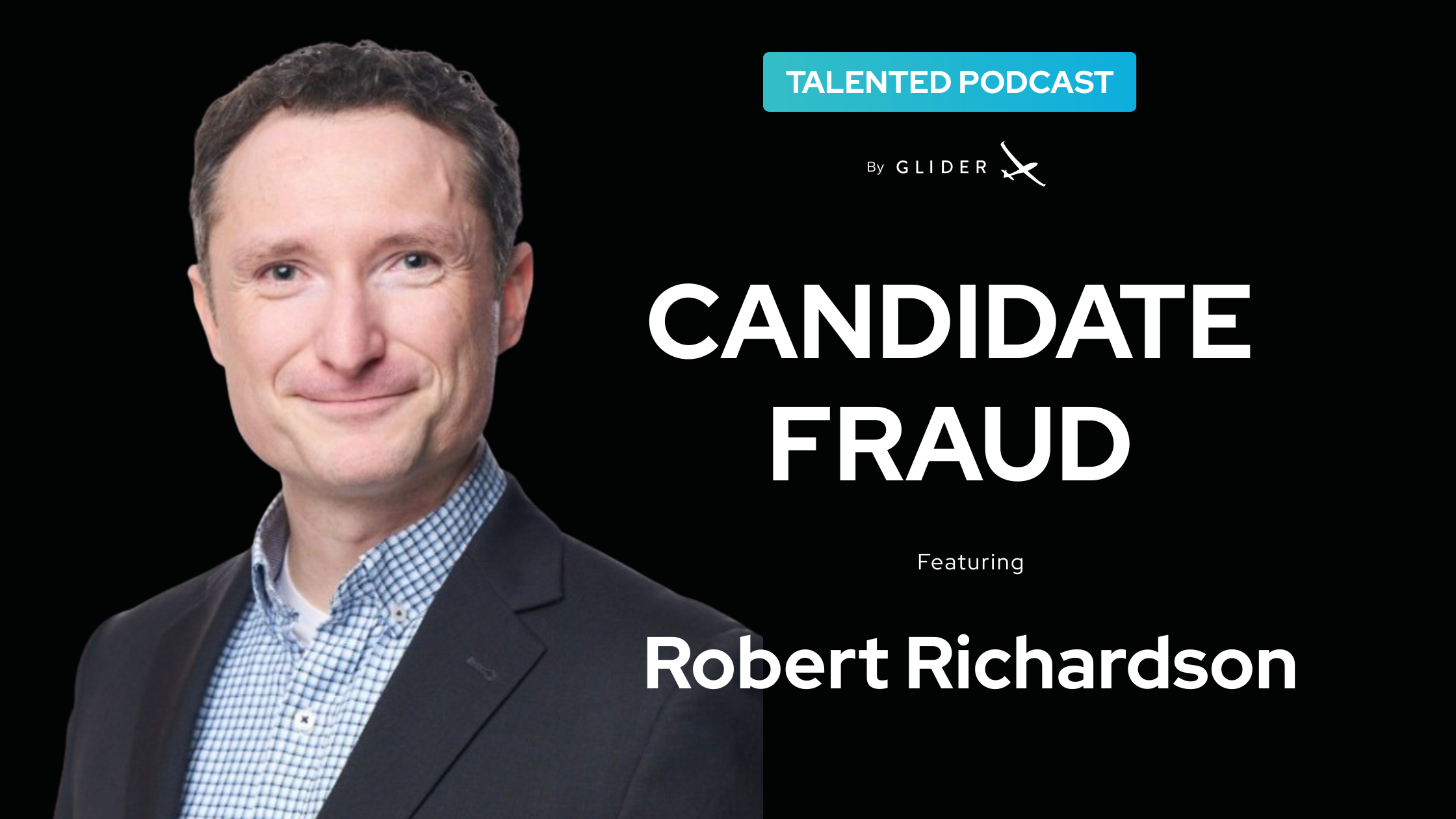
AI Has Changed Hiring Forever: HR Must Become a Security Function Hiring is undergoing a transformation that few HR teams are prepared for. What once felt like a talent challenge has rapidly evolved into a cybersecurity challenge unfolding inside the hiring process itself. That shift came into focus during a recent episode of The Talented […]
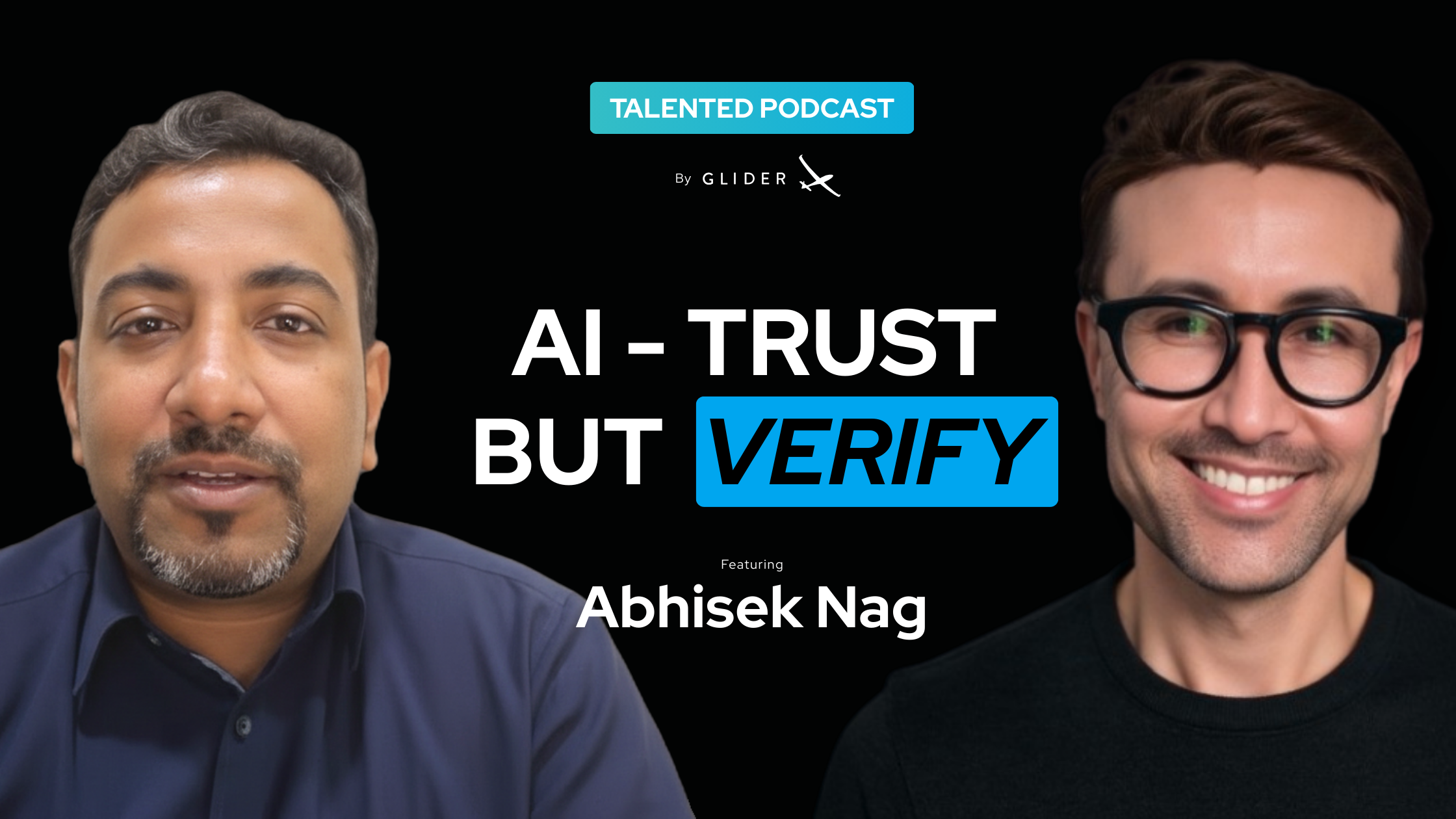
The Limits of AI in Hiring Why Human Judgment Still Matters Abhishek Nag is not a conventional HR leader. An engineer turned entrepreneur turned HR executive, he currently serves as Global Head of HR at Fornax, a multi-entity services organization with more than 40,000 employees across 16 countries. That cross-functional background gives him a systems-level […]