Make talent quality your leading analytic with skills-based hiring solution.
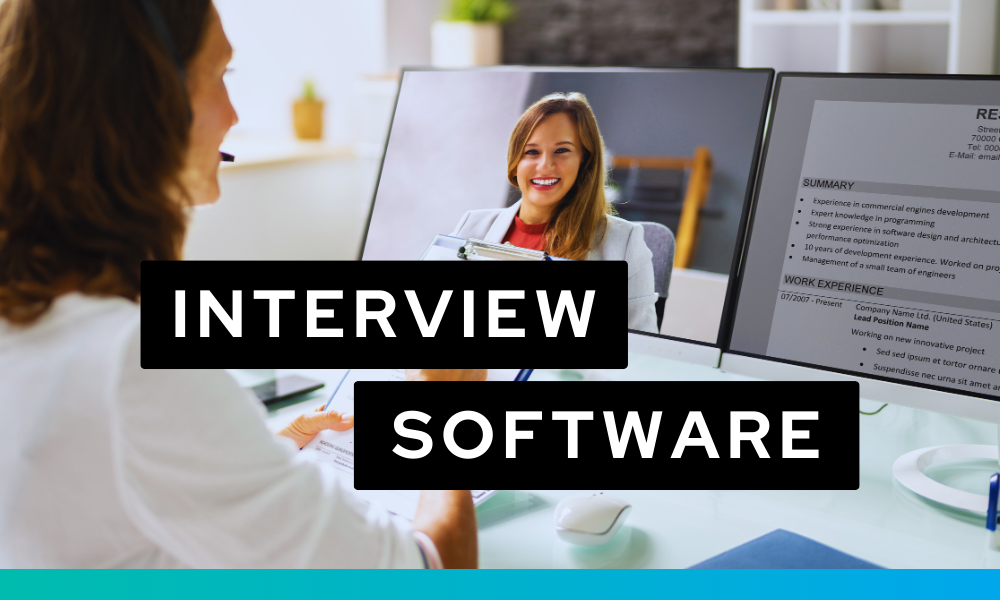
Ask any recruiter what slows them down, and interviews are usually near the top. Scheduling eats up hours, questions vary wildly from one hiring manager to the next, and feedback is often based on gut feel. The result? A process that’s hard to scale and even harder to trust.
Studies from Kyle & Co. show nearly 60% of hiring managers say interviews are the least reliable part of their process, while SHRM reports that a bad hire can cost up to five times a role’s salary. That’s a lot riding on a system still run with spreadsheets and video links.
Interview software fixes this. By bringing interviews into a single, structured platform, companies can finally measure skills with the same rigor they apply to performance reviews or financial reporting.
Glider AI takes it further. It doesn’t just tidy up logistics; it adds AI, security, and candidate-friendly design so every interview is consistent, fair, and built for scale.
Not every role or stage of the hiring process calls for the same type of interview. The best platforms give you options, so you can choose the right format for the job. Glider AI offers four core interview types:
| One-Way Video Interviews | Candidates record answers on their own time, and recruiters review when it fits their schedule. |
| Live Coding Interviews | Real-time technical assessments in a collaborative coding environment. |
| Autonomous Agentic AI Interviews | Autonomous, AI-led conversations that run 24/7, scaling hiring without bottlenecks. |
| Live AI Guided Interviews | Recruiter-led sessions supported by AI prompts and scoring for consistent results. |
By combining all four in one suite, Glider AI helps organizations run faster, fairer interviews across any role, in any geography.
Interviews should reveal ability and fit. Too often, they reveal how good a candidate is at handling an awkward schedule or guessing what a manager wants to hear. Interview software changes that dynamic.
With the right system, interviews stop being a bottleneck and start being a competitive advantage.
The best platforms combine automation, AI, and built-in security to simplify the process for both candidates and hiring teams. Here’s what it looks like with Glider AI:
It’s a simple shift with an outsized impact: interviews become repeatable, measurable, and trusted.
Glider AI was built for enterprise hiring, where scale, fairness, and candidate experience all matter. Some of the key features include:
| AI Proctoring | Detects impersonation, cheating, and deepfakes. |
| ID Verification | Confirms candidate identity with biometric checks. |
| AI Assistant | Guides candidates during interviews, clarifies instructions, and reduces confusion without giving away answers |
| Premium Question Library | Validated for both technical and non-technical roles. |
| Autonomous Question Generation | Upload a job description and generate a structured interview instantly. |
| Video Recording and Transcription | Every interview is searchable and shareable. |
| Advanced Coding IDE | Real-world tools and 70+ programming languages. |
| ATS Integration | Launch and manage interviews directly from your ATS. |
| Multilingual Support | Interview candidates in any language, with live translation. |
Each feature is designed to solve a specific hiring challenge, from ensuring integrity to improving collaboration.
The true value comes in results. Organizations using Glider AI report faster hiring cycles, more consistent evaluations, and better candidate engagement.
Hiring is too important to leave to guesswork. Interview software ensures every decision is backed by evidence.
Interviews are changing quickly. Remote work, global hiring, and AI adoption are reshaping how recruiters and candidates connect. The future isn’t about replacing interviewers — it’s about making every interview more consistent, inclusive, and predictive of real-world performance.
Glider AI is already building for that future with features like AI-guided prompts, agentic AI interviews that run 24/7, and skill simulations that go beyond resumes.
What is interview software used for?
It helps companies run interviews at scale, ensuring fairness, speed, and consistency in hiring decisions.
How does AI improve interviews?
AI brings structure, generates role-specific questions, and provides consistent scoring, which reduces bias and improves accuracy.
Is interview software candidate-friendly?
Yes. Options like one-way video and multilingual support let candidates participate on their terms, reducing stress and drop-off.
Can interview software reduce bias?
Absolutely. Standardized formats and AI-driven scoring allow teams to compare candidates on skills and results, not impressions.

Finding the right candidate starts long before the in-person interview. The Phone Screening Interview is often the first real opportunity to evaluate a candidate’s skills, experience, and fit for your team. Done well, it saves time, reduces bias, and ensures only qualified candidates move forward in the hiring process. Phone screening interviews have evolved from […]
When it comes to hiring, the interview is still the moment that makes or breaks a decision. But the way companies run interviews has hardly changed in decades—manual scheduling, inconsistent formats, and interviewer bias all create inefficiencies that slow down hiring and frustrate candidates. That’s why more organizations are turning to interview software to modernize […]
What Are AI Guided Interviews? A Guide to Structured, Consistent Hiring Live interviews are one of the most important parts of hiring, but they are also one of the least consistent. Two recruiters can run completely different interviews for the same role, leading to uneven candidate experiences and unreliable data. Hiring managers often struggle to […]