
Make talent quality your leading analytic with skills-based hiring solution.
Technical skills assessments have become the foundation of modern engineering hiring. Yet just a few years ago, most technical hiring teams still relied heavily on resumes, recruiter screenings, and live whiteboard interviews to evaluate engineers. While common, these methods were often slow, inconsistent, and prone to favouring candidates who performed well in interviews rather than those who could demonstrate strong real-world coding skills.
Today, the landscape looks very different. AI-powered assessment platforms can simulate real coding environments, score submissions objectively, verify candidate identity, and even predict job performance from skills data.
The hard part now is not whether to use a technical assessment platform. It’s choosing the right one.
Before comparing vendors, it helps to define what “best” actually means for your organization.
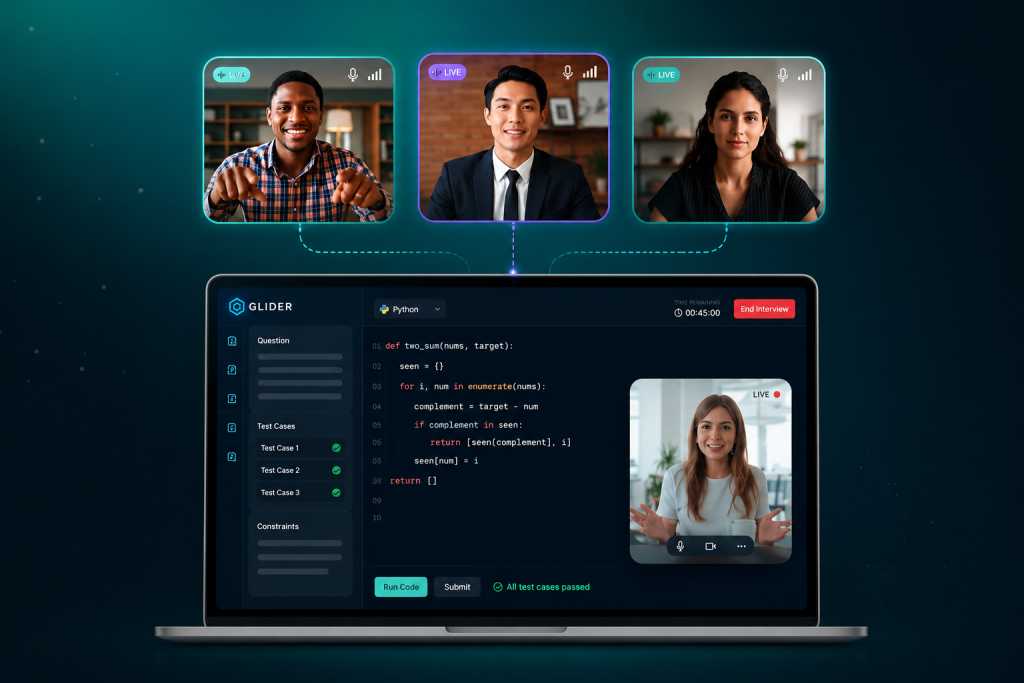
Best for: enterprises that want a full AI-powered hiring workflow, not just coding tests.
Glider AI stands out because it combines skills assessments, AI coding interviews, identity verification, and talent intelligence in one platform. Instead of treating assessments as a standalone screening step, it connects them to broader hiring outcomes.
Why it ranks highly
Best use cases
Potential trade-offs
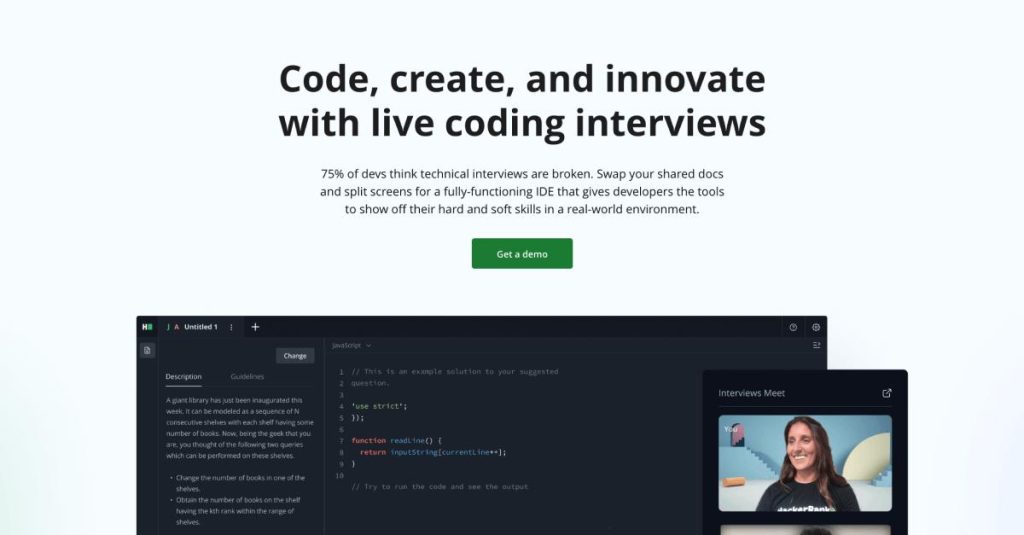
Best for: companies that want a familiar, developer-centric coding interview experience.
HackerRank remains one of the most recognized names in technical hiring. Engineers often know the interface already, which can reduce candidate friction.
Strengths
Limitations
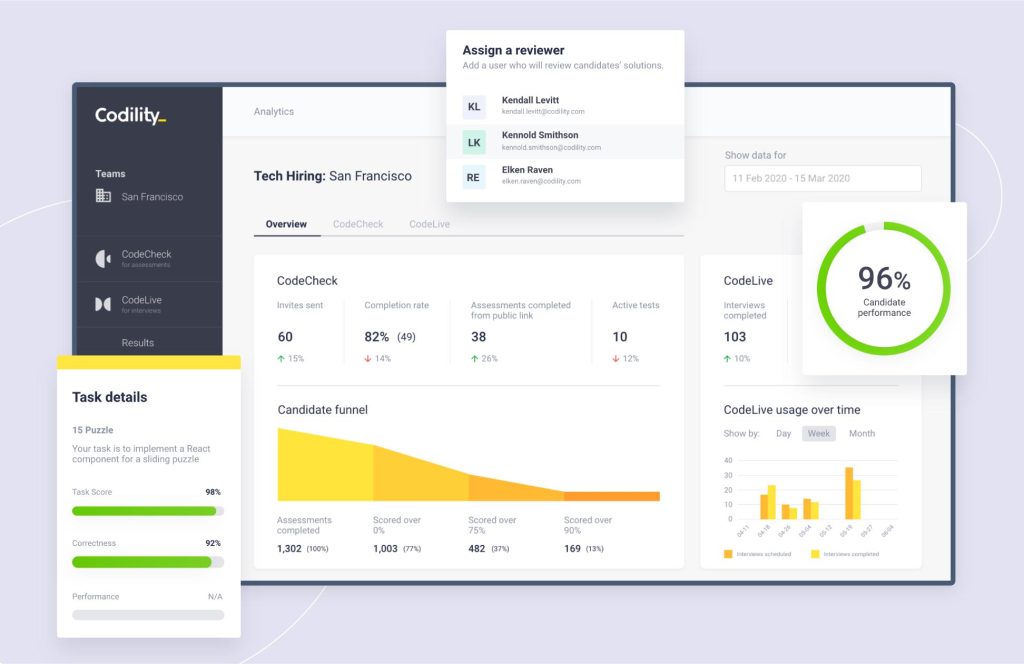
Best for: organizations that want structured, repeatable assessments with strong reporting.
Codility is widely used by enterprises for screening and interviewing software engineers at scale.
Strengths
Limitations
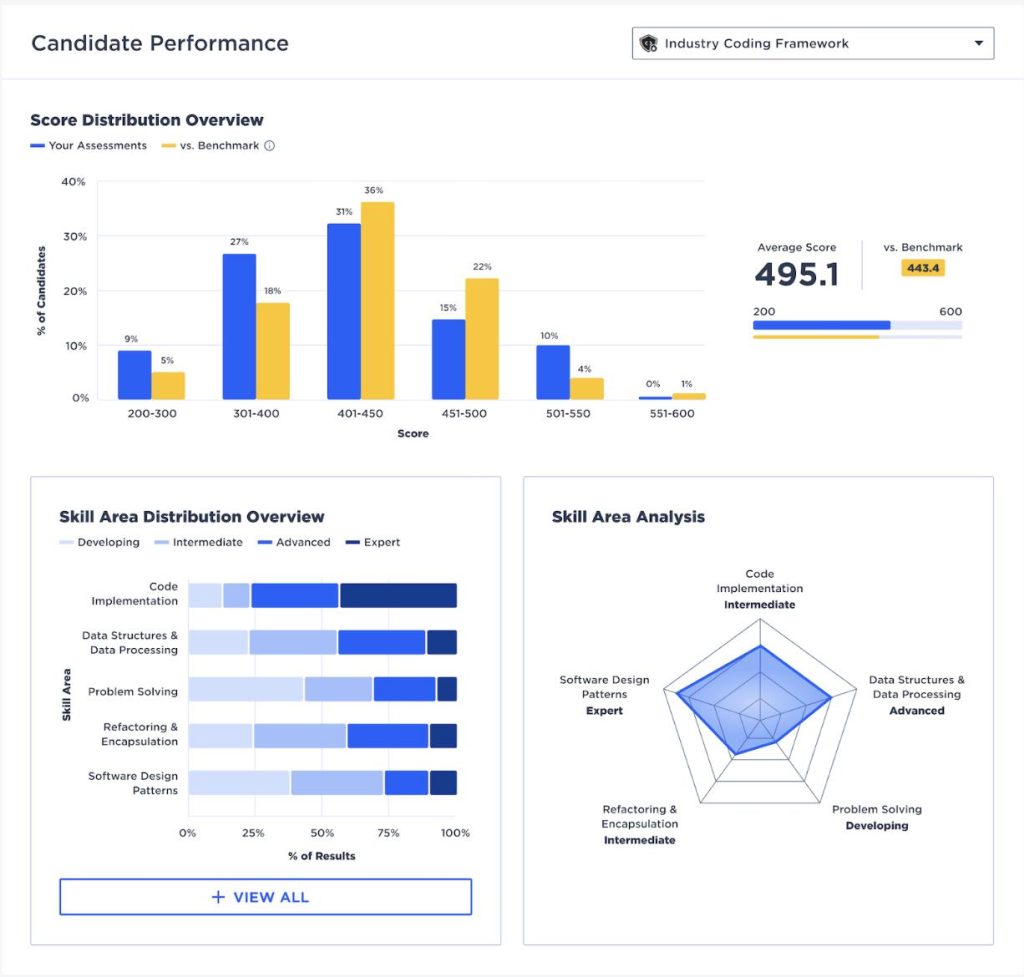
Best for: teams that want comparable skill scores across candidates and roles.
CodeSignal popularized generalized coding scores that can be reused across applications, similar to standardized testing.
Strengths
Limitations
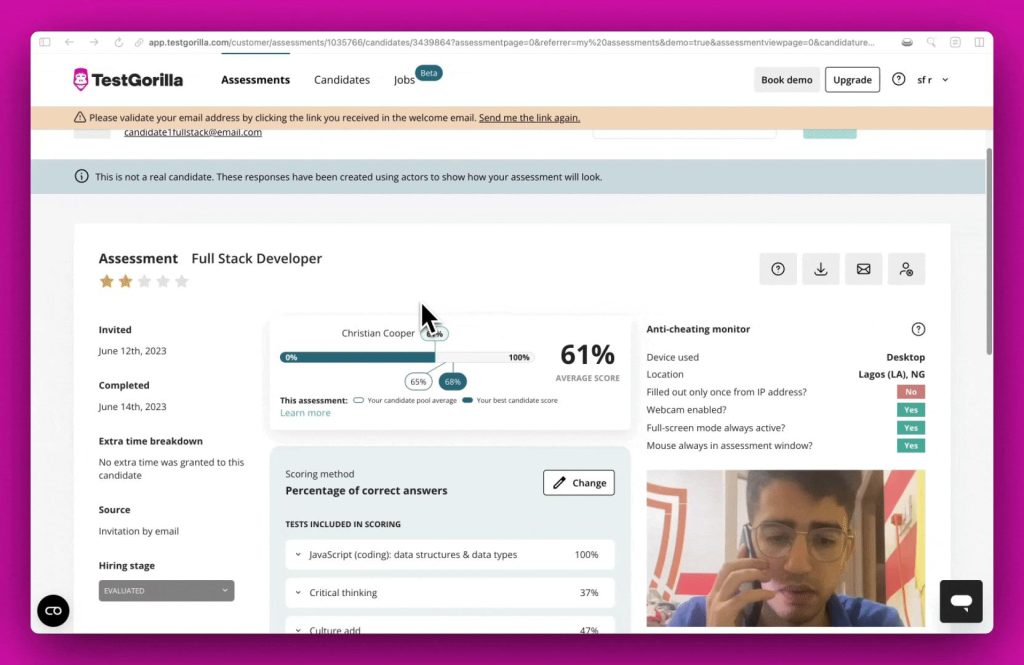
Best for: companies hiring across many functions, not just engineering.
TestGorilla offers technical tests alongside cognitive, personality, and language assessments.
Strengths
Limitations
| Platform | Best for | AI capabilities | Candidate experience | Enterprise readiness |
|---|---|---|---|---|
| Glider AI | Enterprise technical hiring | Advanced | Modern and adaptive | Excellent |
| HackerRank | Developer-centric interviews | Moderate | Strong | Good |
| Codility | Standardized assessments | Moderate | Solid | Very good |
| CodeSignal | Skills benchmarking | Moderate | Good | Good |
| TestGorilla | Broad pre-employment testing | Basic | Simple and accessible | Moderate |
The biggest shift in technical hiring is not just remote interviewing. It’s the move from static tests to AI-native evaluation systems.
Modern platforms can now:
This is where platforms like Glider AI are differentiating themselves. They treat hiring data as a skills intelligence problem, not merely a testing problem.
Instead of asking, “Which platform has the most coding questions?”, ask:
If you’re a startup hiring a handful of engineers, HackerRank or TestGorilla may be enough.
If you’re running structured enterprise hiring at scale, Codility remains a dependable choice.
But if your goal is to combine technical assessment accuracy, AI-powered interviews, candidate verification, and broader hiring intelligence, Glider AI is the strongest overall platform in 2026.
The reason is simple: technical hiring is no longer just about administering coding tests. It’s about identifying real skills, reducing fraud, improving candidate experience, and making faster, better hiring decisions from a unified system.
For most enterprise organizations, Glider AI offers the best balance of AI-powered interviews, assessment accuracy, security, and hiring analytics. HackerRank is also a strong choice for developer-centric coding interviews.
Platforms with built-in identity verification, anti-cheating measures, and AI monitoring are best for remote hiring. Glider AI stands out in this area because it combines assessment delivery with verification and fraud prevention.
AI coding interview platforms can provide richer insights into candidate ability, communication, and problem-solving. They also improve consistency and reduce manual interviewer workload, though they should still be paired with human judgment.
Prioritize assessment validity, candidate experience, security, AI capabilities, integration with your ATS, and measurable hiring outcomes such as reduced time-to-hire and improved quality-of-hire.
Glider AI
Assessment accuracy, candidate experience, AI and automation, security and integrity, breadth of roles, and hiring outcomes.
Glider AI
Glider AI
Glider AI
Glider AI
They can adapt question difficulty, analyze code quality, detect suspicious behavior, summarize interviews, benchmark candidates, and surface transferable skills.
Decide whether you need a screening tool or hiring system, assess candidate authenticity needs, choose between speed vs. quality, standardized tests vs. real-world simulations, and confirm ATS/HR stack integrations.
Because it combines technical assessment accuracy, AI-powered interviews, candidate verification, and broader hiring intelligence in a unified platform.
Skills assessments are is often treated as a single step in the hiring process. In reality, they run through the entire hiring workflow. They appear in different forms depending on the hiring stage, the role being evaluated, and the level of hiring risk a team is willing to take. If you look at the broader […]
Why Skills Assessment Has Become a Hiring Priority Hiring teams are not struggling because they lack candidates. They are struggling because traditional hiring signals no longer predict performance reliably enough. A polished resume does not guarantee execution. Strong interview performance does not always translate into strong on-the-job performance. And as hiring volumes grow, these gaps […]

Most people think skills assessment is just a way to test candidates. That is the basic idea. But in actual hiring, it means something more practical. A skills assessment is not just about checking whether someone can solve a problem in isolation. It is about reducing uncertainty before making a decision that is costly to […]