Make talent quality your leading analytic with skills-based hiring solution.
Synthetic identity fraud in hiring happens when someone builds a job candidate instead of being one, blending a real Social Security number or stolen document with a fabricated name, a generative AI face, and a scripted background, so the “person” who interviews and gets hired never actually existed as a single, real individual. It is a step beyond the fake resume or the borrowed reference. It is a manufactured identity, engineered specifically to pass your screening process.
This is not a theoretical risk. Banks, fintechs, and credit bureaus have been tracking synthetic identity fraud for years as one of the fastest growing categories of financial crime, and the same generative AI tools that make fake identities cheap to produce for a loan application make them just as cheap to produce for a job application. Recruiters and staffing leaders are now facing a version of a problem that fraud teams have been fighting for a decade, often without the detection tools those fraud teams already rely on.
Synthetic identity fraud in hiring is the use of a partly or entirely fabricated identity, rather than a stolen but real one, to obtain employment. The distinction matters. Traditional identity theft uses a real person’s actual name, date of birth, and Social Security number without their knowledge. Synthetic identity fraud instead combines pieces, often a legitimately issued Social Security number (sometimes belonging to a child, an elderly person, or someone who rarely checks their credit) with a fictitious name, a different date of birth, and a constructed work history, none of which trace back to one real, single human being.
In a hiring context, that composite identity gets a fabricated or AI generated photo ID, a resume built to match a job description almost too well, and, increasingly, a real time deepfake video or voice used to get through a live interview. The FBI has documented this exact pattern at scale: North Korean operatives have used stolen and synthetic identities, paired with facilitators inside the United States who receive company laptops and pose as local employees, to get hired into remote IT roles at legitimate companies.
It typically moves through the same stages a genuine application does, which is exactly why it slips through unmonitored processes.
Every stage above is also a checkpoint where identity verification could have stopped the fraud, which is the core argument for building verification into the process rather than treating it as a background check afterthought.
Because generative AI has collapsed the cost and skill required to build a convincing fake identity. A 2026 industry report from Mitek Systems and Datos Insights found that 84 percent of fraud and risk executives now rate synthetic identity fraud as a moderate to high risk in their application processes, and that roughly 4 in 10 financial institutions are already seeing attack volume linked directly to AI. Unsecured credit losses tied to synthetic identities in the United States climbed from around 1.8 billion dollars in 2020 to nearly 3 billion dollars in 2025, a trend the report’s researchers attribute largely to AI making fake identities “cheaper and easier to create.”
Hiring is following the same curve. Glider AI’s own platform data recorded a 92 percent jump in candidate fraud across contingent and full time hiring programs, and multiple eleven nation government advisories through 2026 have warned employers that North Korean operatives are now using real time deepfake video specifically to defeat standard interview screening. What used to require real skill, a convincing forged document, a rehearsed cover story, now largely requires an AI tool and a few minutes of setup.
Because they are built specifically to pass the checks most companies already run. A standard background check confirms history: did this person work here, do they have this conviction record, does this address match. It was never designed to confirm existence: is there one real, consistent human being behind this name, this photo, and this Social Security number in the first place. Glider’s analysis of candidate fraud data from millions of assessments shows how much fraudulent behavior surfaces only once you are actively monitoring the assessment and interview process itself, rather than relying on a one time document check at the start.
A synthetic identity can also pass a cursory ID check, since the document itself may be a real template populated with fabricated but internally consistent data, or an AI generated image that mimics a legitimate ID’s security features closely enough to fool a human reviewer glancing at a screen share.
The most effective defense combines three things a resume review alone cannot provide: document verification, biometric liveness confirmation, and continuous monitoring across the whole hiring journey rather than a single checkpoint.
Synthetic identity fraud is the use of a fabricated identity, often combining a real but misused identifier like a Social Security number with an invented name and history, rather than the wholesale theft of one real person’s complete identity. In hiring, that means a candidate profile that does not correspond to any single, real, verifiable individual.
Ordinary identity theft uses a real, existing person’s actual identity without their consent. Synthetic identity fraud instead assembles pieces from multiple sources, or generates them outright with AI, into a new identity that has no single real world owner, which makes it harder to trace back to a victim who can report it.
Yes. A synthetic candidate can present a real Social Security number, an AI generated or doctored ID photo, a fabricated employment history, and a deepfake or voice altered video interview, none of which correspond to the same one real individual. The FBI has documented exactly this pattern in cases involving North Korean IT worker fraud rings.
It is growing quickly, tracking a broader synthetic identity fraud trend that industry researchers describe as one of the fastest rising categories of financial crime. Glider AI’s own platform data recorded a 92 percent jump in candidate fraud across contingent and full time hiring programs, and government agencies across eleven countries issued joint warnings through 2026 about AI enabled fake candidate schemes.
They can pass an unmonitored, low scrutiny interview, particularly when the interviewer has no live proctoring or liveness detection in place and the deepfake technology is well executed. Subtle indicators, lip sync drift, unnatural blinking, audio that lags slightly behind mouth movement, are the main visual tells, but they are easy to miss without dedicated monitoring tools built for exactly this purpose.
Combine government ID validation with biometric facial matching and liveness detection at the point of application, then keep verifying identity consistency through assessments, interviews, and onboarding rather than treating one initial check as sufficient. Continuous, cross stage verification is what catches an identity that only holds together for a single screening step.
Yes. Using a fabricated or partly fabricated identity to obtain employment, along with any misuse of a real Social Security number within that identity, can violate federal identity fraud and wire fraud statutes in the United States, in addition to whatever sanctions or espionage related laws apply in cases tied to foreign operatives such as the North Korean IT worker schemes the FBI has publicly warned about.
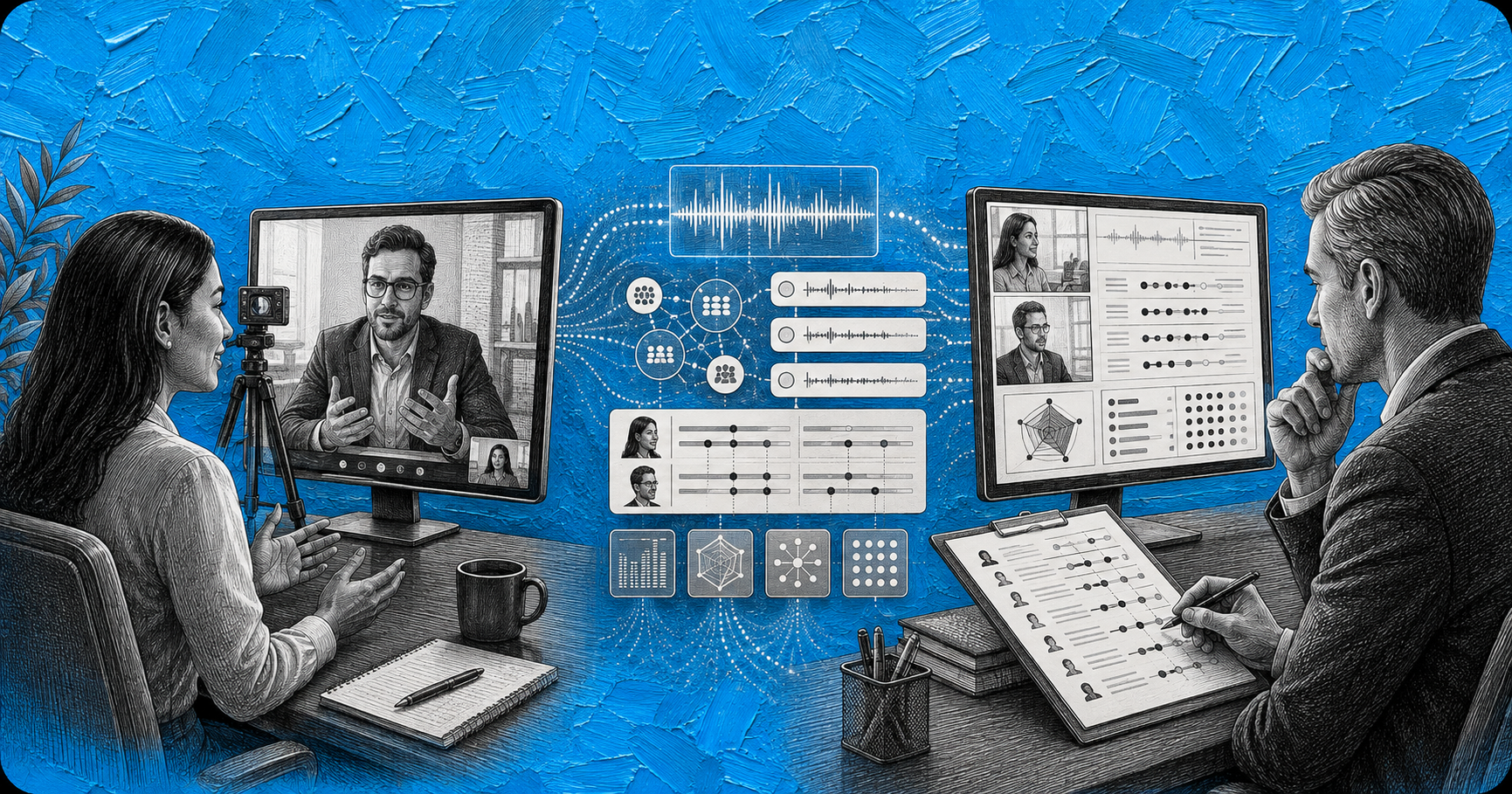
AI interview intelligence is software that records, transcribes, and analyzes interviews that a human recruiter or hiring manager is actually conducting, turning the conversation into structured data such as talk time ratios, sentiment trends, and competency or keyword tags. It does not run the interview itself. It sits behind the human led conversation and gives […]
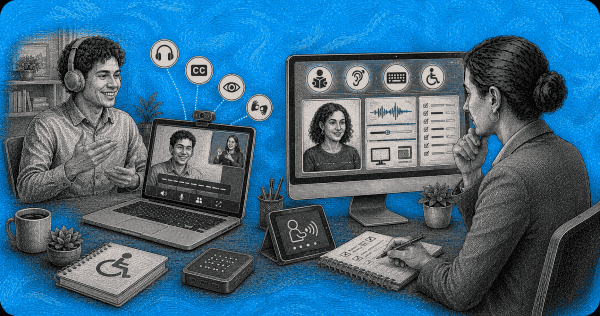
AI hiring accessibility means making sure automated interviews, video assessments, and proctoring tools do not create barriers for candidates with visual, hearing, speech, motor, or neurodivergent disabilities, and that reasonable accommodations, like extended time, alternative formats, and human review, are built into the process rather than bolted on afterward. Getting this right is not just […]
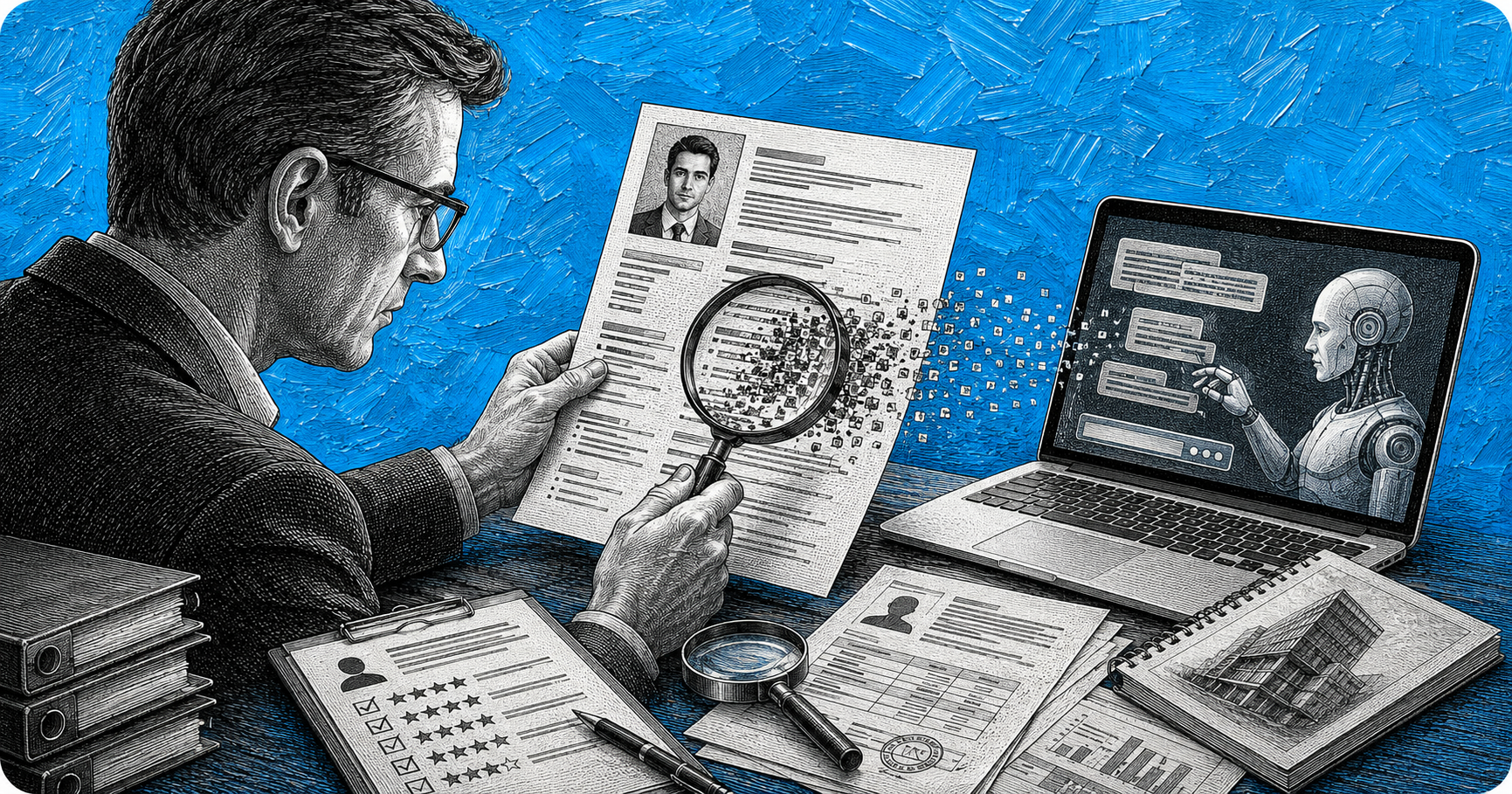
AI resume fraud is the practice of candidates using generative AI tools like ChatGPT to invent, inflate, or heavily embellish work experience, job titles, projects, and skills on a resume, specifically to slip past applicant tracking system keyword filters and impress a human reviewer. It is a resume and application stage problem, distinct from a […]