Make talent quality your leading analytic with skills-based hiring solution.
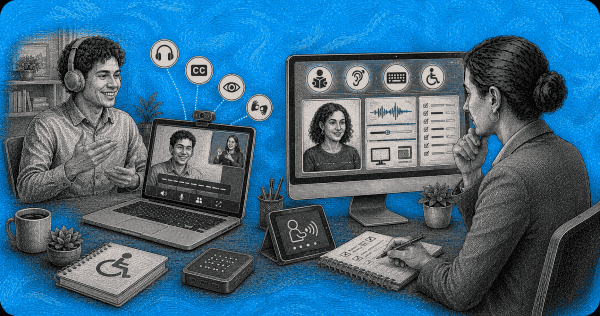
AI hiring accessibility means making sure automated interviews, video assessments, and proctoring tools do not create barriers for candidates with visual, hearing, speech, motor, or neurodivergent disabilities, and that reasonable accommodations, like extended time, alternative formats, and human review, are built into the process rather than bolted on afterward. Getting this right is not just good practice; the Equal Employment Opportunity Commission (EEOC) and the Department of Justice (DOJ) have jointly warned that algorithmic hiring tools can violate the Americans with Disabilities Act (ADA) when they screen out qualified disabled candidates, whether or not that was the employer’s intent.
For talent acquisition teams that have adopted AI driven interviews and assessments to move faster and screen more candidates, this is quickly becoming a compliance issue as much as an ethics one. This guide walks through where AI hiring tools most often create accessibility problems, what the legal landscape actually requires in 2026, and the concrete design and accommodation practices that keep an AI hiring accessibility program defensible and genuinely inclusive.
AI interview and assessment tools are typically built and tested around a “typical” candidate profile: someone who can see a screen clearly, hear audio prompts, speak in a consistent vocal pattern, type or click within a standard time window, and read facial expression cues the same way most raters do. Candidates who fall outside that profile can be scored unfairly, not because they lack the skill being tested, but because the tool was never designed to recognize their input as valid.
A few concrete failure patterns show up repeatedly in research and legal guidance:
The University of Michigan Ford School’s research on AI hiring technology and disability discrimination frames the underlying mechanism plainly: these systems are trained on historical hiring and performance data, and because disabled workers remain underrepresented in most existing workforces, the models can learn to treat disability related characteristics, from speech patterns to facial movement to typing speed, as undesirable signals rather than irrelevant variation.
The ADA applies to AI hiring tools the same way it applies to any other selection procedure: an employer cannot use a tool, algorithmic or not, that screens out a qualified individual with a disability because of that disability, unless the tool is job related and consistent with business necessity. The EEOC and DOJ’s joint technical guidance identifies three specific ways AI and algorithmic hiring tools can run afoul of the ADA:
Beyond the ADA, state and local rules add real, near term compliance deadlines. New York City’s Local Law 144 already requires annual bias audits for automated employment decision tools. Colorado’s new statewide AI employment law, taking effect in 2026, requires annual impact assessments for high risk AI systems, consumer notice, and a meaningful human review and appeal path. Illinois and Maryland both regulate specific aspects of AI video interviews and facial recognition consent. None of these state laws are disability specific frameworks on their own, but they all converge on the same operational requirement: give candidates notice, give them a path to a human, and be able to show the process was tested for fairness. For a broader look at how these overlapping compliance regimes fit together, see Glider’s guide to AI hiring compliance in 2026 and the NYC Local Law 144 and EU AI Act requirements.
This is a genuinely complex and evolving area of civil rights and employment law, and specifics vary by jurisdiction and by the exact tool involved. Nothing in this guide should be treated as legal advice; talent teams should consult qualified employment counsel and accessibility specialists before finalizing an AI hiring accessibility policy.
It is more common than most hiring teams assume, largely because accessibility gaps in AI hiring tools tend to be invisible until a candidate is directly affected. A few data points frame the scale:
This does not mean AI hiring tools are inherently discriminatory. It means most were designed and tested without disability inclusion in mind, and that gap is now surfacing in enforcement actions, litigation, and public scrutiny.
Accessibility cannot be an accommodation request handled one candidate at a time after the fact; it has to be a design requirement built into how the assessment or interview is configured before candidates ever start applying. The following practices are where most AI hiring accessibility programs should start.
Every AI driven step, whether it is a one way video interview, a timed coding assessment, or a personality questionnaire, should have a documented alternative path: a live captioned or transcribed version for hearing disabilities, a screen reader compatible interface for visual disabilities, and a written or phone based alternative for candidates who cannot complete a video format at all. The goal is not a separate, lesser process; it is an equivalent one that measures the same job related skill through a different input method.
Rigid timers are one of the most common and easiest to fix accessibility barriers in AI assessments. Extended time, the ability to pause and resume, and untimed practice questions before a scored section all reduce the risk that a timer is measuring processing speed under pressure rather than the actual skill being assessed, which matters for candidates with motor, cognitive, or attention related disabilities.
Every AI scored interview or assessment should route to a human reviewer, not just for candidates who explicitly disclose a disability, but as a standing safeguard against tools that misread atypical speech, expression, or typing patterns as a negative signal. This is also the practical mechanism through which reasonable accommodation requests actually get honored, since a purely automated pipeline has no natural point where a human can intervene.
Candidates cannot request an accommodation for a barrier they do not know exists. Job postings and interview invitations should clearly state that AI tools are used in the process, describe how to request an accommodation, and provide a direct, human staffed contact rather than routing candidates back into the same automated system that created the barrier.
Bias audits required under laws like NYC Local Law 144 typically focus on race and gender outcomes. A genuine AI hiring accessibility program goes further and specifically tests whether video interview scoring, voice analysis, and behavior based proctoring flags correlate with disability related traits, such as atypical eye contact, speech cadence, or limited physical movement during a webcam monitored assessment. Vendors should be able to answer direct questions about how their models were trained and tested for this kind of impact.
Standard proctoring configurations, constant eye tracking, strict “look at the camera” flags, and automatic flags for looking away or using a second device, can misidentify a legitimate accommodation, like using assistive technology, a support person, or a break, as suspicious behavior. Glider’s approach to AI proctoring is intended to support configurable settings and human review of flagged sessions precisely so a proctoring flag becomes a prompt for review rather than an automatic penalty.
Yes. The ADA applies to any employment selection procedure, including AI and algorithmic tools, the same way it applies to a traditional interview or test. The EEOC and DOJ have issued joint guidance confirming that employers remain legally responsible for ADA compliance even when a third party vendor built or hosts the tool.
Common reasonable accommodations include extended or untimed sections, a screen reader compatible interface, live captioning or a transcript for video content, an alternative format such as a phone interview instead of video, and routing a candidate directly to a human reviewer instead of an automated score. The right accommodation depends on the specific disability and the specific tool.
It can create significant legal risk if it does so in a way that disadvantages candidates with disabilities, since facial expression and vocal tone can be closely tied to speech disabilities, neurodivergence, or other disability related traits. Employers using tools with this kind of analysis should be able to show it is job related, tested for disparate impact, and paired with a human review path.
Employers should provide a clear, easy to find way to request an accommodation before or during the process, ideally listed in the job posting or interview invitation itself, along with a direct human contact rather than only an automated help form.
Not by default. Standard proctoring settings built around continuous eye tracking and strict movement flags can misread legitimate accommodations, like assistive technology or a support person, as rule violations. Accessible proctoring requires configurable settings and a human review step for flagged sessions rather than automatic penalties.
Under EEOC and DOJ guidance, unintentional screening can still create ADA liability if the tool disproportionately excludes qualified candidates with disabilities and was not job related and consistent with business necessity. Employers cannot rely on lack of intent, or on a vendor’s design choices, as a defense.
No. Beyond legal risk, accessibility gaps in AI hiring tools mean employers are likely losing qualified candidates before those candidates ever get a fair evaluation. Building AI hiring accessibility into interview and assessment design widens the qualified talent pool and reflects the same fairness standard hiring teams already apply to structured interviews and skills based assessments more broadly.
This guide is intended as a starting point for talent acquisition and HR teams evaluating their own AI hiring accessibility practices, not as a substitute for legal advice. Given how quickly EEOC guidance, state AI employment laws, and case law in this area are developing, teams should work directly with employment counsel and accessibility specialists to review their specific tools and processes.
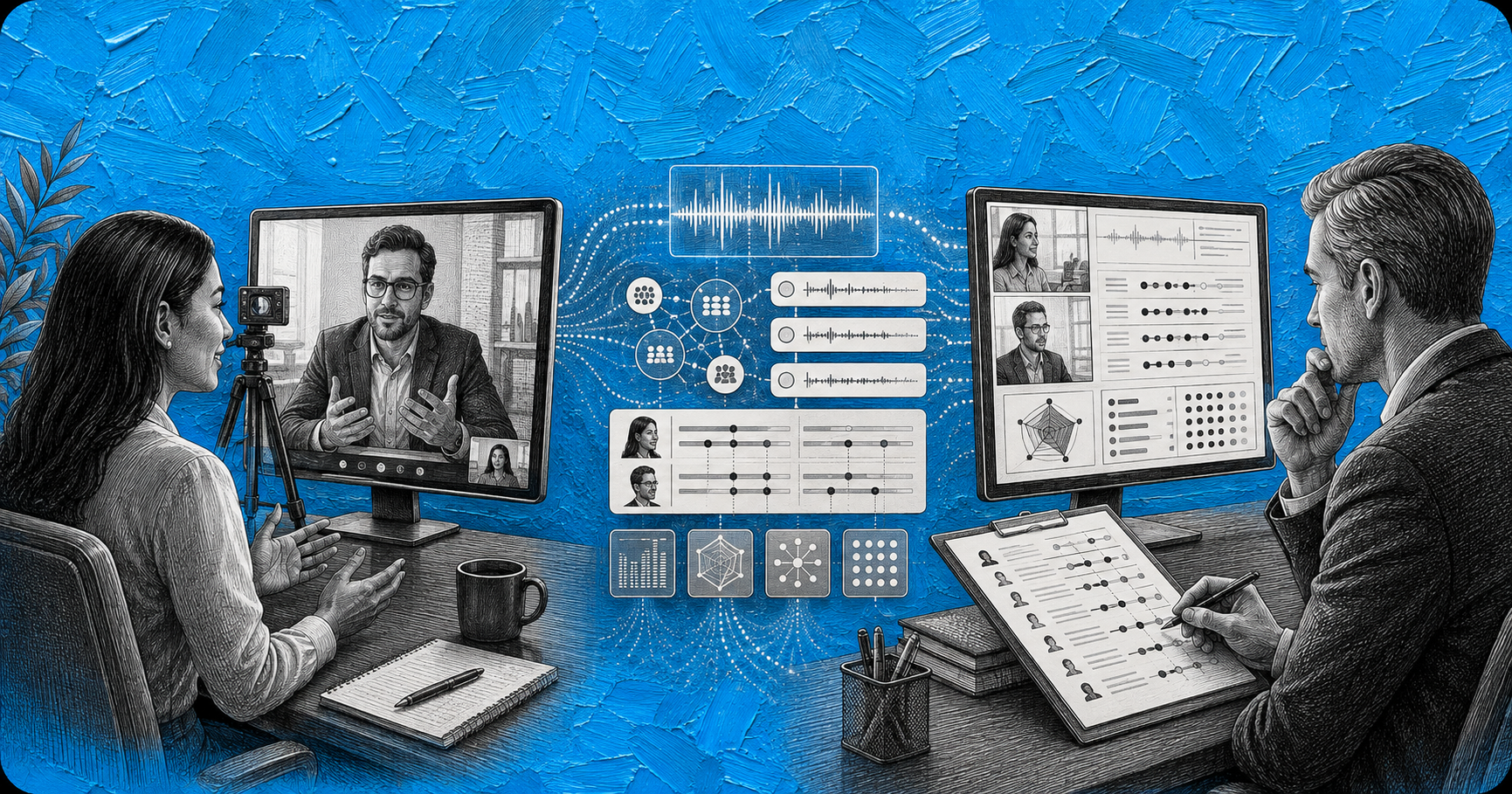
AI interview intelligence is software that records, transcribes, and analyzes interviews that a human recruiter or hiring manager is actually conducting, turning the conversation into structured data such as talk time ratios, sentiment trends, and competency or keyword tags. It does not run the interview itself. It sits behind the human led conversation and gives […]
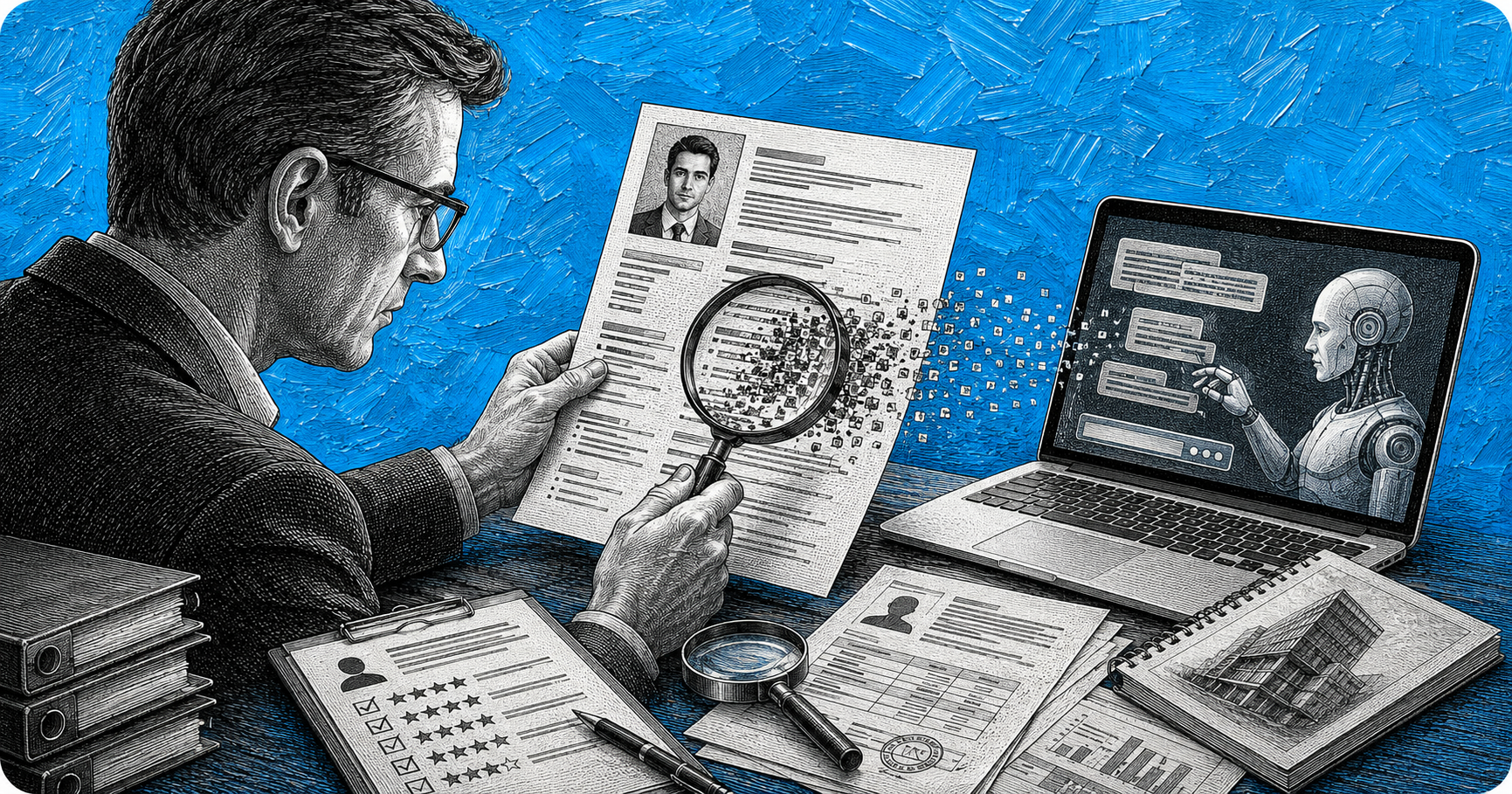
AI resume fraud is the practice of candidates using generative AI tools like ChatGPT to invent, inflate, or heavily embellish work experience, job titles, projects, and skills on a resume, specifically to slip past applicant tracking system keyword filters and impress a human reviewer. It is a resume and application stage problem, distinct from a […]
AI reference checking uses software, not a recruiter’s personal phone calls, to reach a candidate’s former managers or colleagues, collect their feedback through a structured digital survey or a conversational voice or chat interface, and analyze the responses for consistency and red flags. Done well, it does not just digitize the old “would rehire, yes […]