Make talent quality your leading analytic with skills-based hiring solution.
Proxy interview fraud happens when someone other than the actual job candidate sits the interview or assessment on their behalf, then the real candidate either shows up to do the job unqualified, or a completely different person entirely shows up to work the role. It is one of the fastest growing categories of hiring fraud because remote and hybrid interviewing removed the one check that used to catch it automatically: a recruiter in the same room as the person applying.
This is not the same problem as a candidate using ChatGPT to draft better answers or padding a resume with exaggerated skills. Proxy interview fraud is identity substitution. The person a hiring team evaluates, scores, and extends an offer to is not the person who ends up on payroll, and the gap between the two often does not surface until the new hire is already weeks into onboarding.
Proxy interview fraud is the practice of having a stand in, an impersonator, or a hidden coach take part in a job interview or skills assessment in place of the actual applicant. It can take several forms: a lookalike or paid freelancer physically sitting the interview, a real time coach feeding answers through an earpiece or a second device off camera, or the applicant’s video and audio being manipulated so the interviewer never sees who they are actually talking to.
The end result is the same across all three versions: the hiring decision gets made about a person who does not exist in the way the interviewer believes. Either the actual hire cannot do the job the stand in interviewed for, or in more serious cases, an entirely different individual takes the seat once the role is won, a pattern that shows up disproportionately in remote technical and contingent roles where nobody from the company ever meets the worker in person.
Proxy interview fraud is no longer a rare edge case. Independent survey data from the past two years shows a meaningful share of hiring managers are already encountering it directly, not just hearing about it as an abstract risk.
A Checkr survey found that 62 percent of hiring managers said job seekers are now better at faking their identities than they were a few years ago, and separate research citing Gartner puts the share of job seekers who admit to some form of interview impersonation or stand in use at around 6 percent. Other industry surveys have found that roughly one in three hiring managers has personally discovered a candidate using a fake identity or a proxy during an interview process, and that a meaningful minority of affected companies, over one in five in some surveys, report direct financial losses above 50,000 dollars a year tied to fraudulent hires.
Those numbers line up with what staffing firms and TA leaders describe anecdotally: the practice is common enough in high volume remote hiring, particularly for entry level technical, contact center, and contract roles, that several companies now treat identity verification as a required gate rather than an optional nice to have.
Proxy interview fraud generally shows up in one of four ways, ranging from low effort to highly coordinated.
Underground marketplaces for this exist openly on platforms like Telegram and Facebook, where paid “proxies” advertise availability for specific technical stacks and roles, sometimes with money back guarantees if the candidate is not hired.
Most proxy interview fraud leaves detectable traces if an interviewer knows what to watch for. The clearest signals fall into a few categories.
None of these signs alone proves fraud. Together, and especially the combination of audio visual inconsistency plus resume detail gaps, they are strong enough that most structured hiring processes now build in a deliberate check for them.
In most jurisdictions, having someone impersonate you in a job interview can expose both the applicant and the stand in to legal consequences, including fraud, forgery, or impersonation charges, particularly when falsified identification or fabricated documents are involved. Several widely reported cases have resulted in termination, blacklisting from future roles at the company, and in at least one documented 2025 case in India, criminal charges under impersonation statutes after a proxy secured a job offer and the discrepancy surfaced within two weeks of the real hire starting work. Employment contracts also typically treat this as grounds for immediate termination once discovered, independent of any criminal proceeding, since it constitutes material misrepresentation in the hiring process.
Interview coaching, where a candidate prepares in advance, practices answers, or gets feedback on their resume before the real interview, is normal and not fraudulent. Proxy interview fraud is different because it involves deception during the interview itself: either a different person is physically or vocally present, or the applicant is receiving answers in real time without disclosing it. The line is disclosure and identity, not preparation. A well coached candidate is still the one answering. A proxied candidate is not.
Preventing proxy interview fraud works best as a layered approach across the hiring funnel rather than a single checkpoint at the interview stage.
Read more on how ID Verify defends against hiring fraud broadly for a fuller picture of how identity verification fits alongside these interview specific steps.
Proxy interview fraud is when someone other than the actual job applicant participates in the interview or assessment on their behalf, either by physically or virtually impersonating them, or by feeding them answers in real time without disclosure.
It has become common enough that multiple recent surveys report a majority of hiring managers believe candidates are getting better at faking their identity, with independent estimates suggesting somewhere around 5 to 6 percent of job seekers admit to some form of interview impersonation, and roughly one in three hiring managers reporting they have personally caught a proxy or fake identity case.
In most places, yes, particularly when it involves falsified identification or documents. It typically exposes both the applicant and the stand in to fraud or impersonation related legal consequences and is treated as grounds for immediate termination under most employment agreements once discovered.
Look for audio and video that do not quite sync, hesitation or vagueness on specific resume details the real applicant should know well, resistance to enabling video or an unscripted screen share, and inconsistent performance between interview rounds. Live proctoring tools can flag several of these signals automatically during the interview itself.
Coaching happens before the interview and involves the real candidate preparing their own answers. Proxy interviewing involves deception during the interview, either a different person present or answers fed in real time without disclosure. The distinction is identity and disclosure, not preparation.
Yes. AI driven video interviews are not immune, and in some cases are targeted more, since a coordinated proxy can use real time transcription and an AI generated answer feed to respond quickly without the interviewer ever being on the call live to notice tone or hesitation.
Most organizations treat it as grounds for immediate termination, since it constitutes material misrepresentation during hiring. Beyond the individual case, it typically prompts a broader review of how that candidate moved through the pipeline and whether the same gap could let similar cases through again.
Identity verification closes the gap a proxy relies on: an unverified match between the person applying, the person interviewing, and the person who eventually starts the job. Checking a live selfie against a government issued ID at application, again before the interview, and again at onboarding, means a stand in has to defeat three separate checkpoints instead of one conversation.
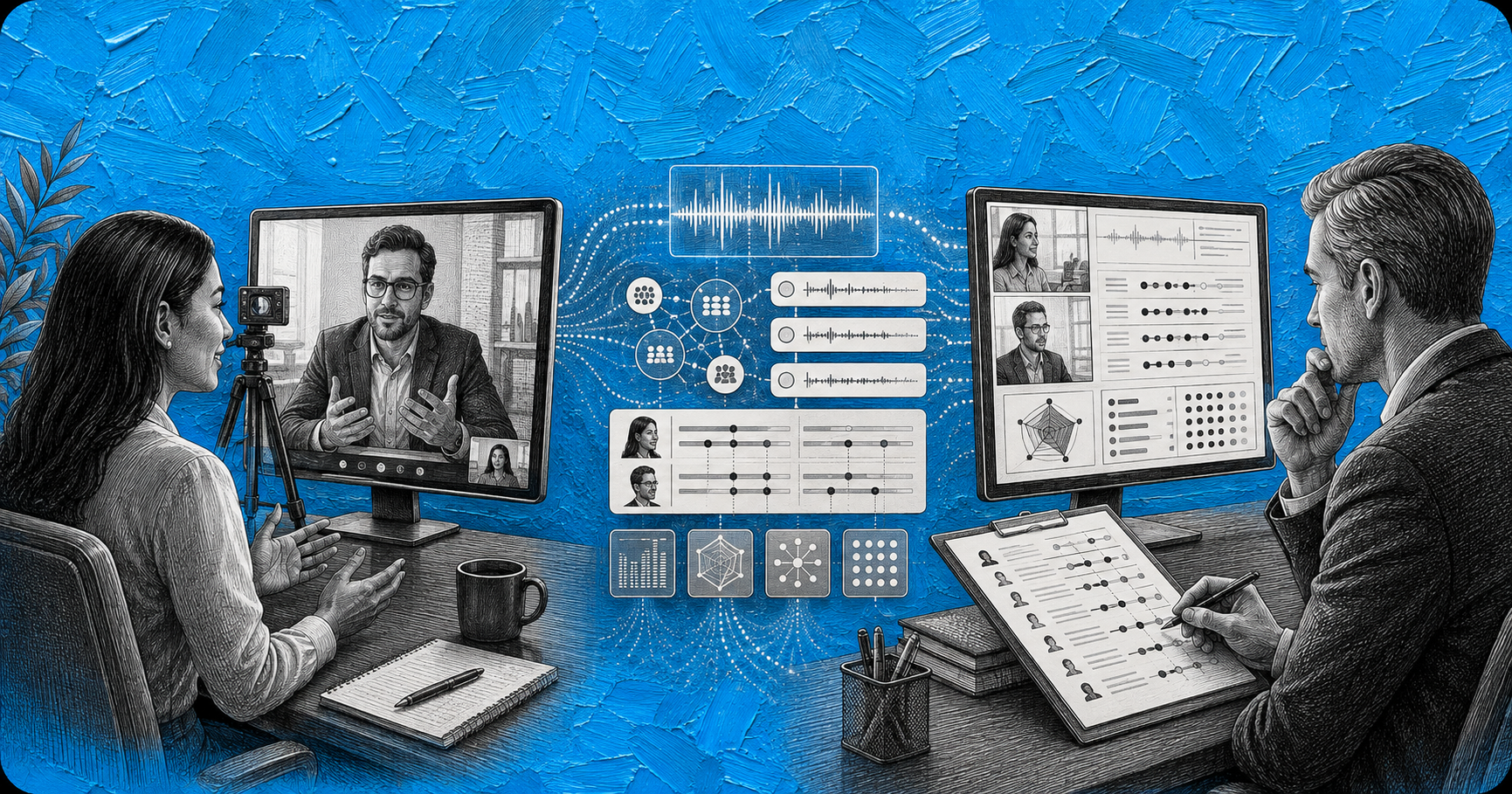
AI interview intelligence is software that records, transcribes, and analyzes interviews that a human recruiter or hiring manager is actually conducting, turning the conversation into structured data such as talk time ratios, sentiment trends, and competency or keyword tags. It does not run the interview itself. It sits behind the human led conversation and gives […]

AI hiring accessibility means making sure automated interviews, video assessments, and proctoring tools do not create barriers for candidates with visual, hearing, speech, motor, or neurodivergent disabilities, and that reasonable accommodations, like extended time, alternative formats, and human review, are built into the process rather than bolted on afterward. Getting this right is not just […]

AI resume fraud is the practice of candidates using generative AI tools like ChatGPT to invent, inflate, or heavily embellish work experience, job titles, projects, and skills on a resume, specifically to slip past applicant tracking system keyword filters and impress a human reviewer. It is a resume and application stage problem, distinct from a […]