Make talent quality your leading analytic with skills-based hiring solution.
Candidates are showing up to video interviews and coding tests with ChatGPT open on a second screen, running in voice mode through an earpiece, or feeding them answers through an invisible overlay window. This is ChatGPT interview cheating: real time AI assistance during a live interview, not identity fraud or a fake candidate. Here is how to spot it and what to do once you do.
ChatGPT interview cheating is when a real candidate, interviewing under their real identity, uses a generative AI tool during a live video interview or online assessment to generate or improve their answers in real time. That covers a candidate typing a question into ChatGPT off camera and reading the response, using ChatGPT’s voice mode through a hidden earpiece, or running a dedicated overlay tool that listens to the interview and streams suggested answers onto a second screen.
This is a different problem than deepfakes or proxy interviewing, where someone else is pretending to be the candidate. Here the person is genuine. The content of their answers is not.
It is more common than most hiring teams assume, and it is growing fast. Fabric’s analysis of 19,368 AI led interviews found that 38.5 percent of candidates showed cheating behavior, and cheating rates roughly tripled between July and September 2025 alone. CodeSignal has reported that cheating attempts on coding assessments more than doubled, climbing from about 16 percent in 2024 to roughly 35 percent in 2025.
Bloomberg’s July 2026 reporting on tools like Cluely and Interview Coder described a fast growing market of purpose built interview cheating software, some of it raising venture funding explicitly to help job seekers cheat on interviews and coding tests. A Greenhouse survey cited in industry coverage found that 65 percent of hiring managers say they have caught candidates using AI deceptively, while 22 percent of job seekers openly admit to using AI during a live interview. The gap between those two numbers is the real risk: a lot of AI assisted cheating is going undetected.
Three categories show up repeatedly across 2026 reporting and vendor research:
Fabric’s data breaks this down further: dedicated assistants accounted for about 45 percent of cheating attempts, voice mode LLM use for about 34 percent, and traditional tab switching or second screen methods for about 18 percent, with human accomplices making up the remaining small slice.
The clearest tells are behavioral, not visual. Watch for a consistent pause of three to five seconds before every answer, regardless of question difficulty. That gap is often the time it takes the AI tool to transcribe the question and generate a response.
Other signals recruiters and interviewers consistently report:
None of these signals alone is proof. Together, and especially when paired with proctoring data, they build a pattern worth acting on.
Behavioral observation catches some of it, but consistent detection needs a technical layer working alongside your interviewers. This is exactly what AI proctoring is built for: it monitors gaze direction, tab and window activity, audio anomalies, and device behavior throughout the interview or assessment, flagging patterns that a human interviewer would miss in the moment.
It is worth understanding the mechanics behind that monitoring, which glider.ai has written about in detail on how auto proctoring actually prevents cheating, including how browser lockdown, environment scanning, and activity logging work together rather than relying on any single signal.
One important caveat many competitor guides also raise: screen sharing alone is not reliable protection. Some overlay tools render at a level beneath what standard screen capture picks up, which means a candidate’s screen can look clean on a recording while an assistant is still feeding them answers. Detection has to combine technical monitoring with interview design that makes AI generated answers harder to disguise, which is covered next.
ChatGPT interview cheating is a content problem, while identity fraud is a presence problem, and they need different defenses. A deepfake or a proxy interviewer means the person on the call is not who they claim to be at all. A candidate using ChatGPT is genuinely who they say they are; they are simply generating or improving their answers with AI in the moment.
That distinction matters for response. Identity fraud is addressed at the door, through steps like ID verification before or at the start of the interview. AI assisted content cheating is addressed throughout the interview itself, through monitoring, follow up questioning, and assessment design. Glider AI’s broader research on how candidates cheat in hiring assessments covers both categories; this post focuses specifically on the generative AI content layer.
Have a written policy before the interview even starts, so a flagged candidate is handled consistently rather than case by case. Most 2026 guidance, including from Incruiter and HeroHunt, recommends a graduated response rather than an automatic rejection, since some roles genuinely allow AI assisted work and the goal is honesty about it, not a blanket ban.
In practice, that looks like:
The strongest long term fix is designing interviews where generated answers are less useful, not just harder to hide. Live, structured follow up questioning is the single most effective tool interviewers have, since generic AI output falls apart under specific, in the moment probing. Assessment formats also matter: proctored, scored exercises like Candidate 360 combine live monitoring with a structured task, which is harder to game than an open ended conversational answer.
For scaled screening, one way video interviews paired with proctoring let teams review response patterns methodically rather than relying on a single live judgment call. And the case for proctoring generally, beyond just this AI moment, is well established; glider.ai’s research on the benefits of remote proctoring in the modern interview process covers why this layer pays off across the whole hiring funnel, not just for catching AI use.
Yes, when a candidate uses it without disclosure to generate answers they present as their own knowledge or skill. Some employers allow disclosed, transparent AI use for certain roles, but undisclosed use during an assessment of the candidate’s own ability is considered cheating by most hiring teams.
Look for a consistent three to five second pause before answers, reading style eye movement, documentation like phrasing, and an inability to defend an answer under a natural follow up question. Pair these behavioral signals with proctoring data on tab activity, gaze direction, and audio anomalies for a fuller picture.
The most common are dedicated overlay assistants like Cluely and Interview Coder, voice mode general assistants such as ChatGPT and Gemini fed through an earpiece, and simpler methods like a second screen with notes or a browser tab left open just off camera.
AI proctoring cannot read what is inside another application, but it can flag the behavioral and environmental signals that usually accompany it, including gaze patterns, tab switching, unusual audio, and multiple connected devices, which together build a reliable pattern for review.
Not on its own. Some overlay tools operate in a way that does not appear in standard screen capture, so screen sharing should be treated as one layer of a broader detection and interview design strategy, not a complete solution.
Ask a specific, real time follow up question to test whether the candidate can defend the answer, flag and review the session in your proctoring platform, and apply a documented, consistent policy rather than an ad hoc decision.
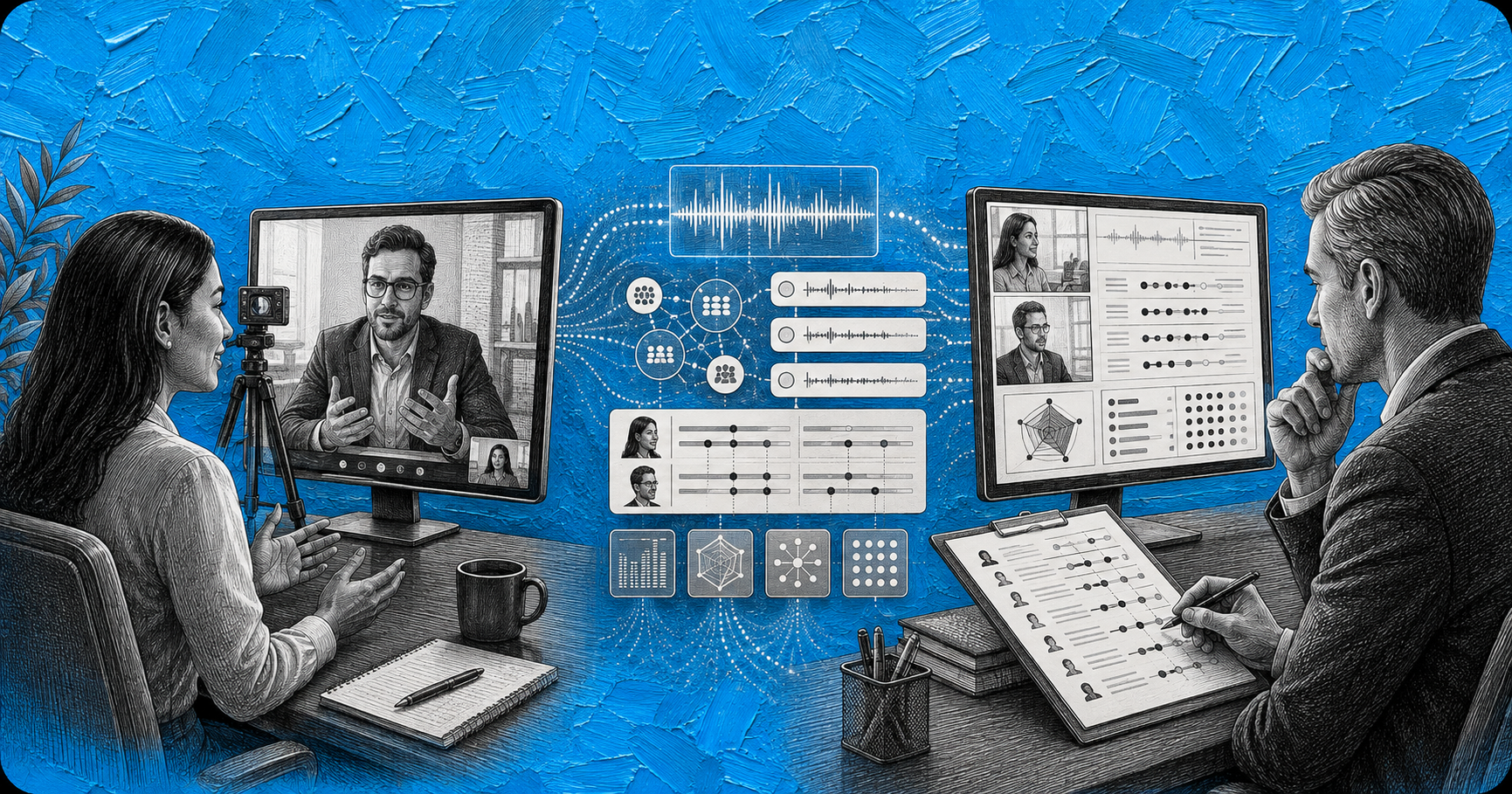
AI interview intelligence is software that records, transcribes, and analyzes interviews that a human recruiter or hiring manager is actually conducting, turning the conversation into structured data such as talk time ratios, sentiment trends, and competency or keyword tags. It does not run the interview itself. It sits behind the human led conversation and gives […]
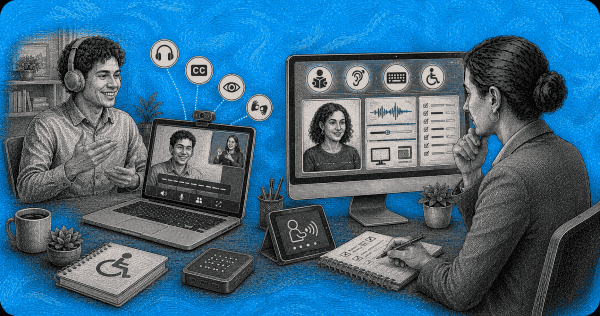
AI hiring accessibility means making sure automated interviews, video assessments, and proctoring tools do not create barriers for candidates with visual, hearing, speech, motor, or neurodivergent disabilities, and that reasonable accommodations, like extended time, alternative formats, and human review, are built into the process rather than bolted on afterward. Getting this right is not just […]
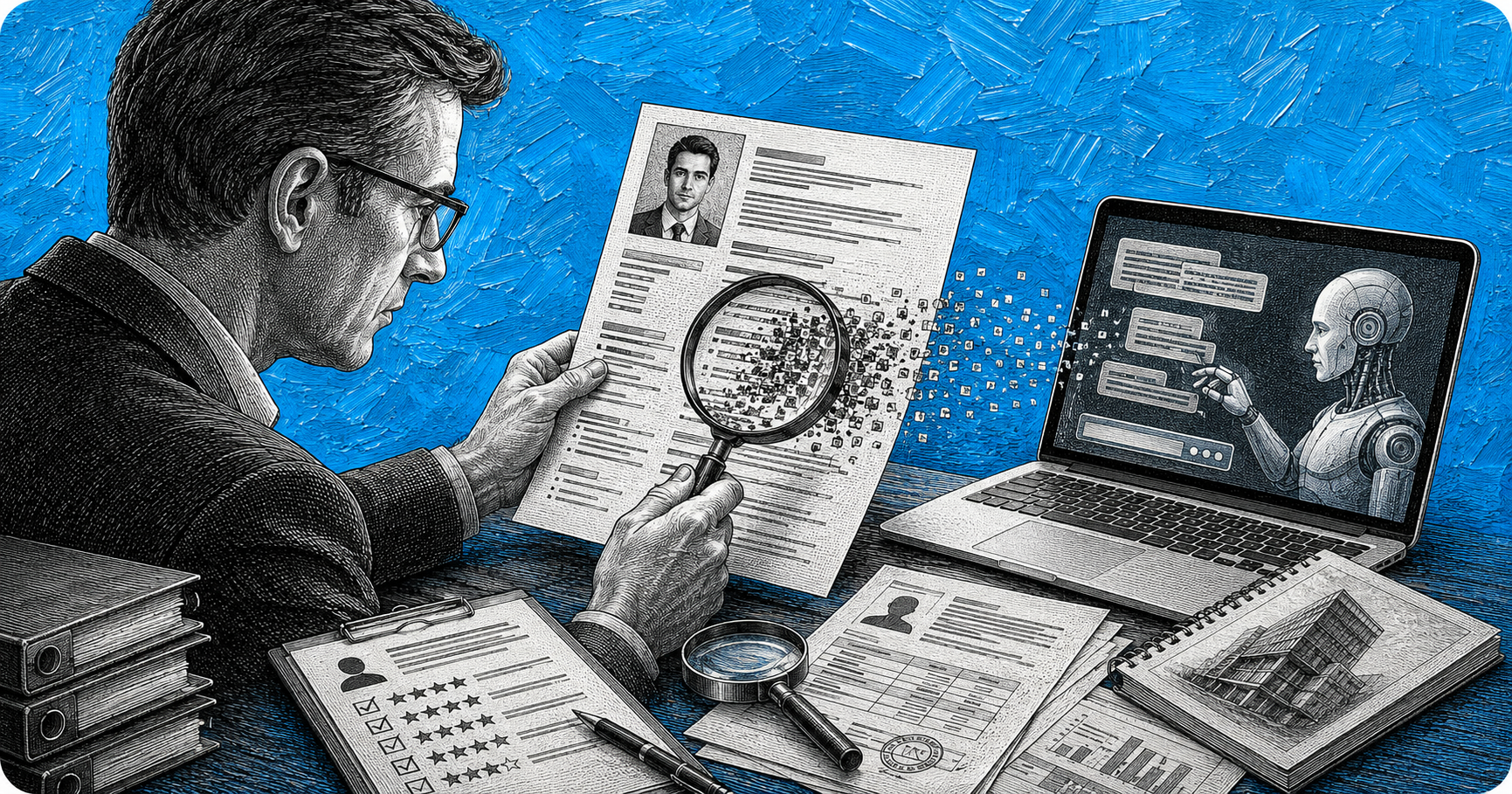
AI resume fraud is the practice of candidates using generative AI tools like ChatGPT to invent, inflate, or heavily embellish work experience, job titles, projects, and skills on a resume, specifically to slip past applicant tracking system keyword filters and impress a human reviewer. It is a resume and application stage problem, distinct from a […]