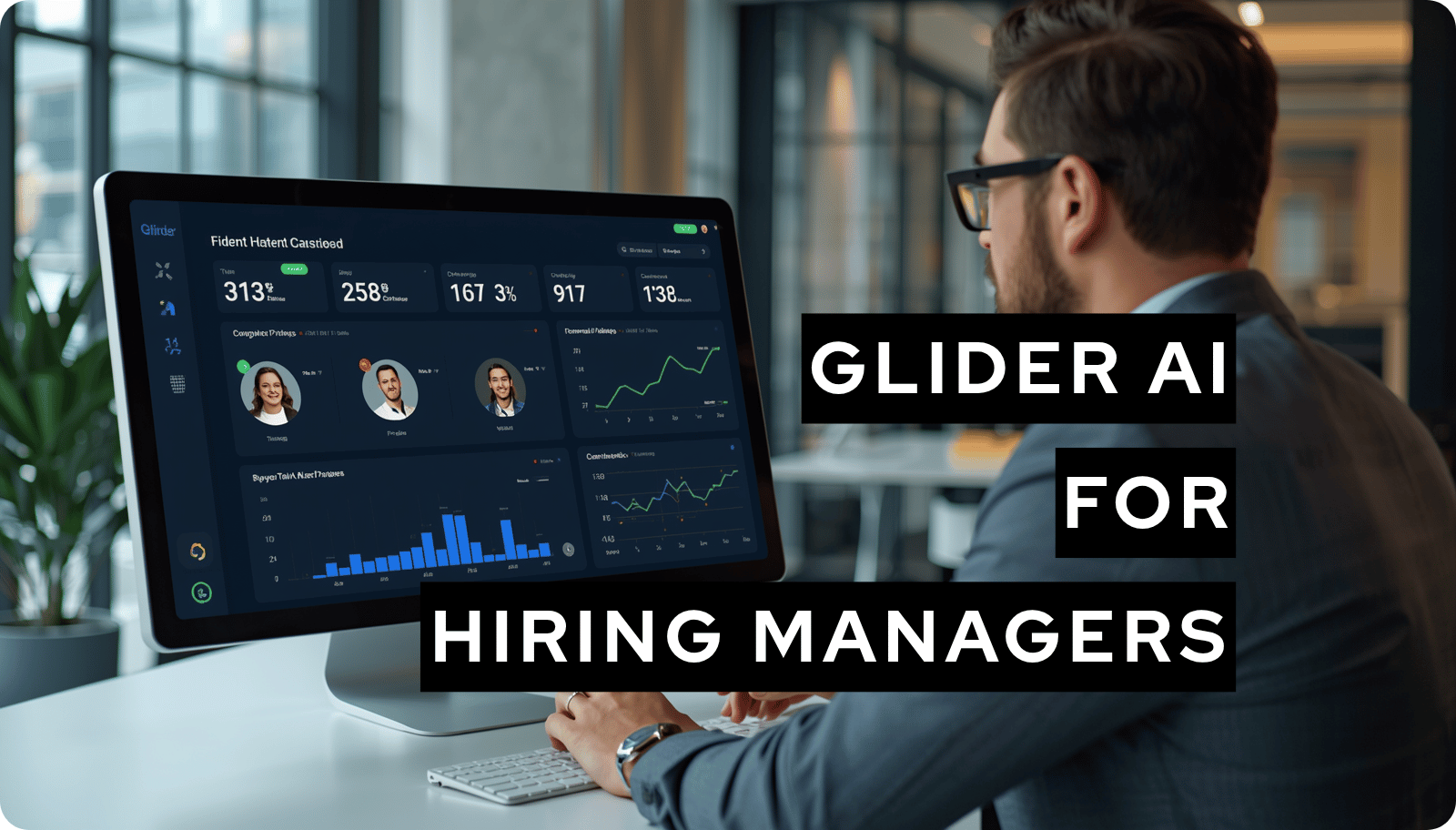
Make talent quality your leading analytic with skills-based hiring solution.
If you have been a hiring manager for a while, you have likely seen the same pattern repeat itself. A role opens, resumes start pouring in, and most of them look convincing. You shortlist a few, run interviews, and somewhere along the way, you realize not everyone can actually do the job.
It is frustrating, more so because of the time it takes to get there.
This is exactly where tools like Glider AI are starting to help. Not by replacing hiring managers, but by reducing the guesswork that creeps into everyday hiring decisions.
Hiring managers today are juggling a lot at once.
Put together, it becomes hard to confidently answer a simple question: is this the right person for the role?
Glider AI is built around one core idea: test skills instead of trusting resumes.
It helps hiring managers evaluate candidates based on what they can actually do, not just what they claim.
Over time, it has expanded beyond assessments. It now supports screening, interviews, and even identity verification. Think of it as a structured layer added to your hiring process, not a replacement for it.
Glider AI does not sit in just one stage. Instead, it connects multiple parts of the workflow. Screening, assessments, interviews, verification, and even learning and development are all covered within the same system.
That changes the workflow in a simple but meaningful way:
It does not remove decision making. It strengthens the inputs behind those decisions.
Early stage screening is where most time gets wasted.
Glider AI automates pre screening by using tools like AI Voice Recruiter to interact with candidates early on. It conducts initial conversations, asks role specific questions, and evaluates responses in real time to shortlist candidates who meet the basic requirements before they reach the hiring manager.
Generic tests do not help much. Role specific ones do.
Glider AI offers skill based assessments that mirror actual job tasks. For hiring managers, this means you are not guessing based on a conversation. You are looking at real performance.
That alone can change how confident you feel about a candidate.
Interview software can be unpredictable: different questions, different styles, different outcomes.
Glider AI brings structure here. With guided interviews and standardized formats, hiring managers can compare candidates more fairly instead of relying on memory or scattered notes.
At the final stage, most hiring managers are piecing together feedback from multiple sources.
Glider AI pulls this into one place. Assessment scores, interview insights, and verification data are all structured and easy to compare.
It does not make the decision for you, but it makes the decision easier to justify.
It brings the entire hiring flow into one place, from finding candidates to screening and interviews. It helps hiring managers move faster by surfacing candidates who are already qualified, verified, and ready to engage.
Smarter, faster, and more secure hiring across roles, industries, and interview formats. Glider’s AI Video Interview is a new addition that helps hiring managers move through interviews with more clarity, consistency, and confidence.
The biggest benefit is time. Less time spent reviewing unqualified candidates, less time coordinating early stages, and more time spent on serious contenders.
There is also better consistency. When every candidate goes through a similar process, comparisons become clearer.
And finally, there is confidence. Decisions feel more grounded when they are backed by actual performance data.
Glider AI adds strong structure to the hiring process, but like any system, it works best when used thoughtfully.
When used the right way, Glider AI helps hiring managers make faster, more confident, and more consistent hiring decisions.
Hiring has always involved a degree of uncertainty. That will not change.
What can change is how much of that uncertainty you carry into the final decision.
Glider AI helps hiring managers rely less on assumptions and more on actual evidence. It does not guarantee perfect hires, but it does make the process more structured, more consistent, and easier to trust.
For most hiring managers, that is a meaningful step forward.
Does Glider AI replace interviews for hiring managers?
No. It improves the quality of interviews by adding structured data beforehand, but hiring managers still need to evaluate candidates directly.
Can it be used for non technical roles?
Yes. It supports a wide range of roles, including customer support, sales, and operations, not just technical hiring.
Will it slow down hiring?
In most cases, it speeds things up by filtering candidates earlier. Poorly designed assessments, however, can slow things down.
What if a good candidate performs poorly on an assessment?
That can happen. Hiring managers should treat assessments as one signal, not the final decision.
Is it difficult to integrate into an existing hiring process?
Not really. It works with most ATS systems, but some initial setup and alignment are required to get the best results.
Go ahead and give your hiring managers a real edge with Glider AI today!
Schedule a Demo or contact us at info@glider.ai
Recruiting has always been a field built on learning. Markets shift, candidate behavior changes, and hiring strategies evolve faster than most teams can document. That is one reason the HR podcast format has become valuable for recruiters looking to stay sharp. The best HR podcast for recruiters does more than fill time during a commute. […]
Recruiters often see change before it gets labeled a trend. A shift in candidate expectations. A hiring manager asking for different skills. Questions about AI, flexibility, or internal mobility showing up more often than they did a year ago. That is the future of work arriving in practical form. A strong HR podcast can help […]
Employee engagement is often framed as something that matters after hiring. Recruiters know it starts much earlier. It begins in the way roles are positioned, how expectations are set, and whether candidates are matched to the realities of the job. That is why an HR podcast about employee engagement can be surprisingly valuable for recruiting […]