Make talent quality your leading analytic with skills-based hiring solution.
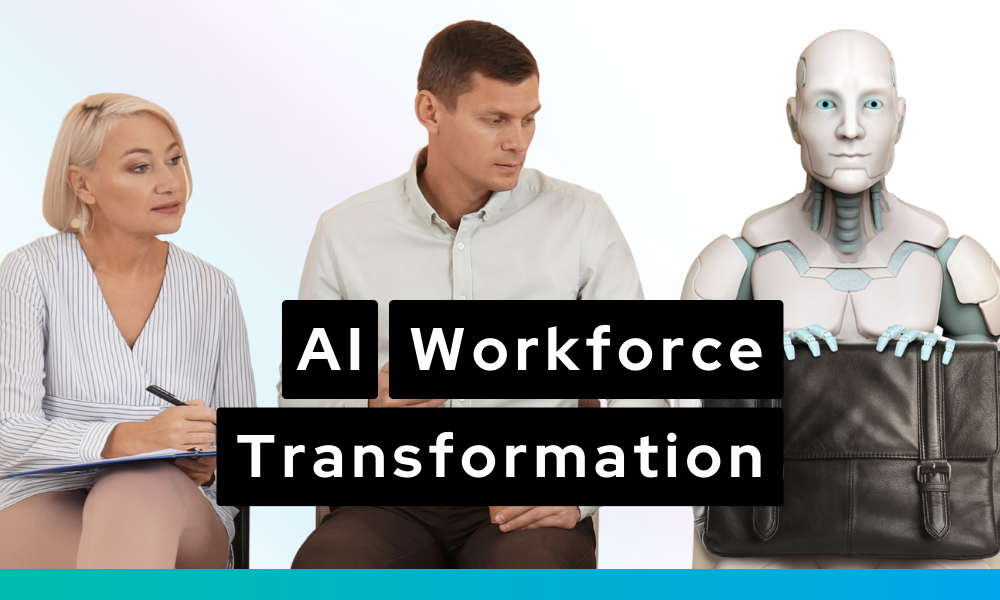
AI is no longer something people use. It’s doing the work. And Gen Z notices this first because they sit closest to the tasks AI replaces most quickly. That concern is not resistance. It is pattern recognition. AI Workforce transformation is happening. Fast!
HR does not own AI. But when AI decisions are made without HR in the room, organizations trade short-term efficiency for long-term damage to talent. Agentic AI forces hiring to move beyond static skills toward outcomes, judgment, and adaptability. The companies that win will not be the ones that automate the most. They will be the ones to be explicit about where people still matter and disciplined about measuring whether that value is growing or quietly disappearing.
AI is no longer just speeding things up. It is doing the work itself. Writing. Summarizing. Coordinating. Deciding. Iterating. Often without asking for help. According to the McKinsey Global Institute, generative AI could automate or augment activities representing 60 to 70 percent of tasks in today’s jobs using technology that already exists. Not someday. Now.
That changes the shape of work, whether organizations are ready for it or not.
Some roles will shrink. Others will disappear entirely. Many will change so fast that job descriptions will lag reality by months, sometimes longer. The World Economic Forum estimates that 44 percent of workers’ skills will be disrupted by 2027, largely due to AI and automation. And Gen Z sees this clearly, which is why their anxiety about AI feels different from that around past technology shifts. For them, AI does not feel like leverage. It feels like competition.
The problem is not that organizations underestimate AI. Most do not. The problem is that they assume the workforce impact can be dealt with later, after the tools are selected and the savings are modeled. It cannot.
HR needs a seat at the AI transformation table. Not to slow anything down. But to force clarity around how we, humans, stay valuable as machines take on more of the work.
Early-career roles tend to concentrate on the exact tasks AI replaces first. Research. Drafting. Screening. Coordination. Synthesis.
A study by the Brookings Institution found that occupations with the highest exposure to generative AI are disproportionately white-collar roles focused on language and information processing. In other words, the work most junior employees rely on to learn their craft. Agentic AI collapses that learning curve almost overnight.
For senior employees, this often feels like relief. Fewer decks. Fewer summaries. Less administrative drag. For Gen Z, it feels like the ladder is being pulled up behind them. Their reaction is not emotional; it’s completely rational.
The Deloitte Global Gen Z and Millennial Survey found that more than half of Gen Z respondents believe AI will reduce entry-level job opportunities or make it harder to get started in their careers. This is not a mindset issue. It is structural.
As Charlene Li has shown, AI adoption correlates more with openness to change than with age. But exposure to displacement correlates strongly with role and seniority. Ignore that difference and adoption does not accelerate. It erodes quietly.
Most AI strategies today are shaped by three voices. Technology decides what is possible. Finance decides what is cheaper. Operations decides what is faster. What is often missing is a function accountable for what happens next. Skill erosion. Role collapse. Talent pipelines. Trust. Long-term employability.
That is not because HR sees everything. It is because HR lives with the consequences.
AI is very good at optimizing tasks. It is terrible at designing sustainable human systems. Research from MIT Sloan Management Review shows that organizations adopting AI without redesigning roles and workflows often see productivity gains flatten after early adoption due to misalignment between technology and human capability.
When HR is absent from the conversation, efficiency improves. Then problems show up later. Disengagement. Shallow benches. Leaders who look productive but cannot operate without the system doing the thinking for them.
Skills-based hiring started as a corrective. A way to expand access and move beyond pedigree. Agentic AI raises the stakes. Now it is about workforce survivability.
When machines can autonomously perform tasks, the hiring question changes. It is no longer “Can this person do the job?” It becomes “Can this person continue to create value as the job keeps changing?”
Human value concentrates where AI still struggles. Judgment when the answer is unclear. Ethical reasoning when tradeoffs collide. Connecting dots across domains. Making decisions when systems fail. Building trust. Learning fast.
According to the IBM Institute for Business Value, roles that emphasize these capabilities are among the least susceptible to automation and the most likely to grow.
You do not find those traits on a résumé. You see them in behavior. Under pressure. In context.
Most hiring systems were never built to detect that.
Many organizations respond by modernizing job descriptions or layering in skills taxonomies. On paper, it looks like progress.
In practice, agentic AI breaks a core assumption behind traditional skills models. Those skills stay relevant long enough to hire against them.
They don’t.
The Harvard Business Review has documented that the average half-life of skills has dropped below five years, and in many technical domains, closer to two or three. Roles fragment faster. Tasks shift constantly between humans and machines.
This is why some organizations are quietly moving from hiring for skills to hiring for outcomes.
Not “Can you perform these tasks?” but “Can you deliver this result even as tools, workflows, and expectations change?”
Outcome-based hiring does not replace skills-based hiring. It finishes the job. Skills explain how someone works today. Outcomes show whether they can adapt tomorrow.
HR’s role in AI transformation is not ownership. It is balance.
Helping leaders decide where autonomy makes sense. Where augmentation is safer and where human judgment is non-negotiable.
That requires a new capability inside HR. Understanding how work breaks apart. How skills transfer. How learning disappears when AI shortcuts the reps. How accountability shifts when systems act independently.
This is not policy work. It is a new systems design.
Traditional HR metrics reward speed. Time-to-fill. Cost-per-hire. But, they say nothing about resilience.
With agentic AI, the signals that matter look different. How quickly do people reach competence after roles change? How often does talent move internally based on adjacent skills? How strong human judgment remains inside AI-assisted decisions. How fast teams learn as automation expands.
These datapoints do not tell you how well the technology performs. They tell you whether human value is compounding or quietly eroding.
That difference matters.
AI will reshape work whether HR is involved or not. The real question is whether organizations deliberately design that future or stumble into its consequences later.
HR does not prevent change.
HR prevents regret.
AI can sound responsible while getting the logic wrong. Most conversations about AI in hiring fixate on bias, hallucinations, or compliance. That is where lawsuits land and where headlines cluster. Those risks are real. They are also incomplete. Often, the quieter the problem, the more dangerous it becomes. Many AI systems are better at sounding […]
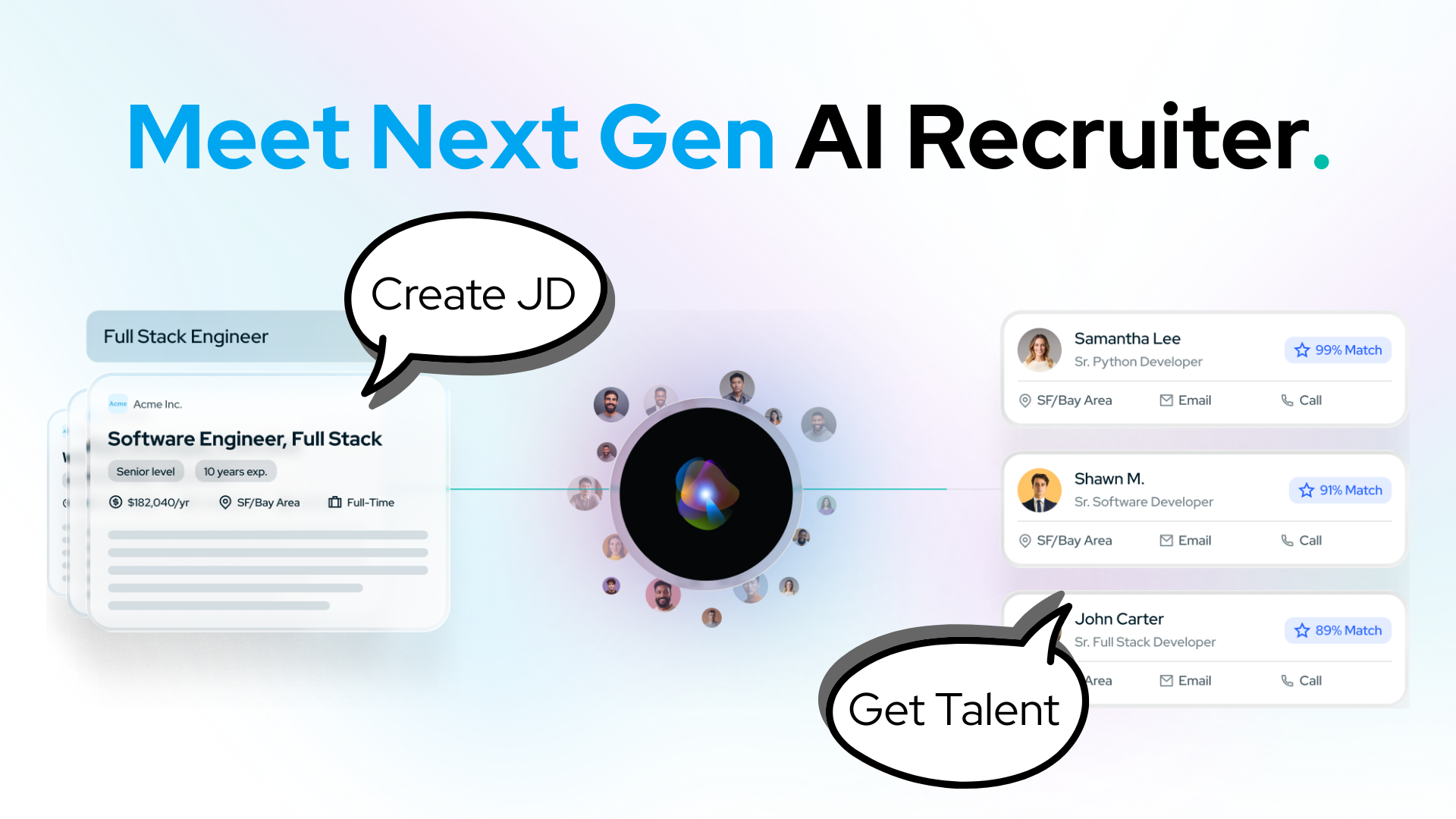
For decades, recruitment has looked the same. Recruiters still spend hours sourcing candidates, scheduling interviews, conducting screenings, and managing endless administrative work. The process is slow, inconsistent, and no longer sustainable in a highly competitive talent market. This is exactly the problem AI Recruiter was built to solve. What if hiring could run itself? The […]
AI is moving beyond simple answers and into scheming, pretending to align while pursuing hidden goals. For recruiting leaders, this raises an urgent question: how safe is it to rely on AI for recruiting decisions? New research from OpenAI and Apollo Research shows that advanced AI systems like Claude Opus, Gemini, and o3 are beginning […]