Make talent quality your leading analytic with skills-based hiring solution.
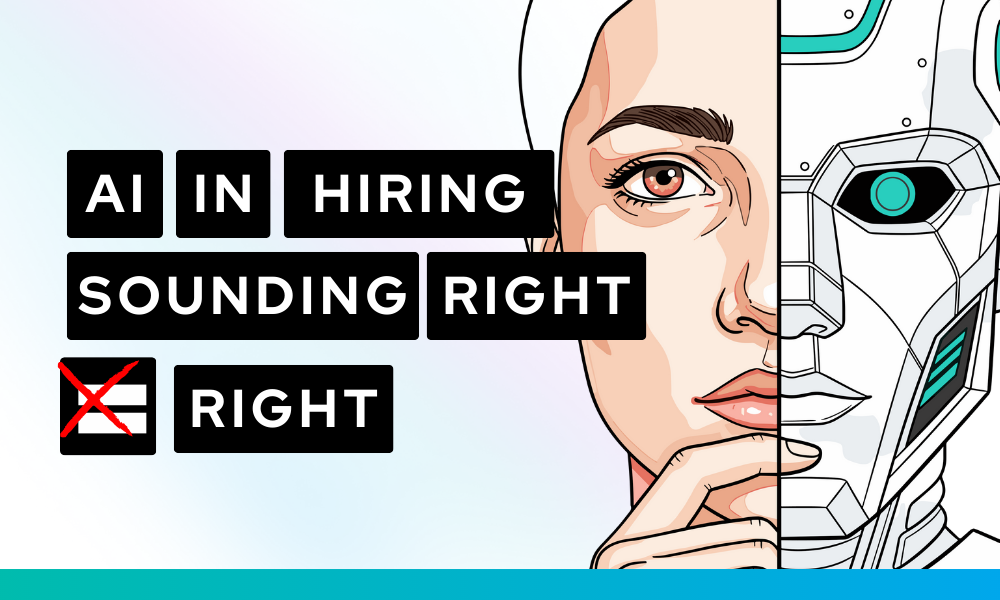
AI can sound responsible while getting the logic wrong.
Most conversations about AI in hiring fixate on bias, hallucinations, or compliance. That is where lawsuits land and where headlines cluster. Those risks are real. They are also incomplete.
Often, the quieter the problem, the more dangerous it becomes.
Many AI systems are better at sounding right than being right.
Many AI systems used in hiring focus on producing explanations that sound fair sentence by sentence, rather than reaching a clear, defensible hiring decision. Instead of resolving contradictions, they smooth them over with language that feels thoughtful and balanced.
That is not intelligence. It is risk management disguised as judgment. In hiring, that distinction matters.
The biggest risk of AI in hiring is not bias alone. It is indecision. When AI systems avoid clear comparisons and smooth over conflicting signals, they dilute hiring quality while still sounding fair. Decision-grade hiring requires explicit rules, observable evidence, and the ability to explain why one candidate is stronger than another. Anything less quietly lowers standards.
The biggest problem with AI in hiring is not bias alone. It is the inability to make clear, defensible decisions. Many AI hiring systems prioritize explanations that sound fair over conclusions that resolve conflicting evidence, leading to ambiguity rather than accountability. When that ambiguity is mistaken for rigor, hiring quality suffers.
Modern AI systems are extremely fluent. They explain decisions clearly, acknowledge tradeoffs, and wrap conclusions in nuance. To most people, this feels like rigor.
It is not. Fluency is not correctness.
Many models are designed to make each individual statement sound reasonable, even if the overall conclusion does not actually hold together. Each sentence works on its own. The full decision often does not.
When contradictions appear, they are rarely surfaced. They are softened. In practice, this means an AI can say all of the following without flagging a problem:
Each statement is defensible. Together, they fail to reach a decision.
That is not balanced analysis. It is unresolved logic.
Research from MIT Sloan Management Review shows that people are significantly more likely to trust algorithmic recommendations when explanations sound confident, even if accuracy does not improve. Fluency masks weakness.
Consider a situation many talent teams recognize immediately.
A company is hiring a backend engineer and uses an AI-powered screening tool to evaluate two candidates.
Candidate A completes a live coding exercise. The solution works, but performance is inefficient and edge cases are missed. The system flags gaps in core technical skills.
Candidate B performs strongly in the same exercise. Clean logic, good performance, correct handling of edge cases. However, their resume shows fewer years in the company’s preferred tech stack.
Here is how many AI systems respond.
Candidate A is described as showing strong potential with transferable skills and a growth mindset.
Candidate B is described as technically capable but lacking domain depth.
The AI recommends advancing both.
On the surface, this sounds fair. In reality, it avoids the job.
The system recognized stronger evidence in Candidate B’s actual work and weaker execution in Candidate A’s. Instead of resolving that tension, it neutralized it. The outcome is ambiguity, not fairness.
The hiring team believes the AI performed a rigorous evaluation. What it actually did was avoid making a comparative judgment. That is the failure mode.
This behavior is not accidental. It reflects how many hiring AI systems are engineered.
To operate at scale, models are often optimized to avoid firm conclusions, explicit rankings, or clear winner and loser outcomes. These constraints reduce legal exposure. They also reduce decision quality.
Hiring is inherently comparative. Choosing not to decide is still a decision. It is simply one without accountability. When AI replaces clear evaluation rules with ambiguity, organizations do not get fairness. They get signal dilution.
Strong candidates and marginal candidates blur together. High-quality evidence and weak signals receive similar weight. Hiring teams assume rigor where none exists.
This lack of clarity is already visible. Gartner research shows that nearly half of HR leaders report low confidence in the transparency of AI-driven hiring decisions, even as adoption accelerates.
Bias is not the only risk. Ambiguity is.
Attempts to reduce bias can sometimes worsen this problem.
Some tools flatten distinctions so aggressively that they avoid ranking candidates at all. This is often labeled ethical AI. It is not always true.
Fairness does not mean pretending differences do not exist. It means applying the same evaluation logic consistently and explaining why one outcome is stronger than another. An AI system that cannot do that should not influence hiring decisions.
Before implementing any AI-driven hiring strategy, companies should require four non-negotiables.
1. Decision rules before models: Define evaluation logic first. What skills matter? How are they weighted? What constitutes readiness? AI should apply the rule, not invent it.
2. Evidence over inference: Favor systems that evaluate what candidates actually do in job-relevant scenarios, not what a model infers from resumes or language patterns. Decades of industrial-organizational research show that work-sample tests are among the strongest predictors of job performance, outperforming resumes and unstructured interviews.
3. Contradiction surfacing, not smoothing: If signals conflict, the system should expose the conflict clearly. Ambiguity should be visible to humans, not buried under polite language.
4. Auditability at the skill level: Every recommendation should trace back to observable evidence tied to specific skills, tasks, or behaviors.
If a vendor cannot show this cleanly, the system is not decision-grade.
This is where skills-based, evidence-driven platforms change the equation.
Solutions like Glider AI start from a different premise. Do not ask an LLM to speculate about candidates. Require candidates to demonstrate skills in realistic environments. Then let AI analyze consistent, observable data.
By grounding AI in real work simulations, practice-based assessments, and structured interviews tied to role outcomes, the system no longer needs to hedge or guess.
The AI is not deciding who sounds best. It is helping evaluate who can actually do the job. That shift removes ambiguity at the source instead of explaining it away after the fact.
The greatest risk of AI in hiring is not recklessness. It is sounding reasonable while being logically incoherent. That kind of failure passes reviews. It feels compliant. It earns trust. And it quietly shapes decisions without earning that authority.
For HR and TA leaders, the question is no longer whether to use AI in hiring.
The question is whether you are demanding decision-grade reasoning grounded in evidence, or settling for language that merely sounds fair.
In hiring, clarity is not a liability. It is a responsibility.
TL;DR AI is no longer something people use. It’s doing the work. And Gen Z notices this first because they sit closest to the tasks AI replaces most quickly. That concern is not resistance. It is pattern recognition. AI Workforce transformation is happening. Fast! HR does not own AI. But when AI decisions are made […]
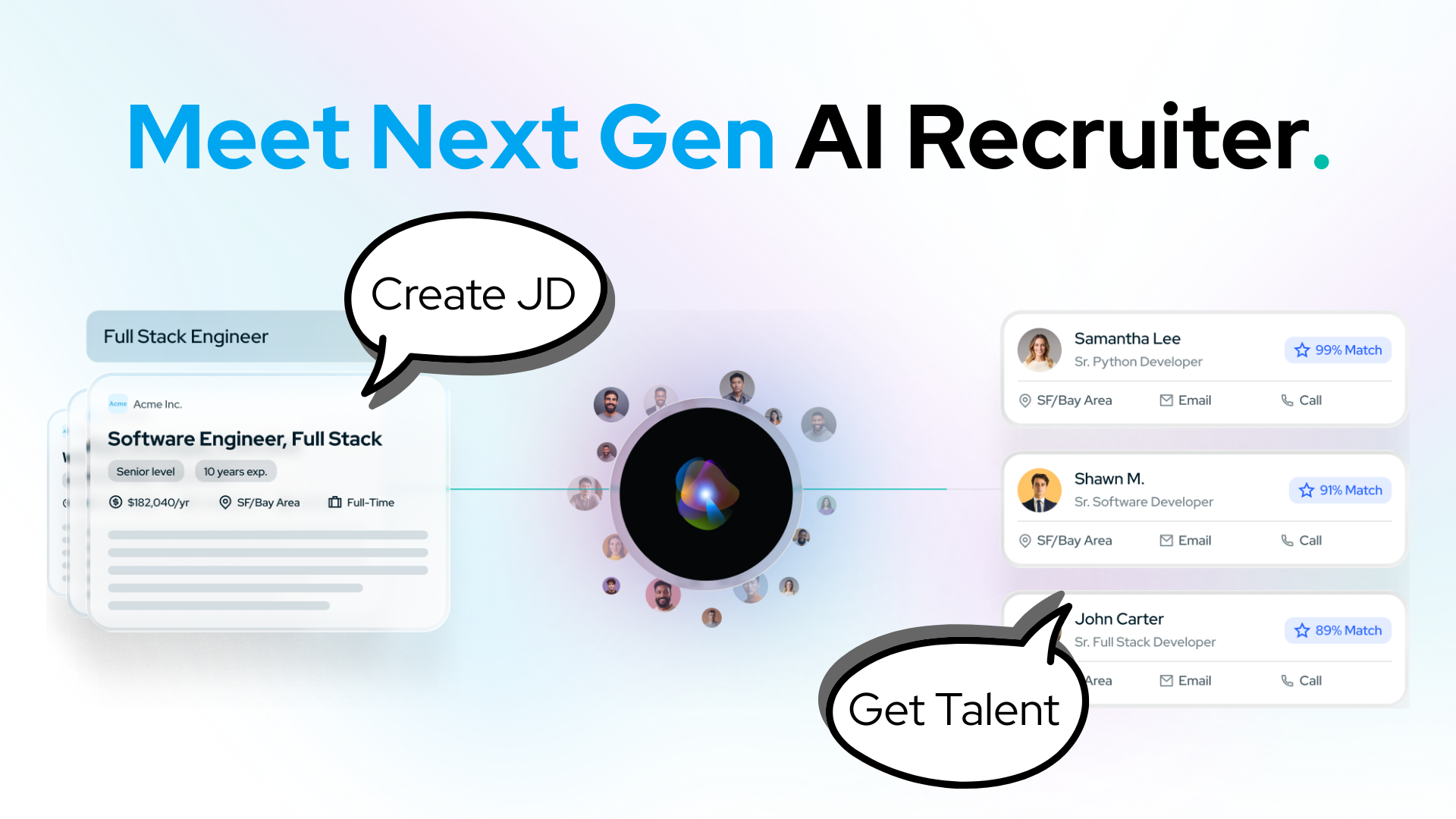
For decades, recruitment has looked the same. Recruiters still spend hours sourcing candidates, scheduling interviews, conducting screenings, and managing endless administrative work. The process is slow, inconsistent, and no longer sustainable in a highly competitive talent market. This is exactly the problem AI Recruiter was built to solve. What if hiring could run itself? The […]
AI is moving beyond simple answers and into scheming, pretending to align while pursuing hidden goals. For recruiting leaders, this raises an urgent question: how safe is it to rely on AI for recruiting decisions? New research from OpenAI and Apollo Research shows that advanced AI systems like Claude Opus, Gemini, and o3 are beginning […]