

Make talent quality your leading analytic with skills-based hiring solution.
A hiring manager with three open reqs and a full sprint already knows the problem. Every role gets more applicants than anyone can screen by hand, a good share of first round interviews go to people who were never a fit, and in remote hiring, some candidates are not who they say they are. AI recruiting is the set of tools that takes that screening load off people so the interviews that remain are worth having.
This guide explains AI recruiting from the hiring manager’s side: what AI should handle, what it should not, and what to ask before you trust its output.
AI recruiting uses software to engage candidates, screen them, verify their identity, test their skills, and in some cases run the first interview, all before a person spends time with them. For hiring managers, the value is fewer wasted interviews and clearer evidence on each candidate. AI for hiring managers works best when it scores candidates against a defined rubric and real tasks, logs everything for review, and leaves the final hiring decision with people.
Most writing about AI recruiting is aimed at recruiters and HR teams: sourcing, outreach, pipeline volume. Hiring managers sit downstream of all that. What reaches you is a calendar invite and a resume, and your time is the scarcest resource in the process.
That cost has a name: the interview tax. Every first round conversation with a candidate who cannot do the work takes an hour from someone who is also shipping product, closing deals, or running a support queue. Multiply that across a quarter of open roles and it becomes a real drag on the team.
Useful AI for hiring managers reduces that tax. It makes sure the people who reach your calendar have already been checked on three things:
If an AI recruiting tool cannot tell you how it checked each of those, it is filtering resumes faster, which is a different and smaller thing.
Hiring teams get the most from AI when they map it to specific stages rather than buying “AI” in general. Here is how the work divides in a typical process for high volume or technical roles.
| Hiring stage | What AI handles | What the hiring manager or recruiter owns |
|---|---|---|
| Engagement | Calls or messages candidates right after they are matched, captures interest, availability, salary expectations, and relocation willingness | Deciding which signals matter for the role |
| Identity verification | Matches photo ID, live selfie, location, and voice across each stage | Reviewing any mismatch before an offer |
| Skills assessment | Runs coding, simulation, or open ended tasks and scores them against a rubric | Setting the rubric and pass thresholds |
| First interview | Runs one way video, AI guided, or fully autonomous interviews with structured questions | Reviewing transcripts and scores, overriding when needed |
| Scheduling | Finds availability, sends invites, and handles scheduling interviews for later rounds | Showing up prepared for the conversations that remain |
| Final decision | Summarizes evidence across stages | Making the hire |
The first step in most processes is still a phone screen, and it rarely needs a person. Glider’s AI voice recruiter calls candidates right after they are matched and collects interest, intent, availability, and salary expectations. A chatbot option covers the same ground over SMS, WhatsApp, email, or web. Recruiters stop spending mornings on calls that end in “I’ve already accepted another offer.”
Resumes describe experience. Assessments show it. Glider’s skill assessment software draws from a bank of 200,000 questions across 250+ technologies and 200+ non tech roles, with more than 35 interactive question types and 100+ hands on simulations. Candidates write code in a full project environment, work in Jupyter Notebooks, or answer open ended questions scored against a rubric, with human override available.
For hiring managers, the point is that you see what the candidate did, not just a pass or fail. If a coding task allowed an AI copilot, the report shows which prompts the candidate used.
Glider’s AI interview software supports three levels of autonomy:
The autonomous mode only holds up because the questions are set in advance and scored against a specific rubric. AI is not improvising from a job description. At Infosys, more than 30,000 AI interviews were conducted, and AI outcomes matched hiring manager decisions 80 percent of the time.
Scheduling interviews is pure coordination work, and it eats recruiter hours. A scheduling agent finds open slots, sends invites, and manages reschedules, so the back and forth over email disappears.
There is a common fear that AI will replace human recruiters. In practice, AI recruiting takes over the repetitive layer: first calls, screening questions, test administration, calendar logistics. It does not replace the judgment calls that make hiring work.
Keep these decisions with people:
Recruiters and HR teams who use AI well spend more time on the parts of the job that need a person: calibrating with hiring managers, closing candidates, and fixing a process when the data shows it is broken.
Remote hiring created a new problem for hiring teams: the person who interviews is not always the person who shows up. Proxy test takers, impersonation, and candidates who pass the interview and then send someone else to start are all documented risks.
Identity verification addresses this directly. Glider’s ID Verify matches four signals (photo ID, live selfie, location, and voice) at each stage: assessment, first round, second round, and onboarding. A mismatch raises a flag before the offer goes out, not after day one. Every check is logged, which gives compliance a clear audit trail, and the process is GDPR and CCPA compliant, with candidates able to request data deletion.
During assessments, proctoring can track tab switching, copy and paste, gaze, multiple faces, and phone use, with full video and timeline markers for review. Candidates consent to each step, and every proctoring feature can be switched on or off by the employer.
Use these questions before you trust any AI recruiting tool with your pipeline:
A note on completion: candidates with 5 to 10 years of experience push back on assessments more than early career candidates. That is a filter working as intended. The candidates who complete are the ones worth your interview time.
AI for hiring managers is AI recruiting software that screens, verifies, assesses, and interviews candidates before they reach a hiring manager. It cuts down first round interviews with candidates who are not a fit and gives the hiring manager evidence from real tasks.
No. AI takes over repetitive work such as first calls, screening, test delivery, and scheduling interviews. Recruiters still own calibration with hiring managers, candidate relationships, offers, and the final decision.
Bias drops when every candidate gets the same structured questions, scored against the same rubric, based on what they did rather than how they present. Glider sets interview questions in advance instead of letting a model improvise, and humans can review and override scores.
They verify identity at more than one stage. Matching photo ID, selfie, location, and voice from assessment through onboarding catches proxy test takers and swapped candidates before an offer is made.
No. It works best for high volume, high velocity, and evergreen roles in tech, sales, and customer support, at roughly 1 to 12 years of experience. Executive hiring needs a different approach.
Pick the stage that costs your hiring teams the most time, often screening or first round interviews, and pilot AI there with a clear rubric. Measure interview to offer ratio and time to hire before and after. Glider’s guide to recruitment metrics covers what to track.
If your hiring managers are losing hours to first round interviews that go nowhere, start there. See how Glider AI for hiring managers puts verified, assessed candidates in front of your team, or explore AI recruiting software from Glider AI across engagement, verification, assessment, and interviews.
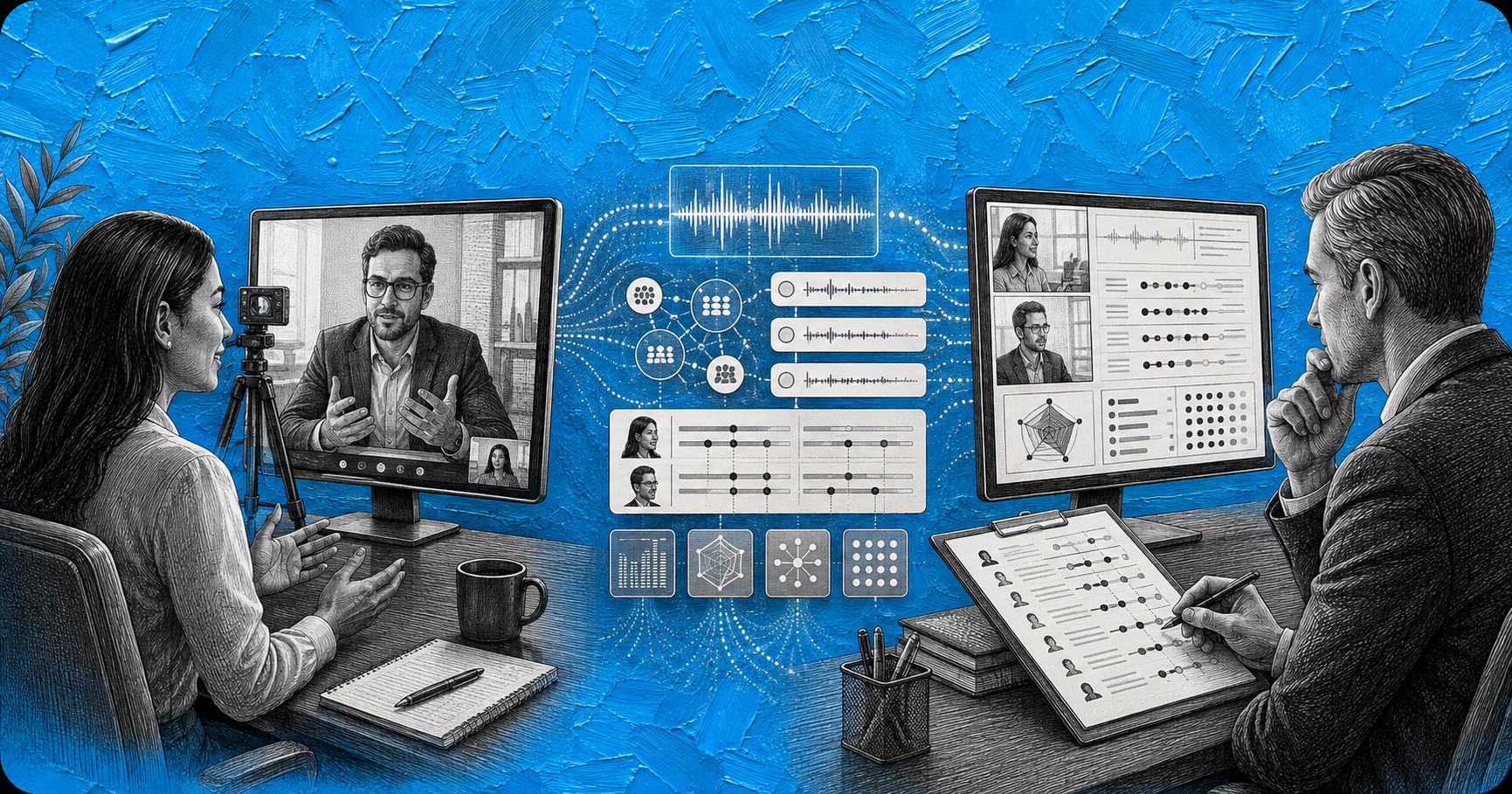
AI interview intelligence is software that records, transcribes, and analyzes interviews that a human recruiter or hiring manager is actually conducting, turning the conversation into structured data such as talk time ratios, sentiment trends, and competency or keyword tags. It does not run the interview itself. It sits behind the human led conversation and gives […]

AI hiring accessibility means making sure automated interviews, video assessments, and proctoring tools do not create barriers for candidates with visual, hearing, speech, motor, or neurodivergent disabilities, and that reasonable accommodations, like extended time, alternative formats, and human review, are built into the process rather than bolted on afterward. Getting this right is not just […]
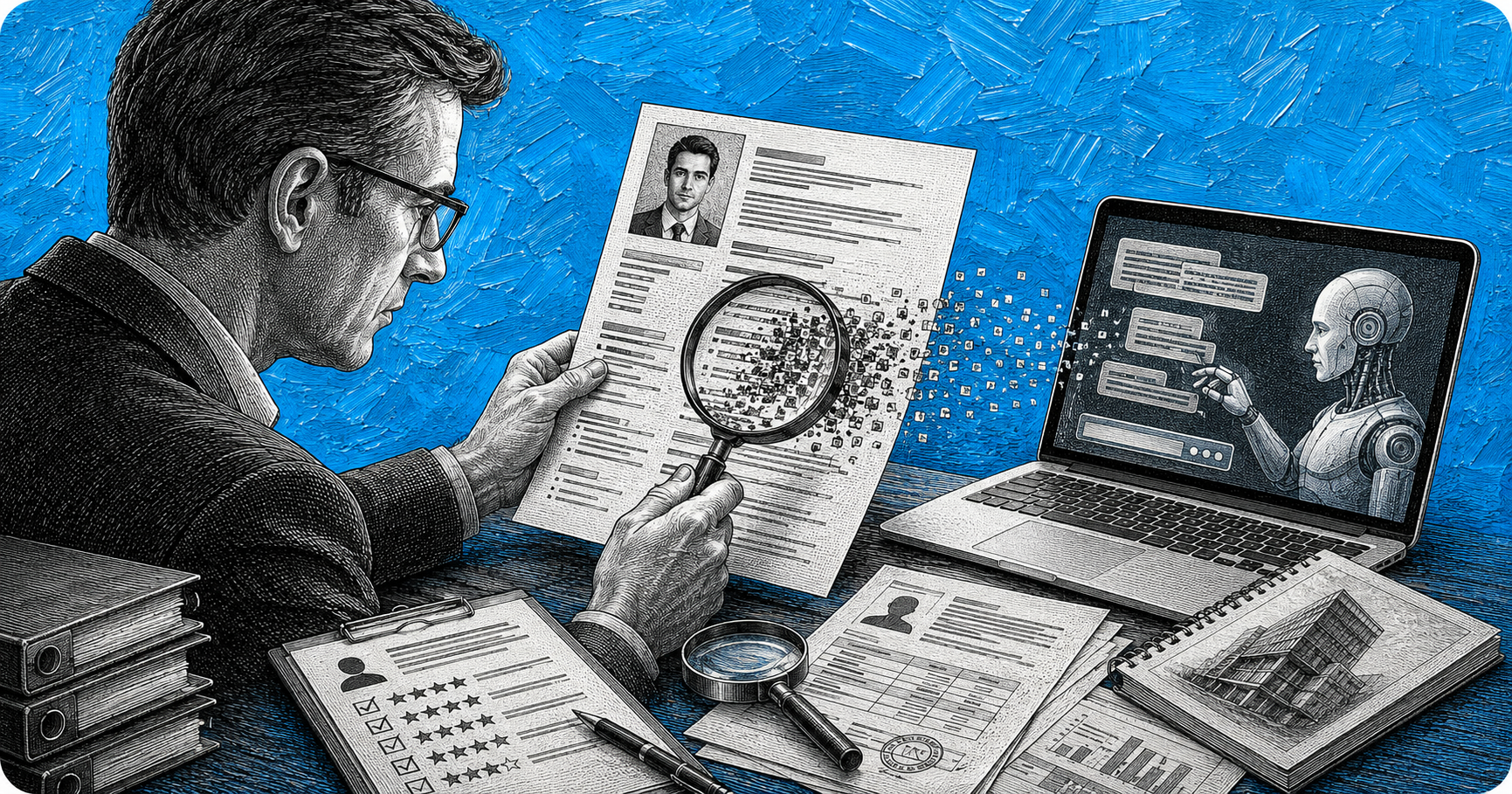
AI resume fraud is the practice of candidates using generative AI tools like ChatGPT to invent, inflate, or heavily embellish work experience, job titles, projects, and skills on a resume, specifically to slip past applicant tracking system keyword filters and impress a human reviewer. It is a resume and application stage problem, distinct from a […]
