Make talent quality your leading analytic with skills-based hiring solution.
AI assisted cheating in interviews covers two related but distinct threats: candidates using generative AI to feed themselves answers in real time during a live interview, and candidates using synthetic, AI generated video to impersonate someone else entirely. Both have moved from rare edge case to common occurrence extremely fast. Fabric’s analysis of 19,368 interviews conducted between July 2025 and January 2026 found that 38.5 percent of all candidates were flagged for AI assisted cheating behavior, with the rate climbing sharply in the second half of that window.
This is no longer a fringe concern, it is close to the median candidate experience in some hiring pipelines, which makes understanding AI assisted cheating in interviews specifically, not cheating in general, a practical necessity.
The more common version by far is a candidate using a large language model to generate answers during the interview itself. Fabric’s data breaks down exactly how: 45 percent of caught candidates used a dedicated tool built specifically for this purpose, such as Cluely or Interview Coder, 34 percent used voice mode on ChatGPT or a similar assistant through a secondary device so answers could be read back without visibly typing, and the remaining 18 percent used a more basic method, switching tabs or screens to search manually, with a small remainder getting live help from another person.
This tactic is concentrated in technical roles, where cheating rates reach roughly 48 percent, four times the rate seen in sales roles at 12 percent, and junior candidates cheat at roughly double the rate of senior professionals.
The rarer but more severe version uses AI generated synthetic video to impersonate a different person entirely, either a more qualified individual or someone whose identity was stolen outright. This connects directly to the broader fraud patterns covered in Glider’s Deepfake Tech and Candidate Fraud post, and to Gartner’s widely cited projection that as many as one in four candidate profiles could be entirely fabricated by 2028 if current trends continue. The interview specific version of this threat is what a hiring manager actually encounters live, on a call, in real time, rather than as a resume level red flag caught earlier in the funnel.
The data on detection is not encouraging on its own. Sixty one percent of candidates flagged for AI assisted cheating still scored above the passing threshold and would have advanced undetected without a separate review step, and a majority of hiring managers believe candidates are currently better at faking than recruiters are at catching it.
This is consistent with what our companion piece on AI based test monitoring found for written assessments: single detection methods used in isolation are not reliable on their own.
Verify identity at the start of the interview using real identity verification and liveness detection, since this specifically defeats the deepfake half of this threat. For the chatbot half, ask unscripted, highly specific follow up questions that a real time prompting tool cannot anticipate well, and watch for the fluency and pause patterns described in our companion guide on ChatGPT interview cheating detection.
And where the role justifies it, run interviews through a structured, monitored live interview platform rather than an unmonitored video call, since both threats described here specifically exploit the lack of any verification layer in a standard call.
| Factor | Chatbot Threat | Deepfake Threat |
|---|---|---|
| How common | Far more common, affects most flagged interviews | Rarer, but severity is much higher |
| What it does | Feeds the real candidate answers in real time | Impersonates a different person entirely |
| Best defense | Unscripted, specific follow up questions | Identity verification and liveness detection |
| Where it is concentrated | Technical and junior candidate interviews | Any role using unmonitored video calls |
| Related Glider resource | ChatGPT interview cheating guide | Deepfake tech and candidate fraud |
AI assisted cheating in interviews is not a single problem with a single fix, it is two distinct threats, a chatbot feeding answers and a deepfake feeding a false identity, that happen to converge on the same moment: the live interview. Naming them separately, and defending against each specifically with tools like identity verification for the deepfake threat, is more effective than treating AI cheating as one vague, unsolvable category.
AI assisted cheating in interviews covers two distinct threats: candidates using AI chatbots to generate answers in real time during a live interview, and candidates using AI generated synthetic video to impersonate a different person entirely.
Fabric’s analysis of 19,368 interviews conducted between July 2025 and January 2026 found that 38.5 percent of all candidates were flagged for AI assisted cheating behavior, with rates climbing sharply in the second half of that period.
Per Fabric’s data, 45 percent of caught candidates used a dedicated real time prompting tool such as Cluely or Interview Coder, 34 percent used voice mode on ChatGPT or a similar assistant through a secondary device, and 18 percent used a more basic method like switching browser tabs to search manually.
Deepfakes can be detected using liveness detection technology that analyzes texture, lighting, and involuntary movement patterns synthetic video lacks, though detection has not fully kept pace with the sophistication of newer deepfake generation tools.
Employers can verify identity and use liveness detection at the start of the interview to address deepfake impersonation, and ask unscripted, specific follow up questions that real time prompting tools struggle to anticipate, to address chatbot assisted cheating.
Technical roles see the highest rates, around 48 percent according to Fabric’s data, roughly four times the rate seen in sales roles at 12 percent, and junior candidates cheat at close to double the rate of senior professionals.
Not reliably. Fabric’s research found that 61 percent of candidates flagged for AI assisted cheating still scored above the passing threshold, meaning they would have advanced to the next round without a separate detection and review step in place.
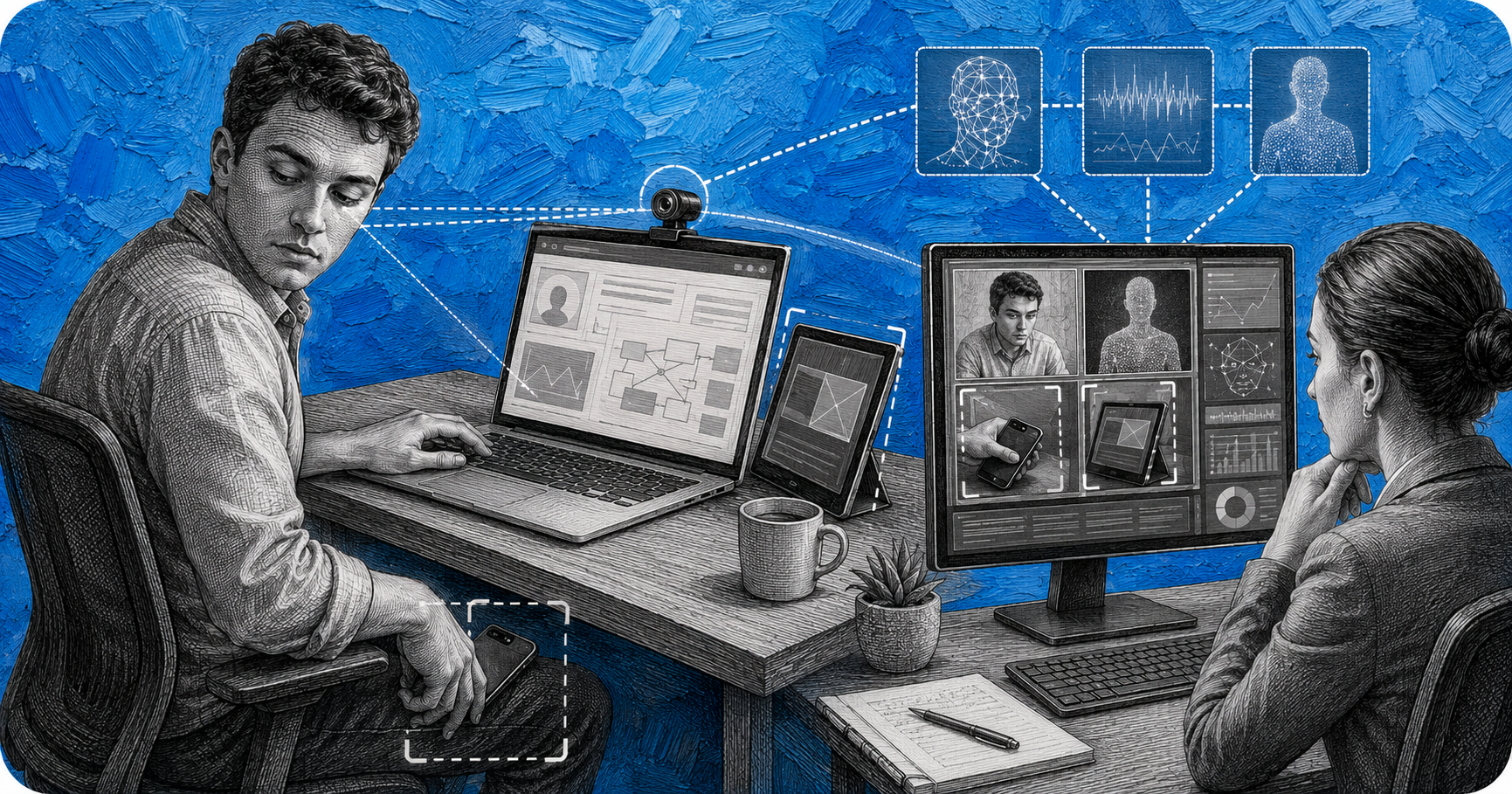
Second device cheating is when a candidate uses a phone, tablet, or second monitor outside the webcam’s view during a proctored online assessment to look up answers, message someone for help, or mirror their screen to a helper. It is one of the hardest forms of assessment fraud to stop with software alone, because the […]
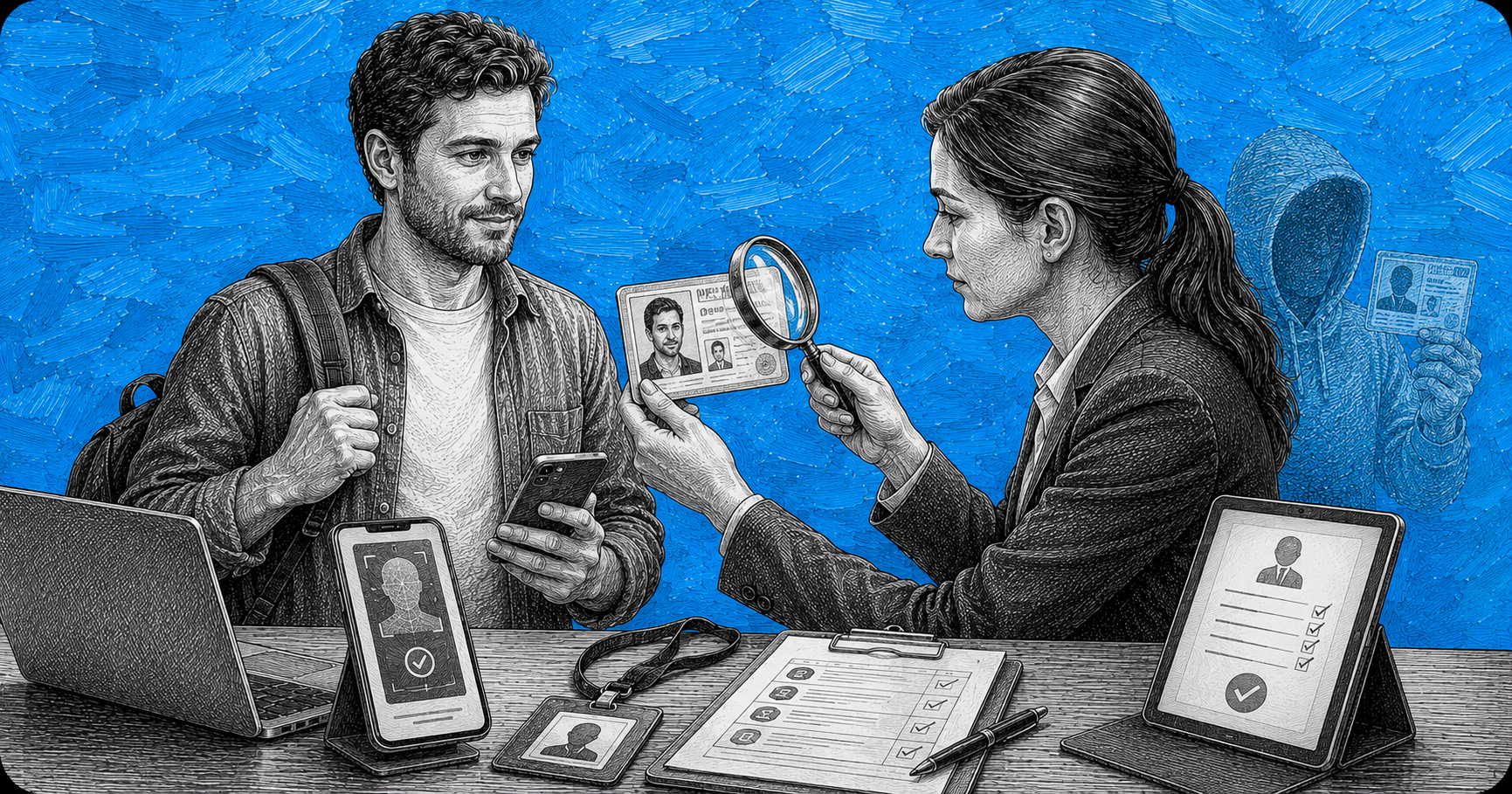
Contingent worker identity verification is the practice of confirming that a freelancer, contractor, or gig worker is who they claim to be before they are onboarded, not just screened on paper. Most companies apply this scrutiny to full time employees and skip or shortcut it for contingent talent, which is exactly the gap fraud actors […]

A structured interview scorecard is a standardized form that lists the specific competencies a role requires, gives every interviewer the same rating scale to judge candidate answers against, and forces a written justification for each score. It exists to replace gut feeling with evidence, so five interviewers evaluating the same candidate land on comparable, defensible […]