Make talent quality your leading analytic with skills-based hiring solution.
AI proctoring catches more total instances of cheating across a large candidate pool because it monitors every single test taker the same way, without fatigue, distraction, or inconsistency. Human proctoring catches fewer incidents overall, but a trained human is still better at reading ambiguous, context heavy situations that automated systems can misjudge. For most hiring teams running remote assessments at any real volume, the honest answer is not “pick one,” it is understanding what each one is actually good at, because they fail in different places.
That distinction matters more in hiring than it does in academic testing, where most of this comparison has historically been written. A university exam and a technical hiring assessment share a proctoring problem, but they do not share a business problem. A bad hire that got through by cheating on a coding test does not just fail a grade, it costs real money, team time, and trust in the hiring process.
AI proctoring uses automated monitoring, computer vision, and behavioral analysis to watch a candidate during a test without a human watching in real time. In a hiring context, that typically includes webcam and audio monitoring, tab switch and copy paste detection, browser lockdown, screen recording, and a plagiarism check that compares a candidate’s answers against known sources and other submissions.
Glider’s own AI proctoring platform is a useful reference point for what this looks like in practice, since it monitors candidates across three separate stages rather than just during the test itself. Pre assessment checks confirm location, photo ID, and device permissions. During the assessment, the system tracks internet browsing, external application use, tab switching, clickstream behavior, copy paste actions, screen sharing, facial presence, and room audio for multiple voices. Post assessment, it runs plagiarism comparisons and produces an audit trail with a cheating probability score attached to each candidate, so a recruiter is not left guessing what a flag actually means.
Human proctoring is a live person, watching one candidate or a small group of candidates through video, in real time, exactly the way an in person exam supervisor would. The proctor can ask a candidate to show their desk, clarify a confusing instruction, or make a judgment call about something ambiguous, like a candidate glancing off screen because they are reading the question aloud rather than looking something up.
That real time judgment is genuinely valuable, but it does not scale. A single human proctor can reasonably watch a handful of candidates at once, which is workable for a small executive assessment and unworkable for a hiring pipeline running hundreds of candidates through a screening test in a single week.
Across the broader proctoring industry (this comparison originates mostly in academic testing, where the data is more mature), vendor comparisons commonly cite live human proctors missing up to 30 percent of cheating incidents during long exam sessions, largely due to fatigue and divided attention when watching multiple candidates at once. AI proctoring does not get tired and does not divide its attention, which is why it tends to flag a higher raw number of incidents across a large candidate pool.
That does not mean AI proctoring is simply “more accurate.” It is more consistent, which is a different thing. AI systems are prone to false positives, flagging normal behavior like looking away to think, a shaky internet connection, or a second person briefly walking through the background as suspicious. A human proctor watching the same moment would likely recognize it as harmless. So the fair framing is this: AI proctoring catches more volume, human proctoring catches better context. Neither one, on its own, catches everything.
Cost is one of the more concrete differences between the two approaches, and it is also one of the main reasons hiring teams lean toward automated monitoring at volume. Industry pricing comparisons put live human proctoring in the range of 30 to 70 dollars per candidate session, while AI proctoring typically runs closer to 1 to 5 dollars per candidate. That gap widens fast once a hiring pipeline is running dozens or hundreds of assessments a week, which is the normal cadence for high volume recruiting rather than the exception.
Yes, and any vendor claiming otherwise is overselling. Sophisticated cheating methods, like a second monitor positioned outside the camera frame, a briefly muted earpiece, or increasingly, AI generated identity manipulation during video interviews, can slip past automated detection if a system relies on a single signal. This is exactly why layered detection matters more than any single feature: combining device monitoring, browser lockdown, biometric identity checks, and post test plagiarism comparison closes gaps that any one method alone would miss. Pairing automated monitoring with real identity verification at the start of the process also closes off one of the more common workarounds, someone other than the actual applicant taking the test.
Given that AI and human proctoring fail in different places, it is not surprising that most mature hiring programs are landing on a hybrid model rather than picking one exclusively. A practical version of this looks like automated monitoring and flagging for every candidate, with human review reserved for anything the system flags as high risk or ambiguous, plus any final round or high stakes assessment where a live proctor’s judgment is worth the added cost. This gives a hiring team the volume and consistency of AI proctoring without losing the judgment calls a person is still better positioned to make.
If your team is running high volume screening, AI proctoring should be the default, both for cost and for consistent coverage of the technical cheating methods described in how candidates actually cheat on hiring assessments. If your team is running smaller, higher stakes final round assessments, budgeting for human review of flagged cases, or a live proctor for the final stage, is a reasonable tradeoff. Either way, the goal is not proctoring for its own sake, it is protecting the quality of who actually gets hired, since a candidate who cheated their way through an assessment is a candidate whose real skill level was never actually verified.
Yes, for the categories of cheating it is designed to catch, like tab switching, copy pasting, external device use, and identity mismatches. It is less reliable for highly contextual judgment calls, which is where a hybrid approach with human review closes the gap.
Not overall. Human proctors bring better contextual judgment to ambiguous situations, but they also miss a meaningful share of incidents due to fatigue and divided attention, especially when watching several candidates at once. AI proctoring is more consistent across every candidate, though it produces more false positives on harmless behavior.
Yes, no monitoring method is unbeatable. Layered detection, combining device monitoring, biometric identity checks, and post test plagiarism review, closes most of the common workarounds, but hiring teams should treat proctoring as risk reduction rather than a guarantee.
Live human proctoring commonly runs in the range of 30 to 70 dollars per candidate session, while AI proctoring typically costs closer to 1 to 5 dollars per candidate, based on industry pricing comparisons. Actual pricing varies by vendor and assessment length.
It can be, as long as flagged behavior is reviewed rather than automatically penalized. Because automated systems can misread normal behavior as suspicious, the fairest setups pair AI flagging with a human review step before any decision is made about a candidate.
Hybrid proctoring combines automated AI monitoring for every candidate with human review reserved for flagged or high stakes cases. It is increasingly the default approach for hiring teams that need both scale and judgment.
AI proctoring is generally the better fit for high volume hiring because of its lower cost per candidate and consistent monitoring across every applicant, with human review layered in for whatever the system flags as higher risk.
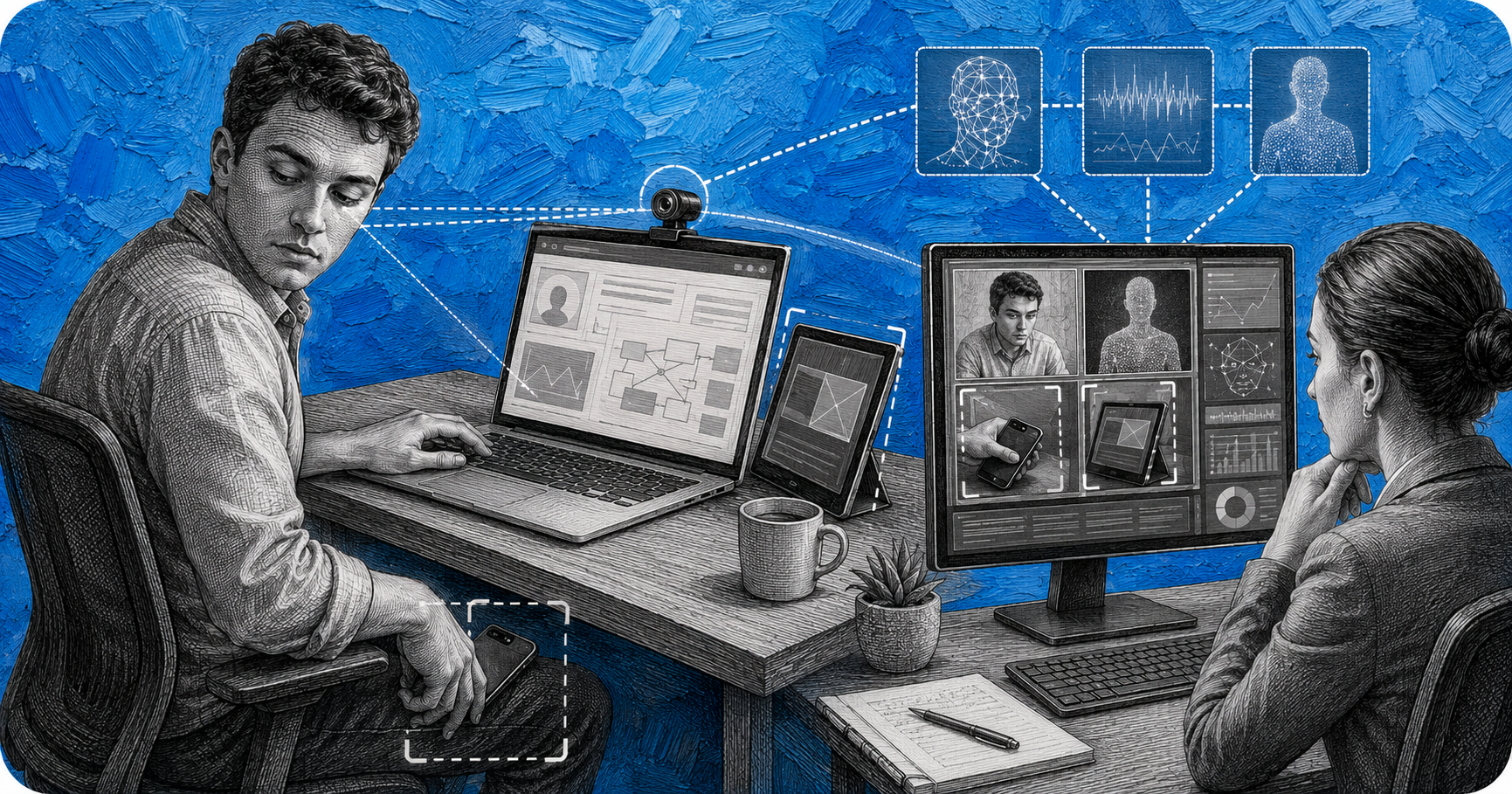
Second device cheating is when a candidate uses a phone, tablet, or second monitor outside the webcam’s view during a proctored online assessment to look up answers, message someone for help, or mirror their screen to a helper. It is one of the hardest forms of assessment fraud to stop with software alone, because the […]

Contingent worker identity verification is the practice of confirming that a freelancer, contractor, or gig worker is who they claim to be before they are onboarded, not just screened on paper. Most companies apply this scrutiny to full time employees and skip or shortcut it for contingent talent, which is exactly the gap fraud actors […]
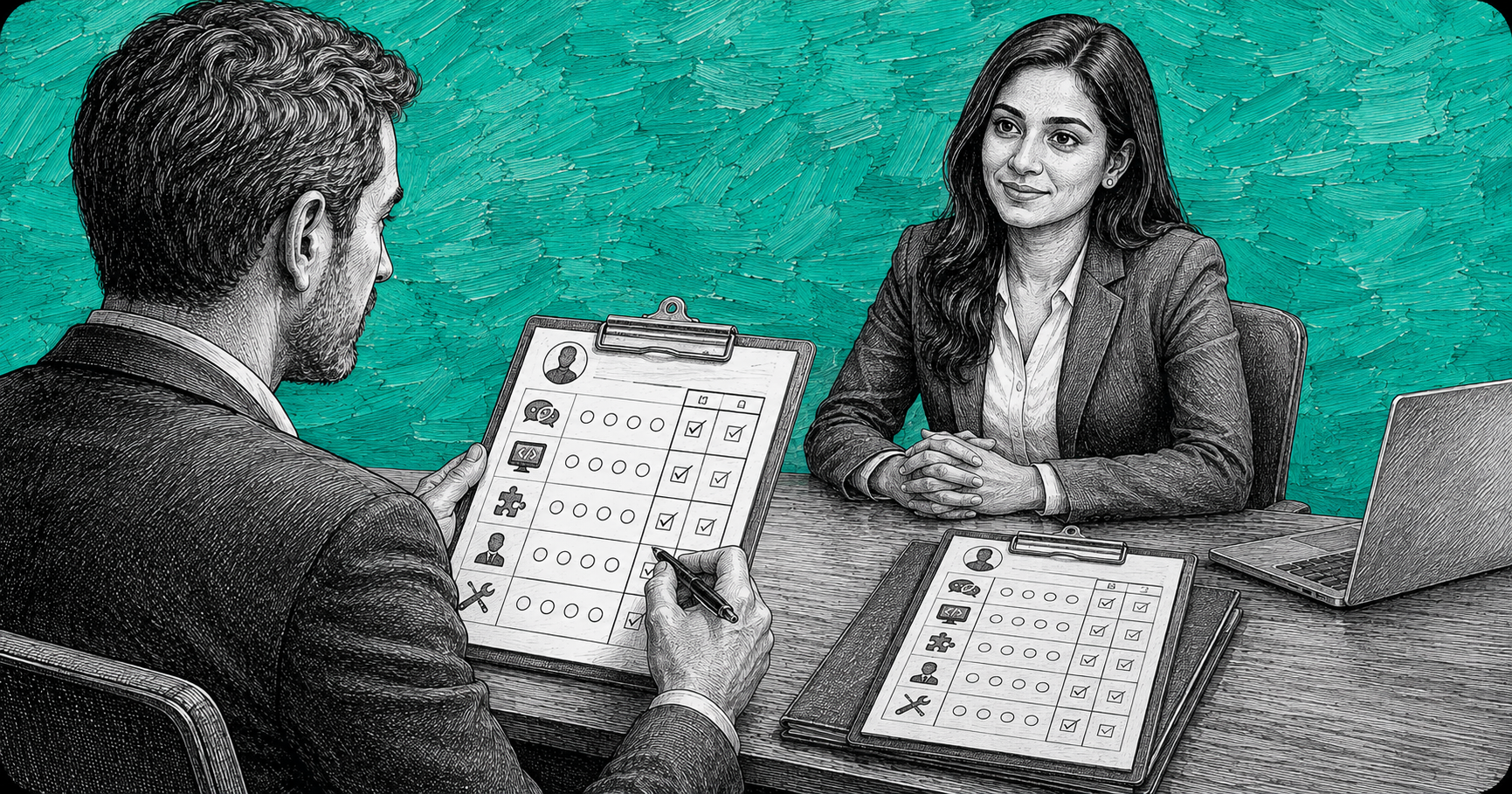
A structured interview scorecard is a standardized form that lists the specific competencies a role requires, gives every interviewer the same rating scale to judge candidate answers against, and forces a written justification for each score. It exists to replace gut feeling with evidence, so five interviewers evaluating the same candidate land on comparable, defensible […]