Make talent quality your leading analytic with skills-based hiring solution.
Remote hiring fraud happens when a candidate deceives an employer, an interview panel, or a hiring platform in order to get hired for a job they are not qualified for, not legally eligible for, or never intend to actually do themselves. It covers everything from a single candidate exaggerating their skills on a video call to organized networks running “laptop farms” that place fraudulent remote workers inside dozens of companies at once. As hiring has shifted to fully remote and asynchronous pipelines, the opportunity for this kind of fraud has grown just as fast.
Fully remote hiring processes are especially exposed because so many of the checks that used to happen naturally, in person, no longer exist. There is no office visit, no face to face handshake, no ID checked at a front desk, and often no live human watching every stage of the process. A recruiter may never see a candidate outside of a video call window, and that window can be manipulated. Add in AI tools that can generate a convincing resume, clone a voice, or overlay a deepfake face onto a live video feed, and a determined bad actor has more tools than ever to impersonate someone else or misrepresent who is actually doing the work.
Remote and distributed teams multiply the attack surface in a few specific ways:
Fraud rings buy or steal real identities, including Social Security numbers, resumes, and photos, then use deepfake video and voice tools to make a stand in interviewee appear to be that person on camera. This has become sophisticated enough that live video alone is no longer reliable proof of who a candidate really is.
In a proxy interview, a more skilled or more credible person interviews on behalf of the actual applicant, then hands the job off to someone else once hired, or continues doing the interviews for multiple candidates as a paid service. The person who shows up for onboarding and daily work is not the person who was hired.
This is the scheme behind most of the recent North Korean IT worker headlines. A company ships a work laptop to what it believes is the employee’s home address; in reality, that address is a “laptop farm,” often a house or apartment rented specifically to receive and run company hardware. A facilitator plugs the laptop into remote access software so an operator overseas, frequently using a stolen or fabricated US identity, can log in and do the job. Some operations have placed workers into dozens of companies simultaneously, funneling salaries to sanctioned regimes and creating major insider threat and export control exposure for the employer.
Remote hiring makes it easy to list a friend, relative, or paid accomplice as a former manager, since there is rarely an in person way to verify the relationship existed. Phone only reference checks with no corporate email or company record are a common blind spot.
Some candidates misrepresent their true location to get hired for a role that legally requires them to work from an approved country, whether to bypass sanctions, avoid tax and payroll obligations, or work multiple full time jobs at once without disclosure.
Fraudulent remote workers frequently use VPNs, proxy servers, or “IP masking as a service” tools to make traffic from another country appear to originate from a US or EU city, defeating simple location checks based on IP address alone.
Generative AI now makes it trivial to produce a polished, keyword optimized resume with fabricated work history in seconds, and to clone a voice from a short audio sample well enough to pass a phone screen. Both lower the cost of running fraud at scale.
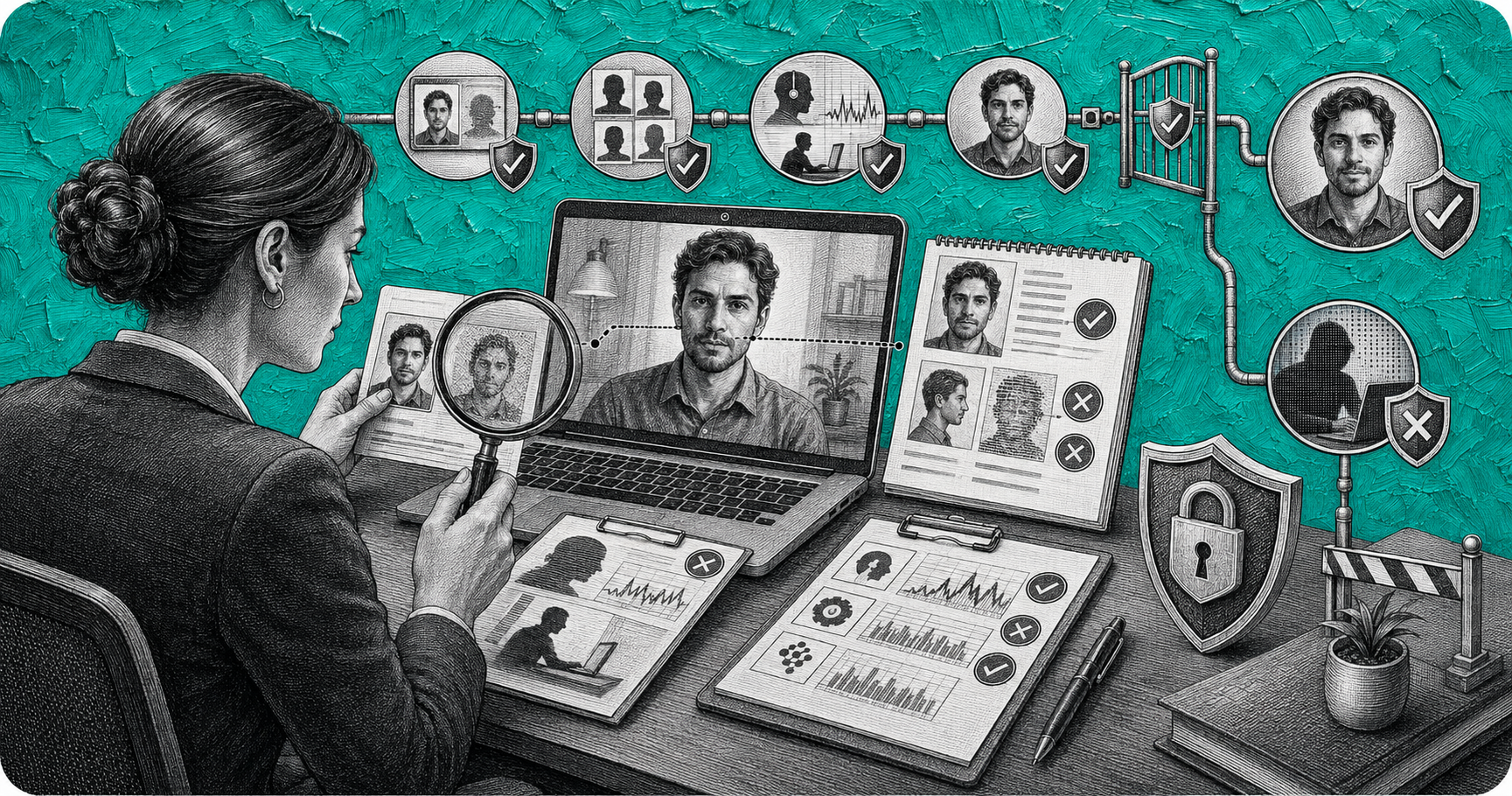
Glider AI’s platform is built specifically for the moments in a hiring process where remote hiring fraud slips through: the skills test, the interview, and the identity check. It combines AI powered skills assessments with live, camera on remote proctoring, so what a candidate demonstrates during testing is verifiably their own work rather than a proxy’s. Its video interviewing tools apply AI analysis to flag inconsistencies that suggest deepfake manipulation, coached answers, or a mismatch between the person on screen and the person who applied. And its identity and skill verification layer ties a candidate’s tested abilities back to a confirmed identity, closing the gap that fully remote pipelines otherwise leave wide open.
For teams that want to go deeper on any one piece of this, Glider AI’s remote proctoring and online assessments page covers how live proctoring works in practice, the fake candidate profiles guide walks through spotting fabricated resumes and personas, and the hiring fraud prevention guide lays out a broader, end to end framework beyond remote specific schemes. Teams building out a full detection program may also want the candidate fraud detection and prevention guide as a companion reference.
Remote hiring fraud is any attempt to deceive an employer during a remote hiring process, whether by faking an identity, having someone else interview or complete assessments on a candidate’s behalf, misrepresenting location or eligibility, or using AI tools like deepfakes and voice cloning to pass as someone else. It ranges from individual resume padding to organized networks that place fraudulent workers into many companies at once.
Companies detect remote hiring fraud by combining identity verification, live proctored skills assessments, and AI analysis of video interviews to check for manipulation or inconsistency. Comparing location signals such as IP address, shipping address, and banking details, plus verifying references through corporate channels, adds further layers of detection.
A laptop farm is a physical location, often a rented house or apartment, where a facilitator receives company issued laptops shipped to a supposed remote employee, then keeps those laptops running with remote access software so a different operator elsewhere can actually log in and do the job. It is the mechanism behind many recent North Korean IT worker fraud cases.
Warning signs include a live ID check that does not match interview video, inconsistent audio or lip sync during calls, shipping and banking details that do not match the claimed location, and skills assessment results that do not line up with resume claims. Requiring a verified ID matched to a live selfie or video before an offer is the most reliable single safeguard.
Proxy interviewing is when someone other than the actual job applicant sits in for the interview, either to secure the job for the applicant or to run the interview process as a paid service for multiple candidates at once. Live, camera on skills assessments and identity verified interviews are the most effective defenses against it.
In this scheme, operatives use stolen or fabricated US identities to get hired into remote IT roles, then use laptop farms and remote access tools so someone overseas can perform the work while appearing to be based domestically. The goal is typically to funnel salary income to a sanctioned regime while avoiding detection through fabricated documents and location masking.
Yes. AI video analysis tools can flag signs of deepfake manipulation such as unnatural blinking, lighting or lip sync inconsistencies, and audio that does not match facial movement, and these checks are increasingly built directly into video interviewing and remote proctoring platforms.
The most effective combination is identity verification, live proctored skills assessments, and AI powered video interview analysis, layered on top of standard background and reference checks. Platforms like Glider AI combine these functions so identity, skill, and interview integrity are all verified within the same hiring workflow rather than as separate, disconnected steps.
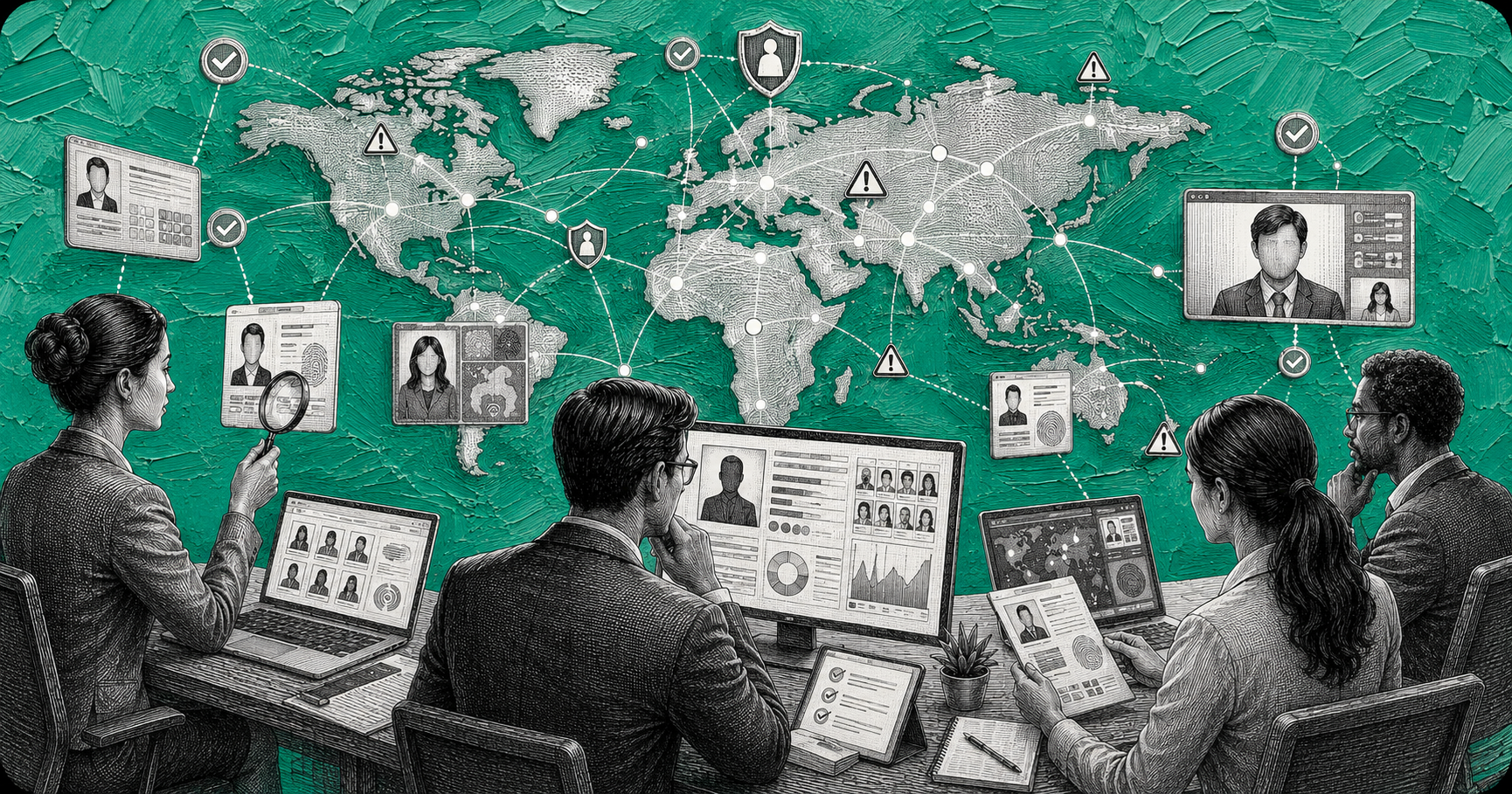
Global hiring fraud hotspots are the countries and regions where documented candidate fraud and identity verification risk run highest, based on named industry indices rather than assumption. In 2026, that data points consistently in one direction: fraud vulnerability is concentrated in markets with weaker centralized identity infrastructure and fast growing digital hiring volume, led by […]
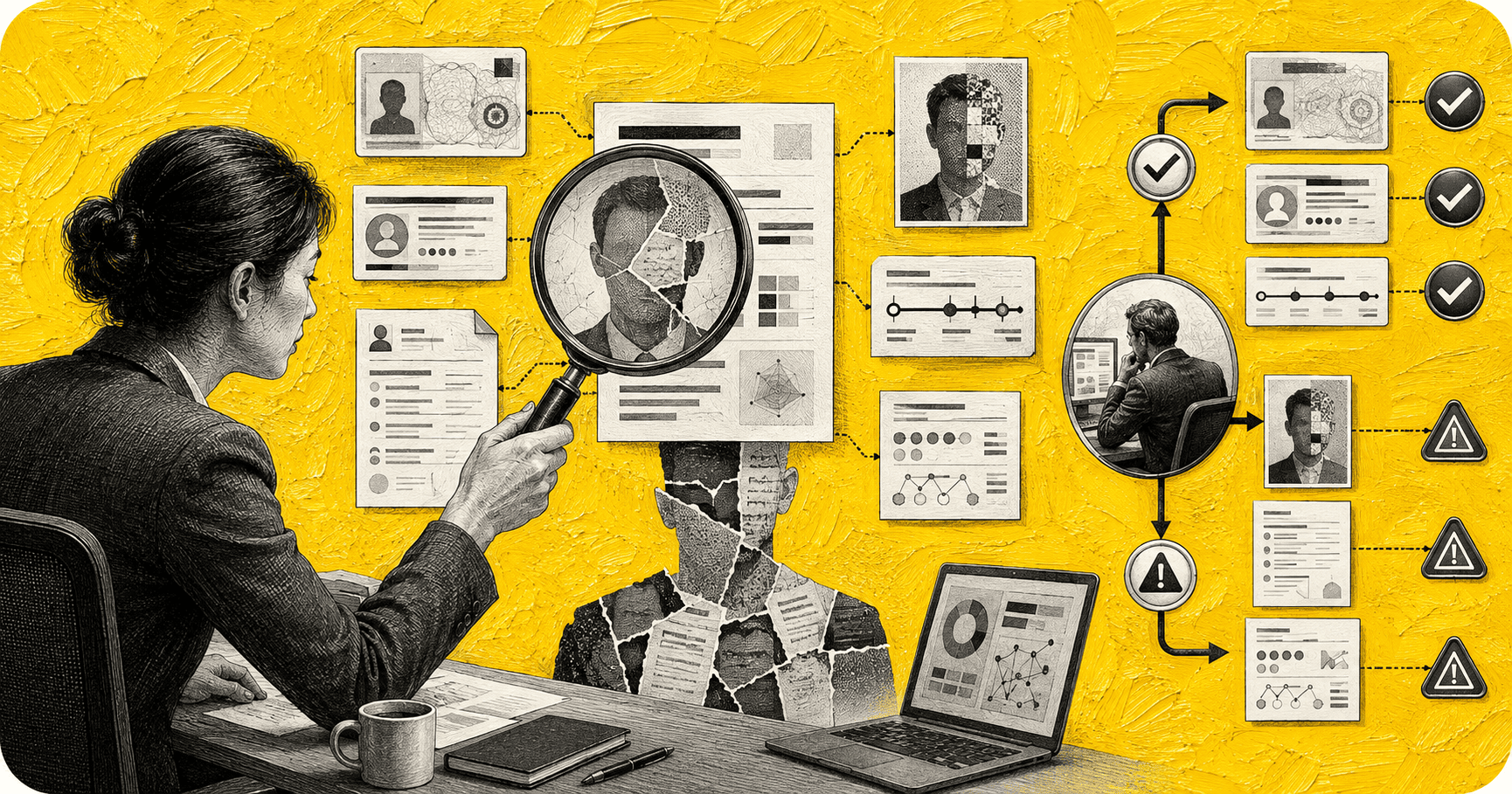
A synthetic candidate is a job applicant who does not exist as a single real person at all. The persona is assembled, usually by combining stolen or purchased personally identifiable information (PII) with an AI generated resume, an AI generated or composite photo, and an invented work history, into a package that looks, on paper […]

Hiring overqualified candidates is not automatically a mistake, but it is a decision that carries real, well documented risk if the role and the offer are not restructured around it. Recent survey data shows most employers already do this regularly: 70 percent of hiring managers say they typically consider candidates who are overqualified for the […]