
Make talent quality your leading analytic with skills-based hiring solution.
Video interview impersonation is no longer a rare, sophisticated exception, it is a documented, growing share of live interviews across the hiring market. One recent analysis of over 19,000 live interviews found that 38.5 percent of candidates were flagged for AI assisted cheating behavior, a rate that tripled in three months during the study period. Separately, one in three hiring managers report having personally discovered a case of proxy impersonation, someone other than the real candidate sitting the interview, and deepfake fraud attempts in hiring rose 1,300 percent year over year. Naming these tactics, covered already in our companion pieces on interview cheating and AI assisted cheating in interviews, is only half the job.
Actually catching video interview impersonation before a fraudulent hire reaches day one requires a checkpoint built into every stage of the funnel, not just vigilance during the interview itself.
Human detection of deepfakes and impersonation during a live interview is not reliable on its own, current research puts human detection accuracy at barely above chance, around 55.5 percent, and 61 percent of candidates flagged for cheating still scored above the passing threshold and would have advanced without a second check.
Only 31 percent of organizations currently deploy any AI or deepfake detection software at all, and 48 percent of HR professionals report zero training on AI driven hiring fraud. If the interview is the only checkpoint, most impersonation attempts are structurally likely to pass through it undetected.
Before a live interview ever happens, confirm identity against submitted documents using a real identity verification step rather than assuming the applicant and eventual interviewee are automatically the same person. This single checkpoint closes the door on a large share of proxy interviewing before it can begin, since a proxy still needs to pass an identity check tied to the original applicant’s documents.
During the interview, verify identity again at the start of the conversation rather than relying on the earlier application stage check alone, and pair that with unscripted, specific follow up questions that a proxy or an AI assisted candidate struggles to handle as fluently as a scripted answer.
This is the checkpoint our interview cheating guide covers in tactical depth, off screen glances, unnatural pausing, audio and video mismatches.
Where a role includes a technical or skills based round, tie the assessment result to the same verified identity confirmed at the interview stage, using a structured skill assessment platform rather than treating the assessment as a separate, unlinked step. A strong assessment score means little if there is no confirmed chain connecting the person who sat the interview to the person who completed the assessment to the person ultimately hired.
The final and most commonly skipped checkpoint is day one itself. Confirm identity once more at onboarding, matching the person who shows up for their first day against the identity verified earlier in the process. This closes the exact gap that proxy interviewing is designed to exploit, someone else attends the interview, but the real hire is expected to actually show up for the job, and a day one check catches that substitution when every earlier checkpoint has already been defeated.
Video interview impersonation succeeds most often when an organization treats the interview as the only moment fraud needs to survive. Building identity confirmation into four separate checkpoints, application, interview, assessment, and day one, means an impersonation attempt has to defeat every single one, not just the one everyone is already watching most closely.
Employers can build identity verification into four separate checkpoints, application, the interview itself, the assessment stage, and day one onboarding, rather than relying on the interview alone, since human detection during a live interview is only slightly better than chance on its own.
Identity should be confirmed at application against submitted documents, again at the start of the interview, tied to any assessment result completed afterward, and finally reconfirmed at onboarding to ensure the person starting the job matches the person verified throughout the process.
Current research found 38.5 percent of candidates flagged for AI assisted cheating behavior across a large sample of live interviews, one in three hiring managers reporting a discovered proxy impersonation case, and a 1,300 percent year over year increase in deepfake fraud attempts in hiring.
Human detection alone is unreliable, with accuracy only slightly above chance at around 55.5 percent, and only 31 percent of organizations currently use any AI or deepfake detection software, which is why a multi checkpoint identity process matters more than interview vigilance alone.
Employers should pause the process rather than continue on schedule, request a live, unscripted follow up conversation with a fresh identity check, and verify the individual again at the very next stage before proceeding toward an offer.
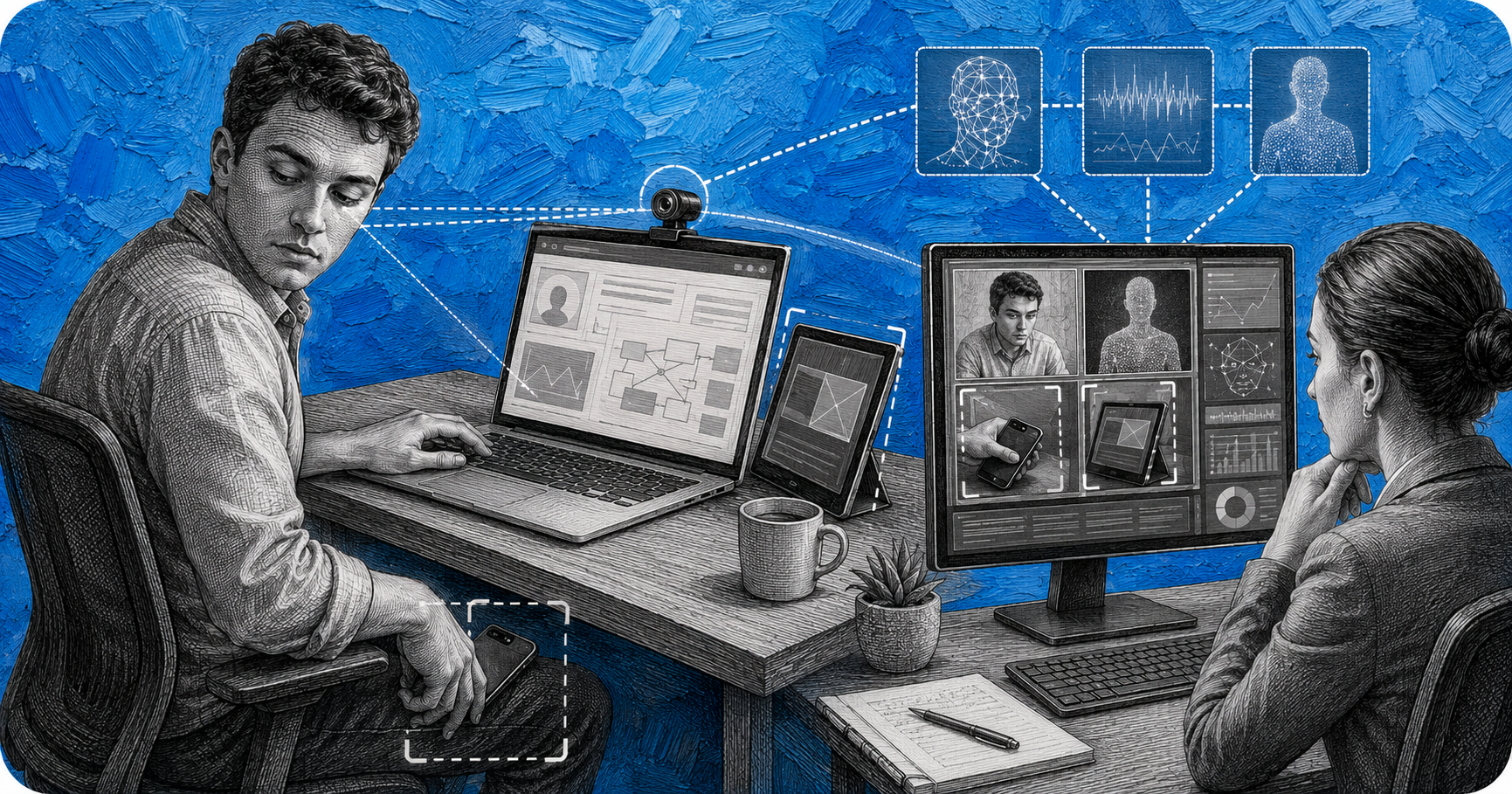
Second device cheating is when a candidate uses a phone, tablet, or second monitor outside the webcam’s view during a proctored online assessment to look up answers, message someone for help, or mirror their screen to a helper. It is one of the hardest forms of assessment fraud to stop with software alone, because the […]
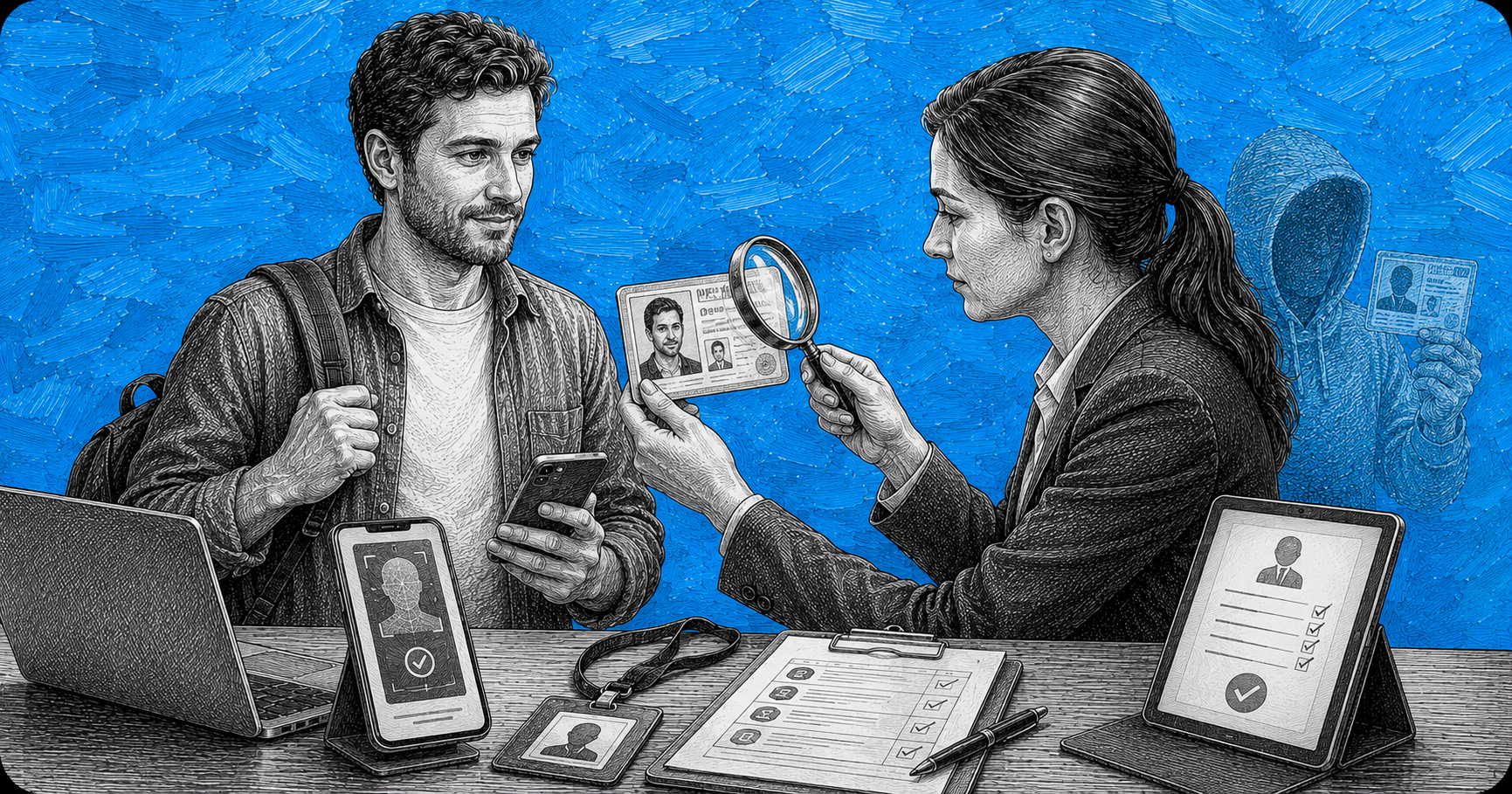
Contingent worker identity verification is the practice of confirming that a freelancer, contractor, or gig worker is who they claim to be before they are onboarded, not just screened on paper. Most companies apply this scrutiny to full time employees and skip or shortcut it for contingent talent, which is exactly the gap fraud actors […]

A structured interview scorecard is a standardized form that lists the specific competencies a role requires, gives every interviewer the same rating scale to judge candidate answers against, and forces a written justification for each score. It exists to replace gut feeling with evidence, so five interviewers evaluating the same candidate land on comparable, defensible […]