
Make talent quality your leading analytic with skills-based hiring solution.
A pre-screening interview is an essential part of the hiring process, acting as a preliminary check to ensure that candidates meet the basic qualifications before moving on to more in-depth interviews. Understanding how to prepare for and excel in a pre-screening interview can significantly boost your chances of landing your desired job. Here’s everything you need to know about the pre-screening interview and how to make a great impression.
A pre-screening interview is typically a brief, initial conversation between a recruiter or HR representative and a job candidate. The primary goal is to verify that the candidate has the necessary qualifications, experience, and fit for the role before advancing them to the next stage of the hiring process. These interviews can be conducted via phone, video call, or even through automated AI systems.
Pre-screening interviews are crucial for several reasons:
Before your pre-screening interview, research the company thoroughly. Understand their mission, values, and recent developments. Familiarize yourself with the job description and identify how your skills and experiences align with the role. This will help you tailor your responses to show that you’re a strong fit for the position.
Be ready to discuss your resume in detail. Highlight your key achievements, relevant experiences, and skills that make you suitable for the job. Make sure you can explain any gaps in your employment history or other potential red flags.
While each pre-screening interview is unique, there are common questions you can expect:
Having thoughtful questions prepared shows your interest in the role and company. Ask about the team structure, company culture, or specific responsibilities of the job. This not only provides you with valuable information but also demonstrates your proactive approach.
First impressions matter, especially in a pre-screening interview. Dress appropriately, even if the interview is conducted over the phone or video call. Ensure you are in a quiet, distraction-free environment and speak clearly and confidently.
Honesty is crucial during the pre-screening interview. If you don’t have a particular skill or experience that’s required, acknowledge it but also highlight your willingness and ability to learn quickly. Transparency helps build trust with the recruiter.
Express your genuine interest in the role and the company. Enthusiasm can set you apart from other candidates and show that you’re truly motivated to join the team.
After the interview, send a thank-you email to express your appreciation for the opportunity. Reiterate your interest in the role and briefly mention why you are a good fit. This leaves a positive impression and keeps you on the recruiter’s radar.
Reflect on how the interview went and identify areas for improvement. Use this insight to prepare for potential follow-up interviews, where you’ll have the chance to delve deeper into your qualifications and experiences.
A pre-screening interview is a critical step in the hiring process, providing an opportunity to make a strong first impression and demonstrate your qualifications. By researching the company and role, reviewing your resume, practicing common questions, and showcasing your enthusiasm, you can effectively prepare for and excel in your pre-screening interview. Remember to follow up with a thank-you note and reflect on your performance to continue improving. With these strategies, you’ll be well-equipped to navigate the pre-screening interview and move closer to securing your desired job.

Global hiring fraud hotspots are the countries and regions where documented candidate fraud and identity verification risk run highest, based on named industry indices rather than assumption. In 2026, that data points consistently in one direction: fraud vulnerability is concentrated in markets with weaker centralized identity infrastructure and fast growing digital hiring volume, led by […]
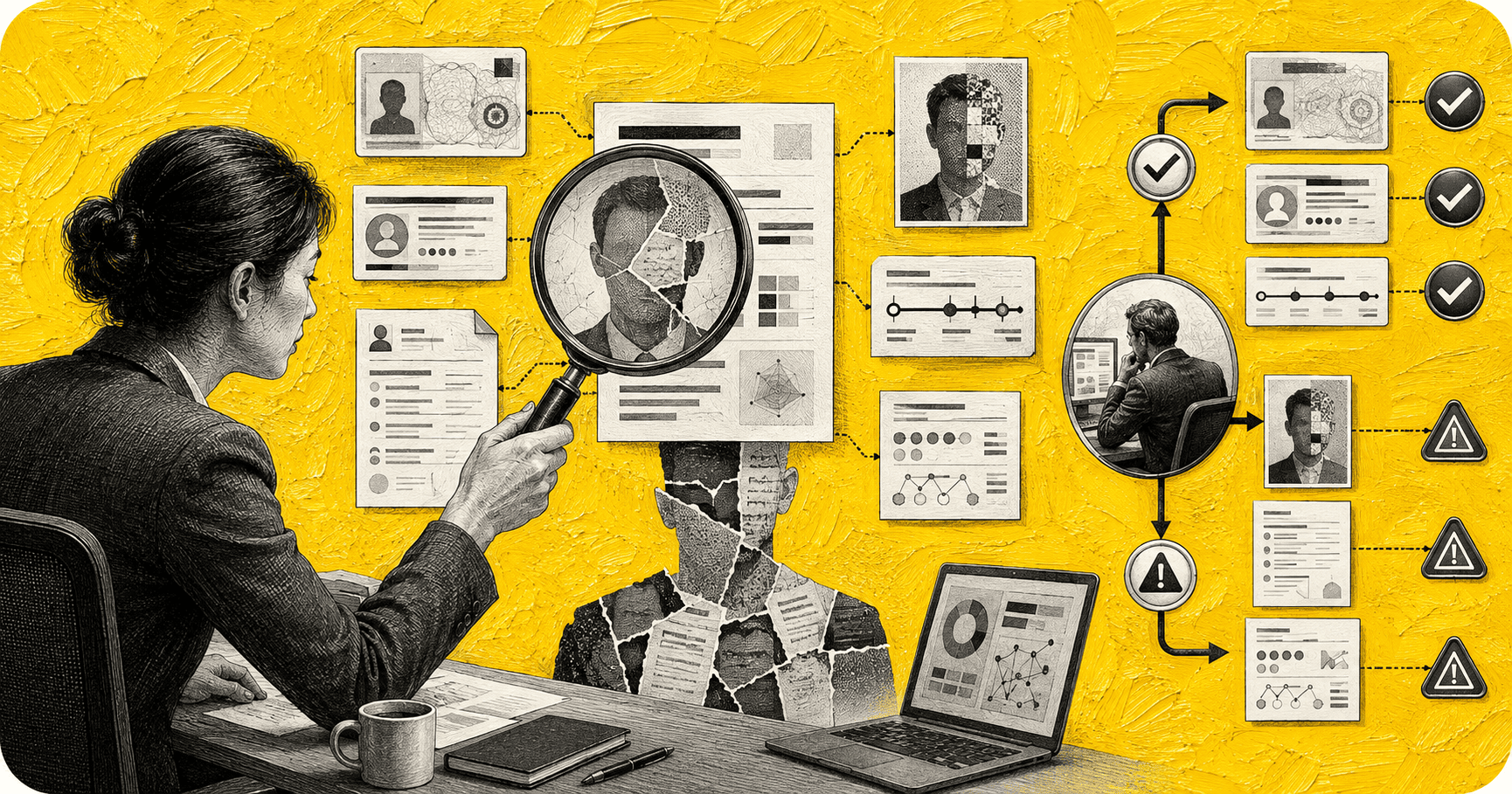
A synthetic candidate is a job applicant who does not exist as a single real person at all. The persona is assembled, usually by combining stolen or purchased personally identifiable information (PII) with an AI generated resume, an AI generated or composite photo, and an invented work history, into a package that looks, on paper […]

Hiring overqualified candidates is not automatically a mistake, but it is a decision that carries real, well documented risk if the role and the offer are not restructured around it. Recent survey data shows most employers already do this regularly: 70 percent of hiring managers say they typically consider candidates who are overqualified for the […]