
Make talent quality your leading analytic with skills-based hiring solution.
The quest for top talent is ever more intense, especially in areas like technology. This talent shortage combined with the escalating costs of hiring has led many companies to use artificial intelligence (AI) to make their recruitment strategy more efficient.
AI-driven assessments and algorithms are transforming talent acquisition by automatically verifying candidates. In this blog, we explore how neural networks are reshaping candidate selection to refine recruitment and help companies quickly zero in on the ideal candidates.
AI recruitment shortens the initial screening process by automatically identifying the most promising applicants based on their resumes and profiles.
AI technology can accurately assess and confirm a candidate’s capabilities through innovative testing and evaluation methods.
By using advanced monitoring algorithms to detect and prevent dishonest practices, AI proctoring introduces a layer of integrity and security to the evaluation process.
By automating repetitive recruitment tasks, AI improves screening efficiency so that recruiters can concentrate on more strategic functions.
Looking to identify trends, predict candidate success, and refine your team’s hiring decisions? AI can quickly analyze vast datasets of recruitment data to do exactly that. With this data-driven approach, your organizations can continuously improve recruitment processes and outcomes.
Even though it’s rapidly advancing, AI is still a fairly new technology with privacy and ethical loopholes. It’s important to be aware of them if you intend to use AI in your recruitment strategy:
AI recruitment technology is getting better by the day. However, it’s important to remember that it’s a support tool — not a replacement for human judgment and expertise. Human involvement is still crucial for setting goals and interpreting AI outcomes. Nothing can replace human insight when making final hiring decisions and ensuring ethical compliance.
If you’re interested in incorporating AI into your recruitment strategy, check out Glider. Schedule a demo to see how it can put your hiring process on autopilot.
1. What is AI screening in the context of recruitment, and how does it work?
AI screening uses machine learning algorithms to analyze application materials (such as resumes and cover letters) and massive recruitment datasets to identify qualified candidates.
2. How has artificial intelligence become a trend in recruitment?
The need to shorten hiring times and manage vast applicant volumes drives AI adoption.
Forward-thinking companies also want to harness AI technology’s future potential, as machine learning improvements continue to enhance its accuracy.
3. What are some potential ethical and privacy considerations when using AI in recruitment?
4. How can automation streamline the recruitment process, and what tasks can be automated?
5. Are there specific industries or roles where AI technology is particularly beneficial for hiring top talent?
AI can efficiently manage large applicant pools for roles (such as customer service or sales). It can also analyze technical skills and experience from resumes and online profiles.

AI interview intelligence is software that records, transcribes, and analyzes interviews that a human recruiter or hiring manager is actually conducting, turning the conversation into structured data such as talk time ratios, sentiment trends, and competency or keyword tags. It does not run the interview itself. It sits behind the human led conversation and gives […]

AI hiring accessibility means making sure automated interviews, video assessments, and proctoring tools do not create barriers for candidates with visual, hearing, speech, motor, or neurodivergent disabilities, and that reasonable accommodations, like extended time, alternative formats, and human review, are built into the process rather than bolted on afterward. Getting this right is not just […]
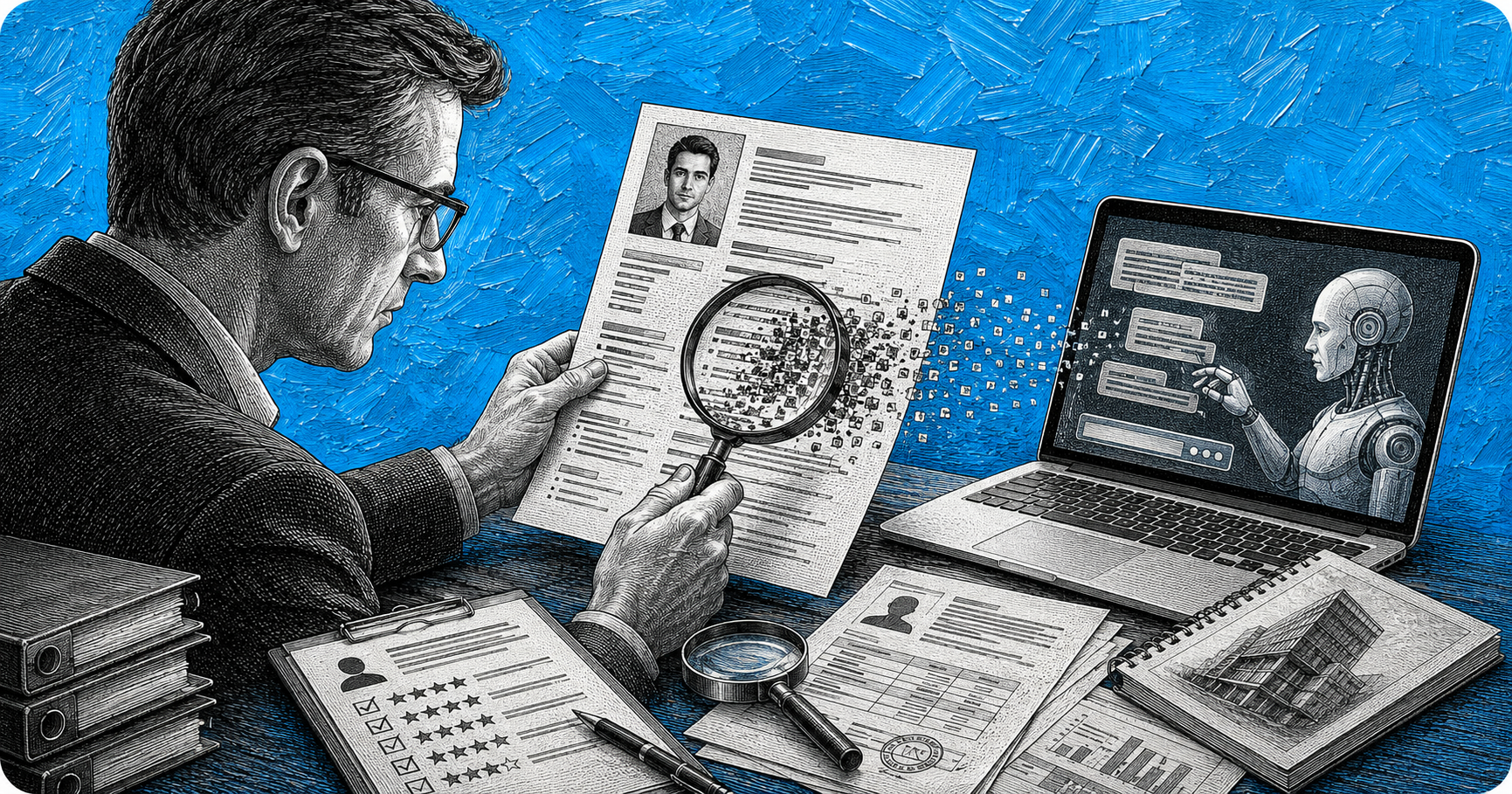
AI resume fraud is the practice of candidates using generative AI tools like ChatGPT to invent, inflate, or heavily embellish work experience, job titles, projects, and skills on a resume, specifically to slip past applicant tracking system keyword filters and impress a human reviewer. It is a resume and application stage problem, distinct from a […]