Make talent quality your leading analytic with skills-based hiring solution.
Remote hiring, remote assessment, and remote proctoring have become standard practice rather than a pandemic era experiment. Along with that shift came a rise in identity fraud and assessment malpractice: during 2020 and 2021, Glider Intelligence tracked a 92 percent increase in fraudulent test taking activity, and Glider’s own AI enabled proctoring features flagged assessment malpractice in 23 percent of candidates during that period. According to The Washington Post, citing data from ProctorU, cheating detected on remote exams rose from under 1 percent before the pandemic to above 8 percent during the peak of remote testing.
In a LinkedIn article, Nick Shah, Founder and President of Peterson Technology Partners, noted that the number of fake candidates may be small, but they can cause outsized damage in both time and cost to a company.
The traditional model of human proctoring is no longer the only invigilation option today. Backed by AI, proctoring systems generally fall into three types:
Online proctoring existed before the pandemic. Some recruiters and universities had already been using it for assessments and examinations, but widespread remote work and remote hiring brought it into the mainstream.
An Artificial Intelligence Proctoring System, or AIPS, has reinvented the proctoring mechanism. Beyond being user friendly, an AIPS tracks the candidate closely with little or no human intervention.
At the outset, AI based proctoring is an automated virtual proctoring system that monitors the candidate and their environment during an assessment. The system mainly deters and detects any suspicious activity that amounts to cheating.
Compared to other proctoring systems, an AIPS requires far less human interference and relies more on technology. Common requirements for AI based proctoring include:
Human proctoring is the classic invigilation model most people have experienced from school or university. Just because the world has largely moved to AI based automated proctoring does not mean human proctoring is obsolete. Much of the tedious work is now handled by technology, but AI still benefits from the watchful eyes of a human proctor.
A human proctor is an individual who invigilates candidates in real time, monitoring one or multiple candidates from start to finish. Human proctors need to be professionally trained on online proctoring technology, which is why many recruiting companies rely on third party professionals who specialize in the work.
In short, human proctoring is a live proctoring mechanism, monitoring candidates online rather than in a physical test center.
All proctoring systems, including AI based ones, are ultimately human centered. Scott McFarland, then CEO of ProctorU, has said that AI can never be a complete substitute for human proctoring, and that a trained proctor is necessary to correct behavior, review activity, and make a judgment call.
There are many views on how much AI and human proctoring should be integrated, and on whether it is appropriate to let an AI proctor operate entirely on its own. Either way, AI and automation are meant to support human decision making, not fully substitute for it.
It is rarely useful to frame this as AI versus human proctoring as if one must win. Human intervention still matters most when a candidate’s results look too good to be true, and no algorithm has yet matched human judgment for evaluating genuine talent quality. The well documented case of Amazon’s hiring algorithm, which was found to disadvantage female candidates because it mirrored biased historical hiring data, is a reminder of why the proctoring domain treats full automation with the same caution.
A human proctor remains valuable for reasons like these:
What is AI based proctoring?
AI based proctoring is an automated system that monitors a candidate and their environment during an assessment, using tools like facial recognition, browser lockdown, and audio and video analysis to detect suspicious activity, with little or no human intervention during the session.
Is AI proctoring better than human proctoring?
Neither fully replaces the other. AI proctoring scales monitoring across many candidates at once, while a human proctor is still needed to review flagged activity, resolve technical issues, and make judgment calls AI cannot make on its own.
What are the three main types of proctoring?
Live proctoring uses a human proctor in real time, recorded proctoring records the session for later human review, and automated proctoring uses AI to detect suspicious activity with no human intervention during the session itself.
Why do companies still use a human proctor if they have AI proctoring?
A human proctor clears false positives, calms candidates, handles technical issues, and reviews genuinely suspicious activity flagged by the AI, which keeps the process fair and protects the candidate experience.
Does AI proctoring introduce bias into hiring or testing decisions?
It can, if the system is left to make final decisions on its own; the safer approach, and the one most proctoring providers recommend, is to have AI surface findings for a human to review rather than letting an algorithm decide outcomes automatically.
True to its belief in talent first and integrity always, Glider AI combines technology and human oversight rather than choosing one over the other. Glider AI’s automated monitoring, comprehensive reporting, and auto flag features are built to surface findings, not make final decisions. Recruiters review the report and make the call themselves, so the ultimate hiring decision always stays with the hiring team. Learn more about Glider AI’s proctoring platform.
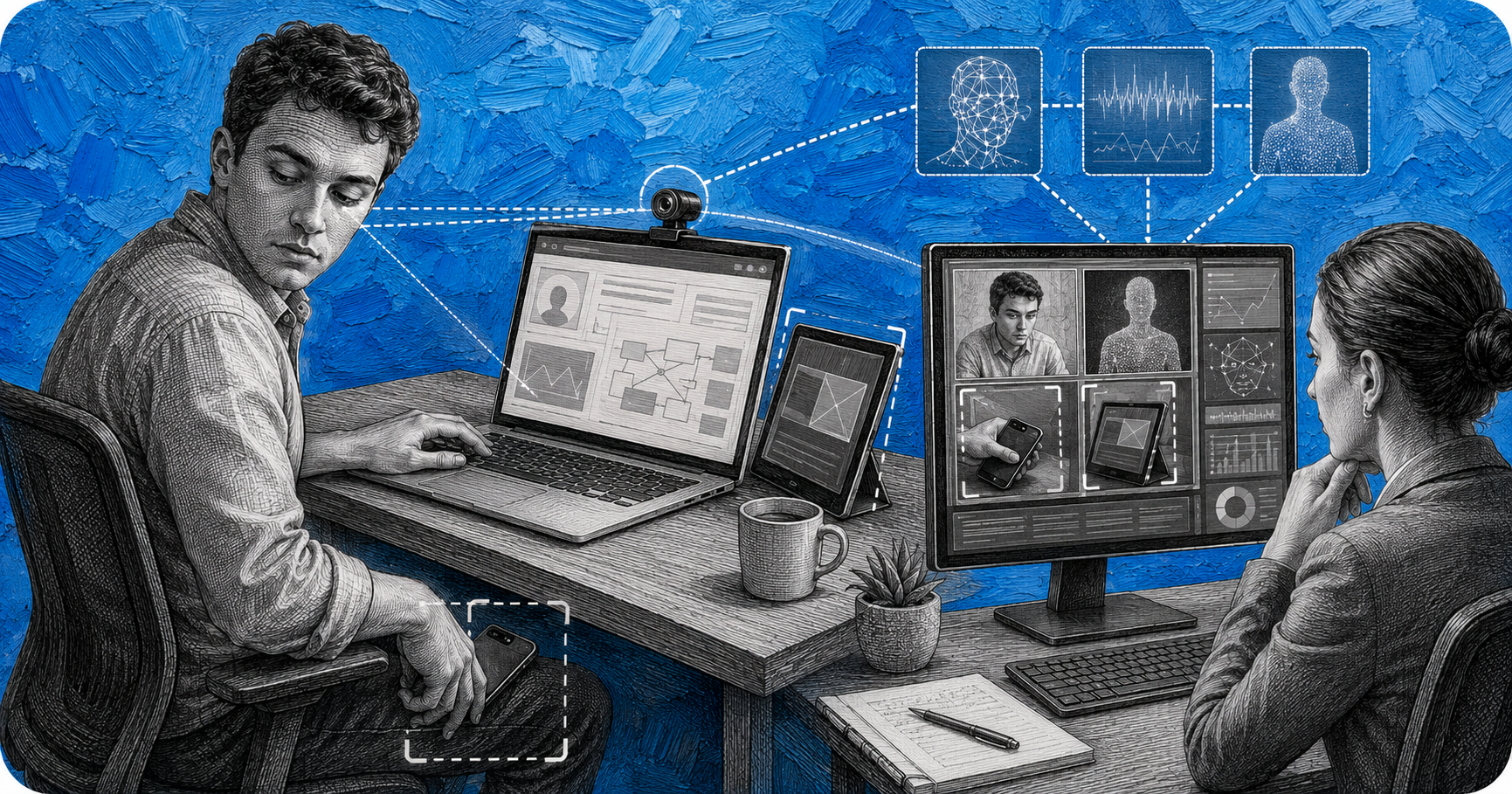
Second device cheating is when a candidate uses a phone, tablet, or second monitor outside the webcam’s view during a proctored online assessment to look up answers, message someone for help, or mirror their screen to a helper. It is one of the hardest forms of assessment fraud to stop with software alone, because the […]

Contingent worker identity verification is the practice of confirming that a freelancer, contractor, or gig worker is who they claim to be before they are onboarded, not just screened on paper. Most companies apply this scrutiny to full time employees and skip or shortcut it for contingent talent, which is exactly the gap fraud actors […]
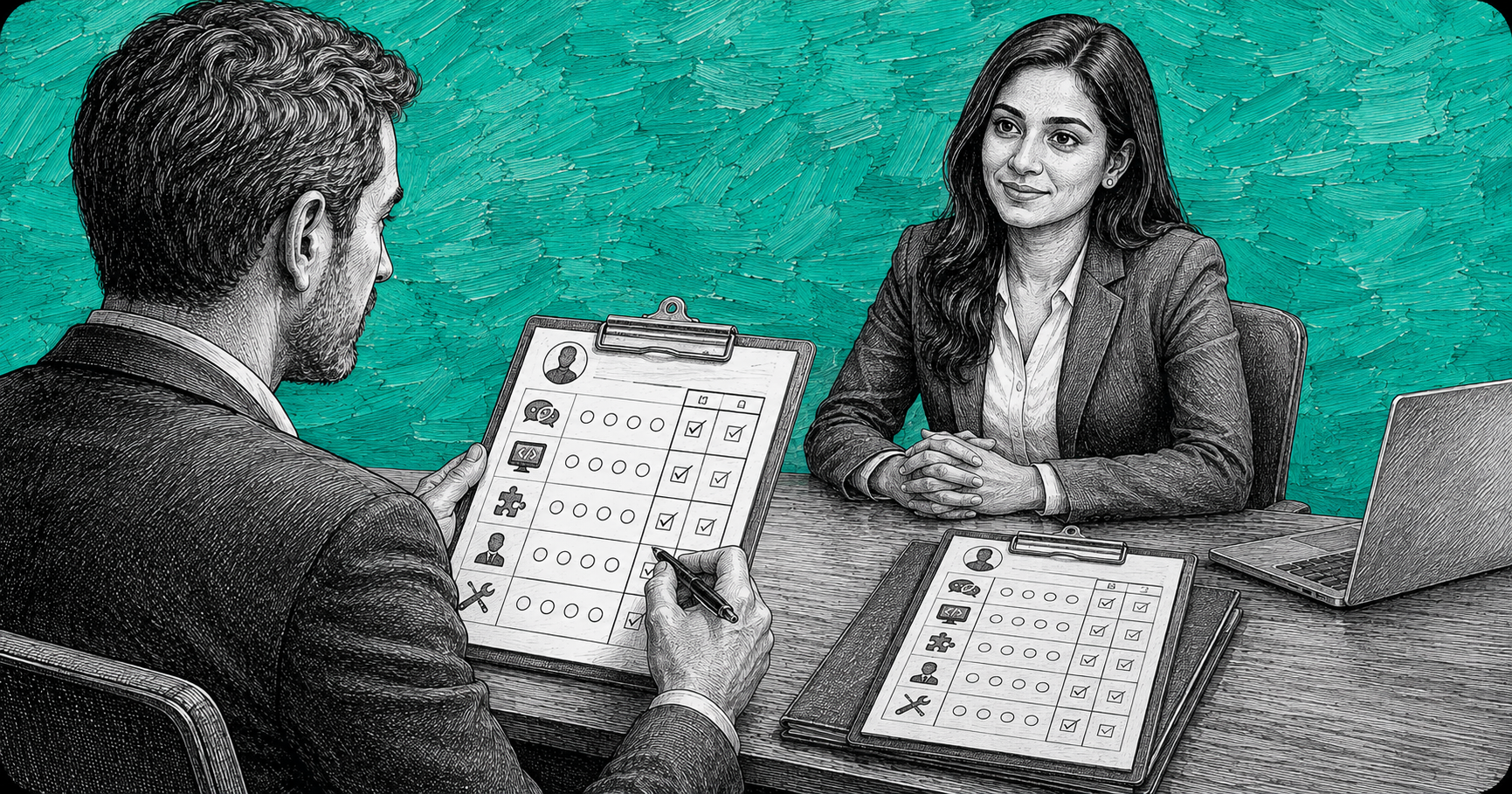
A structured interview scorecard is a standardized form that lists the specific competencies a role requires, gives every interviewer the same rating scale to judge candidate answers against, and forces a written justification for each score. It exists to replace gut feeling with evidence, so five interviewers evaluating the same candidate land on comparable, defensible […]