
Make talent quality your leading analytic with skills-based hiring solution.
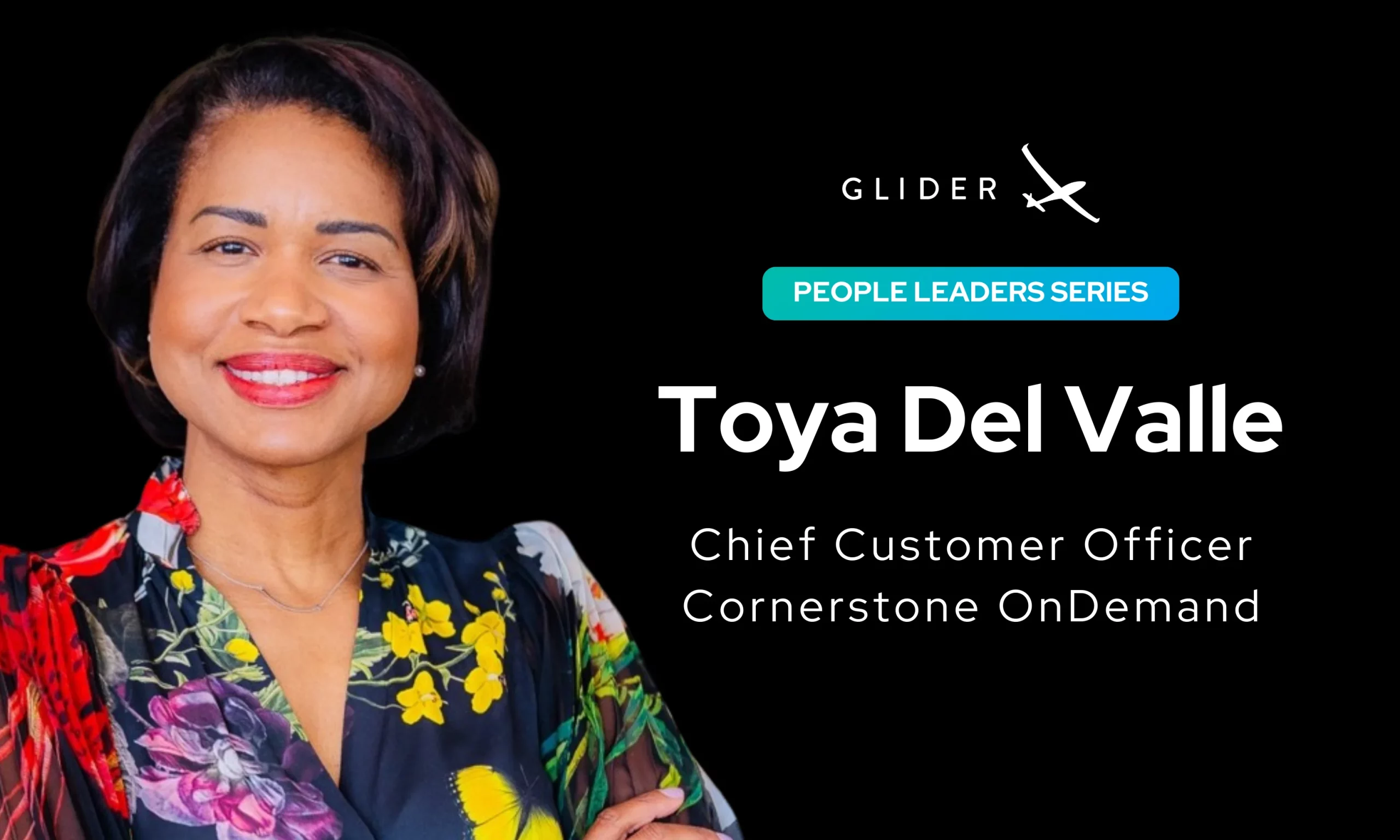
A skills based workforce strategy treats skills, not job titles, as the unit for hiring, developing and moving people. In a conversation with Kyle Lagunas, Cornerstone Chief Customer Officer Toya Del Valle argued that companies cannot hire their way out of skills gaps and must build capability inside the organization.
The conversation took place on the Transformation Realness Podcast, sponsored by Glider AI, and it lands on a tension many HR and talent leaders know well. Skills and AI dominate every conference agenda, yet many teams still struggle to define what a skill is, let alone build a strategy around it. This summary pulls out the ideas most useful for TA and HR leaders, and what they mean in practice for teams using tools like Glider AI L&D Software.
Del Valle pointed to a basic gap: “Everyone talks about skills and many folks are trying to figure out what are skills?” Without a shared definition, a skills based workforce strategy turns into a relabeled job architecture. Teams change titles to skill lists without changing how they hire or develop people.
What this means for TA teams: agree on the skills that matter for each critical role and how you will measure them. A skill you cannot test or observe is hard to hire for or develop.
Del Valle drew a parallel with earlier diversity efforts that relied mostly on hiring: “Some are trying to recruit their way through diversity. It’s not going to work.” The same applies to skills. “Companies cannot recruit themselves out of this change,” she said.
External hiring still matters, but a skills based talent strategy balances it with internal development. That changes the TA role from filling every gap from outside to working with L&D on which gaps to build and which to buy.
“Skills are about people. AI should be about people,” Del Valle said. The article highlighted Cornerstone’s acquisition of SkyHive as an example of applying AI to skills in a human first way.
For hiring teams, that means using AI to surface evidence and save time while people make the decisions. Assessment and interview tools should show their work so recruiters and hiring managers can review and defend outcomes.
“We really don’t know what the future holds,” Del Valle said. Long range workforce plans built on fixed role definitions break when the business shifts. Agility comes from people who can learn new skills quickly and from a clear view of what skills already exist inside the company.
“Cornerstone benefits from Cornerstone,” Del Valle noted. The company applies its own skills based approach internally, which gives its customers a working example rather than a theory.
| Question | Hiring led approach | Skills based workforce strategy |
|---|---|---|
| How gaps are filled | Mostly external hiring | Mix of internal development, mobility and hiring |
| What is measured | Titles, years of experience | Demonstrated skills |
| Role of AI | Screening volume | Surfacing skills evidence for people to act on |
| Role of HR | Fill requisitions | Own the skills agenda across hiring and development |
| Planning horizon | Fixed annual plans | Flexible, revisited as the business changes |
TA and HR leaders who want to act on these ideas can start small:
Our guide to skills based hiring for hiring managers covers the hiring side in more depth. For more conversations like this, explore the Talented Podcast archive.
Glider AI, a Findem company, helps organizations measure and build skills across the employee lifecycle. L&D Software supports skill gap analysis, skill benchmarking, practice based learning, mastery tracking and certification, so the skills you test at hiring are the skills you keep developing after. On the hiring side, Skill Assessment Software measures the same skills before an offer.
A skills based workforce strategy uses skills, rather than titles or degrees, as the basis for hiring, development, mobility and planning. It requires clear skill definitions and a way to measure them, both at hiring and on the job.
Demand for new skills moves faster than the external market can supply them, and hiring every new skill from outside is slow and expensive. Developing current employees fills gaps faster and keeps institutional knowledge in the company.
She said, “Skills are about people. AI should be about people.” Her view is that AI should help people grow and make better decisions, not replace human judgment.
Workforce agility is an organization’s ability to shift skills and people quickly as business needs change. It depends on employees who can learn new skills and on clear visibility into the skills the organization already has.
When hiring and L&D use the same skill definitions, assessment results at hiring become the starting point for each employee’s development plan. That links what you hire for to what you build.
Start with a few critical roles. Define the skills that predict success, measure them at hiring with job based tests, and use the same definitions to plan development for current employees. Review gaps with L&D each quarter.
The message from this conversation is direct: hiring alone will not close skills gaps. If your team is building a skills based workforce strategy, explore Glider AI L&D Software to measure and develop skills after the hire.
AI Is Transforming Recruitment. Here’s What HR Leaders Need to Know. Hiring is no longer about speed and scale alone. It’s about precision, experience, and knowing what AI should and shouldn’t decide. On a recent episode of the Talented podcast, host Joseph Cole interviewed Anshu Uppal, an HR transformation leader based in India with two […]
How AI Is Redefining HR Roles, Not Just Supporting Them When Joseph Cole from Glider AI spoke with Deeraj Malhotra, VP of HR at Birlasoft, the conversation quickly moved beyond AI hype to something more practical: how HR roles are actually evolving inside organizations. For a long time, HR was designed to keep things running […]
AI Has Changed Hiring Forever: HR Must Become a Security Function Hiring is undergoing a transformation that few HR teams are prepared for. What once felt like a talent challenge has rapidly evolved into a cybersecurity challenge unfolding inside the hiring process itself. That shift came into focus during a recent episode of The Talented […]
