Make talent quality your leading analytic with skills-based hiring solution.
Interview cheating covers the tactics a candidate uses to misrepresent who they are or what they know during a live conversation, as opposed to a written test. Remote video interviews made this meaningfully easier, since a screen removes several of the physical cues that used to make cheating obvious in person.
Understanding the specific tactics behind interview cheating is the first step toward actually catching it, rather than relying on a vague sense that something felt off.
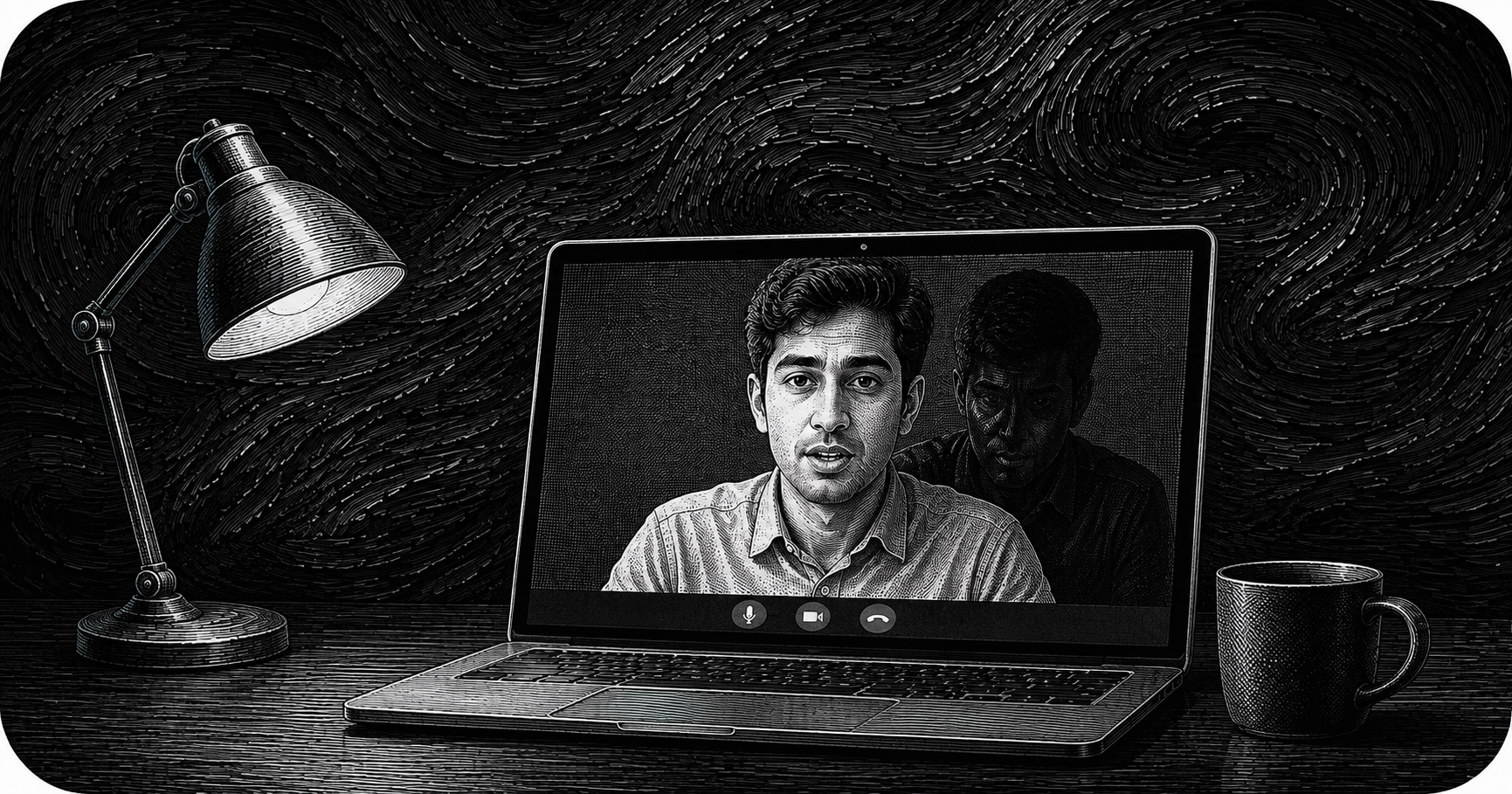
The most direct form of interview cheating is having someone else attend the interview in the candidate’s place, or feeding answers to the real candidate through an earpiece or a second device just off camera.
This is why identity checks at the start of an interview, not just at application, matter: a document verified at application does not confirm who is actually speaking twenty minutes into the conversation.
A more subtle version involves the real candidate attending the interview, but with someone else, or an AI tool, feeding them answers in real time through a hidden earpiece, a phone out of camera view, or a second monitor angled away from the webcam.
Signs include eyes repeatedly moving to a fixed point off screen, unnatural pauses followed by long, fluent, oddly formal answers, or a delay pattern that matches someone reading a response rather than thinking one through live.
In more sophisticated cases involving pre recorded or manipulated video, audio and lip movement can fall subtly out of sync, or audio quality can shift mid answer in a way that suggests a different microphone or environment took over partway through.
This overlaps with deepfake specific tactics, covered in more depth in our companion piece on AI assisted cheating in interviews.
Verify identity at the start of the interview itself, not only at application, using a real identity verification step rather than assuming the applicant and the interviewee are automatically the same person. Ask unscripted, specific follow up questions rather than only prepared questions, since prompted or proxy answers tend to handle predictable questions well but struggle with genuine follow up.
Watch for the behavioral patterns described above, off screen glances, unnatural pause and fluency patterns, audio inconsistencies, as signals worth a closer look rather than automatic disqualification. And where the stakes justify it, pair the interview with a structured, scored live interview process that builds identity and behavioral monitoring in by default, rather than relying on an interviewer’s gut feeling alone.
Interview cheating exploits the same gap remote hiring created everywhere else: distance removes the physical cues that used to make deception obvious. Knowing the specific tactics, and building identity verification into the interview stage itself rather than only at application, closes most of that gap.
Interview cheating covers tactics a candidate uses to misrepresent who they are or what they know during a live conversation, including proxy interviewing, hidden prompting through earpieces or off screen devices, and, in more sophisticated cases, manipulated or synthetic video.
Common tactics include having someone else attend in their place, receiving fed answers through a hidden earpiece or second device, and in more advanced cases using pre recorded or manipulated video that can show subtle audio and lip movement mismatches.
Signs include eyes repeatedly moving to a fixed off screen point, unnatural pauses followed by unusually fluent or formal answers, delayed responses consistent with reading rather than thinking live, and audio or video quality that shifts partway through the interview.
Employers can verify identity at the start of the interview itself, ask unscripted follow up questions rather than only prepared ones, and watch for behavioral patterns like off screen glances or unnatural fluency, ideally supported by a structured live interview process with monitoring built in.
It is not typically a criminal matter on its own, but it constitutes misrepresentation that can be grounds for immediate termination if discovered, and in staffing or contract placements can create separate contractual or liability issues for the placing organization.

Second device cheating is when a candidate uses a phone, tablet, or second monitor outside the webcam’s view during a proctored online assessment to look up answers, message someone for help, or mirror their screen to a helper. It is one of the hardest forms of assessment fraud to stop with software alone, because the […]

Contingent worker identity verification is the practice of confirming that a freelancer, contractor, or gig worker is who they claim to be before they are onboarded, not just screened on paper. Most companies apply this scrutiny to full time employees and skip or shortcut it for contingent talent, which is exactly the gap fraud actors […]

A structured interview scorecard is a standardized form that lists the specific competencies a role requires, gives every interviewer the same rating scale to judge candidate answers against, and forces a written justification for each score. It exists to replace gut feeling with evidence, so five interviewers evaluating the same candidate land on comparable, defensible […]