
Make talent quality your leading analytic with skills-based hiring solution.
In the quest for a more equitable workplace, companies across industries are striving to reduce bias in their hiring processes. Bias, whether conscious or unconscious, can significantly impact the diversity and inclusivity of an organization. It affects who gets hired, who gets promoted, and ultimately, who thrives within a company. AI adoption in HR tasks climbed to 43 percent in 2025, up from 26 percent the year before, according to SHRM’s 2025 Talent Trends survey of over 2,000 HR professionals, and much of that growth is happening inside the recruiting function. Artificial Intelligence in recruitment is emerging as a powerful tool to combat bias, offering practical ways to build fairer and more inclusive hiring practices, though it also raises new questions that recruiting teams need to manage carefully. This article explores how AI recruitment can reduce bias, where it needs guardrails of its own, and how to foster a genuinely diverse workforce.
Bias in hiring can manifest in many ways. It can be based on gender, race, age, socioeconomic background, or even appearance. These biases, often ingrained in human psychology, can lead to unfair hiring practices, where certain groups of people are favored over others without valid reasons. Traditional hiring methods, reliant on human judgment, are susceptible to these biases, making it challenging to ensure a level playing field for all candidates.
AI recruitment leverages machine learning algorithms and data analytics to automate and enhance various aspects of the hiring process. By removing some of the human element from the earliest stages of candidate screening and assessment, AI can help mitigate biases that typically influence these processes. Here is how AI can make a difference.
One of the first steps in the hiring process is screening candidates. Traditional methods involve human recruiters reviewing resumes and cover letters, a process susceptible to potential biases. AI screening, however, uses algorithms to analyze candidate profiles and match them with job requirements objectively. AI can conduct conversations over SMS, WhatsApp, and social media, prequalifying candidates faster and more efficiently. By focusing on skills, experience, and qualifications, AI helps ensure that no candidate is overlooked due to unconscious bias.
Skill tests are a crucial part of the recruitment process, helping to determine whether candidates possess the abilities a job actually requires. AI powered skill assessments use standardized, science based tests to evaluate candidates’ technical and soft skills objectively. These tests reduce the influence of biases that might arise during in person evaluations. By providing a uniform assessment environment, AI helps ensure that all candidates are judged based on their performance, not on subjective criteria.
Interviews are another critical stage where bias can creep in. Human interviewers, despite their best intentions, can be influenced by a candidate’s appearance, mannerisms, or even the way they speak. AI can support the interview process through live coding sessions, virtual one on one interviews, or asynchronous video interviews. These AI supported interviews focus on evaluating candidates based on their responses and problem solving abilities, reducing the potential for bias.
Diversity, Equity, and Inclusion (DE&I) are essential metrics for any organization committed to building a diverse workforce. AI can provide in depth DE&I analysis, offering insight into the diversity composition of candidates across the hiring lifecycle. By tracking metrics like age, race, and sex at an aggregate level, AI helps organizations understand their diversity landscape better and make informed decisions to improve inclusivity. This data driven approach helps organizations pursue diversity goals without compromising on the quality of hires.
Assessing departmental diversity is crucial to understanding how diversity varies across different parts of the organization. AI can analyze diversity at the departmental level, helping companies identify areas that need improvement. By surfacing where diversity lags across the organization, AI enables targeted interventions to promote inclusivity in departments that may be behind. This holistic view helps diversity efforts stay embedded in the organization rather than staying superficial.
Measuring DE&I retention is key to gauging the effectiveness of inclusion efforts. AI can track retention rates among diverse groups, providing insight into how well an organization is retaining its diverse talent. This information is useful for identifying gaps in the inclusion strategy and making adjustments to improve retention. By focusing on long term DE&I performance, organizations can better tell whether their diversity efforts are translating into a genuinely inclusive workplace.
AI recruitment relies on data driven decisions, which can be less susceptible to certain human judgment errors. By analyzing large amounts of data, AI can identify patterns and trends that might not be apparent to human recruiters. This capability allows AI to support decisions based on empirical evidence rather than subjective opinions. For instance, AI can help surface candidates who might have been overlooked due to unconventional career paths or gaps in employment, supporting a more inclusive selection process.
One of the significant advantages of AI in recruitment is the standardization of hiring practices. AI helps ensure that all candidates go through the same evaluation process, reducing the risk of inconsistent treatment. Standardized assessments and interview formats provide a fair platform for all candidates, regardless of their background. This uniformity not only helps reduce bias but also improves the overall efficiency of the recruitment process, supporting faster and more consistent hiring decisions.
Unconscious bias is a significant challenge in traditional hiring methods. Even well intentioned recruiters can be influenced by subconscious preferences, leading to biased hiring decisions. AI systems, when properly designed and monitored, can operate without many of these human biases. By focusing on objective criteria, well built AI tools reduce the influence of unconscious bias, supporting a fairer evaluation of candidates. This kind of objectivity is an important building block for a diverse and inclusive workforce.
AI recruitment can offer a high level of transparency and accountability when it is implemented well. Decisions made by AI systems can be tracked and audited, providing a clear rationale for why certain candidates were selected or rejected. This transparency is essential for building trust in the recruitment process, both within the organization and among candidates. It also allows companies to identify and correct any biases that might exist in their AI systems, supporting continuous improvement in the hiring process.
It is worth being direct about the other side of this topic. AI does not automatically remove bias, and a poorly built or poorly monitored system can encode and even amplify the same patterns found in the historical data it was trained on. Regulators have taken notice: New York City’s Local Law 144 requires employers using automated employment decision tools to complete an independent bias audit and publish the results before using the tool, and the EU AI Act classifies many hiring related AI systems as high risk, with its own documentation and oversight requirements. The practical takeaway is that AI should be treated as a tool that needs ongoing auditing and human oversight, not a set and forget fix for bias. For a closer look at what these rules require, see our guide to AI hiring compliance under NYC Local Law 144 and the EU AI Act, and for concrete mitigation tactics, see 5 strategies to mitigate AI bias and discrimination.
Reducing bias in hiring is not just a moral imperative but also a business necessity. A diverse and inclusive workforce drives innovation, enhances productivity, and improves employee satisfaction. Used well, AI recruitment offers a genuinely useful set of tools to combat bias in the hiring process, from objective screening and skill tests to DE&I analytics that make progress measurable. The standardization, transparency, and accountability that well governed AI systems can offer, paired with regular audits and human oversight, give companies a realistic path toward a fairer, more diverse hiring process, rather than a promise that any single tool solves the problem on its own.
Can AI really reduce bias in hiring?
Yes, when it is designed and monitored well. AI can standardize screening, skill assessment, and interview evaluation so that every candidate is judged against the same criteria, which reduces the influence of factors like appearance, accent, or unconscious favoritism that affect human reviewers. It is not automatic, though, and a poorly audited system can just as easily reproduce bias from its training data.
Can AI hiring tools also introduce bias?
Yes. If an AI system is trained on historical hiring data that reflects past bias, it can learn and repeat those same patterns. This is why regular, independent bias audits and human oversight are considered essential rather than optional, and why laws like NYC Local Law 144 and the EU AI Act now require formal accountability for automated hiring tools.
What is a bias audit, and is it required by law?
A bias audit is an independent statistical review of how an automated hiring tool’s outcomes differ across demographic groups. It is legally required in some jurisdictions, most notably under New York City’s Local Law 144 for employers using automated employment decision tools, and similar accountability requirements are emerging under the EU AI Act and other state level laws.
What is the difference between DE&I analysis and DE&I performance tracking?
DE&I analysis typically looks at the diversity composition of candidates at a given point, such as during sourcing or screening. DE&I performance tracking looks over time, measuring things like retention rates among diverse groups, to show whether inclusion efforts are actually working after people are hired.
Should AI make the final hiring decision on its own?
Most guidance, including from SHRM, recommends against letting AI fully automate a final hiring decision without human review. AI works best as a support tool that standardizes and speeds up earlier stages of the process, while a human recruiter or hiring manager remains accountable for the final call.
Glider’s recruiting platform combines skill based assessments, structured interviews, and DE&I analytics so you can reduce bias in your hiring process while keeping people in the loop on every decision.
Go ahead and build a fairer, more consistent hiring process with Glider AI today!
Schedule a Demo or contact us at info@glider.ai
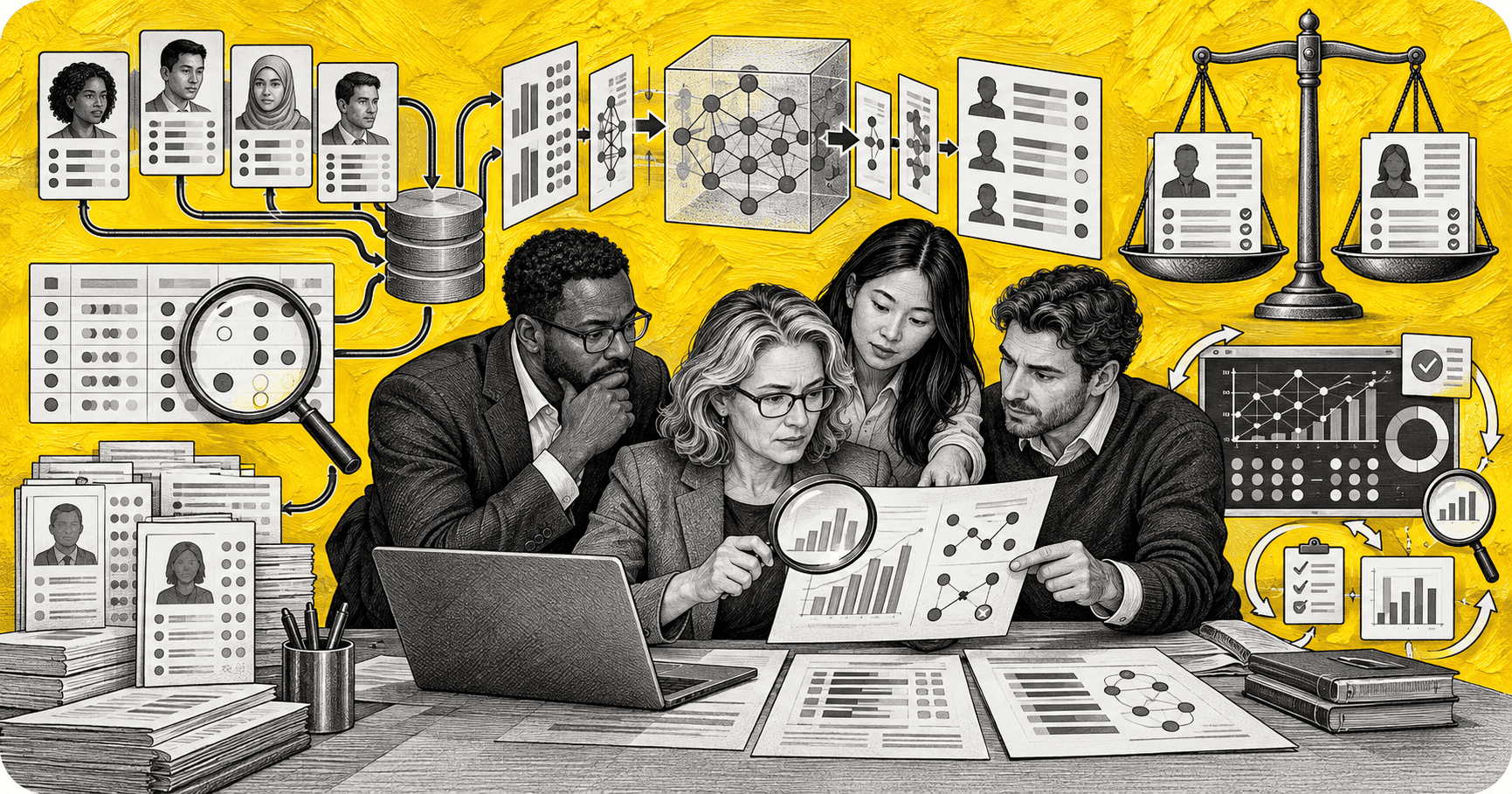
Every hiring algorithm learns from somebody’s past decisions. If those decisions favored certain schools, zip codes, or career paths, the model learns to favor them too, and it does so at a scale no single recruiter ever could. To mitigate AI bias and discrimination, you have to treat the AI as a decision maker that […]
The world is slowly waking up from the shackles of Covid. As it restructures to the imperative changes, there are individuals and institutions that need the most help, compassion and solidarity in the time of crisis. Like the UN says, Covid is a test of societies, governments, institutions and individuals. In term of individuals, DE&I and its […]
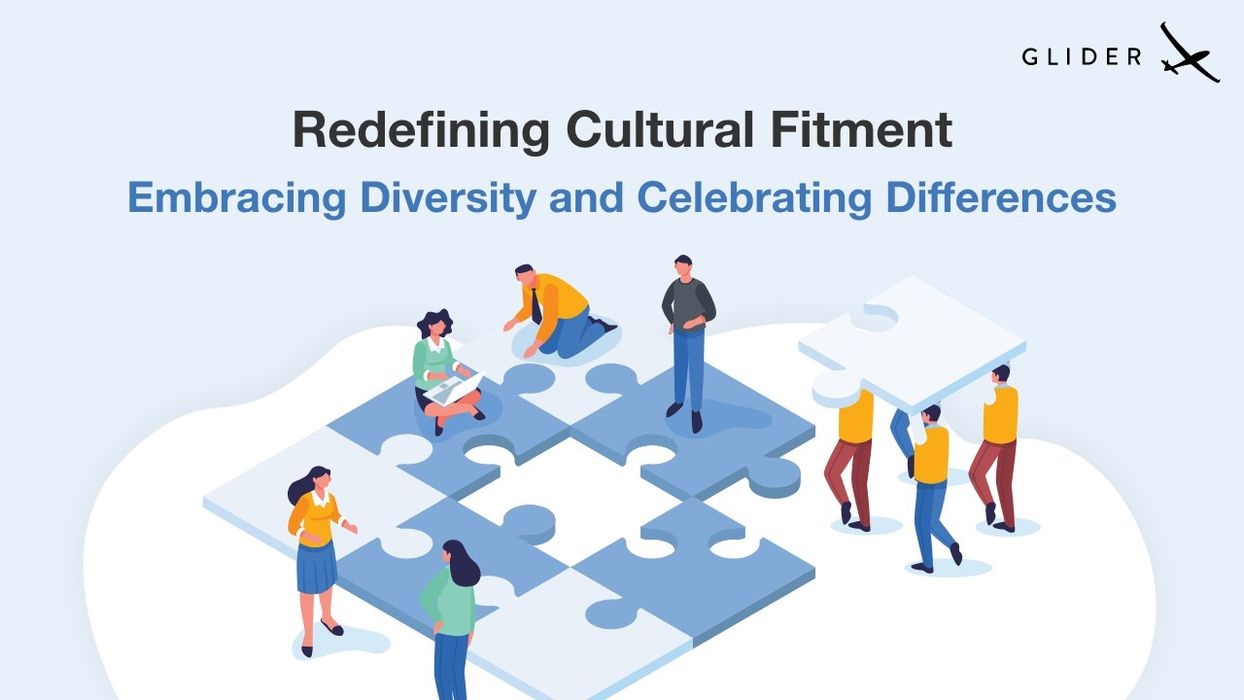
The definition of cultural fitment is discreet, based on a company’s ideologies and principles. In many cases, companies look for employees who match their requirements and have the qualities to “blend in” with the prevalent culture. “Maintaining the culture that you’ve built for your company is the goal of most business owners. Even before they […]