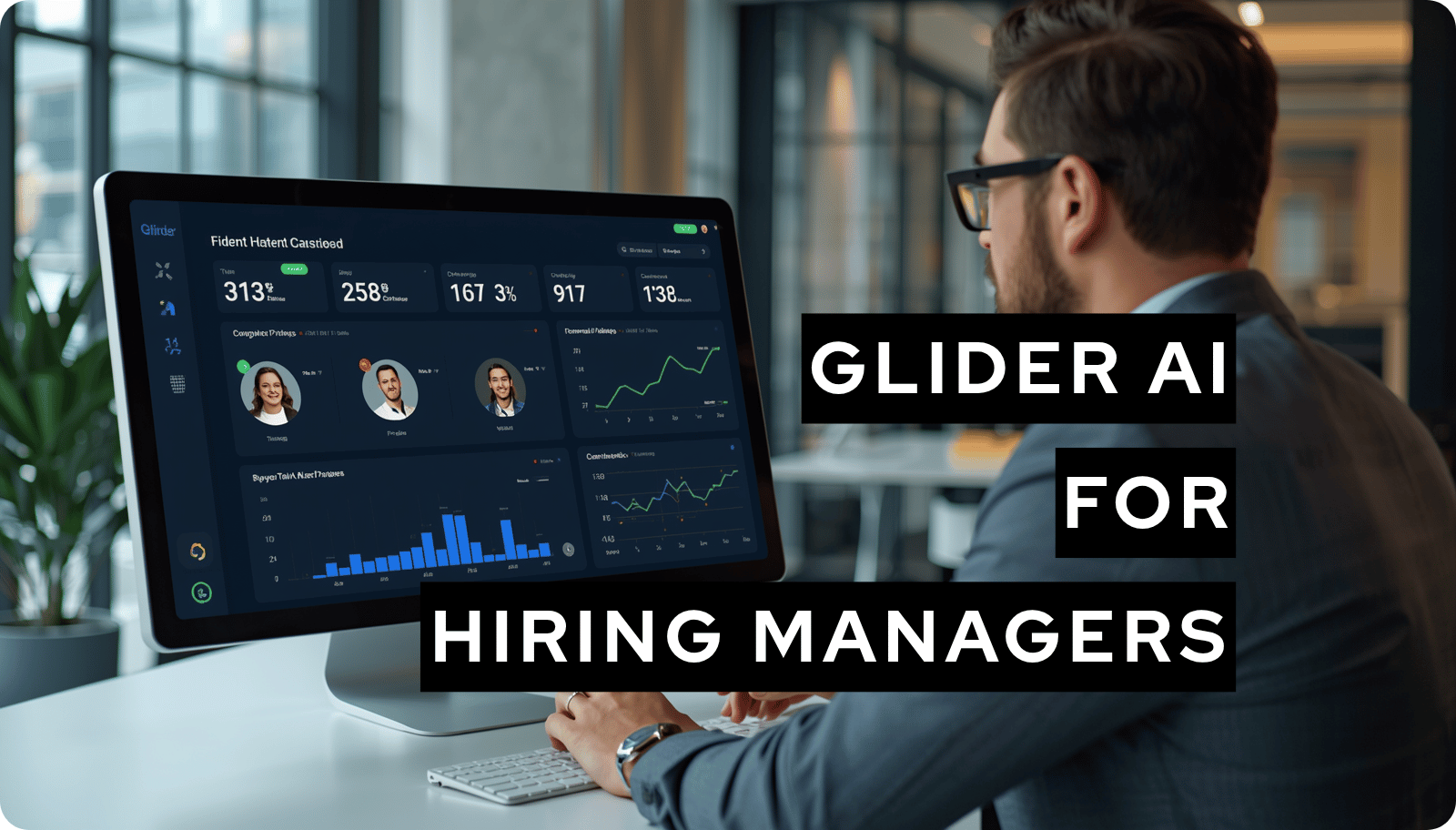
Make talent quality your leading analytic with skills-based hiring solution.
AI hiring tools for hiring managers screen, assess, interview and verify candidates before they reach your calendar. Glider AI gives hiring managers a shortlist backed by skills evidence, structured interview results and identity checks, so interview time goes to candidates who can do the job. Final decisions stay with you.
Hiring managers rarely complain about having too few applicants. The complaint is the fourth first round interview of the week with someone who clearly cannot do the work. Glider AI, a Findem company, is built to fix that. The AI Recruiter brings sourcing, screening and interviewing into one flow, so the people who reach you have already shown the skills the role needs.
Glider AI tests skills instead of trusting resumes. Candidates complete realistic tasks, answer structured interview questions and confirm their identity before a hiring manager spends time with them. Recruiters and hiring managers see the results in one place.
An AI voice recruiter holds early conversations with candidates by phone, capturing interest, availability, expectations and basic qualifications. Recruiters get a shortlist of interested candidates without hours of screening calls.
Role specific assessments replace generic tests. A support candidate handles a customer scenario; a developer solves a coding task. You see how candidates perform, not how they describe their performance. See Skill Assessment Software.
Structured formats, from one way video to live coding to AI interviews, keep questions and scoring the same for every candidate. Recorded interviews let you review answers when your schedule allows.
Identity checks and AI proctoring confirm the candidate in the interview is the person in the assessment and, later, the person who starts. Flags are evidence for review, not automatic rejections.
Scores, interview recordings and verification results sit together, so your debrief starts from shared evidence.
| Hiring step | Without AI hiring tools | With Glider AI |
|---|---|---|
| First screen | Recruiter phone calls, inconsistent notes | AI voice or chat screening with structured answers |
| Skills check | Resume review and gut feel | Role specific assessment with scores |
| First interview | Hiring manager live call with every candidate | Recorded or AI interview reviewed on your schedule |
| Fraud risk | Discovered late, sometimes after start date | Identity checked at each stage |
| Debrief | Opinions from different interviewers | Shared scores, recordings and rubric results |
The AI Recruiter combines sourcing, screening and interviewing in one flow, so hiring managers receive candidates who have already cleared the early steps.
AI video interviews run structured conversations with candidates at any hour, using questions your team sets and rubrics your team approves.
AI hiring tools work best with some groundwork:
For a wider view of measuring results, see our guide to crucial talent acquisition metrics.
Hiring managers and procurement teams need confidence in any vendor that handles candidate data. Glider AI holds SOC 2 Type II and ISO 27001 certifications, supports GDPR, CCPA, ADA and EEOC requirements, and integrates with common ATS and VMS platforms with single sign on. Glider AI customers include enterprises, systems integrators and staffing firms.
No. AI hiring tools handle early screening and assessment so hiring managers interview fewer, better qualified candidates. The final interview and the hiring decision stay with people.
Yes. Glider AI supports assessments and interviews for hundreds of non technical roles, including customer service, sales, operations and marketing, as well as technical roles.
Savings depend on volume and role, but the biggest gain comes from fewer first round interviews with poor fit candidates. Recorded interviews also let managers review answers on their own schedule.
Scores are evidence, not verdicts. Recruiters and hiring managers can review the full response, recording and context, and decide whether to advance the candidate anyway.
Questions are set in advance by your team, delivered the same way to every candidate, and scored against rubrics. Options to mask personal information help reviewers focus on the answers.
Glider AI integrates with common ATS and VMS platforms and supports single sign on, so results flow into the systems your recruiters already use.
The goal of AI hiring tools for hiring managers is simple: fewer interviews with the wrong people and more confidence in the right ones. Explore the Glider AI AI Recruiter to see how screening, assessment and interviews come together before candidates reach your calendar.
Recruiting has always been a field built on learning. Markets shift, candidate behavior changes, and hiring strategies evolve faster than most teams can document. That is one reason the HR podcast format has become valuable for recruiters looking to stay sharp. The best HR podcast for recruiters does more than fill time during a commute. […]
Recruiters often see change before it gets labeled a trend. A shift in candidate expectations. A hiring manager asking for different skills. Questions about AI, flexibility, or internal mobility showing up more often than they did a year ago. That is the future of work arriving in practical form. A strong HR podcast can help […]
Employee engagement is often framed as something that matters after hiring. Recruiters know it starts much earlier. It begins in the way roles are positioned, how expectations are set, and whether candidates are matched to the realities of the job. That is why an HR podcast about employee engagement can be surprisingly valuable for recruiting […]