Make talent quality your leading analytic with skills-based hiring solution.
Talent sourcing and contingent workforce programs are evolving faster than ever. With AI reshaping how companies find, evaluate, and engage workers, organizations are asking an increasingly urgent question: Will gig work collapse or transform?
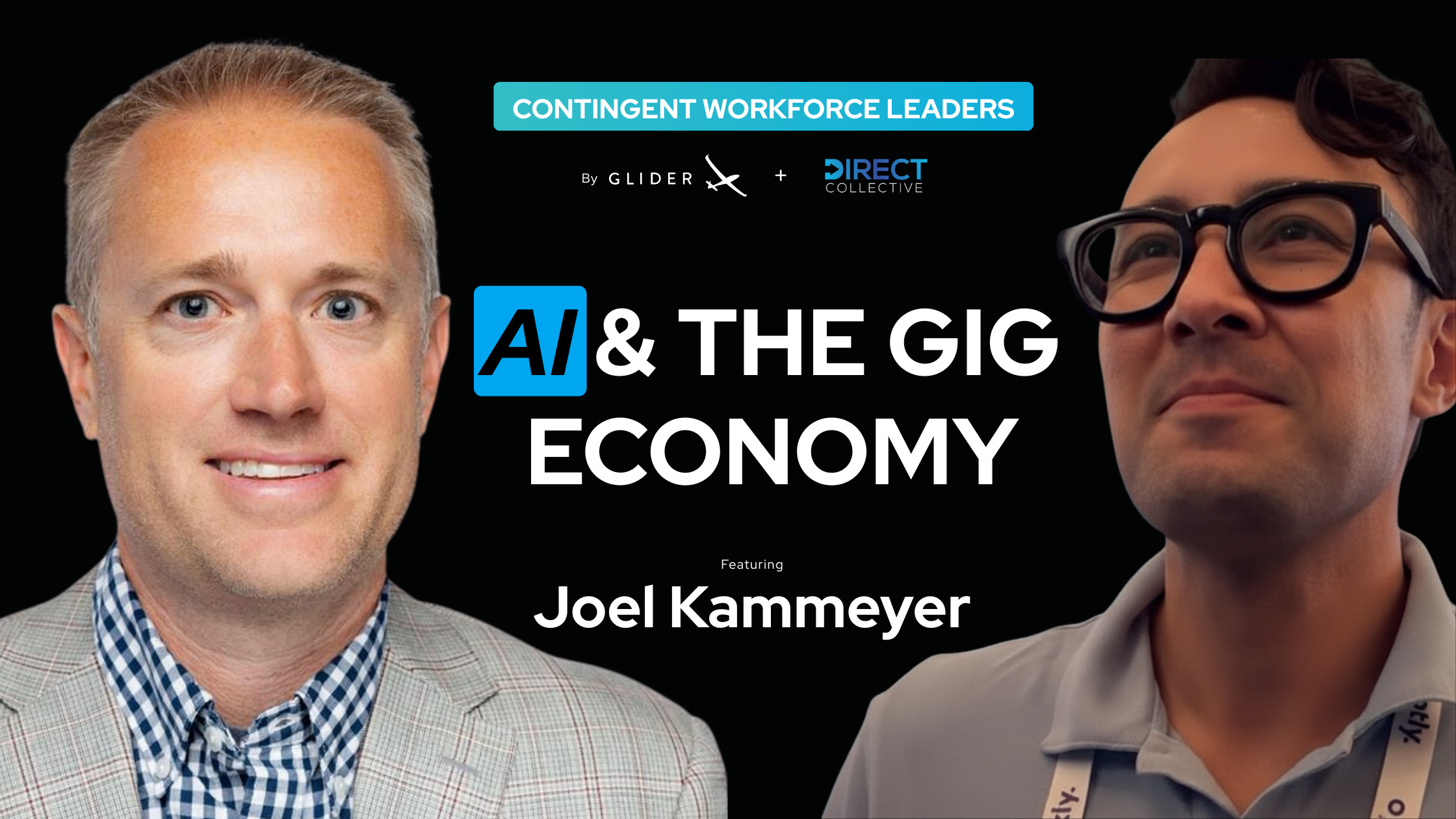
At ProcureCon 2025, Joel Kammeyer, Senior Director of Contingent Workforce at Epiq, offered a candid look at how AI is transforming the gig economy and the broader contingent workforce landscape. With responsibility for a global program that spans 18 countries and covers roles from call center support to high-level corporate attorneys, Joel brings a practical frontline perspective on where the next five years are headed.
Below are some takeaways from our interview with Joel and how they connect to broader industry research.
When asked whether AI and talent marketplaces might make staffing suppliers obsolete, Joel was direct.
“I do not think they will ever become obsolete. I think there is a place in the industry for them.”
He added:
“If I can fill this through direct sourcing, why would I pay a markup with a supplier?”
Companies are becoming more selective. They are using suppliers for the most specialized and difficult roles while relying on internal talent pools or platforms for everything else.
This matches market trends. Gartner reports that 87 percent of organizations are automating HR and workforce administration. Many of these functions were traditionally handled by suppliers.
Epiq uses Upwork, but Joel pointed out a major limitation.
“There are millions of people on that platform, but the challenge is connecting it to your traditional VMS.”
He believes true value will come when marketplace workers are fully integrated into the same systems that manage supplier and W2 labor. Without this, companies only capture a fraction of the potential offered by AI and digital platforms.
IDC supports this view. They report that by 2027, 40 percent of enterprises will adopt low-code or no-code HR infrastructure to create more flexible and connected workflows.
Joel does not believe that AI will eliminate gig work.
“I do not think so. I think it will evolve to where technology really makes it easier to connect the end client and that worker. Whereas in the past you had to sell yourself as a consultant, now technology really makes it easier to connect the end client and that worker.”
In Joel’s view, AI will increase the volume of opportunities by making matching faster and more precise. Workers and companies will both benefit.
Joel highlighted two areas where he already sees growth.
“Creative marketing roles. You are seeing a lot of that. I think lawyers. That is a great one for us.”
He explained that short-term legal work does not always justify a full-time employee.
“Maybe they do not need to have somebody on a W2 long-term if they have three months of work to get done.”
He also emphasized a major transformation in task structure as AI becomes more advanced.
“Some of the work that our contingent workers are doing will be replaced by AI. But I see more people needing to be quality control.”
Workers will shift from output creation to validation and oversight.
On the future of managing AI in the workforce, Joel said:
“I think it will eventually get to where you are having an MSP-like version of managing that technology for an organization.”
Some companies will internalize this work. Others will rely on outside partners. Either way, orchestration becomes a program in itself.
Looking ahead five years, Joel shared a bold view.
“I think we will find a disruptor like an Uber for staffing. That platform is that connection point.”
He predicts a world where enterprises and workers meet digitally. Friction reduces. Speed increases. And traditional staffing models evolve or adapt.
Joel described a significant shift in where Epiq is now finding talent.
“We are in 18 countries, but we have contingent workers in 25 countries. We are seeing Pakistan, Nepal, and South Africa, where we are not even located.”
He believes offshoring in the traditional sense is becoming more expensive and less predictable. Companies are turning to new regions and using flexible management systems to hire talent without needing physical operations there.
Joel’s message to workers and leaders was clear.
“With AI you have to embrace it. If you do not, you are going to be left behind.”
He also stressed governance.
“Trust but verify. I think that is what you need to do.”
His teams already use Microsoft Copilot and ChatGPT. He encourages workforce leaders to involve IT, risk, and compliance as they update their policies.
Joel ended with a long-term view of workforce dynamics.
“There is a lot of supply out there. A new workforce is coming on as baby boomers are retiring. Fewer babies being born. Embrace AI, we may not need as many jobs.”
OECD research confirms this trend. Many developed countries are experiencing a shrinking working-age population. That means companies must use AI and flexible talent to keep productivity stable.
Joel Kammeyer’s view is straightforward. We are not watching the collapse of the gig economy. We are watching its evolution. AI will not replace contingent work. It will enhance it. It will make matching smarter. It will make projects more dynamic. And it will require new skills related to quality control and governance.
To stay ahead, leaders should:
• Use suppliers strategically and not by default.
• Integrate platforms into their VMS and talent systems.
• Invest in legal, creative, and project-based skills.
• Prepare for MSP-style oversight of AI and tech workflows.
• Build trust and verify frameworks for AI use.
• Plan for demographic pressure on labor supply.
Joel’s message is simple. Move forward with intention. The next era of contingent work will be more interconnected, more global, and more technology-driven.
Joseph Cole (00:01)
Joel, hello, welcome. We’re here at ProcureCon 2025. How’s it going for you today? Awesome. Anything that you’re excited about seeing today?
Joel Kammeyer (00:07)
Really well.
I’m interested to see AI, what the industry is doing with AI, direct sourcing, a few other things, yeah.
Joseph Cole (00:19)
Awesome, so why don’t you give us a little background about yourself, your role, who you work for, what you do, all the good stuff.
Joel Kammeyer (00:25)
Yeah. So I’mSenior director of contingent workforce at Epiq. We’re legal services, so we do anything from call center staffing to high level lawyers in corporate counsel. So a little bit of everything. We have a program that’s around in 18 countries. Wow. And how long have you been at Epiq? I’ve been at Epiq coming up on six years. OK, awesome. And where are you based? I’m based in Kansas City, Missouri.
Joseph Cole (00:39)
Awesome.
Wow, and how long have you been at Epiq for? I’ve been at Epiq, coming up on six years. Okay, awesome. And where are you based? I’m based in Kansas City. Kansas, nice. Kansas City. That’s Missouri, not Kansas. Okay, awesome.
Joel Kammeyer (00:55)
Well, there’s both, but I’m on the Missouri side.
Joseph Cole (01:00)
AI is ubiquitous, you know, it’s here, it’s everywhere and it’s impacting contingent staffing, the gig economy. And so what we’d like to talk about today with you is will the gig economy collapse or evolve knowing all of this stuff going on? So my first question for you is with AI optimizing talent marketplaces, will staffing suppliers become obsolete?
Joel Kammeyer (01:00)
you
I don’t think they’ll ever become obsolete. I think there’s a place in the industry for them. However, I think as technology has improved, you’re starting to see direct sourcing, you’re starting to see that freelance management systems, the gig platforms come about. So you’re starting to see more programs look at this more strategically. So you see, okay, if I can fill this through direct sourcing, why would I pay a markup with a supplier? So it’s really looking at your program, what roles you can fill internally or through a platform versus maybe it’s a hard to fill role. Maybe it’s suppliers that can fill those hard to fill roles and that’s where I think they fit in.
Joseph Cole (02:04)
Interesting. Do you see any particular marketplaces becoming more important?
Joel Kammeyer (02:11)
We’ve used Upwork, so I can probably only speak to that. do think that, you know, there’s millions of people on that all around the world. I think it’s really how best to connect that then to your more traditional vendor management system. How do you fit that in the program? Because that is a challenge today for programs where if they have a traditional VMS, how do you make sure that all of that is automated and streamlined?
Joseph Cole (02:18)
Yeah. Right, It makes sense.
Next question for you. Will direct sourcing and AI-powered talent pools make traditional gig work irrelevant?
Joel Kammeyer (02:44)
I don’t think so. think it’ll evolve to where I think it just makes it easier to find that talent. So whereas used to as a consultant you might have had to sell yourself or go out and sell, I think now That technology really makes it easier to connect the end client and that worker.
Joseph Cole (03:02)
Right. What skills do you think are becoming more important with this, particularly for gig workers? I guess there’s a lot of skills out there, obviously. What kind of roles or expertise are?
Joel Kammeyer (03:15)
Well, what I see, not even necessarily for what I staff, but creative marketing roles, you’re seeing a lot of that. I think lawyers, that’s a great one for us, that if you don’t have to go through a supplier, go straight to that gig platform. If you need a piece of work done, a project done, I think that’s what we’re moving to more so as employers get smarter about it. Maybe they don’t need to have somebody on a W-2 long term if they have three months of work to get done.
Joseph Cole (03:23)
really?
Yeah.
Joel Kammeyer (03:45)
I think we’re more towards that, your workforce still has to become comfortable with having that instability or that perceived instability.
Joseph Cole (03:53)
Right, right. All right, interesting.
No, it makes a lot of sense. Second to last question for you. How will enterprises manage a fully AI-driven and flexible workforce?
Joel Kammeyer (04:06)
That’s great question. I think there’s always going to be pieces, but I see it going to your MSP model today. I think it will eventually get to where you’re having an MSP-like version of managing that technology for an organization.
An organization doesn’t have to evolve with the technology if they maybe outsource that. So I think there will still be organizations that want to insource, want to control that, but I see that market becoming more prevalent.
Joseph Cole (04:38)
Awesome,
Well last question for you and great insights on that one. Five years away, it’s 2030, it sounds like such a massive milestone, right? It is the future. So much is changing, right, so quickly. What predictions, if any, do you have for the contingent workforce ecosystem at large?
Joel Kammeyer (04:47)
It’s so much easier.
I think, maybe what I said already a little bit, but I think we’ll find a disruptor like an Uber for staffing. I see us going to that type of model where if I’m a worker, I get on a platform, an enterprise company, that platform is that connection point, and I think you’re going to see that become more prevalent. Sure.
Joseph Cole (05:17)
Awesome, well is it okay if I ask a few more questions? Just kind of curious. So what specific challenges are you experiencing right now with your contingent staffing programs?
Joel Kammeyer (05:28)
I think as the world has evolved post pandemic, you have a lot of workers that have become, know, bubbled up to the surface in various markets that maybe like for us, we’re in 18 countries, but we have contingent workers in 25 countries. So we’re seeing, you know, Pakistan, Nepal, South Africa, where we’re not even located, we’re finding talent for IT there. So I think as, you know, offshoring was a, was big years back, I think that’s become a little more expensive, a little more complex.
Joseph Cole (05:43)
Yeah.
Joel Kammeyer (05:58)
So companies are starting to look at various other markets and I think your FMS’s are some of what’s going on there.
Joseph Cole (06:03)
Yeah. It’s the majority of your roles still IT in nature or tech by nature or operations. Yeah. Yeah. And you see the demand for those roles shifting a little bit with more AI coming into play or? Yeah.
Joel Kammeyer (06:09)
We do a lot of operations, so project management, call center, claims processing.
I see it shifting a little bit. I think some of the work that our contingent workers are doing will be replaced by AI. But I see more people needing to be quality control. So I think that’s where, you you have to protect your data. You have to make sure the AI is actually doing what it’s supposed to. So I know for us, those lawyers that are doing manual doc review today, that will eventually evolve into we need more quality control than actual review.
Joseph Cole (06:39)
Yeah. Right, right.
So I guess, you know, it’s a big scary thing, AI, right? Like, what advice would you give, say, contingent workers just looking to, like, make sure that they have some level of stability if they can have stability? And maybe even the same for contingent staffing executives and leaders, you know? Yeah.
Joel Kammeyer (07:07)
I think with AI you have to embrace it. So I know, I’ve told my team, we have to embrace it. We use Microsoft Copilot, we use ChatGPT, we really try to embrace that because if you don’t, you’re going be left behind and you’re not going to be able to keep up. you know, it’s a scary new world I guess, but I think as long as you have the protections in place, you have your IT involved, know, trust but verify I think is what you need to do.
Joseph Cole (07:31)
Yeah.
Awesome. Well, I asked you extra questions and I think I got some really great insights from there. So thank you so much, Joel. Is there anything else that you want to share with us or take away?
Joel Kammeyer (07:37)
Sure. Absolutely.
Like I said on my last, I think just embracing that technology, keeping an open mind, I think there’s a lot of supply out there and there’s a new workforce coming on as baby boomers are retiring. Less babies being born, I think AI, you embrace it because we may not need as many jobs.
Joseph Cole (07:52)
Yeah.
Well, I thought that was great and we got a lot of good insights like I said, so I’m gonna end this Whenever it lets me. This is such a weird thing. Okay, let me try one more. Good thing I can edit.
Thank you for your time.
Joel Kammeyer (08:15)
Yeah.
Thank yor for having me.

AI Has Changed Hiring Forever: HR Must Become a Security Function Hiring is undergoing a transformation that few HR teams are prepared for. What once felt like a talent challenge has rapidly evolved into a cybersecurity challenge unfolding inside the hiring process itself. That shift came into focus during a recent episode of The Talented […]
The Limits of AI in Hiring Why Human Judgment Still Matters Abhishek Nag is not a conventional HR leader. An engineer turned entrepreneur turned HR executive, he currently serves as Global Head of HR at Fornax, a multi-entity services organization with more than 40,000 employees across 16 countries. That cross-functional background gives him a systems-level […]
Keeping the Human in the Loop: How AI Is Rewriting HR, Recruiting, and the Role of Leadership Featuring Lionel Paul David, Global CHRO, WaterTech India As the Global Chief Human Resources Officer at WaterTech India, Lionel Paul David has spent the past two years driving transformation across HR, communications, and ESG for one of India’s […]