Make talent quality your leading analytic with skills-based hiring solution.
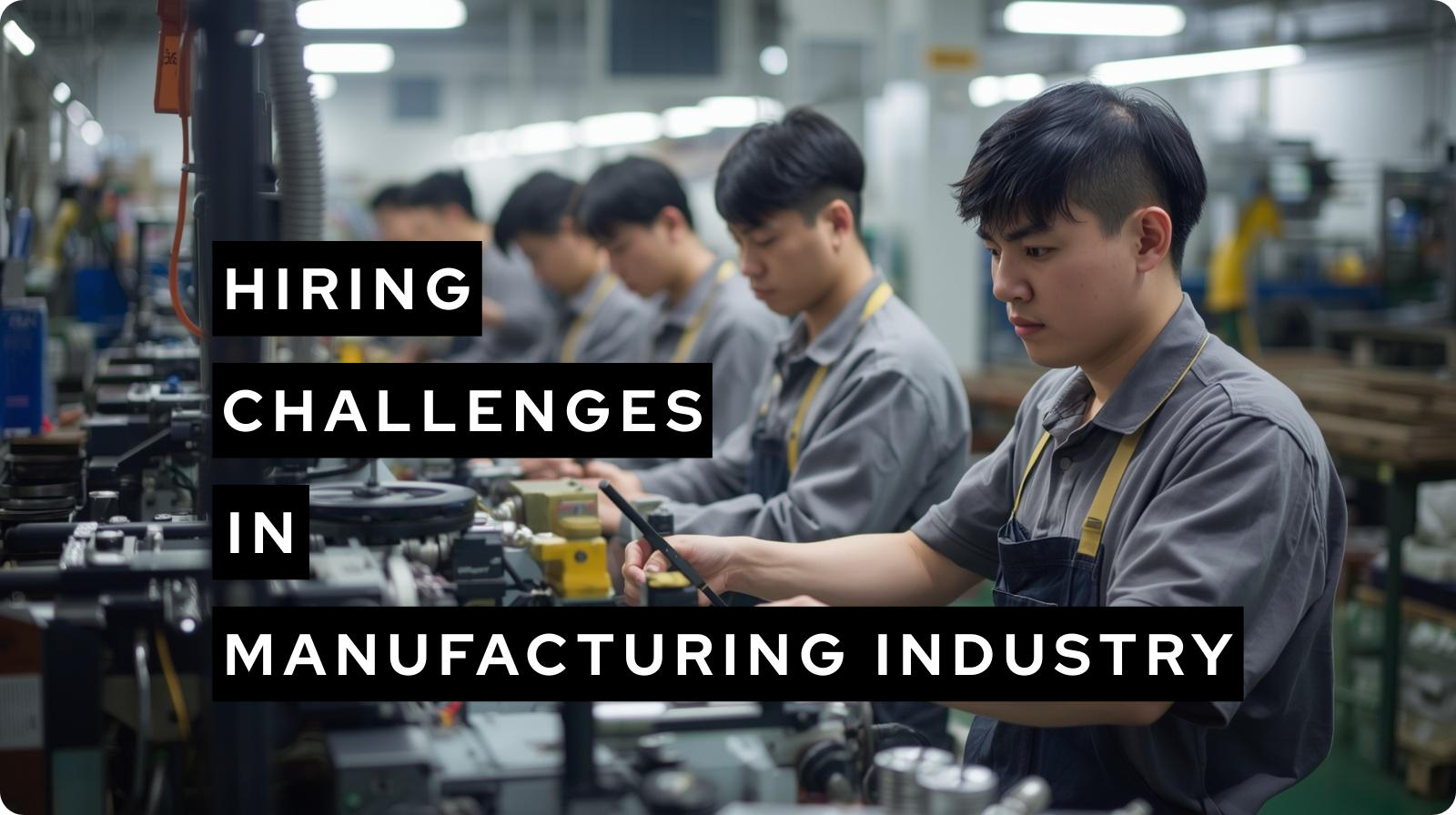
Challenges in manufacturing industry hiring are becoming harder for plant leaders and HR teams to manage.
Every manufacturing leader recognizes this pressure.
A production line is scheduled to start. A new project is approved. A customer deadline is already tight. Yet the hiring pipeline is not ready.
Resumes are coming in. Interviews are happening. Still, plant heads and HR teams often feel uncertain about who is actually prepared to step onto the shop floor.
The reality is that the challenges in manufacturing industry hiring today are not just about finding people. They are about finding individuals who can work safely, adapt quickly, and perform in real production environments from day one.
For HR leaders, operations managers, and plant heads, hiring has quietly become one of the biggest operational risks.
Let’s explore the real, root-level challenges in manufacturing industry hiring and why they keep repeating across plants, regions, and roles.
Almost every hiring discussion in manufacturing starts with the same frustration.
“We are getting candidates, but they are not ready for the floor.”
This is one of the most visible challenges in the manufacturing industry hiring today.
Candidates may come with certificates, diplomas, and even years of experience written on their resumes. But when they enter a live production environment, many freeze.
They hesitate around machines. They struggle to follow work instructions. They are unsure how to respond when something goes wrong. And most importantly, they are not confident working inside a tightly controlled, safety-driven, and time-sensitive environment.
The root of this problem is not attitude. It is exposure.
Most talent pipelines do not give enough real production experience. Training is often classroom-based. Assessments are mostly theoretical. So when candidates finally step into a real plant, the learning curve becomes steep and risky.
For operations leaders, this translates directly into longer ramp-up time, more supervision, and lower line efficiency.
Another painful truth behind the challenges in manufacturing industry recruitment is the mismatch between resumes and real capability.
A resume can say many things.
It can say CNC operation. It can say “quality inspection.” It can say maintenance exposure.
But very little on a resume tells you how a person behaves when a job setup goes wrong, when a tool breaks mid-cycle, or when a supervisor changes priorities during a shift.
Most hiring processes still rely heavily on interviews and self-reported experience. Interviewers ask what candidates have done. Candidates explain what they believe they have done. Everyone moves forward with assumptions.
Only after the person joins do teams realize that practical depth is missing.
By then, the cost is already incurred. Training time is spent. Supervisors are stretched. Production schedules take the hit.
This silent mismatch remains one of the most expensive challenges in manufacturing industry hiring.
Many plants quietly accept it.
People join. People leave. It happens.
But high attrition in the first few months is one of the most damaging challenges in manufacturing industry operations.
In most cases, people do not leave because they are bad workers.
They leave because the job is very different from what they imagined.
The physical strain. The standing hours. The shift rotations. The discipline. The pace of production. The pressure to meet targets while following safety rules.
These realities are rarely visible during interviews.
So candidates accept roles with incomplete expectations. When reality hits, many realize the role is not for them.
For manufacturing organizations, this creates a constant loop of rehiring for the same positions. It weakens team stability. It frustrates supervisors. It drains training budgets.
More importantly, it damages workforce morale.
Another often-overlooked challenge in manufacturing industry hiring is how slow and inefficient screening has become.
Recruiters spend hours reviewing resumes that look almost identical. Hiring managers spend time interviewing candidates who are clearly not suitable once they start speaking.
When volumes increase, depth reduces.
The pressure to close open positions forces shortcuts. Screening becomes lighter. Decisions become faster, but not better.
Ironically, while production teams need people urgently, the hiring process itself becomes one of the biggest bottlenecks.
This delay directly affects capacity planning, shift allocation, and project commitments.
One of the hardest challenges in manufacturing industry recruitment is evaluating behavior.
Manufacturing performance depends on how people behave under real working conditions.
Do they follow instructions without cutting corners?
Do they escalate safety concerns immediately?
Do they stay focused during repetitive tasks?
Do they communicate clearly with supervisors and coworkers?
These behaviors decide safety outcomes and quality consistency.
Yet most interviews are not designed to reveal them.
Candidates know how to answer behavioral questions. But very few hiring processes allow leaders to actually observe how a candidate reacts to realistic shop floor scenarios.
This creates a workforce that may be technically acceptable but operationally fragile.
If you manage multiple locations, you already know this challenge.
One plant hires cautiously and systematically. Another plant hires quickly through agencies. A third relies heavily on referrals and quick interviews.
Over time, the quality of hiring becomes inconsistent.
This is one of the most complex challenges in manufacturing industry workforce planning.
Leadership teams struggle to move people across plants. Productivity varies for similar lines. Safety culture feels uneven. Supervisors in certain locations spend far more time correcting basic work behavior.
Without a common way of evaluating readiness, standardization becomes extremely difficult.
Perhaps the most stressful of all challenges in manufacturing industry hiring is the pressure to hire fast.
When a line must run, roles cannot remain vacant.
But every rushed hire introduces operational risk.
A wrong hire on the shop floor does not just affect output. It can affect safety, equipment, and the people working around that person.
Hiring leaders and plant heads constantly walk this tightrope.
Speed on one side. Safety and productivity on the other.
The uncomfortable reality is that most hiring systems were built for office roles, not for production environments.
Resumes and interviews work reasonably well when work is knowledge-based.
Manufacturing work is execution-based.
It requires coordination, discipline, real-time decision-making, and strict safety compliance. Yet hiring still focuses on what candidates say, not what they demonstrate.
Without realistic, job-aligned evaluation, organizations are forced to rely on judgment and intuition.
That is why the same challenges in the manufacturing industry hiring repeat across plants, years, and leadership teams.
Across the manufacturing sector, some organizations are beginning to rethink how they evaluate talent.
Instead of asking only about past experience, they are introducing assessments that reflect real work situations.
Candidates are asked to solve practical problems. They are exposed to role-relevant scenarios. Their responses are observed, not just heard.
This shift is helping teams identify job readiness earlier and with far more confidence.
Platforms such as Glider AI are part of this broader movement toward skills-based hiring. By enabling real-world, role-aligned assessments, they help hiring teams see how candidates perform before they enter the plant environment.
For HR and operations leaders, this creates a common language.
Instead of debating resumes and interview impressions, they can discuss actual performance signals.
Not in a sales-driven way, but in a way that supports safer, more predictable hiring decisions.
Manufacturing is becoming more complex, not less.
Automation, tighter quality standards, and increasing safety expectations are raising the bar for workforce readiness.
If hiring practices remain unchanged, the same challenges in manufacturing industry recruitment will continue to weaken productivity, stability, and plant culture.
The real shift is not about adding more interview rounds or stricter filters.
It is about aligning hiring with the reality of the job.
When candidates are evaluated through realistic tasks and scenarios, hiring becomes less dependent on assumptions and more grounded in evidence.
For HR leaders, plant heads, and operations managers, this shift offers something extremely valuable.
Confidence.
Confidence that the people joining the shop floor are not only qualified on paper but also ready to perform, adapt, and work safely in the environment that truly defines manufacturing work.
The biggest challenges in the manufacturing industry hiring include a shortage of job-ready workers, difficulty verifying real technical skills, high early attrition, and slow screening processes. Many candidates apply, but fewer are prepared to work safely and efficiently in real production environments.
The manufacturing industry faces a talent shortage because many workers lack hands-on shop floor experience. Training programs often focus on theory rather than real production exposure, which makes it difficult for candidates to perform confidently in live manufacturing environments, leading to a workforce that is unprepared for the practical challenges they will face on the job.
Early attrition in manufacturing often happens because candidates underestimate the realities of the job. Long standing hours, shift rotations, physical work, and strict safety procedures can feel very different from what candidates expect during the hiring process.
Resumes usually list certifications, tools, or job titles but rarely show how candidates perform in real production situations. Without practical assessments, hiring teams cannot accurately evaluate problem-solving ability, safety awareness, or shop floor readiness.
Manufacturing companies can improve hiring by using skills-based assessments, practical job simulations, and standardized evaluation methods. These approaches help hiring teams identify candidates who are truly ready for shop floor work instead of relying only on resumes and interviews.
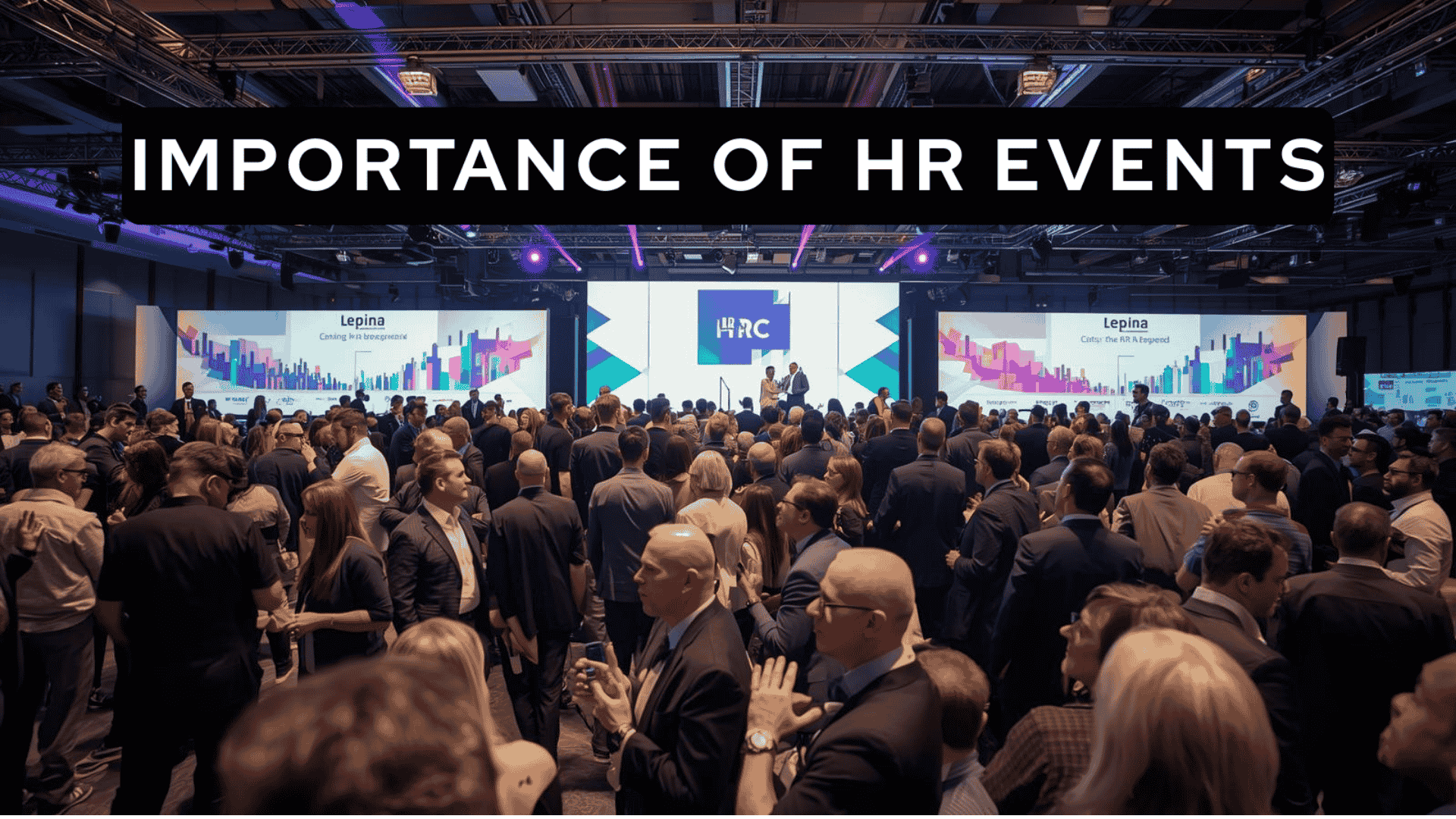
HR events have become one of the most important ways for human resources professionals to learn, exchange ideas, and stay updated with industry changes. While human resources has always been a people-focused function, the way HR professionals connect with the broader HR community has evolved significantly over time, making HR events a valuable platform for […]
Somewhere in the daily rhythm of most HR organizations, there is a quiet disconnect. Recruiters are sourcing, screening, scheduling, and following up. Dashboards are filling with metrics. And yet, quarter after quarter, hiring managers are still uncertain about the candidates they see. Time-to-fill stretches longer than it should. A promising hire leaves within a year. […]
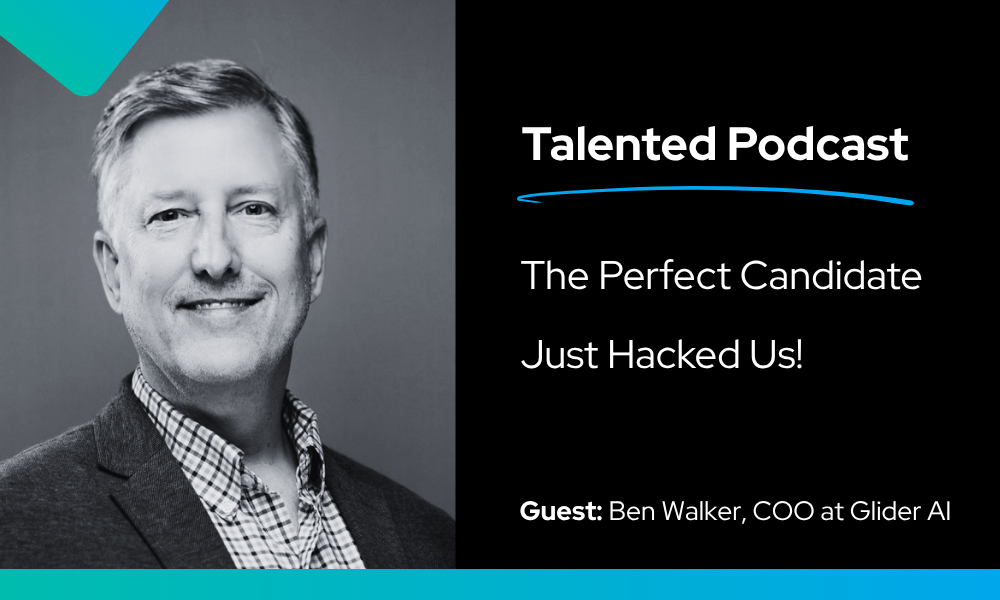
“The Perfect Candidate Just Hacked Us”: Inside the Global Playbook of Hiring Fraud That 100% test score might be your biggest red flag. Enterprise breaches don’t always start with phishing emails; sometimes, they start with a fake job interview. In this episode of Talented, Joseph Cole sits down with COO Ben Walker to unpack one […]