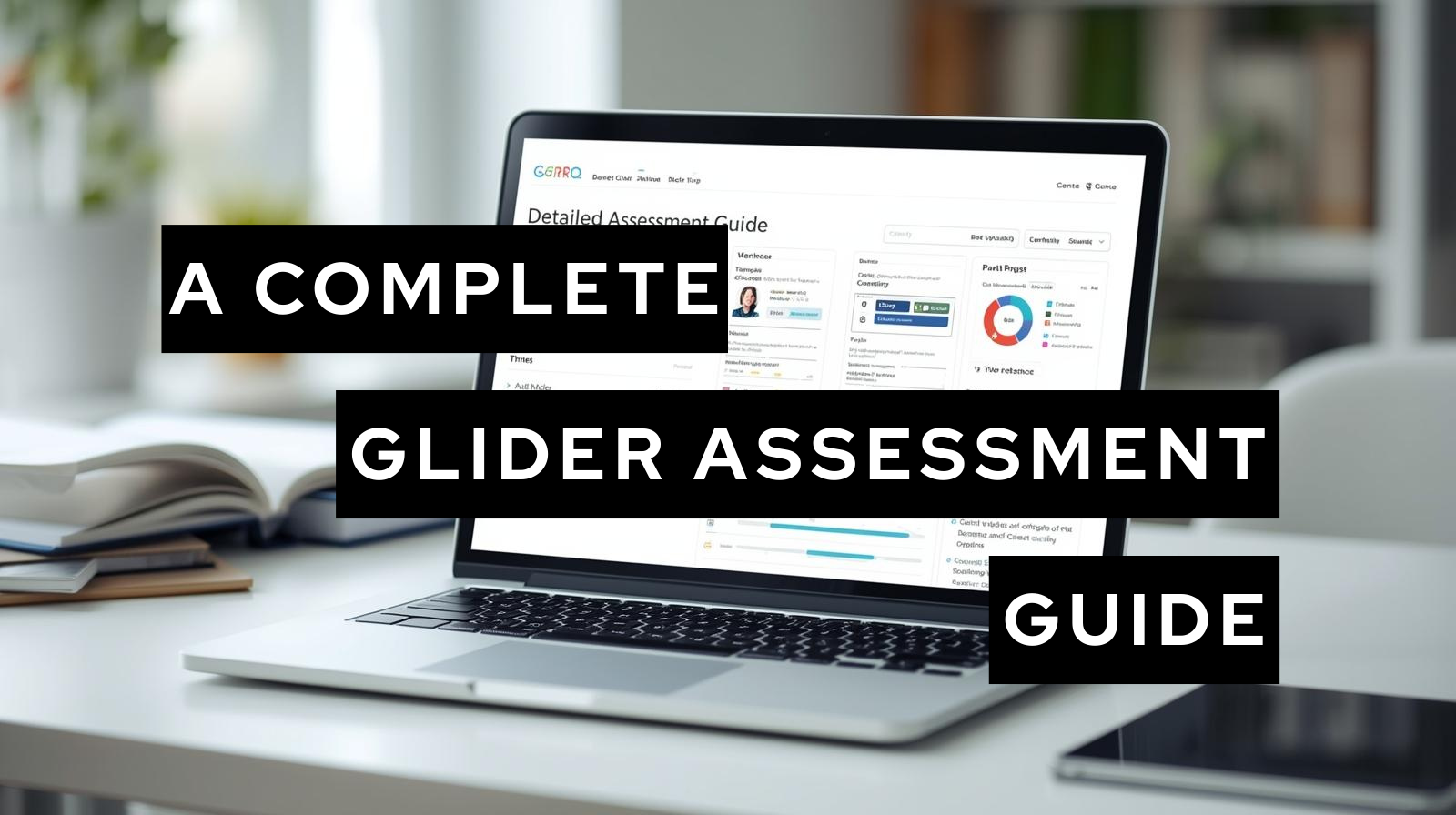
Make talent quality your leading analytic with skills-based hiring solution.
The Glider assessment suite gives hiring teams a structured and reliable way to evaluate skills across technical, functional, behavioral, and coding domains. With a focus on accuracy and fairness, Glider AI helps recruiters identify talent with confidence while creating a clear and supportive experience for candidates. This guide outlines each part of the Glider assessment suite and how it strengthens decision-making throughout the hiring process.
The Glider assessment platform brings all evaluation methods into one place. Recruiters and hiring managers use it to measure real ability, verify job readiness, and reduce uncertainty in early and advanced hiring stages. Every assessment is built to reflect true work environments so that candidates can demonstrate how they think, work, and collaborate. The result is a hiring process that stays consistent, objective, and aligned with job expectations.
Technical Assessments in the Glider assessment suite allow teams to evaluate technical skill at speed, scale, and confidence. These tests measure knowledge, reasoning, and hands-on capability across software engineering, data roles, IT support, and many other technical job families. The Glider assessment test engine adapts to different difficulty levels and job requirements, which helps identify candidates who can apply knowledge to practical problem solving. Recruiters gain structured results that make comparisons easier and more accurate.
The Glider AI Assistant supports candidates as they complete Technical Assessments and Live Coding Interviews. It guides them through tasks and encourages clear thought processes. For recruiters, the AI Assistant highlights how candidates approach a challenge, how they reason, and how they collaborate with an AI partner. These insights add depth to the evaluation and go beyond what a traditional code submission can show. The assessment features help hiring teams understand candidate performance from multiple angles.

Glider Behavioral Tests reveal important traits that contribute to long-term success. These include work style, situational judgment, and interpersonal strengths. Behavioral and psychometric assessments help hiring teams understand who a candidate is behind the resume. They also create a fuller picture when combined with technical or competency results. Recruiters use these insights to ensure alignment with team culture, work expectations, and role requirements.
According to Psicosmart, After implementing psychometric evaluations, they reported a striking 30% rise in hires from underrepresented groups within just one year.

Competency Assessments measure how candidates perform real job tasks, allowing you to assess them based on the specific role. These assessments reflect day-to-day responsibilities and help teams understand whether individuals can complete work in realistic conditions. Candidates can be evaluated through shared workspaces, live video, or recorded responses. This format helps recruiters verify functional knowledge, communication, and decision-making. Competency Assessments also reduce guesswork for hiring managers because they show how well a candidate can operate in the actual job environment before they join the team.
Coding Simulations recreate the coding environment that a candidate would use on the job. Glider AI can replicate real tools, settings, and workflows so that candidates solve problems in the same way they would after joining the company. This eliminates risk and ensures that coding ability is verified with accuracy. Coding Simulations help hiring teams confirm that a candidate can do the work reliably and under conditions that reflect actual job expectations.

Each part of the Glider AI assessment suite plays a distinct role in improving evaluation quality. Technical Assessments validate knowledge and skill. Competency Assessments verify performance in real tasks. Behavioral Tests show mindset and work style. Coding Simulations confirm job readiness. The AI Assistant adds visibility to how candidates think and collaborate. Together, these tools support a hiring process that is fair, structured, and predictive of real performance.
Glider assessments replicate real job environments instead of relying on generic questionnaires or memory-based tests. This helps hiring teams measure true skill, not test-taking ability.
Yes. Recruiters can tailor assessments to match job requirements, seniority levels, technical stacks, and industry-specific competencies to ensure accurate evaluation.
Glider uses standardized scoring, structured evaluation workflows, and objective performance data. These reduce subjective bias and help ensure every candidate is assessed consistently.
Yes. The AI Interview helper offers task guidance, clarifies instructions, and encourages transparent problem-solving. This helps candidates perform confidently while giving recruiters deeper insights.
Glider AI provides Seamless Integrations with leading ATS and HR tech platforms. Hiring teams can automatically sync assessment results, view ranked candidates, and streamline decision-making.
Engineering roles stay open longer than almost any other position. You know the pattern: a req opens, applications flood in, resumes get reviewed, phone screens happen, and then the pipeline stalls. Candidates who looked strong on paper can’t solve basic problems. Others talk a good game but can’t write functional code. By the time you […]
Hiring behavioral consultants can be challenging. Organizations often rely on resumes and interviews to gauge skills, but these methods rarely reveal how a candidate will perform in real-world scenarios. Misjudging traits like problem-solving, adaptability, and interpersonal skills can lead to mis-hires, wasted training efforts, and lower team productivity. How to Conduct a Initial Behavioral Assessment […]
Test Technical Skills, Not Assumptions Hiring technical talent is one of the toughest challenges recruiters face today. Resumes often fail to reflect real expertise, and interviews can be biased or inconsistent. Report by Upturn highlights that employers often face challenges in assessing candidates’ technical skills, leading to potential mis-hires and resource wastage. That’s where a […]