Make talent quality your leading analytic with skills-based hiring solution.
Manual resume screening is a tedious process. According to Ladders’ eye tracking research, recruiters spend an average of just 7.4 seconds on an initial resume screen, which means there is always a risk that good applicants get rejected simply because a reviewer moved too fast.
Given the number of resumes recruiters receive for a single job posting, it is understandable that they cannot spend hours on each application. So what is the solution? How can you avoid spending hours screening resumes while still not missing strong applicants? The answer is AI resume screening tools.
An AI resume screening tool, also known as an AI resume checker, is technology that helps hiring managers with the initial step of recruitment: application review. Instead of manually sifting through stacks of resumes, this tool uses artificial intelligence to quickly analyze many resumes at once, checking for specific words, skills, and qualifications that match the job requirements. This makes the hiring process faster, helps ensure fairness, and helps recruiters find strong candidates in just a few minutes.
From candidate verification to speeding up the hiring process, AI resume checkers help HR teams and organizations in several ways.
Imagine a company expanding into a new region or launching a new business line within a month, and getting flooded with hundreds of resumes for multiple positions. Despite the time pressure, the decision to hire cannot be hasty.
At this stage, AI resume screening tools can be a lifesaver. Unlike a person, an AI resume checker can go through many applications quickly and consistently, without getting tired. The faster candidates are screened, the quicker positions get filled, saving time and money, and applicants are notified about results sooner, which improves their experience even when the answer is no.
Some job seekers embellish their resumes, overstating skills or experience. Checking and confirming every detail for every applicant by hand takes a long time. AI tools can spot inconsistencies between what is on a resume and what is verifiable, and flag them to recruiters right away. This cuts down on the number of applicants who are not as qualified as they claim, freeing recruiters to focus their time on candidates who genuinely match the requirements.
Being completely objective is hard for humans, since unconscious bias around things like gender or educational background can creep into manual review even with good intentions. AI resume screening tools help address this by focusing only on the skills and qualifications that matter for the role, ignoring irrelevant information, so every candidate is evaluated on a more level footing. Organizations looking to reduce bias and keep hiring fair and equitable can use Glider AI’s skill intelligence platform, which focuses on candidates’ skills over credentials.
AI resume screening contributes to cost savings in a few main ways: reduced time to fill, more efficient use of recruiter time, and more precise candidate matching. By checking multiple resumes at once, these tools save recruiters’ time and effort, and by helping recruiters focus on the most promising candidates, they make the recruitment process more cost effective overall. When companies hire the right candidates for the right roles, the business benefits, and they avoid the added cost of having to repeat the hiring process.
How does AI contribute to the hiring process?
AI tools, including resume screening software, speed up review, improve consistency, and make the overall talent acquisition process more efficient.
What does an AI resume checker do?
An AI resume checker uses artificial intelligence to assess resumes against job requirements, focusing on candidates’ qualifications and skills rather than subjective impressions.
What advantages does AI bring to resume screening?
AI resume screening tools like Glider AI speed up hiring, reduce overhead costs, and help ensure the candidates who move forward are the ones who genuinely match the role’s requirements.
Is AI resume screening fair to candidates?
When configured to evaluate skills and qualifications rather than proxies like school name or employer prestige, AI resume screening can reduce the unconscious bias that creeps into manual review, though it should still be paired with human oversight.
How is AI resume screening different from a basic applicant tracking system keyword filter?
A basic keyword filter only matches exact terms, while AI resume screening can evaluate context, verify consistency across a resume, and surface candidates a simple keyword search would miss.
Glider AI’s skill assessment platform focuses on candidates’ skills over credentials, helping your team screen resumes faster while reducing bias and catching inconsistencies before they reach a final interview.
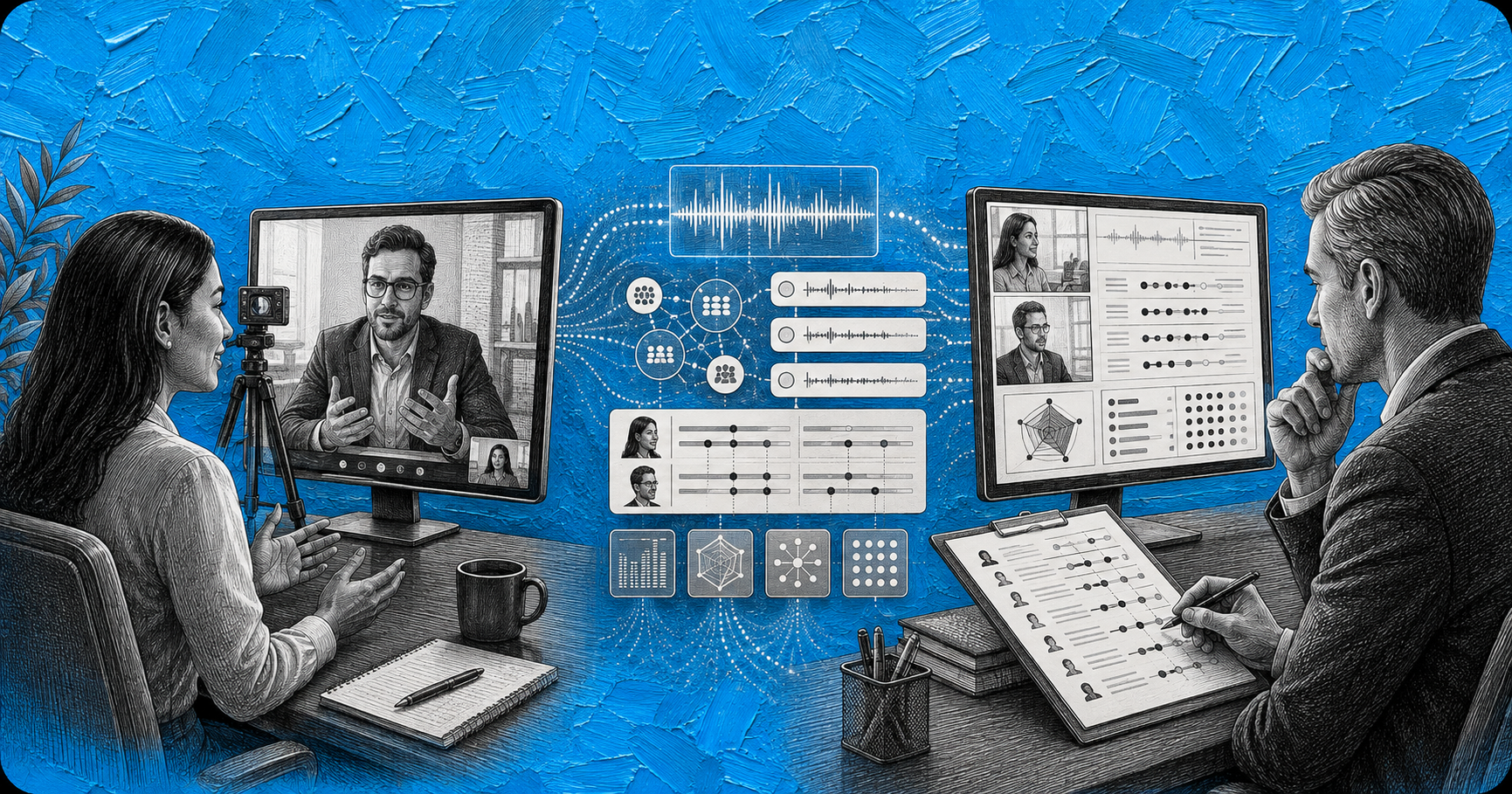
AI interview intelligence is software that records, transcribes, and analyzes interviews that a human recruiter or hiring manager is actually conducting, turning the conversation into structured data such as talk time ratios, sentiment trends, and competency or keyword tags. It does not run the interview itself. It sits behind the human led conversation and gives […]

AI hiring accessibility means making sure automated interviews, video assessments, and proctoring tools do not create barriers for candidates with visual, hearing, speech, motor, or neurodivergent disabilities, and that reasonable accommodations, like extended time, alternative formats, and human review, are built into the process rather than bolted on afterward. Getting this right is not just […]

AI resume fraud is the practice of candidates using generative AI tools like ChatGPT to invent, inflate, or heavily embellish work experience, job titles, projects, and skills on a resume, specifically to slip past applicant tracking system keyword filters and impress a human reviewer. It is a resume and application stage problem, distinct from a […]