
Make talent quality your leading analytic with skills-based hiring solution.
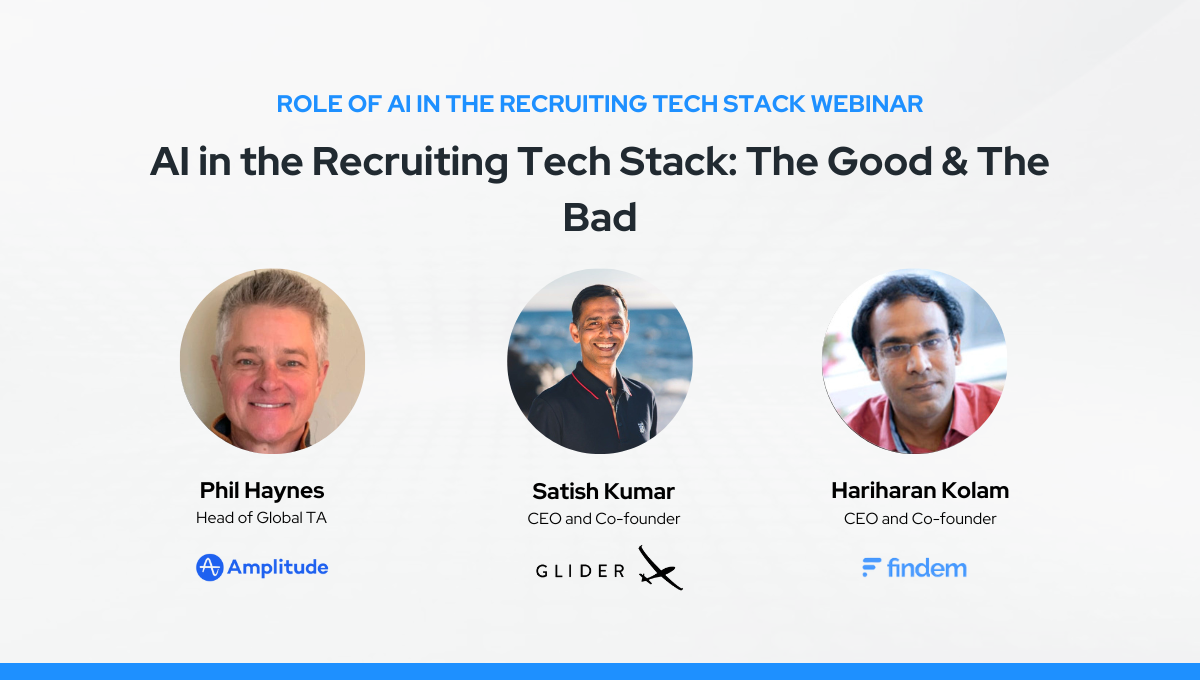
Glider AI had hosted a webinar featuring prominent thought leaders in the fields of AI, HR, and TA. Hosted by Karen Henke, the session included speakers, Phil Haynes, Head of Global TA at Amplitude, Satish Kumar, CEO and Co-Founder of Glider AI and Hariharan Kolam, CEO and Co-Founder of Findem, who shared their expertise and knowledge by delving deeper into the role of AI in the tech recruitment stack, associated risks and ways to mitigate these risks and success metrics.
The discussion began with findings from a survey that was conducted among talent leaders, highlighting the obvious presence of AI in some form in the recruitment process. Moving the discussion towards the recruitment funnel, Hari Kolam stated that putting AI at the top of this funnel will “Automate substantial chunks of the data work.”
With Glider AI operating at the middle of the funnel, Satish exclaimed, “Our mission is to make hiring fair and opportunity accessible. So this falls into the category of screen and interview segment.”
Tech screening and virtual skill assessments are some of the tools Glider uses to understand the interest, intent, and evaluate skill and capability of candidates, with Satish describing it as “A litmus test to dig deeper later, that can be completely automated through AI.”
While there are concerns about AI recruiting, there are also challenges that humans bring into the recruiting process. Reflecting on the benefits that AI offers in the hiring process, from scale to identifying candidate potential, Karen shares “AI helps us uncover people who maybe wouldn’t have been found otherwise or wouldn’t have their skills come to the fore because the recruiting process just didn’t allow the scale to find those folks.”
Distinguishing between tasks that should be automated owing to high volumes and those that should have a human element to improve personalization and engagement is also essential.
In addition, allowing AI to handle the initial stages frees up recruiters to deliver high-value advisory services, allowing the “Human element to move into more strategic advisory roles,” stated Phil.
Moving the discussion towards the risks associated with AI, Satish discussed that AI struggles to grasp the full context of candidate achievements and career journeys, leading to incomplete evaluations. In addition, AI is trained on historical data which may lead to a struggle to adapt to new or changing job requirements.
As AI learns from human-provided data, resolving data-related AI bias in recruiting necessitates ongoing human monitoring in minimizing personal biases, guaranteeing fair input, and actively addressing historical data.
AI will take up nearly a major part of the recruiter’s work, allowing them more time to focus on relationship building, “The role will essentially evolve into more strategic to become a strong partner for the business” Hari quoted.
The need to evolve traditional recruitment metrics such as time to fill and cost per hire to emphasize quality, speed, diversity, and ROI will shift the overall focus to outcome and impact.
Removing personally identifiable information (PII) from data sets and AI models opens up opportunities for a wider talent pool and can also remove AI bias towards candidates of different ethnicities, beliefs, backgrounds, etc.
“The quality as well as the diversity and the amount of data, all three are relevant to have all the right models,” Satish stated, adding that ensuring statistically significant data enhances model accuracy and efficiency.
Shifting from rigid resume-based input to abstracted attributes aligned with business needs enhances inclusivity enabling, “Building an inclusive pipeline can actually really be automated today.” stated Hari.
AI in recruiting offers opportunities for efficiency, equality, and extended opportunities, but also carries with it, risks like bias. In addition, the use of AI in the recruitment funnel is intended to empower recruiters and not replace them, necessitating a delicate balance between the two.
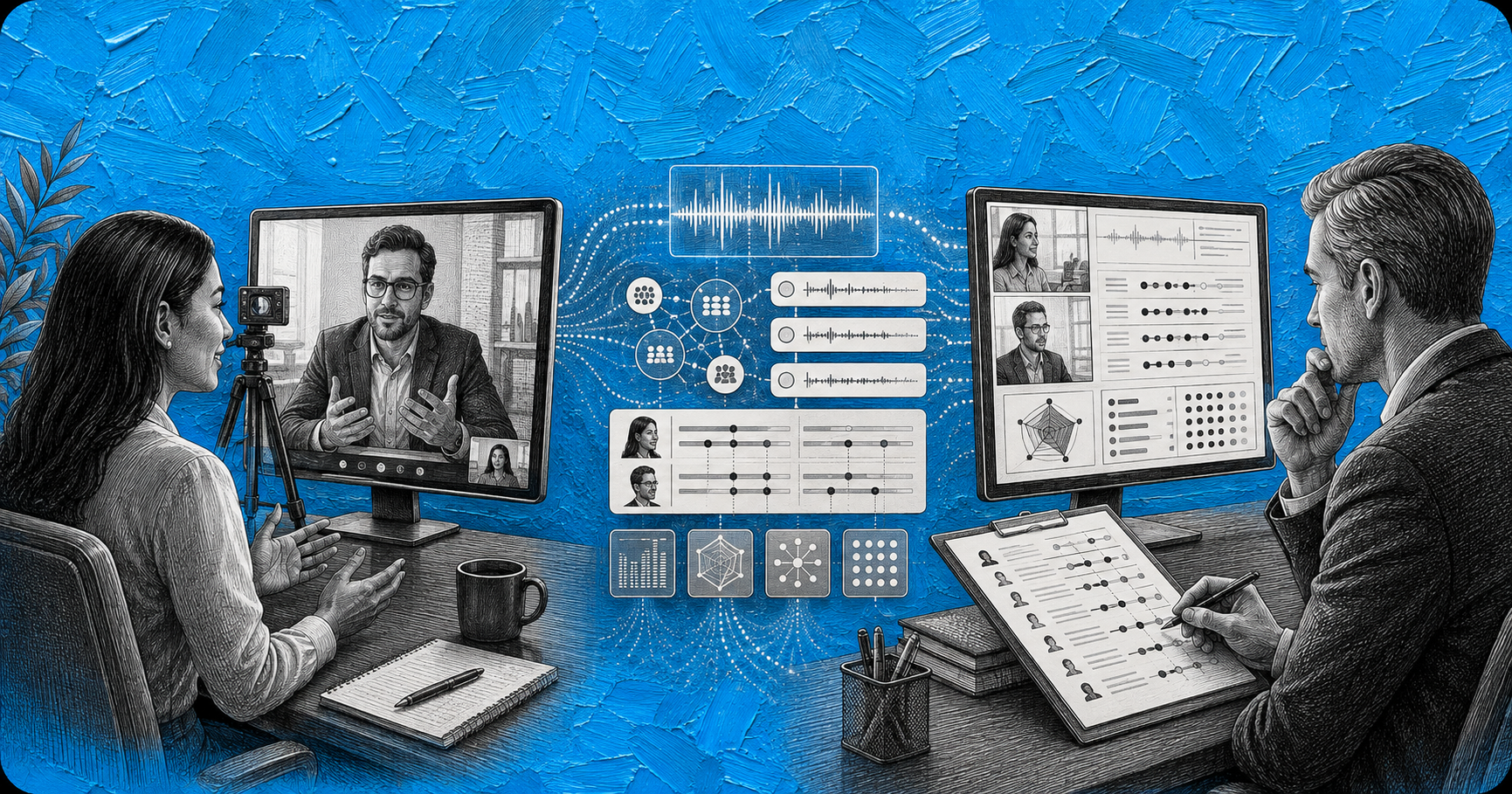
AI interview intelligence is software that records, transcribes, and analyzes interviews that a human recruiter or hiring manager is actually conducting, turning the conversation into structured data such as talk time ratios, sentiment trends, and competency or keyword tags. It does not run the interview itself. It sits behind the human led conversation and gives […]

AI hiring accessibility means making sure automated interviews, video assessments, and proctoring tools do not create barriers for candidates with visual, hearing, speech, motor, or neurodivergent disabilities, and that reasonable accommodations, like extended time, alternative formats, and human review, are built into the process rather than bolted on afterward. Getting this right is not just […]
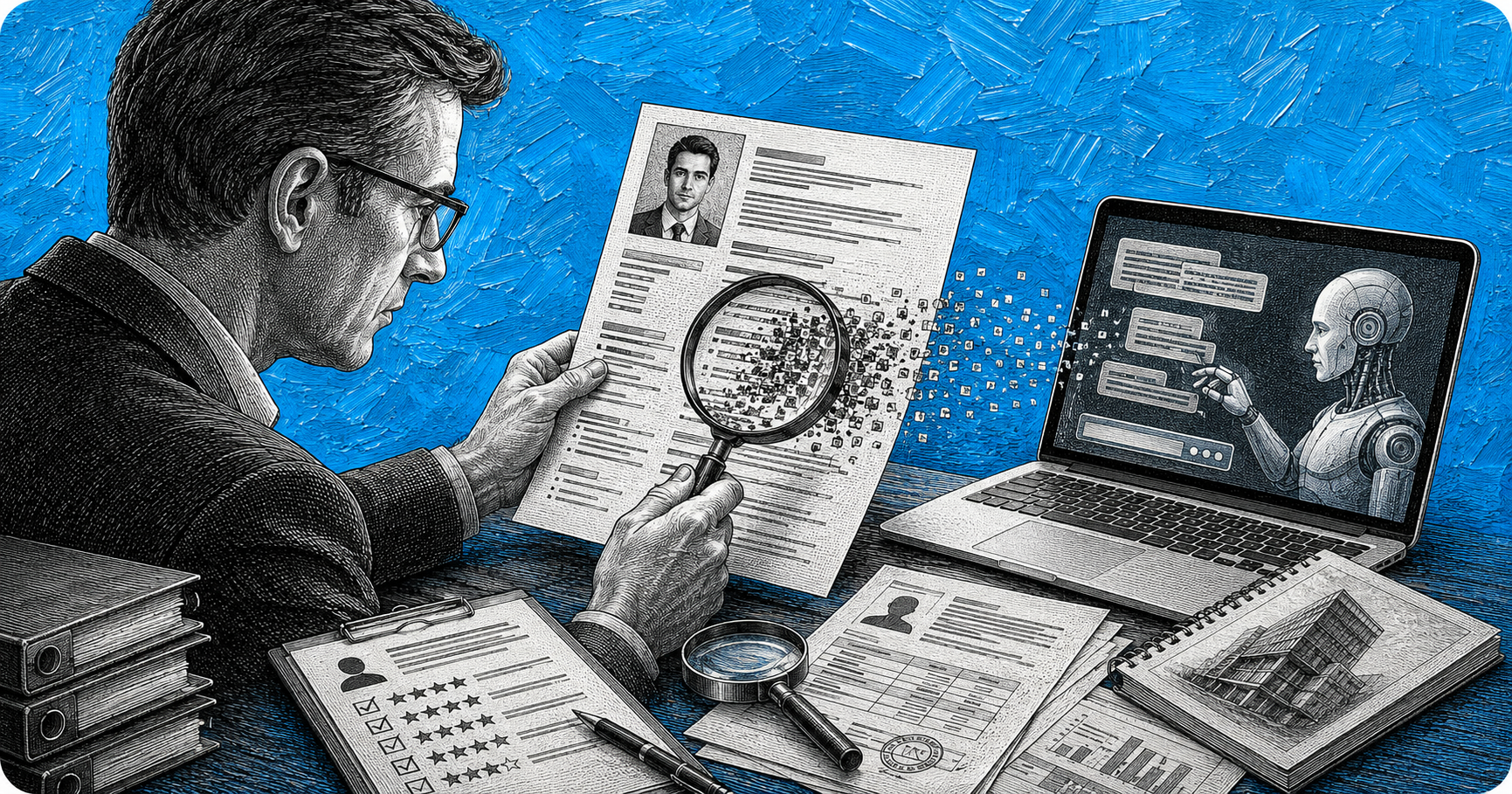
AI resume fraud is the practice of candidates using generative AI tools like ChatGPT to invent, inflate, or heavily embellish work experience, job titles, projects, and skills on a resume, specifically to slip past applicant tracking system keyword filters and impress a human reviewer. It is a resume and application stage problem, distinct from a […]