4 min read

Hiring an AR and VR Developer

joseph cole

Updated on December 2, 2022

Hiring an AR and VR Developer

joseph cole

Updated on December 2, 2022

In this post

CREATE YOUR ACCOUNT

Accelerate the hiring of top talent

Make talent quality your leading analytic with skills-based hiring solution.

Get started

What is an AR and VR Developer?

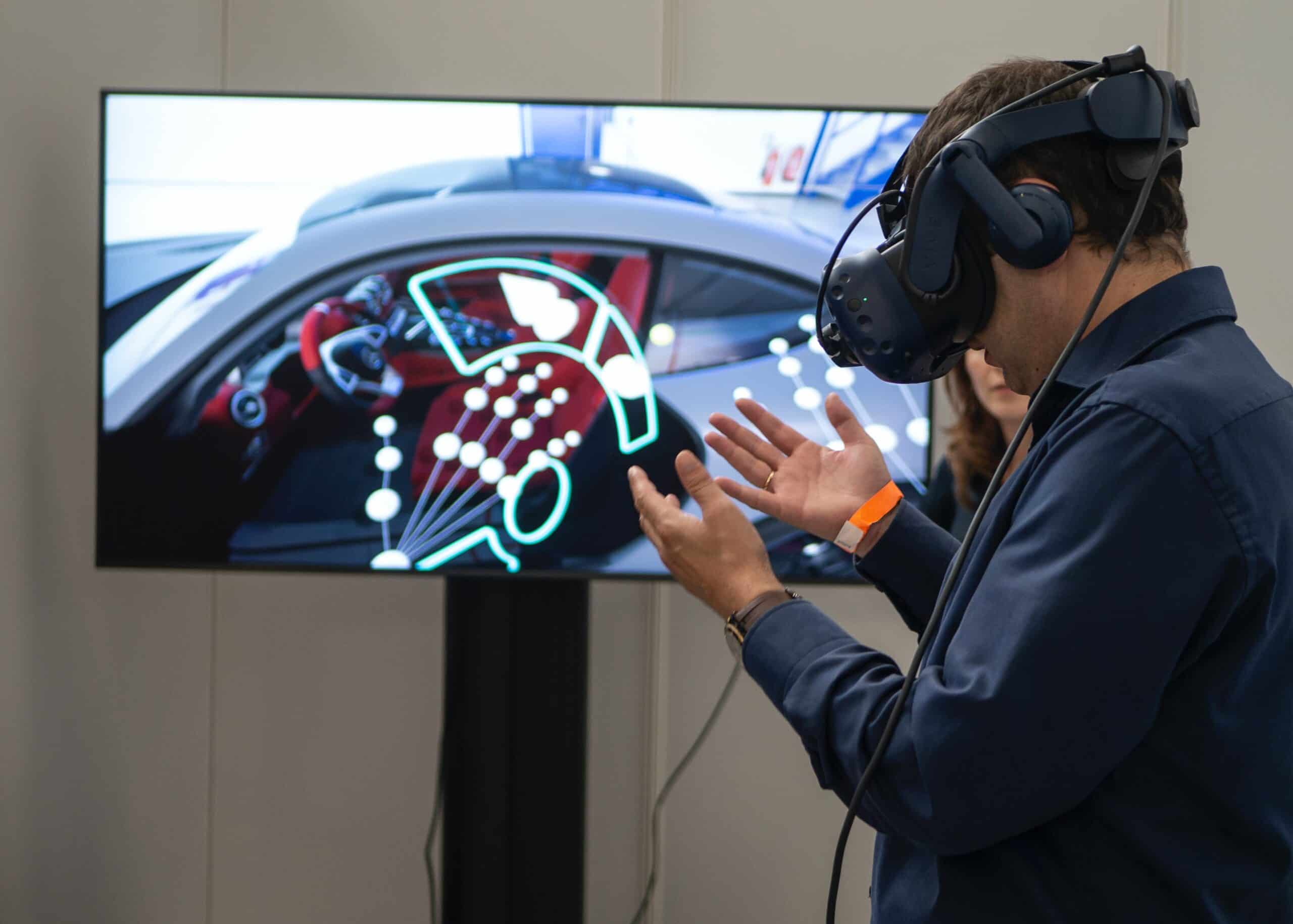
AR and VR Developers, or Augmented Reality and Virtual Reality Developers, are not just used for gaming anymore. The multi faceted industry is a “game changer” for a variety of industries.

Wendy Gonzalez, CEO at Sama, says the adoption of AR and VR technologies is no longer an option, but a necessity to close the gaps between physical and virtual spaces.

AR and VR are often used interchangeably, but in practice an AR developer works with mobile apps to create an augmented reality experience layered over the real world (like Snapchat filters), while a VR developer creates a whole new simulated experience for users to see through a device (like a headset or console). In most cases, an AR and VR developer must be familiar with video game engines (like Unreal or Unity) as well as constructing 3D environments.

Why Hire an AR and VR Developer?

According to Allied Market Research, the global augmented and virtual reality market was valued at $27.6 billion in 2021 and is projected to reach $856.2 billion by 2031, a compound annual growth rate of 41.1 percent over that period. The rise of mobile gaming, growing internet connectivity, and increased adoption of consumer electronic devices have all propelled the growth of the AR and VR industry, and prominent technology companies continue to invest heavily in AR, VR, and mixed reality initiatives across many industry verticals.

According to the U.S. Bureau of Labor Statistics, employment for software developers, the broader occupational category that includes AR and VR developers, is projected to grow 10 percent from 2025 to 2035, much faster than the average for all occupations, with about 106,100 job openings anticipated annually over that decade.

What does an AR and VR Developer do?

  • Design and build augmented reality and virtual reality applications and experiences
  • Develop and upgrade software using game engines such as Unreal Engine and Unity
  • Construct and optimize 3D environments, models, and assets
  • Write and maintain code in languages such as C++, C#, JavaScript, and Swift
  • Test AR and VR experiences across devices and platforms to ensure performance and stability
  • Collaborate with designers, product managers, and QA teams throughout development
  • Debug and resolve technical issues affecting user experience and immersion
  • Stay current with emerging AR, VR, and mixed reality tools and best practices

How much do AR and VR Developers make?

There is no dedicated Bureau of Labor Statistics profile specifically for AR and VR developers. According to the BLS Occupational Outlook Handbook, the median annual wage for software developers, the broader occupational category that includes AR and VR developers, was $135,980 as of May 2025. Actual AR and VR developer pay varies by specialization, experience, employer, and region.

Skill Requirements

TIP: Glider AI enables recruiters, staffing firms, and hiring teams to assess skills across technical and non technical job roles, including specialized engineering positions. Use Glider AI Skill Intelligence Platform™ to evaluate coding ability, 3D development skills, and problem solving before you hire.

Qualitative Skill Requirements

  • Spatial and Visual Thinking: AR and VR developers need to think in three dimensions to design believable, immersive environments.
  • Problem Solving: Building performant AR and VR experiences requires creative solutions to hardware, rendering, and interaction challenges.
  • Attention to Detail: Small inconsistencies in a virtual environment can break immersion, so precision matters.
  • Collaboration: AR and VR developers work closely with designers, product managers, and QA throughout the development cycle.
  • Adaptability: The AR and VR toolset and best practices evolve quickly, and developers need to keep learning as the field matures.

Formal Skill Requirements and Credentials:

  • Bachelor’s degree in computer science, software engineering, or a related field, or equivalent practical experience
  • Proficiency in programming languages such as C++, C#, JavaScript, and Swift
  • Experience with game engines such as Unreal Engine and Unity
  • Experience constructing and optimizing 3D models and environments
  • Familiarity with AR and VR hardware platforms and SDKs
  • Understanding of performance optimization for real time rendering
  • Prior experience building AR, VR, or mixed reality applications is a plus
  • Strong debugging and testing skills across devices and platforms

Example KPIs for an AR and VR Developer

  • Frame Rate and Performance: Measures how consistently an AR or VR experience maintains a stable, comfortable frame rate across target devices.
  • Bug Resolution Time: Measures how quickly reported issues affecting immersion or functionality are diagnosed and fixed.
  • Feature Delivery Timeliness: Measures how consistently new features and updates are shipped on schedule.
  • Cross Platform Compatibility: Measures how reliably an application performs across different AR and VR devices and platforms.
  • User Experience Quality: Measures user feedback and testing results related to comfort, immersion, and ease of interaction.

Frequently Asked Questions

What does an AR and VR developer do?
An AR and VR developer designs and builds augmented reality and virtual reality applications, working with game engines and 3D environments to create immersive user experiences.

What skills does an AR and VR developer need?
AR and VR developers need strong programming skills (such as C++, C#, JavaScript, or Swift), experience with game engines like Unreal or Unity, spatial thinking, and strong problem solving and debugging skills.

How much do AR and VR developers make?
According to the U.S. Bureau of Labor Statistics, the median annual wage for software developers, the broader category that includes AR and VR developers, was $135,980 as of May 2025, though actual pay varies by specialization and experience.

What qualifications are needed to become an AR and VR developer?
Most employers look for a degree in computer science or a related field (or equivalent experience), proficiency in relevant programming languages, and hands on experience with AR/VR hardware and game engines.

How do I evaluate an AR and VR developer candidate’s skills before hiring?
A structured coding and 3D development skills assessment gives a clearer picture of a candidate’s real world ability than a resume alone.

How can Glider AI help you with hiring an AR and VR Developer?

Glider’s recruitment platform is built on the mission of “competency over credentials”. This way, you can make the most of the hiring assessments through a structured and data driven candidate evaluation process. Access thousands of pre built assessments across hundreds of skills, including for the AR and VR developer role.

Glider AI’s Unique Features

  • Conversational Chatbot for Talent Screening
  • On Demand One Way Interviews
  • Interactive, Coding Enabled Skill Tests
  • Task Based and Live Coding Enabled Video Interviews
  • Advanced AI Proctoring
  • Powerful Candidate Analytics

Discover Hiring Resources for AR and VR Developers

  • AR and VR Developer Job Description
  • AR and VR Developer Interview Questions
  • AR and VR Developer Skills Test

Go ahead and spotlight your AR and VR Developer with Glider AI today!

Exploring Challenges Faced By Recruiters in Technical Hiring

Introduction  Technical roles are some of the hardest to fill. The process is a landmine of recruitment challenges.  HR teams often find themselves under-resourced and struggling to find suitable talent, while engineers waste too much time interviewing candidates who don’t meet the necessary qualifications.  Meanwhile, high-quality candidates get frustrated by slow and inefficient hiring processes and […]

QA & Testing​ – Top Job Roles and Skills

What is QA and Testing? Quality Assurance (QA) and testing are integral processes in software development aimed at ensuring the reliability, functionality, and usability of applications. QA involves establishing standards and procedures to monitor and improve the software development lifecycle, focusing on preventing defects and identifying areas for optimization. It encompasses various activities such as […]

JavaScript Interview Questions

Whether hiring for an entry-level web developer position or a web architect, asking the right JavaScript coding questions lets you assess the candidate’s depth of knowledge in core JavaScript concepts, problem-solving skills, and understanding of modern JavaScript practices.  More than identifying which people in your pool of applicants can answer technical questions, these JavaScript interview questions also reveal who […]

chevron-down