Make talent quality your leading analytic with skills-based hiring solution.
As the sophistication of AI grows, many organizations are considering how AI tools can support recruiting and talent acquisition. These tools can help automate repetitive tasks, support candidate screening, improve consistency, and help hiring teams identify potential fraud. At the same time, AI can introduce risks related to bias, transparency, data privacy, security, and compliance.
Earlier versions of this article cited market forecasts including a 6.8% CAGR for 2022-29. That forecast is now historical context rather than a current benchmark. Glider AI research also previously found that Over 91% of HR and TA leaders said that they were either using AI for recruiting or were planning to use it. The broader point remains relevant: AI adoption in talent acquisition has moved from experimentation toward more formal governance and oversight.
With increasing adoption, growing sophistication, and a more developed regulatory landscape, companies should establish clear AI recruiting policies before using AI in hiring decisions. These policies can help hiring teams use AI responsibly while maintaining human oversight and consistent candidate treatment.
The AI recruitment space continues to evolve, and requirements can vary by jurisdiction. The following policies provide a practical foundation for creating fair, transparent, secure, and accountable AI-supported hiring procedures.
AI hiring regulation has developed significantly since this article was first published in 2023. Employers should track the laws and regulatory guidance that apply to the locations where they recruit and hire. For example, New York City requires certain automated employment decision tools to undergo bias audits and requires candidate notices, while Illinois has notice and consent requirements for certain AI-analyzed video interviews. In the European Union, employment-related AI can fall within the AI Act’s high-risk framework, with obligations applying in phases.
It is important for companies that have adopted or are planning to adopt AI based recruiting tools and systems to implement a comprehensive set of AI recruiting policies that govern how those tools are selected, monitored, and used. The goal is to use AI as a support mechanism for recruiters and hiring managers while keeping fairness, transparency, privacy, security, and human accountability at the center of hiring.
AI recruiting policies are internal rules that define how an organization selects, uses, monitors, and reviews AI tools in recruiting. They typically cover fairness, transparency, data privacy, human oversight, monitoring, training, and compliance.
A bias prevention policy helps hiring teams review whether AI-supported processes are evaluating candidates consistently and whether outcomes may create unintended disadvantages for particular groups.
Candidate notification requirements depend on the jurisdiction and the type of technology being used. As a general practice, clear communication about AI use can improve transparency and candidate trust.
Organizations should review AI-supported hiring systems regularly and whenever there is a significant change in the tool, vendor, data, decision criteria, regulation, or recruiting workflow.
Yes. Requirements differ across countries, states, and cities, so employers should identify which rules apply to each hiring location and review their policies with appropriate legal and compliance teams.
AI can make recruiting more efficient, but responsible adoption requires clear governance. A strong set of AI recruiting policies should address bias prevention, candidate communication, data privacy, regular monitoring, training, and regulatory compliance. By defining these expectations before AI becomes deeply embedded in the hiring workflow, organizations can reduce risk while giving recruiters a clearer framework for using AI responsibly.

AI interview intelligence is software that records, transcribes, and analyzes interviews that a human recruiter or hiring manager is actually conducting, turning the conversation into structured data such as talk time ratios, sentiment trends, and competency or keyword tags. It does not run the interview itself. It sits behind the human led conversation and gives […]

AI hiring accessibility means making sure automated interviews, video assessments, and proctoring tools do not create barriers for candidates with visual, hearing, speech, motor, or neurodivergent disabilities, and that reasonable accommodations, like extended time, alternative formats, and human review, are built into the process rather than bolted on afterward. Getting this right is not just […]
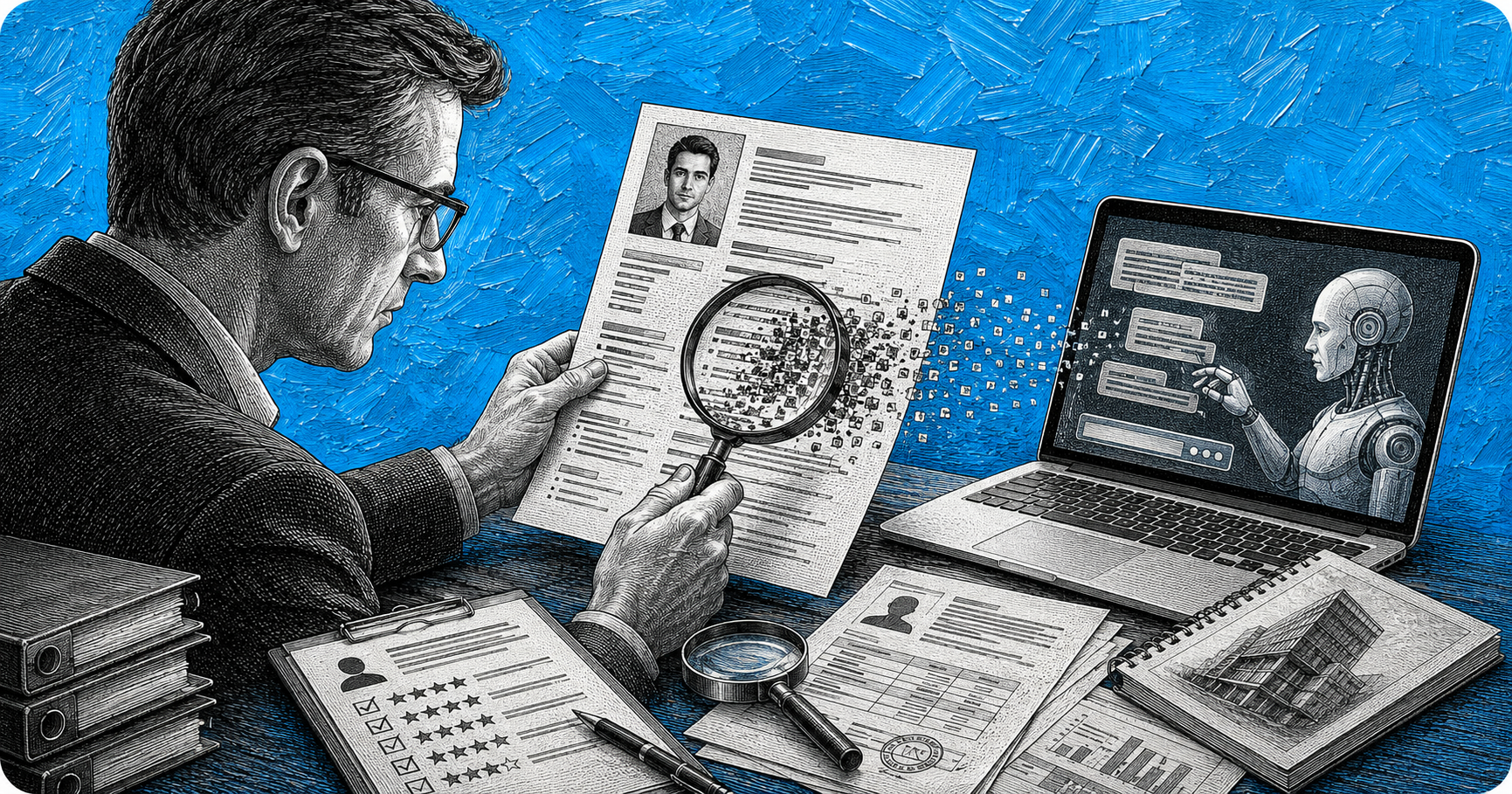
AI resume fraud is the practice of candidates using generative AI tools like ChatGPT to invent, inflate, or heavily embellish work experience, job titles, projects, and skills on a resume, specifically to slip past applicant tracking system keyword filters and impress a human reviewer. It is a resume and application stage problem, distinct from a […]