
Make talent quality your leading analytic with skills-based hiring solution.
To speed up your hiring process, move skills evidence to the start. Online skills tests, job simulations and recorded video answers let recruiters screen every applicant on the same criteria within days, so hiring managers only interview candidates who have shown they can do the job. Time to hire drops without lowering the bar.
Most slow hiring processes are not slow because recruiters are slow. They are slow because evidence arrives late. A resume gets a phone screen, the phone screen gets a technical interview, and only then does anyone learn whether the candidate can do the work. Each step adds days, and good candidates accept other offers while they wait. Glider AI Skill Assessment Software flips that order, so the first thing a hiring team sees is proof of skill.
Delays tend to come from the same places:
Each of these is a problem of missing or late information. Testing technology fixes the information problem first.
In a survey of 266 staffing and enterprise hiring professionals conducted for the Glider AI and SIA talent quality report, the teams that outperformed their peers shared a set of habits. They relied more on technology to judge candidate quality early:
None of these replace recruiter or hiring manager judgment. They give that judgment better evidence, sooner.
| Hiring stage | Traditional approach | With testing technology |
|---|---|---|
| Initial screening | Resume review, keyword filters | Short role based skills test for every applicant |
| Early communication | Phone screen calls | One way video or chatbot questions answered anytime |
| Skill verification | Technical interview late in the process | Job simulation before any interview |
| Integrity checks | Rare, or after hire | AI proctoring and identity checks during testing |
| Hiring manager review | Several rounds to compare candidates | Side by side scored reports |
| Decision | Debate over impressions | Discussion grounded in the same evidence |
Send a short, role specific assessment as soon as a candidate applies. Recruiters can review results for hundreds of applicants in the time it takes to run a handful of phone screens.
For developers, analysts and other technical roles, a coding simulation or practical task shows real ability. Glider AI Coding Simulations give candidates realistic environments and hiring managers scored results.
Recorded video questions remove scheduling from early screening. Candidates answer when it suits them, and recruiters review responses in a fraction of the time.
Remote testing needs safeguards. Configurable AI proctoring flags issues such as tab switching or a second face on camera, and recruiters review the evidence before deciding anything. Fraud caught during testing is far cheaper than fraud discovered after onboarding.
When every candidate takes the same test and is scored on the same rubric, hiring managers spend less time debating and more time deciding. Standardized evaluation also supports fairer, more consistent hiring.
Glider AI brings these steps together. Skill Assessment Software covers technical and non technical roles with a library of questions and simulations you can customize, plus integrity features such as AI proctoring and identity checks. Results arrive as structured reports hiring managers can compare at a glance, and assessments connect with common applicant tracking systems so recruiters do not switch tools.
Staffing firms use the same approach to submit qualified candidates to clients faster; see how it works for staffing firms. Enterprise teams handling large applicant pools can explore high volume hiring. For a wider view on why technology alone is not the answer, read Hiring Is Broken. AI Alone Won’t Fix It.
Test skills before interviews, replace early phone screens with recorded video, use job simulations for hands on roles and standardize scoring. These steps remove the delays caused by late evidence, so hiring managers interview fewer, better qualified candidates.
Yes, when they replace steps rather than add them. A short assessment at the start lets recruiters screen many candidates at once and send hiring managers a shortlist, which cuts the number of interview rounds needed.
Long or irrelevant tests can. Short, role specific assessments that candidates can take on their own schedule tend to be well received because they give candidates a fair chance to show what they can do.
Move evidence earlier. When skills, communication and integrity are checked at the start, speed and quality improve together, because decisions rest on the same objective data for every candidate.
Most delays come from late information: candidates move through several conversations before anyone checks whether they can do the job. Interview scheduling and inconsistent evaluation add more delay.
It flags unusual activity during online tests, such as tab switching or a second person on camera, so recruiters can review the evidence. It protects the integrity of remote assessments without requiring a live proctor.
Faster hiring starts with better information at the first step. Build role specific tests with Glider AI Skill Assessment Software and give hiring managers a shortlist of candidates who have already shown they can do the job.
Hiring is broken. Not because companies lack tools or effort, but because the signals used to make decisions can’t be trusted. Resumes are inflated, interviews are inconsistent, and now AI has made it even easier for candidates to generate answers, code, and even entire personas on demand. At the same time, the industry is moving […]
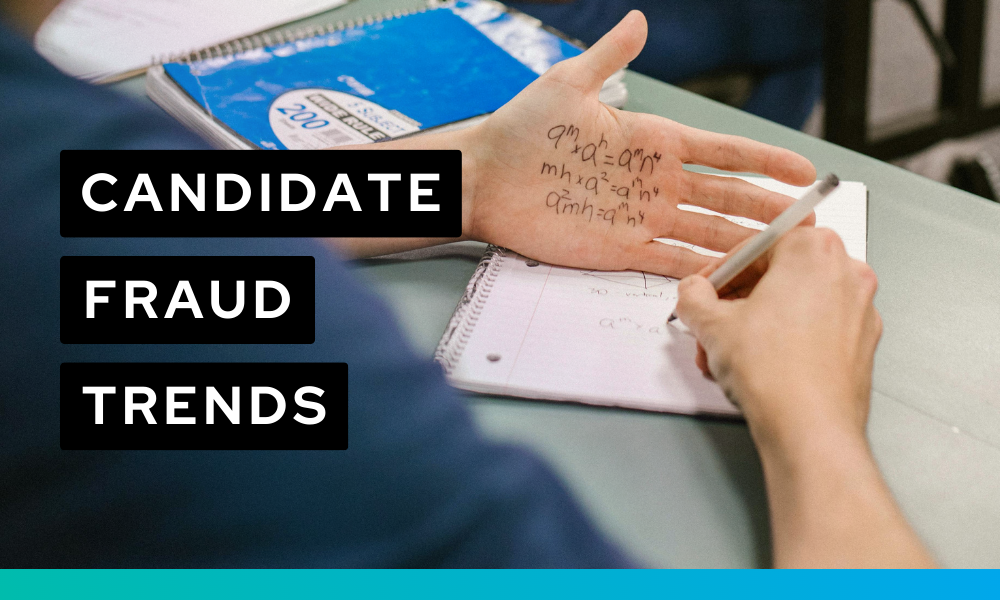
Fraud in hiring doesn’t fade because you catch it. It fades when you make it pointless. Across millions of Glider AI validated technical assessments conducted over multiple years, one pattern stands out: And it matters now. Investigations by The Wall Street Journal and Bloomberg recently exposed how remote workers using stolen identities embedded themselves inside […]
The year Skills based hiring became non-negotiable If 2025 proved anything, it is that the old way of hiring does not survive economic pressure. Budgets stayed tight. Headcount stayed constrained. Every hire had to justify itself quickly. At the same time, AI adoption accelerated faster than trust, governance, or data quality could keep up. For […]
