

Make talent quality your leading analytic with skills-based hiring solution.
Skills based hiring means evaluating candidates on what they can do, measured through assessments, work samples and structured interviews, instead of relying mainly on degrees, titles and years of experience. The business case rests on three points: a larger qualified pool, better evidence before interviews, and fairer decisions. Skill Assessment Software is how teams put it into practice.
Most hiring teams already agree with the idea. Where it stalls is the second meeting, when a hiring manager asks how the team will know a candidate without a degree can do the job. That’s a fair question, and it’s the one this guide answers.
Degrees, job titles and years of experience were always shortcuts. They’re easy to scan when a recruiter has 300 applications for one req, but they say little about whether someone can do the work today. A title means different things at a 40 person startup and at a global bank. A degree from ten years ago says nothing about current skills in a field that changes every year.
Resumes are also less reliable than they used to be. AI writing tools make it easy for any applicant to produce a polished, keyword matched resume. When every resume looks strong, the resume stops being a useful filter, and teams need a different source of evidence.
Employers increasingly see it the same way. In TestGorilla’s research, 94 percent of employers said skills assessments are more reliable than resumes, and 98 percent said skills based hiring helps them find better candidates.
When you present skills based hiring to leadership, focus on outcomes they already track.
| Factor | Traditional hiring | Skills based hiring |
|---|---|---|
| Primary filter | Degree, title, years of experience | Demonstrated skills |
| Evidence | Resume and unstructured interviews | Assessments, work samples, structured interviews |
| Candidate pool | Narrowed by credentials | Wider, includes nontraditional backgrounds |
| Consistency | Varies by interviewer | Same tasks and rubric for every candidate |
| Fraud risk | Hard to detect inflated claims | Skills are shown, and can be proctored and verified |
| Decision record | Interview notes | Scored results tied to job requirements |
Choose roles with volume and clear skill requirements, such as customer support, software engineering or sales development. Early wins on a few roles are easier to prove than a company wide change.
Work with hiring managers to list the five or six skills that actually predict success in the role. Remove degree requirements that aren’t legally or technically necessary. Write the job post around those skills.
Place a short, role specific assessment right after application. Keep it focused, 20 to 60 minutes depending on the role, so strong candidates complete it.
Use the same questions and scoring rubric for every candidate, tied to the skills you listed. Interviews then test what the assessment couldn’t, such as judgment and communication.
Track pass through rates, time to hire, hiring manager satisfaction and early performance or retention for skills based hires compared with your previous process. Bring those numbers back to leadership.
Glider AI’s Skill Assessment Software gives teams role based tests across 250+ technologies and 200+ non technical roles, with 35+ question types and hands on simulations. Open ended answers are scored against a rubric, with a human override when reviewers disagree.
For technical roles, Technical Assessments cover coding, cloud and enterprise software skills. For non technical roles, job based skill tests cover areas like customer service, sales and finance. AI Proctoring keeps remote results honest, and every flag is reviewed by a person rather than used as an automatic rejection. Teams hiring at volume can see how this fits a high volume hiring process.
Skills based hiring is a hiring approach that evaluates candidates on demonstrated skills, using assessments, work samples and structured interviews, rather than relying mainly on degrees, job titles or years of experience. It focuses on whether someone can do the job today.
The main benefits are a larger qualified candidate pool, better evidence before interviews, fewer mismatched hires, more consistent and defensible decisions, and clearer data for internal mobility. It also helps teams cut through polished, AI written resumes that all look alike.
Start with two or three roles, rewrite requirements around the skills that predict success, remove unnecessary degree requirements, add a short skills assessment early in the funnel, structure interviews with a shared rubric, and measure results against your previous process.
For most roles, yes, because it measures the skill directly instead of using credentials as a proxy. It works best combined with structured interviews that test judgment and communication. Credentials still matter where they’re legally required, such as licensed professions.
Compare skills based hires with your previous process on pass through rates, time to hire, hiring manager satisfaction, early performance ratings and 90 day or one year retention. Track how many hires came from nontraditional backgrounds to show the pool widened.
You need a skills assessment platform with role specific tests, a structured interview process with rubrics, and integrity controls such as proctoring and identity verification for remote testing. Integration with your ATS keeps results in the same workflow recruiters already use.
Skills based hiring wins the argument when you can show results, not just principles. Start with a few roles, measure what changes, and use Glider AI’s Skill Assessment Software to give every candidate the same fair test of the skills that matter.

Global hiring fraud hotspots are the countries and regions where documented candidate fraud and identity verification risk run highest, based on named industry indices rather than assumption. In 2026, that data points consistently in one direction: fraud vulnerability is concentrated in markets with weaker centralized identity infrastructure and fast growing digital hiring volume, led by […]
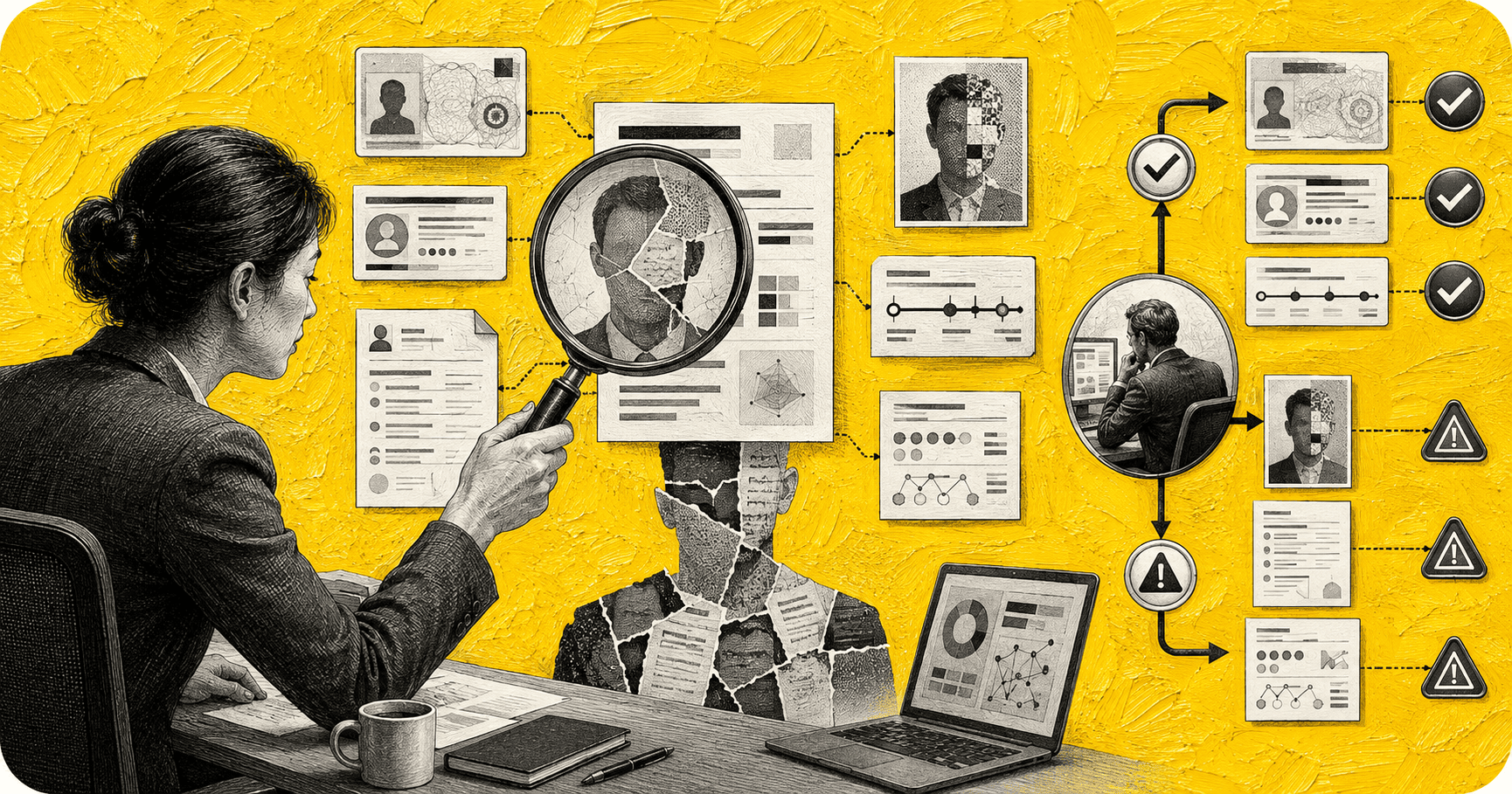
A synthetic candidate is a job applicant who does not exist as a single real person at all. The persona is assembled, usually by combining stolen or purchased personally identifiable information (PII) with an AI generated resume, an AI generated or composite photo, and an invented work history, into a package that looks, on paper […]

Hiring overqualified candidates is not automatically a mistake, but it is a decision that carries real, well documented risk if the role and the offer are not restructured around it. Recent survey data shows most employers already do this regularly: 70 percent of hiring managers say they typically consider candidates who are overqualified for the […]
