
Make talent quality your leading analytic with skills-based hiring solution.
HR transformation means HR stops being a service desk and becomes a strategic function that shapes culture, advises leaders and represents the company brand. In a Transformation Realness episode sponsored by Glider AI, a seasoned Chief People Officer described three roles HR now plays, and why no leader can carry them alone.
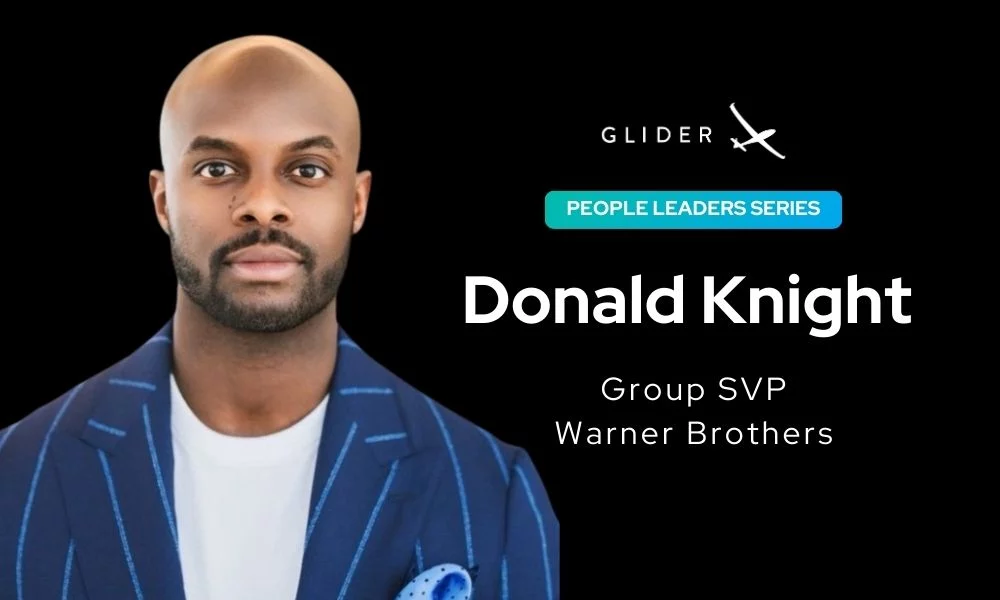
The conversation, hosted by Kyle Lagunas, featured Donald Knight, an HR executive whose career includes a Group SVP role at Warner Bros. What follows is a summary of the ideas from that episode, organized for HR and talent acquisition leaders who are living through the same shift.
HR leaders are not facing one hard problem at a time. They are facing regulation changes, DE&I expectations, hybrid work, budget scrutiny and AI adoption in the same quarter. Knight put it plainly: “Any one of these challenges could be overwhelming. But we’ve had to face them all at once.”
That stacking effect is what makes the current wave of HR transformation different. Earlier changes, such as the move to cloud HRIS or the rise of employer branding, arrived one at a time. Today a people leader might be rewriting a hybrid policy, preparing for an audit, and fielding questions about AI in hiring during the same week.
The pressure shows up in career choices too. One HR leader in the conversation explained that she went fractional because, in her words, “I wanted to make more and do less.” That is a signal worth taking seriously. When experienced leaders choose part time engagements over full time seats, the full time version of the job has become too heavy.
Knight broke the expanded value of HR into three layers. Each one asks something different of the people team.
HR designs the conditions people work in: how decisions get made, how feedback moves, how new hires are welcomed. This is architecture, not decoration. A culture that exists only on a values poster does not survive the first reorg.
What this looks like in practice:
Strong HR leaders sit in the room where business decisions are made, not downstream of them. They bring data on attrition, hiring velocity and team health, and they help leaders see the people cost of a plan before it ships.
Every candidate interaction and every employee story is part of the company brand. HR shapes how the company is talked about by candidates, employees and alumni. In talent acquisition, the hiring process itself is often the first brand experience a person has with the company.
| HR role | Primary focus | Where it shows up |
|---|---|---|
| Culture architect | How work gets done | Onboarding, performance, recognition |
| Internal consultant | Business decisions | Workforce planning, reorgs, budget |
| Brand ambassador | Reputation | Candidate experience, employer brand |
When asked how people leaders hold up under this load, Knight said, “Resilience comes from being forged in the fire.” Leaders who have worked through hard periods carry that experience into the next transformation, whether at the same company or a new one.
That framing matters because it rejects the idea that resilience is a personality trait. It is closer to a skill earned through difficult work, reflection and recovery.
The second half of the answer is community. “No one can do this alone,” Knight said. He described leaning on several circles at once:
For a CHRO or VP of talent, the practical takeaway is to build those circles before a crisis, not during one.
Talent acquisition is where HR transformation becomes visible fastest. When recruiters spend their days scheduling interviews, chasing candidates for availability and screening resumes that do not prove skill, there is no capacity left for the advisory and brand work described above.
Glider AI helps TA teams take that administrative load off recruiters. The Glider AI Recruiter runs screening, interviewing and scheduling as a connected workflow, with agents for phone screens, structured AI interviews, skills assessments, ID verification and calendar coordination. Results flow into the ATS, and recruiters keep the final decisions. That frees time for the relationship work that makes HR a strategic partner.
If candidate fraud is part of the pressure your team is carrying, the Talented podcast interview on candidate fraud covers how leaders are responding. More conversations with people leaders are collected in the Talented podcast archive.
HR transformation is the shift of HR from an administrative function to a strategic one. It covers how HR shapes culture, advises business leaders, manages employer brand and uses data and technology to make better people decisions.
A Chief People Officer leads the people strategy for a company. That includes culture, talent acquisition, development, compensation, employee experience and workforce planning, and it increasingly includes advising the CEO and board on organizational risk.
HR leaders are handling several major changes at once, including new regulation, DE&I expectations, hybrid work and AI adoption. Each would be manageable alone. Together they create a workload that pushes some experienced leaders toward fractional roles.
Resilience comes from experience working through hard periods and from strong support networks. People leaders who rely on their team, peers, the HR community and allies in other functions recover faster and lead change more steadily.
HR shapes employer brand through candidate experience, onboarding, internal communication and the way employees describe the company. When the hiring process is slow or unclear, the brand suffers before a candidate ever joins.
Technology helps most when it removes repetitive work, such as screening, scheduling and first round interviews, so HR and TA teams can spend time on advising leaders and building culture. People should keep the final decisions.
HR transformation asks people leaders to be architects, advisors and ambassadors at the same time. That is only possible when the routine parts of hiring stop consuming every recruiter’s week. See how the Glider AI Recruiter takes on screening, interviewing and scheduling so your team can focus on the work only people can do.
AI Is Transforming Recruitment. Here’s What HR Leaders Need to Know. Hiring is no longer about speed and scale alone. It’s about precision, experience, and knowing what AI should and shouldn’t decide. On a recent episode of the Talented podcast, host Joseph Cole interviewed Anshu Uppal, an HR transformation leader based in India with two […]
How AI Is Redefining HR Roles, Not Just Supporting Them When Joseph Cole from Glider AI spoke with Deeraj Malhotra, VP of HR at Birlasoft, the conversation quickly moved beyond AI hype to something more practical: how HR roles are actually evolving inside organizations. For a long time, HR was designed to keep things running […]
AI Has Changed Hiring Forever: HR Must Become a Security Function Hiring is undergoing a transformation that few HR teams are prepared for. What once felt like a talent challenge has rapidly evolved into a cybersecurity challenge unfolding inside the hiring process itself. That shift came into focus during a recent episode of The Talented […]
