Make talent quality your leading analytic with skills-based hiring solution.
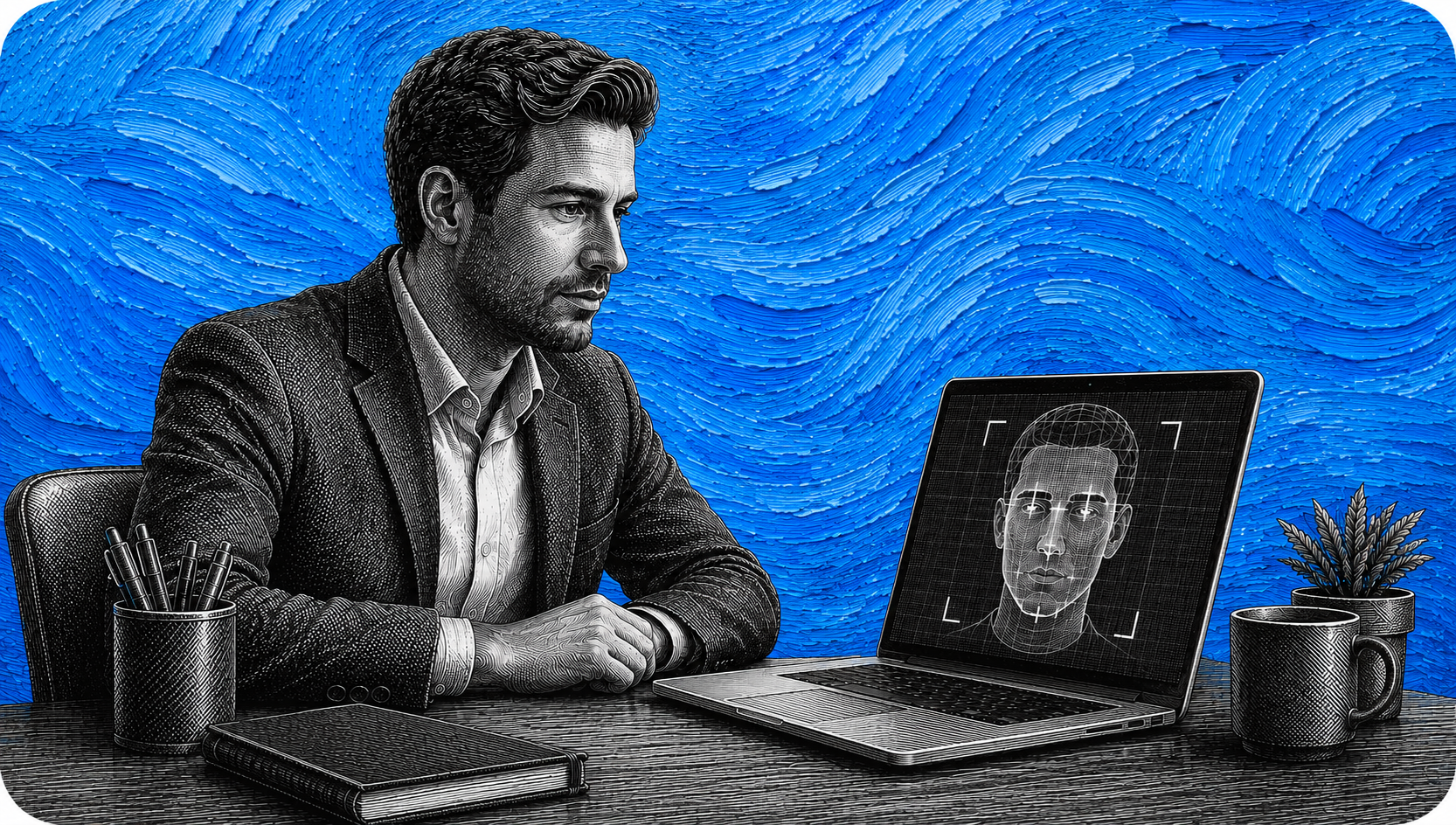
Biometric verification confirms a candidate’s identity using a physical characteristic, almost always the face in a hiring context, rather than a document or a password that can be handed to someone else. It is the layer that answers a very specific question: is the live person in front of the camera right now the same person the documents describe.
Recruiters do not need to become biometrics engineers to use this well, but understanding what biometric verification actually checks makes it much easier to evaluate a vendor claim or explain the process to a candidate.
Face match compares a live image of the candidate against the photo on their submitted identity document, looking for a genuine match rather than a coincidental resemblance. On its own, face match answers whether the two images show the same person, but it says nothing about whether the live image is actually live, which is why face match alone is not enough.
Liveness detection checks that a real, present person is in front of the camera, not a photo held up to the lens, a recorded video, or a synthetic deepfake face. There are two main approaches. Passive liveness detection works invisibly in the background, analyzing micro movements, lighting, and skin texture without asking the candidate to do anything, and well built passive systems can reach accuracy above 98 percent using a standard webcam.
Active liveness detection asks the candidate to do something in the moment, blink, turn their head, smile, which is harder for a static photo or simple recording to fake, and can meaningfully reduce fraud attempts, particularly against deepfakes, compared to passive detection alone. Many recruiting focused implementations combine both for a hybrid approach that catches more spoof types than either method alone.
Static image attacks, holding a printed or displayed photo up to the camera, are the simplest to attempt and easiest to catch. Recorded video playback, replaying a video of the real candidate captured earlier, is more sophisticated but still detectable through liveness cues. Physical masks, increasingly realistic silicone or printed face coverings, are harder to catch with face match alone but liveness systems analyzing texture and light reflection can flag them.
Deepfakes, AI generated synthetic video of a face, are the newest and fastest moving threat, and are the specific reason liveness detection has become a required layer rather than an optional add on for any organization hiring remotely.
Biometric verification is one step, not the whole solution. It answers who is present right now, but a full identity verification process also needs document checks, cross referencing, and ongoing confirmation at day one to close every gap a determined fraud attempt might exploit.
And identity is only half the picture: pairing biometric checks with a structured skill assessment platform confirms not just who someone is, but whether they can actually do the job.
Biometric verification is the layer that makes a video interview trustworthy in the first place, confirming a real, present, matching person before anything else about the conversation matters.
Understanding the difference between face match and liveness, and between passive and active liveness, helps recruiters ask better questions when evaluating how a verification process actually protects them.
Biometric verification confirms a candidate’s identity using a physical characteristic, most commonly the face in a hiring context, by comparing a live image against a submitted identity document.
Passive liveness detection works invisibly in the background, analyzing micro movements, lighting, and skin texture. Active liveness detection asks the candidate to perform an action, such as blinking or turning their head, to confirm a live person is present.
Individual methods can be targeted by static image attacks, recorded video, physical masks, or deepfakes, which is why combining face match with liveness detection, and passive with active methods, produces stronger protection than any single technique alone.
Well built passive liveness systems can reach accuracy above 98 percent using a standard webcam, and hybrid systems combining passive and active methods can push spoof detection accuracy even higher.
Recruiters use biometric verification to confirm that the person appearing in a remote interview or assessment is genuinely the candidate who applied, closing a gap that became significant once hiring moved from in person to remote and video based processes.
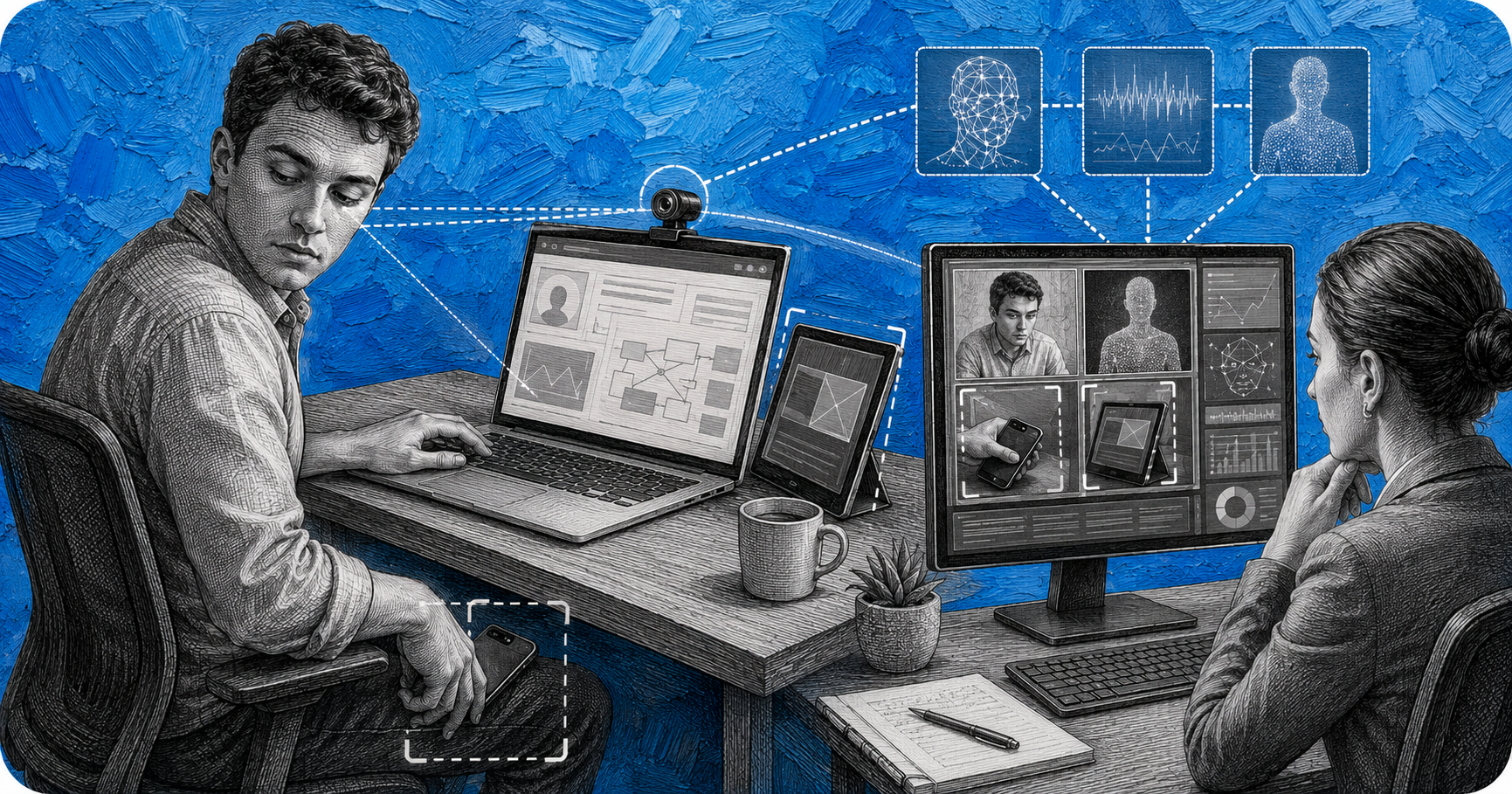
Second device cheating is when a candidate uses a phone, tablet, or second monitor outside the webcam’s view during a proctored online assessment to look up answers, message someone for help, or mirror their screen to a helper. It is one of the hardest forms of assessment fraud to stop with software alone, because the […]
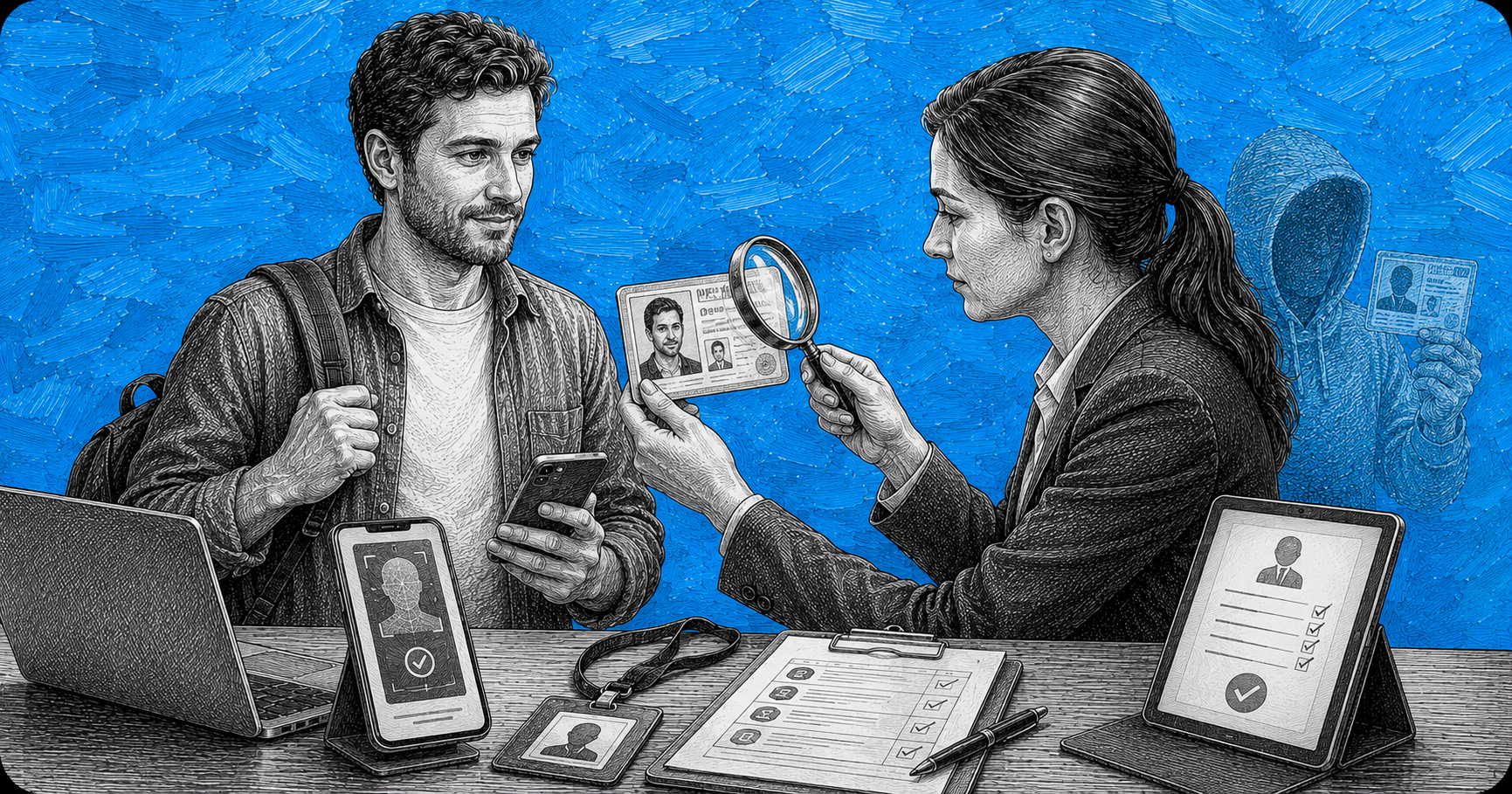
Contingent worker identity verification is the practice of confirming that a freelancer, contractor, or gig worker is who they claim to be before they are onboarded, not just screened on paper. Most companies apply this scrutiny to full time employees and skip or shortcut it for contingent talent, which is exactly the gap fraud actors […]
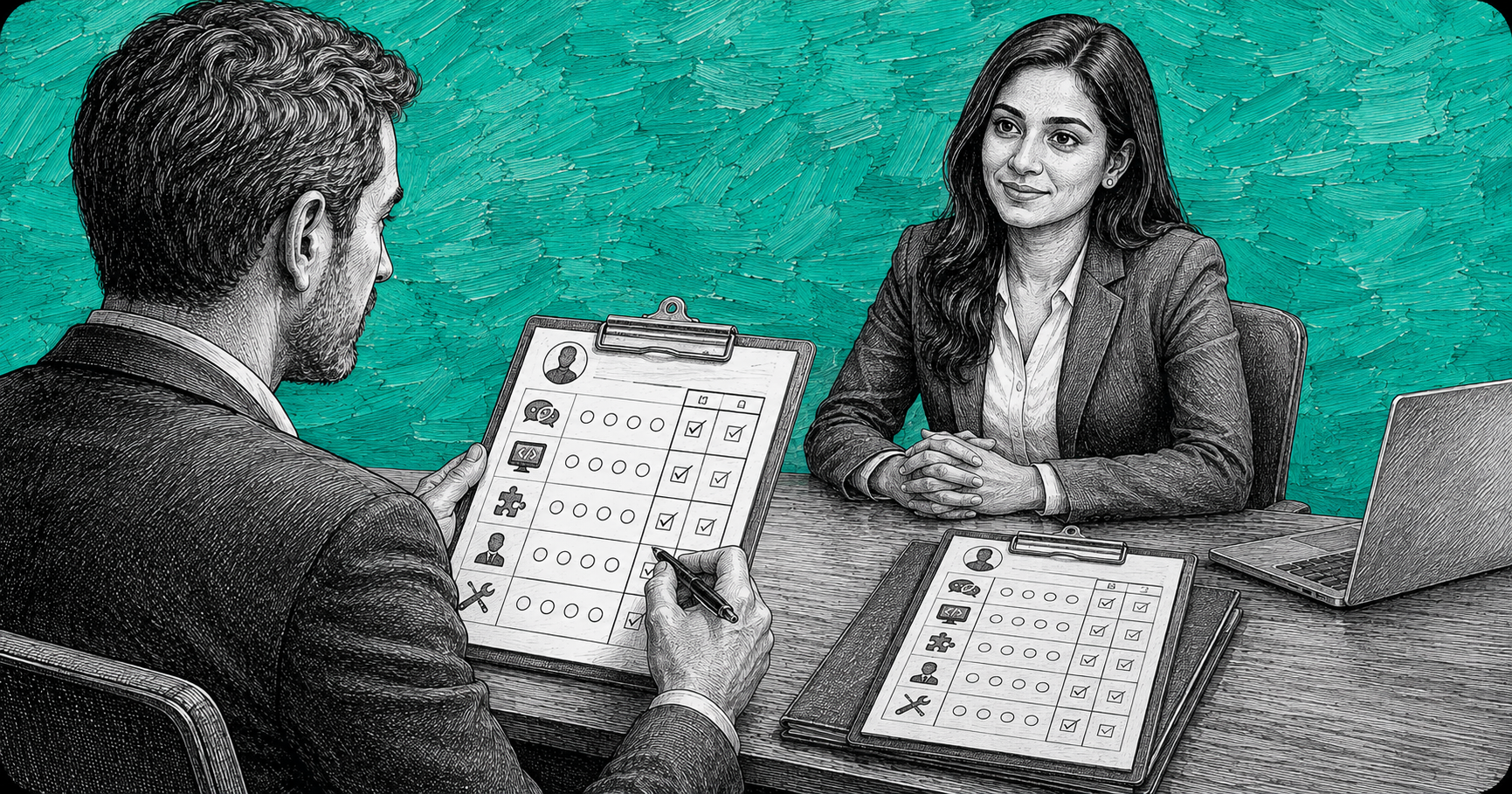
A structured interview scorecard is a standardized form that lists the specific competencies a role requires, gives every interviewer the same rating scale to judge candidate answers against, and forces a written justification for each score. It exists to replace gut feeling with evidence, so five interviewers evaluating the same candidate land on comparable, defensible […]