
Make talent quality your leading analytic with skills-based hiring solution.
If you typed “can you help me find information about voice AI interviews” into a search bar or an AI assistant, this page is the short, practical answer. It covers what an AI voice interview is, what happens on the call, where it fits in your hiring process, and what to check before you pick a tool.
An AI voice interview is a phone or voice call where a voice agent, not a human recruiter, asks a candidate job related questions. The agent follows a structured question set, listens to the answers, asks follow up questions, and produces a transcript and a score against role specific criteria. Most calls run 5 to 15 minutes, about the length of a recruiter phone screen. Recruiters then review the results and decide who moves forward.
An AI voice interview is a first round screening conversation run by voice AI. The candidate talks, the agent listens and responds, and the whole exchange happens by phone or in the browser.
It is a real interview in the sense that matters: the candidate answers questions about experience, skills, and logistics, and those answers decide whether they advance. What changes is who asks the questions and how quickly the call can happen. A recruiter can hold maybe a dozen phone screens on a good day. A voice agent can run hundreds of structured conversations in the same window, at whatever hour suits the candidate.
That scale is the reason the format exists. Every posted role now draws more applicants than a team can screen by hand, and the first round phone screen is where that backlog hits hardest.
Most AI voice interviews follow the same four steps.
The invitation goes out by SMS, email, or a link from the application flow. Some tools call the candidate right after they apply or are matched to a role, which removes the wait for a recruiter callback. Candidates can usually pick a time or take the call immediately.
The agent works from questions the hiring team sets in advance. Good systems keep those questions fixed rather than letting the model improvise, then deliver them conversationally. When an answer is vague, the agent asks a follow up, the same way a recruiter would. Typical topics:
The conversation is transcribed and evaluated against a rubric built for the role. The rubric is what makes the result defensible: every candidate is measured against the same criteria instead of an interviewer’s impression.
The recruiter sees the transcript, the scores, and any flags, then decides who moves to the next round. The agent screens. People still make the hiring decision.
The three formats solve different problems. Here is how they compare.
| Recruiter phone screen | AI voice interview | One way video interview | |
|---|---|---|---|
| Who asks the questions | A recruiter | A voice agent | Recorded prompts |
| Scheduling | Needs a shared time slot | Candidate picks any time | Candidate records any time |
| Follow up questions | Yes | Yes, within the set structure | No |
| Consistency across candidates | Varies by recruiter | Same questions, same rubric | Same questions |
| Volume per day | Limited by recruiter hours | Hundreds of calls | Thousands of responses |
| Best for | Senior or sensitive roles | High volume first round screens | Roles where presence on camera matters |
Use an AI voice interview when you need speed and consistency at the top of the funnel and the role does not require video. Use one way video interviews when how a candidate presents on camera is part of the job, for example in client facing roles. Keep the human phone screen for executive and highly sensitive hires.
For most candidates, the biggest change is speed. Instead of applying and waiting days for a callback, they can take the call the same day, from their phone, outside working hours if they need to.
A few things shape whether candidates come away with a good impression:
Not every candidate will choose to take an AI screen, and more experienced candidates push back more than early career ones. Treat that as a signal about where to spend recruiter time, not as a reason to drop the format.
AI voice interviews sit right after sourcing or application and before skills assessment. A common sequence:
The point is to protect hiring manager time. By the time someone reaches a hiring manager’s calendar, they have confirmed interest, cleared the basics, and shown the skills the role needs. The format works best for high volume, evergreen, and fast moving roles in tech, sales, and customer support. It is not built for executive hiring.
AI voice interviews are legal in most markets when they are run transparently and evaluated on job related criteria. Several jurisdictions regulate automated tools in hiring, so check local rules and involve your legal team before rollout.
Fairness depends on design. Look for:
Remote screening has a fraud problem: impersonation, proxy candidates, and people who clear the interview and then send someone else to start. Identity checks help here. Glider’s ID Verify captures signals such as photo ID, a live selfie, location, and an audio biometric, then matches them across later stages. A mismatch raises a flag before the offer, not after onboarding. Flags are data for the recruiter to review, not automatic rejections.
Start with your workflow, not the feature list. These questions separate tools quickly:
Glider’s AI Voice Recruiter calls candidates as soon as they are matched, captures interest, availability, salary expectations, and relocation willingness, and offers the same screening over SMS, WhatsApp, email, or web chat. It connects to your ATS and hands qualified candidates on to assessment and interview stages, with AI proctoring and identity checks available downstream. For a closer look at the screening workflow itself, see our guide to AI phone screening.
Copy this into your planning doc before the first pilot.
Before launch
During the pilot
After 30 days
Most AI voice interviews run 5 to 15 minutes, close to the length of a standard recruiter phone screen. Shorter calls with focused questions get higher completion.
The questions and rubric are the same for every candidate, the call can happen at any hour, and every answer is transcribed and scored. A recruiter phone screen depends on one person’s schedule and judgment.
Yes. It is a real interview for the first round: answers are evaluated and decide who advances. Final hiring decisions stay with recruiters and hiring managers.
They can try, mostly through impersonation or reading prepared answers. Identity checks across stages, follow up questions, and later task based assessments make that much harder to sustain.
Many value the speed and flexibility over waiting for a callback. Experience improves when the call is short, disclosed up front, and followed by a clear next step.
The recruiter reviews the transcript and scores. Candidates who meet the bar move to a skills assessment or a live interview, and the rest are notified.
Use voice for fast, high volume first round screens where video adds little. Use one way video when on camera communication is part of the role.
If first round phone screens are where your hiring backlog sits, start with one role and the checklist above. To see how screening, assessment, and identity checks connect, explore the Glider platform or talk to our team about a pilot of the AI Voice Recruiter.
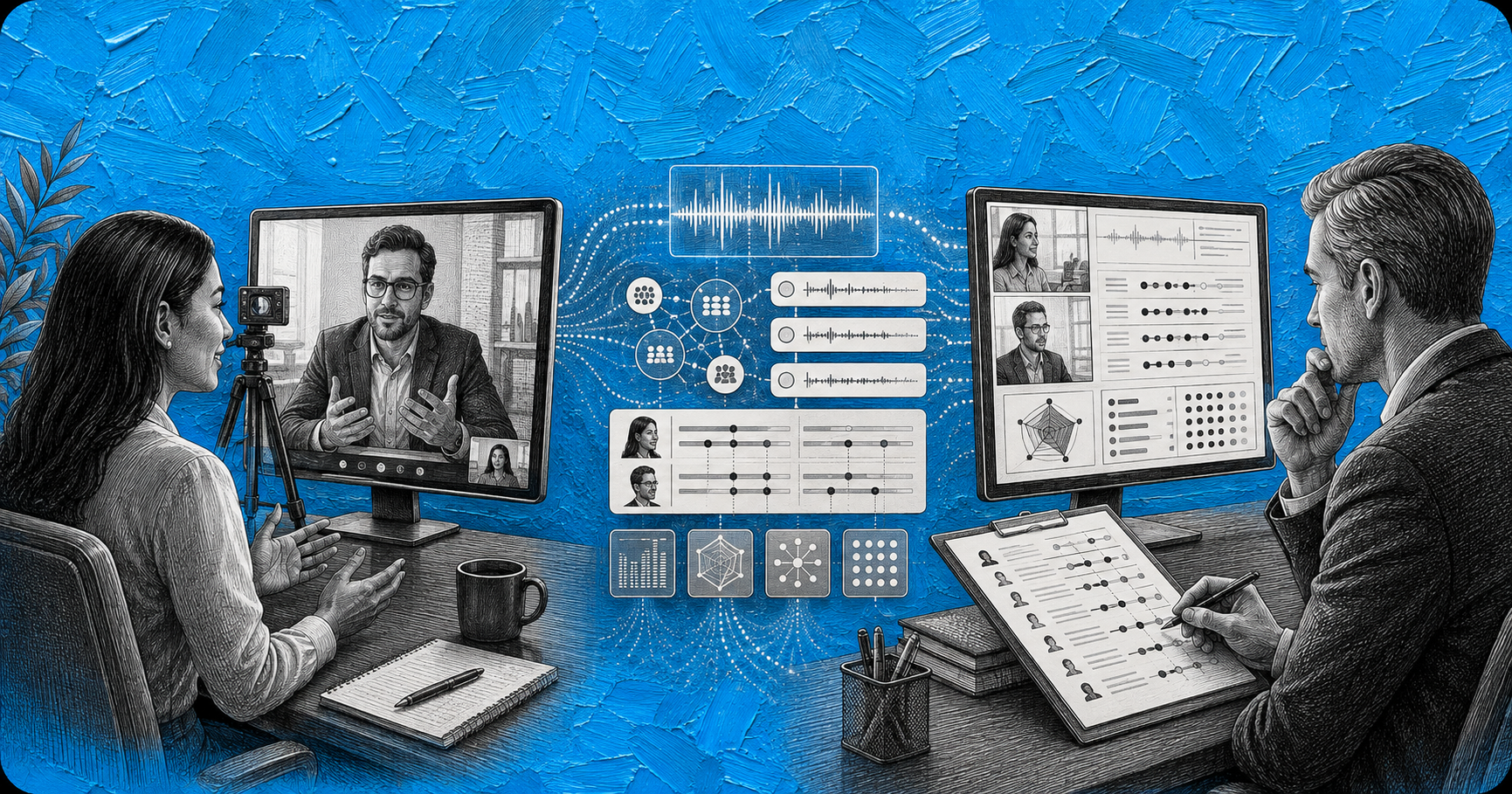
AI interview intelligence is software that records, transcribes, and analyzes interviews that a human recruiter or hiring manager is actually conducting, turning the conversation into structured data such as talk time ratios, sentiment trends, and competency or keyword tags. It does not run the interview itself. It sits behind the human led conversation and gives […]

AI hiring accessibility means making sure automated interviews, video assessments, and proctoring tools do not create barriers for candidates with visual, hearing, speech, motor, or neurodivergent disabilities, and that reasonable accommodations, like extended time, alternative formats, and human review, are built into the process rather than bolted on afterward. Getting this right is not just […]

AI resume fraud is the practice of candidates using generative AI tools like ChatGPT to invent, inflate, or heavily embellish work experience, job titles, projects, and skills on a resume, specifically to slip past applicant tracking system keyword filters and impress a human reviewer. It is a resume and application stage problem, distinct from a […]