
Make talent quality your leading analytic with skills-based hiring solution.
Although it is a universal fact and everybody is aware, let’s just start by
saying that Facebook, Apple, Amazon, Netflix, and Google are the “tech giants”. These omnipresent and illustrious companies also abbreviated to
as the FAANG Companies, hire the top talent, i.e., the cream of the
society through their advanced and dynamic ways of recruitment. Their
alluring strategies not only help them in attracting the top talent but also
helps them in retaining the talent.
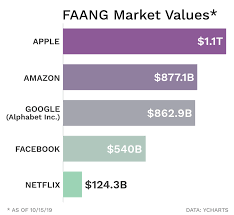
Below are the stats of the FAANG Companies market values.
These “Big Tech” companies hire around 923400 employees per year using their effectual ways. So, the big question:
“How do they do it?”
In this blog, we are going to discuss each of these FAANG Companies hiring techniques exclusively.
The largest social media platform has nearly 50000 employees and is one of the biggest tech hubs in the world. Glassdoor has declared Facebook as the most preferred work destination.
Well, why is it so?
This is because Facebook does not follow the traditional ways of hiring candidates. Mark Zuckerberg, the CEO, has a hiring strategy of his own. According to him, a recruiter should not hire someone whom they will not work for if the tables are turned. Facebook targets those who are hungry for success, not those who have achieved everything. They don’t just select candidates from the top universities but select those who have the potential to be the best.
Lora Goler, the Head of People at Facebook has given out a list of three things that they opt for in their future employees. These are:
Facebook recruiters make their interview process arbitrary and capricious depending on the situation. The company does not put up stereotypical questions to the candidate. Rather they “meticulously interact” with the candidate to bring out the quality.
Steve job’s tech hub recruits those who showcase skills as excellent service providers to the customers. The company hires its employees through the following processes:
Amazon recruits its candidates in three ways:
Unlike other FAANG Companies, Netflix does not do on-campus recruitments. The recruitment team posts ads on the website or the job portals. In the next step, they vet the candidates and screen the desired candidates over the telephone.
In the next round the HR head interviews the candidate over the phone or through a F2F interview.
Following that, the selected candidates are interviewed for the final time by the heads of the respective departments before being provided with the employment letters.
Google recruits its employees through this simple process:
The process is simple like most other companies and doesn’t seem that much complicated. Well, it is not but like all the other FAANG Companies, Google too does not just select candidates who have good grades or great job experiences. Rather they opt for those who can offer them great service and who have the urge and tenacity to upgrade.
The pandemic has hit the job market horribly and tech companies have suffered for the past few months. However, this situation has had little impact on the recruitment process of these big tech companies. They have partnered with third-party assessment and interview vendors like Glider.ai to carry on the hiring process smoothly.
These companies have taken their recruitment process online, and with the help of vendors like Glider.ai, have managed to attract and hire the desired candidates.

Global hiring fraud hotspots are the countries and regions where documented candidate fraud and identity verification risk run highest, based on named industry indices rather than assumption. In 2026, that data points consistently in one direction: fraud vulnerability is concentrated in markets with weaker centralized identity infrastructure and fast growing digital hiring volume, led by […]

A synthetic candidate is a job applicant who does not exist as a single real person at all. The persona is assembled, usually by combining stolen or purchased personally identifiable information (PII) with an AI generated resume, an AI generated or composite photo, and an invented work history, into a package that looks, on paper […]

Hiring overqualified candidates is not automatically a mistake, but it is a decision that carries real, well documented risk if the role and the offer are not restructured around it. Recent survey data shows most employers already do this regularly: 70 percent of hiring managers say they typically consider candidates who are overqualified for the […]