
Make talent quality your leading analytic with skills-based hiring solution.
Thirty eight percent of US job candidates say they have already withdrawn from a hiring process specifically because it involved an AI led interview, according to Greenhouse’s 2026 Candidate AI Interview Report, a survey of 2,950 active job seekers across the US, UK, Ireland, Germany, and Australia published in May 2026. Another 12% said they would abandon the process if an AI interview were required, putting the realistic total dropout risk closer to half of the candidate pool. The walkaway is not primarily about candidates rejecting AI as a concept. It is a reaction to how AI interviews are being deployed: with no human present, no disclosure, no explanation, and often no feedback afterward.
This matters for anyone running a hiring funnel today. Every candidate who quits mid process is a wasted sourcing dollar, a slower requisition, and, increasingly, a public review or social post about a bad experience. The good news is that the reasons behind the 38% figure are specific and fixable. This post walks through what the data actually says, why each factor pushes candidates out, and what a redesigned AI interview process looks like when it keeps candidates engaged instead of losing them.
Greenhouse’s research breaks the walkaway behavior into four leading causes among US candidates, ranked by how often candidates cited them:
A companion UK survey covered by People Management found a similar, if somewhat lower, pattern: 30% of UK candidates withdrew after learning AI was involved, 82% said they were not informed beforehand, and only 10% felt their prospective employer had a clear, published AI policy. The specific percentages shift by market, but the underlying driver is consistent everywhere it has been measured: invisibility. As Tiger Recruitment CEO David Morel put it in that coverage, “candidates are not objecting to AI in principle, they are reacting to its invisibility.”
Candidates walk away from AI interviews most often when there is no human anywhere in the loop, before, during, or after the conversation. A one way, pre recorded video interview scored purely by an algorithm removes the two things a job interview has traditionally offered a candidate: a chance to read the room and a chance to be judged by a person who can account for nuance. When candidates cannot tell whether a human will ever review their answers, many reasonably conclude the process is not worth their time.
This does not mean AI has to be removed from interviews to fix the problem. Glider AI’s own research on AI’s impact on candidate experience has found that AI can shorten timelines, personalize communication, and reduce inconsistency when it is layered around a process that still includes people at the right points, not when it replaces every human touchpoint outright. The fix is less about choosing AI or humans and more about deciding, deliberately, where each one belongs.
Undisclosed AI use is one of the single biggest drivers of candidate dropout, cited by 27% of US candidates and reflected in the 70% who said they were never told AI would be involved before the interview began. When candidates discover AI involvement after the fact, whether through a scripted, non responsive voice on the other end of a phone screen or an interviewer avatar that never adapts naturally to their answers, trust collapses immediately. Greenhouse’s own Chief People Officer, Sharawn Tipton, summarized the stakes bluntly: “Until we get honest about what these tools are actually measuring and own it when they get it wrong, we’re just repackaging the same problem.”
The fix here is procedural, not technical: state plainly, before the interview starts, that AI is involved, what it evaluates, and what a human will review afterward. Regulatory pressure is building around this too. In the Greenhouse research, 57% of US candidates and 59% of UK candidates said AI disclosure should be legally required, a signal that transparency will move from best practice to compliance requirement in more jurisdictions over the next few years.
Yes, AI monitoring is the third most cited reason candidates quit an AI led interview, named by 26% of respondents. This is a distinct concern from disclosure. Even candidates who know an interview involves AI can still feel uneasy about the specific mechanics of being watched: facial tracking, device scanning, tab switching alerts, and behavior scoring, especially when they do not understand what triggers a flag or how a false positive gets resolved.
Monitoring itself is not the problem candidates are reacting to; opacity about the monitoring is. Glider AI’s approach to this is covered on its AI proctoring product page, which frames integrity checks as protecting genuine candidates from being unfairly compared against people using deepfakes, side channel help, or a stand in, rather than as blanket surveillance of every applicant. Employers that explain what is being checked, why, and how a flag gets human review before any decision is made see far less friction than employers that deploy monitoring silently.
Most candidates who complete an AI interview simply never hear back. Greenhouse’s data found that 51% of candidates who completed an AI interview received no follow up communication of any kind, and only 28% advanced to a next round while 13% got a formal rejection, meaning the majority were left in limbo. That silence compounds every other frustration on this list: candidates who already felt like they were being evaluated by a machine with no one paying attention now have direct evidence that no one followed up either.
This is where AI can genuinely help candidate experience rather than hurt it, if it is used to guarantee a response rather than replace one. Automated, personalized status updates, sent at each stage regardless of outcome, cost employers almost nothing to implement and directly address the single most common post interview complaint. Tools built for high volume, always on communication, such as the AI voice recruiter approach described on Glider AI’s phone screening page, exist specifically to keep every candidate informed across time zones without requiring a recruiter to manually track hundreds of open threads.
Reducing AI interview walkaways does not require abandoning AI screening. It requires being deliberate about four things the data above points to directly:
A useful reference model here is Glider AI’s own AI guided interview approach, where AI supports a recruiter with real time structure and coverage during a live conversation rather than replacing the recruiter outright. That structure gives candidates a person to talk to while still giving the hiring team the consistency and fairness benefits that motivated using AI in the first place.
AI still has a clear and defensible role in modern hiring, particularly at high volume stages where manual screening cannot keep pace with application counts, and where fraud and misrepresentation are real, growing risks. Glider AI’s agentic AI interview work exists precisely because early stage screening at scale, combined with rising interview fraud, has made some amount of automation necessary for most high volume employers.
The lesson from the 38% walkaway data is not that AI belongs nowhere in the interview process. It is that AI belongs where it removes friction (scheduling, repetitive early screening, consistent scoring against a rubric) and should step aside, or bring a human alongside it, at the points where candidates most need to feel heard: being told what is happening to them, having someone accountable for the outcome, and getting a real answer at the end.
According to Greenhouse’s 2026 Candidate AI Interview Report, 38% of US candidates said they have withdrawn from a hiring process because it involved an AI led interview, and a further 12% said they would abandon the process if an AI interview were made mandatory. A comparable UK survey found a 30% withdrawal rate.
The leading reasons, per Greenhouse’s research, are pre recorded interviews scored entirely by AI with no human reviewer (33%), employers not disclosing AI use beforehand (27%), AI monitoring during the interview (26%), and being required to complete a fully AI led interview with no human alternative (26%).
Disclosure requirements vary by jurisdiction and are expanding. Illinois and New York City already have AI hiring disclosure or audit requirements in place, and Greenhouse’s research found 57% of US candidates and 59% of UK candidates believe disclosure should be legally mandated everywhere, suggesting more regions will follow. Regardless of the legal minimum in a given location, disclosing AI use upfront is one of the most effective ways to reduce candidate dropout.
AI interviews are not inherently harmful to candidate experience, but poorly disclosed or fully automated implementations clearly are, based on the dropout data above. Candidate experience research on AI recruitment more broadly has found AI can improve speed, personalization, and consistency when a human remains part of the process at key points.
Greenhouse found that 51% of candidates who completed an AI interview received no follow up communication at all. Only 28% advanced to a next round and 13% received a formal rejection, leaving the majority without any resolution.
Disclose AI use before the interview begins, keep a human reviewing outcomes or available as an option, explain any monitoring or proctoring in plain language, and send a status update to every candidate at every stage regardless of outcome.
Yes. Even as 38% of candidates report walking away from specific AI led processes, 63% of job seekers overall report having faced an AI interview already, a 13 percentage point increase in six months, according to the same Greenhouse research. AI screening is not disappearing, which is exactly why fixing how it is disclosed and implemented matters more than debating whether to use it at all.
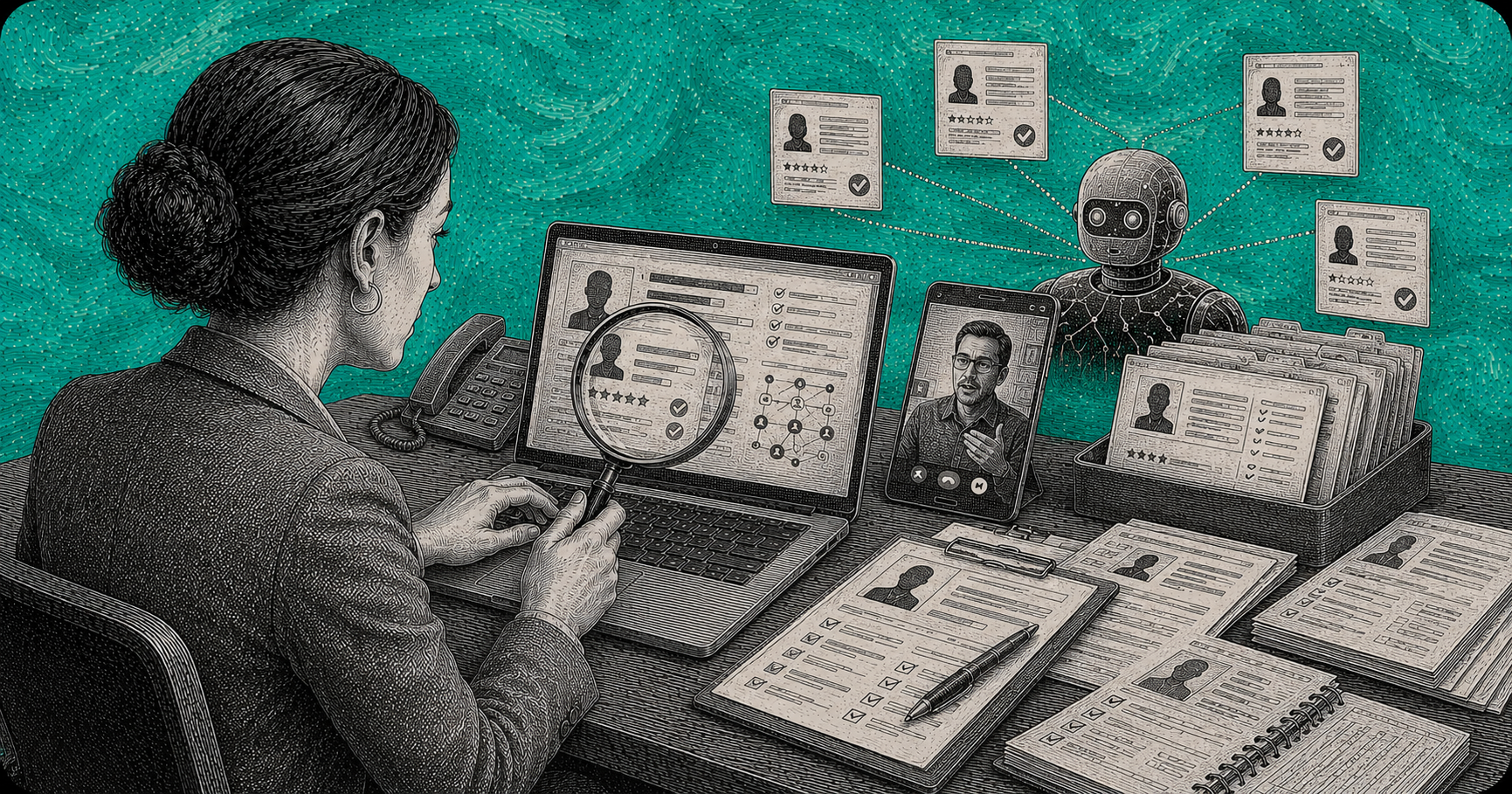
AI reference checking uses software, not a recruiter’s personal phone calls, to reach a candidate’s former managers or colleagues, collect their feedback through a structured digital survey or a conversational voice or chat interface, and analyze the responses for consistency and red flags. Done well, it does not just digitize the old “would rehire, yes […]
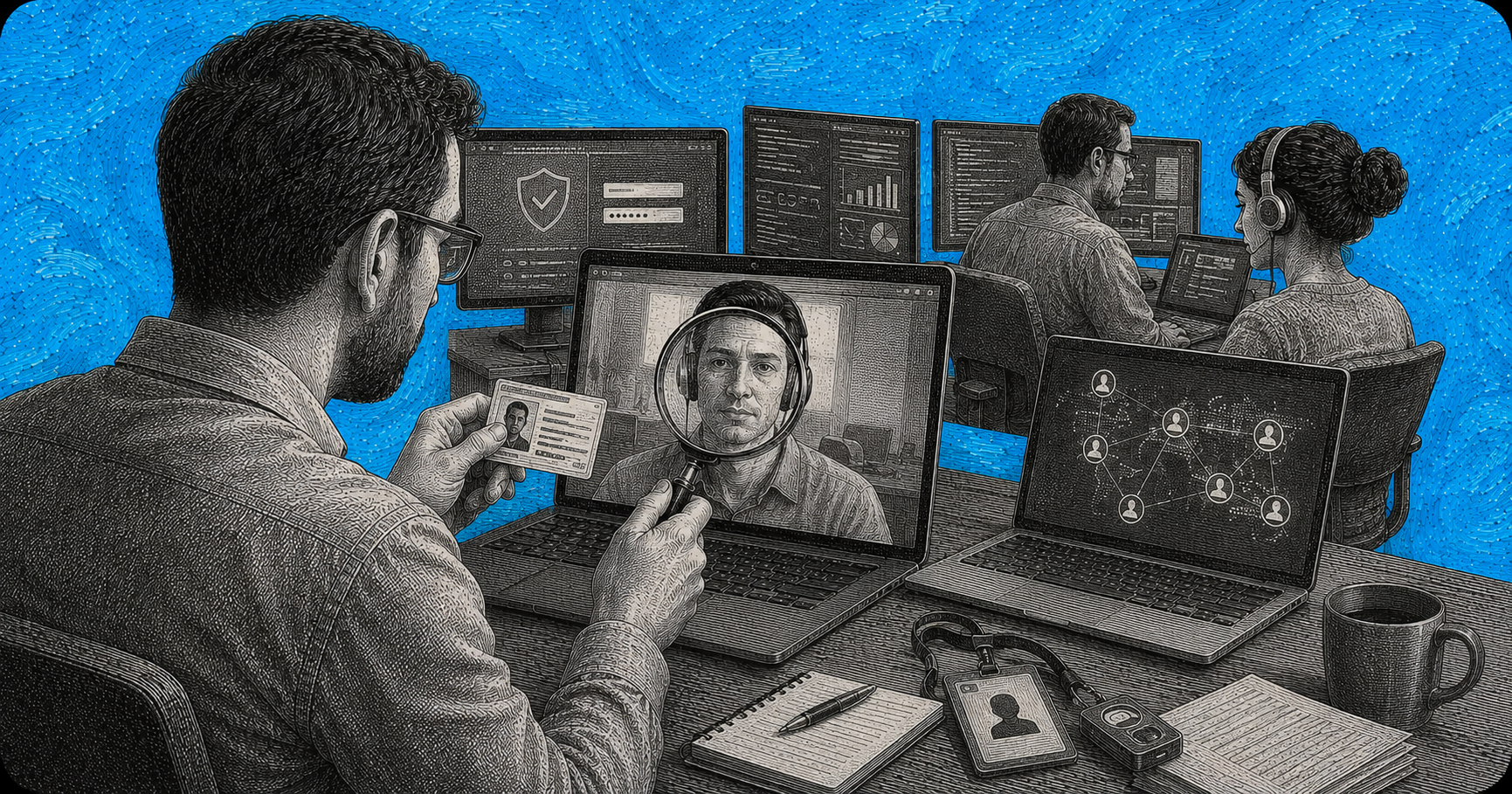
Remote IT worker fraud is a scheme in which someone other than the person a company believes it hired performs the job, typically using a stolen or fabricated identity, a facilitator based in the country where the job is located, and a “laptop farm” that makes the worker appear to be logging in from inside […]

A ghost job is a job posting for a role that the company is not actively trying to fill, whether because the position is already spoken for internally, the budget has quietly frozen, or the listing was never meant to close. In 2026, a Clarify Capital analysis of more than 175,000 US job listings found […]