
Make talent quality your leading analytic with skills-based hiring solution.
An AI interviewer is a system that conducts or scores all or part of a candidate interview without a human present for that step. The category covers a wider range of tools than most people assume, from a simple pre recorded video interview scored by an algorithm to a fully conversational agent that asks follow up questions in real time.
Adoption has moved fast: 63 percent of US job seekers have now faced an AI interview, according to Greenhouse’s 2026 Candidate AI Interview Report, a survey of nearly 3,000 job seekers across the US, UK, Ireland, Germany, and Australia. Adoption and acceptance are not the same thing, though. Our companion piece on why 38 percent of candidates walk away from AI interviews covers that data in full. This page focuses on the question that comes before that one for most teams evaluating a tool: what an AI interviewer actually is, the formats currently in market, and what separates an implementation candidates tolerate from one they abandon.
Pre recorded, AI scored video interviews. The candidate records answers to a fixed set of questions on their own time, and an algorithm scores the response, sometimes with no human reviewer at any point. This is the format most associated with candidate dropout, since it offers no back and forth and often no visible human accountability.
Live, AI guided interviews. A recruiter or hiring manager conducts the conversation in real time, with AI providing structure in the background, suggested follow up questions, rubric aligned scoring prompts, and consistency checks, rather than replacing the human interviewer. This format keeps a person in the loop while still gaining the consistency benefits of structured, AI supported scoring.
Agentic or conversational AI interviews. A conversational AI agent conducts the interview directly, asking dynamic follow up questions based on the candidate’s answers rather than working from a fixed script. This is the newest and most capable format, and the one most likely to be mistaken for a live human interviewer, which makes clear upfront disclosure especially important.
Most AI interviewers score against a defined rubric tied to the specific role’s required competencies, converting spoken or written answers into structured signals, keyword and concept coverage, response structure, relevant experience mentioned, rather than a holistic human impression. This is a meaningful advantage for consistency across a high volume of candidates, since the same rubric applies identically to every candidate rather than varying by which human happened to conduct the interview. The tradeoff is that a rubric based system can miss context a human would naturally pick up on, which is exactly why the strongest implementations pair AI scoring with a human review step before any final decision.
Confirm the format matches the stakes of the role. A one way, pre recorded, fully automated interview is reasonable for high volume early screening and is the format most likely to frustrate candidates for final round or senior positions, where a live or agentic format with clear human backstop performs better.
Confirm there is a genuine human review step, not just a human review claim. Candidates specifically want confirmation that a person reviews the AI’s output before a decision is made, not just a statement that a human is theoretically available.
Confirm disclosure happens before the interview starts, not buried in terms of service. Undisclosed AI use is consistently one of the top reasons candidates disengage from an AI led process.
Confirm a human alternative exists for candidates who ask for one, particularly for senior or final round hiring, where the absence of any human option is a specific, named driver of candidate dropout.
Check the legal and compliance surface for your hiring geography, since jurisdictions including Illinois, New York City, and Colorado now impose specific notice, consent, or audit requirements on AI interview tools. See our guide to ID verify and AI hiring compliance for the current landscape.
| Format | Human in the loop | Best fit | Dropout risk |
|---|---|---|---|
| Pre recorded, AI scored | Often none | High volume early screening | Highest |
| Live, AI guided | Recruiter conducts, AI supports | Most roles, most stages | Lower, if disclosed |
| Agentic or conversational | Varies, review step recommended | Scaling early stage screening | Moderate, disclosure critical |
An AI interviewer is not one thing, it is a category that spans a fully automated, one way video review and a fully conversational agent that adapts its questions in real time, and the format chosen matters as much as the decision to use AI interviewing at all. Teams evaluating AI interview software get better outcomes, both in hiring quality and candidate experience, by matching the format to the role’s stakes, keeping a real human review step, and disclosing AI involvement clearly before the interview begins. For the full data on where undisclosed or fully automated implementations go wrong, see our companion piece on candidate dropout from AI interviews.
An AI interviewer is a system that conducts or scores all or part of a candidate interview without a human present for that step, ranging from AI scored pre recorded video responses to fully automated conversational interview agents.
The three main formats are pre recorded AI scored video interviews, live interviews where AI supports a human interviewer with structure and scoring, and agentic or conversational AI interviews where an AI agent conducts the conversation directly with dynamic follow up questions.
Most AI interviewers score responses against a defined competency rubric, converting answers into structured signals like concept coverage and response relevance, rather than forming a holistic human impression, which improves consistency across candidates but works best when paired with a human review step.
Candidates most want a clear explanation of what the AI measures (39 percent), confirmation that a human reviews the AI’s output (38 percent), and the explicit option to request a human interview instead of an AI one (46 percent).
Not exactly. An AI video interview usually refers specifically to the pre recorded, video based format, while an AI interviewer is the broader category that also includes live AI guided interviews and fully conversational agentic interviews.
63 percent of US job seekers report having experienced an AI interview, based on Greenhouse’s 2026 Candidate AI Interview Report, a survey of nearly 3,000 job seekers across the US, UK, Ireland, Germany, and Australia.
Disclosure requirements vary by jurisdiction and are expanding. Illinois, New York City, and Colorado all impose specific notice, consent, or review requirements on AI tools used in hiring decisions. See our ID verify compliance guide for the current state by state landscape.
Most implementations that keep candidates engaged pair AI with a human review step or a human alternative on request, rather than removing people from the process entirely. Fully automated formats with no human backstop carry the highest documented risk of candidate dropout.
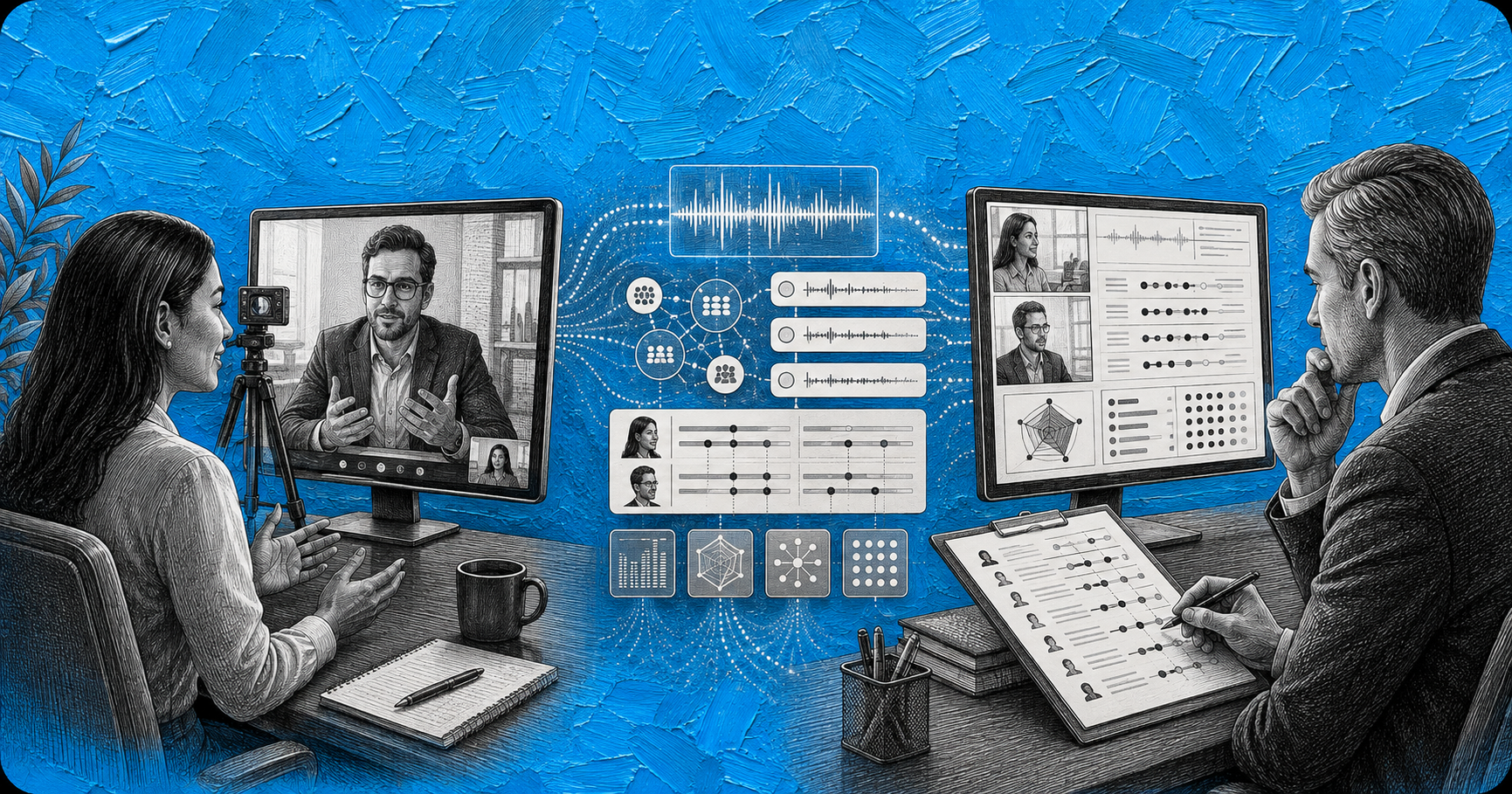
AI interview intelligence is software that records, transcribes, and analyzes interviews that a human recruiter or hiring manager is actually conducting, turning the conversation into structured data such as talk time ratios, sentiment trends, and competency or keyword tags. It does not run the interview itself. It sits behind the human led conversation and gives […]

AI hiring accessibility means making sure automated interviews, video assessments, and proctoring tools do not create barriers for candidates with visual, hearing, speech, motor, or neurodivergent disabilities, and that reasonable accommodations, like extended time, alternative formats, and human review, are built into the process rather than bolted on afterward. Getting this right is not just […]
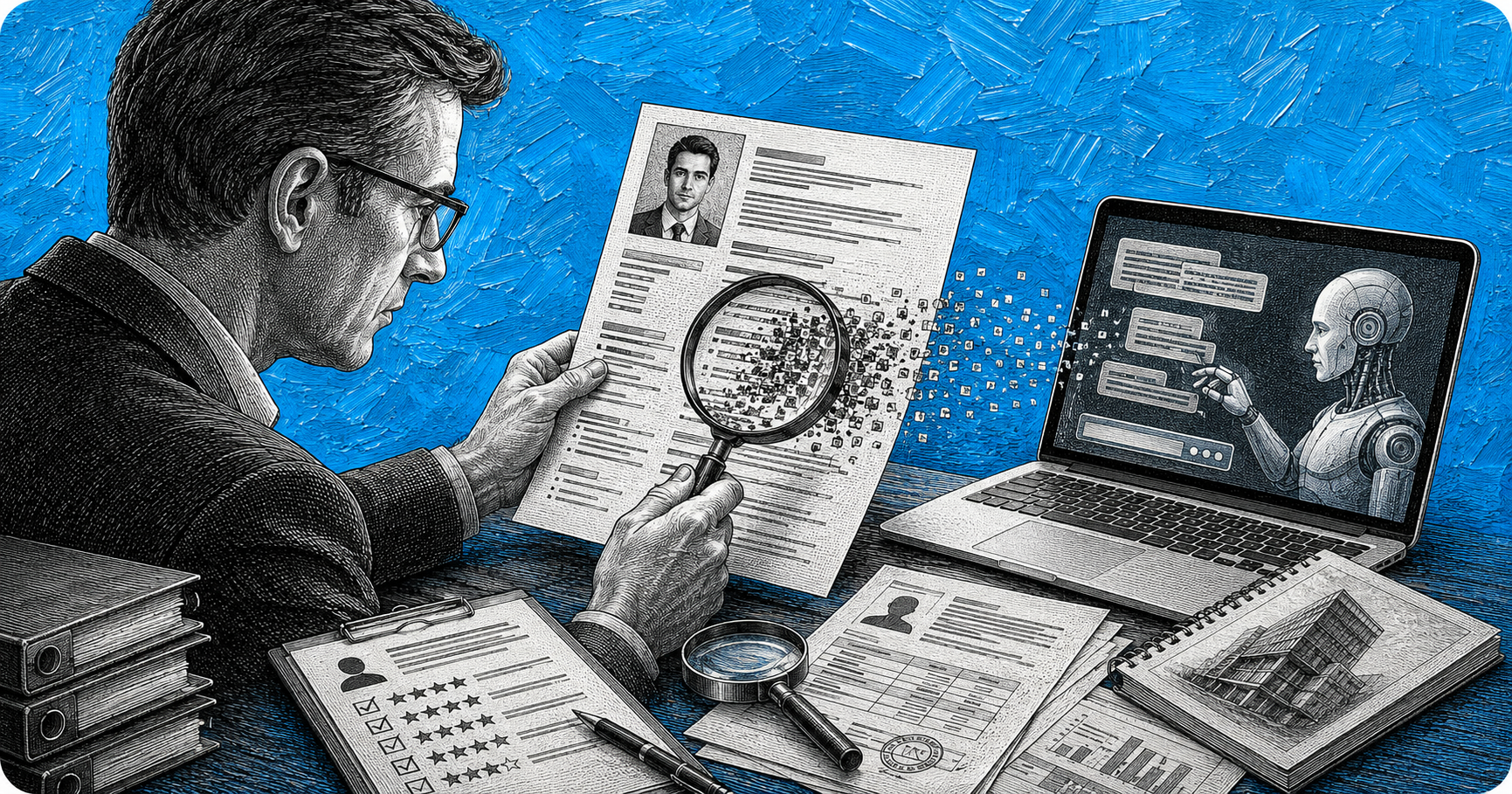
AI resume fraud is the practice of candidates using generative AI tools like ChatGPT to invent, inflate, or heavily embellish work experience, job titles, projects, and skills on a resume, specifically to slip past applicant tracking system keyword filters and impress a human reviewer. It is a resume and application stage problem, distinct from a […]