Make talent quality your leading analytic with skills-based hiring solution.
A recruiter screens a strong candidate over video, sends a coding assessment, and moves them to the hiring manager. On the first day of work, the person who shows up can’t do what the candidate did. Remote hiring and generative AI made that scenario cheap. AI proctoring is how hiring teams check, at every stage, that the right person is doing the work honestly.
AI proctoring is software that monitors a candidate during a remote assessment or interview, using the webcam, microphone, screen, and browser activity, to confirm identity and flag behavior that suggests cheating. It does not replace the recruiter’s judgment. It records what happened, marks the moments that look unusual, and gives a person a report to review.
So, what is AI proctored interview monitoring in practice? An AI proctored interview is a remote interview, recorded or live, where the same checks run in the background: the candidate’s identity is matched against earlier stages, and signals like a second face, a second voice, or a switched tab are logged for review.
Think of AI proctoring as three checkpoints around a single session. Each one answers a different question.
Before the first question appears, the candidate goes through setup checks. In Glider, these include location and IP capture, a photo ID, a live selfie, an internet speed check, permissions for camera, microphone, and screen share, audio verification, and tracking of multiple attempts. Phone soft lock can be switched on so the candidate’s phone isn’t in play during the test.
While the candidate works, the system watches for behavior that doesn’t fit an honest session:
Glider also watermarks questions, so each session carries a unique candidate ID. If a question leaks to a forum, the source can be traced.
When the session ends, the system assembles the evidence. That includes a cheating probability score, a full activity audit trail, a duplicate candidate check that matches faces across sessions, a code plagiarism check, and phone usage identification.
The point of three stages is coverage. A proxy test taker might pass a quick ID check, but passing that, then keeping one face in frame for 40 minutes, then clearing a face match against other sessions is much harder.
An AI proctored interview applies proctoring to the interview stage instead of only to a skills test. It matters because interviews are where impersonation often happens: one person interviews, another person takes the job.
With Glider, proctoring can run across interview formats:
Identity is the thread that ties these together. Glider ID Verify captures four signals (photo ID, live selfie, location, and an audio biometric) and matches them at every stage: assessment, first round interview, second round interview, and onboarding. If the voice on the second round doesn’t match the voice on the first, the flag appears before the offer, not after the start date.
Autonomous interviews hold up because the questions are fixed in advance and scored against specific rubrics, not improvised by a model. At Infosys, Glider has run more than 30,000 AI interviews, and the AI outcome matched the hiring manager’s decision 80 percent of the time. Proctoring confirms the person answering is the person you will hire. You can see how the interview formats work on the AI interview software page.
Most hiring fraud falls into a few patterns. Here is what each looks like and which signal catches it.
AI assistance deserves its own note. Some roles now expect engineers to use AI tools. Glider supports an AI Copilot inside coding tasks and tracks which prompts the candidate used to solve each problem. That turns the question from “did they use AI” into “how well did they use it,” which is a more useful hiring signal.
A flag is a fact, not a verdict. Glider does not disqualify a candidate automatically. The recruiter sees a monitoring report with the full video and timeline markers such as “face not detected,” “code pasted,” or “tab left,” and decides what the evidence means. The system also logs who marked a violation as a non issue, so decisions stay auditable.
Use this checklist when you open a report:
A human proctor watching live can read context well but can’t watch hundreds of sessions at once, and attention drops over a long test. AI proctoring watches every session the same way, around the clock, and never misses a tab switch. It is weaker on context, so AI does the watching and recruiters do the judging. For a deeper comparison, read AI proctoring vs human proctoring.
Candidates should never be surprised by proctoring. In Glider, candidates give explicit consent at each step for camera, microphone, screen share, the browser tracking plugin, and phone soft lock. Every proctoring feature can be switched on or off by the employer, so a customer support role can run lighter checks than a senior engineering role.
On data and security, Glider ID Verify is GDPR and CCPA compliant, and candidates can request deletion of their data. The platform holds SOC 2 Type II and ISO 27001 certifications, encrypts data at rest, and is built to support GDPR, CCPA, ADA, and EEOC compliance requirements. Every identity check is logged, which gives compliance teams a defensible audit trail. For common questions from candidates and legal teams, see the ID Verify FAQs.
A few practices keep proctoring fair:
AI proctoring is software that monitors a remote assessment or interview through the webcam, microphone, screen, and browser. It verifies the candidate’s identity and flags behavior that suggests cheating, then gives a recruiter a report to review.
An AI proctored interview is a remote interview, recorded, AI guided, or fully AI led, where identity checks and behavior monitoring run during the session. The candidate’s identity is matched against earlier hiring stages, and unusual events are logged with timestamps.
It runs in three stages. Before the session it checks ID, selfie, location, and device permissions. During the session it tracks tabs, gaze, faces, voices, and copy and paste events. After the session it produces an audit trail, a cheating probability score, and plagiarism and duplicate candidate checks.
It detects impersonation, proxy test takers, multiple faces, a second voice in the room, tab switching, pasted code, phone use, and leaked questions traced through watermarks.
Not in Glider. Flags are data points. A recruiter reviews the video and timeline markers and makes the decision, and the system logs who cleared each flag.
AI proctoring is widely used in hiring when candidates are told what is monitored and give consent. Requirements vary by country and state, so review your process with your legal team. Glider collects explicit consent at each step and supports GDPR and CCPA data rights.
It collects video, audio, and screen data, so transparency matters. Glider asks for consent for each monitoring feature, lets employers turn features off, and lets candidates request data deletion.
Use a quiet room with good light, close other tabs and apps, keep your phone away, have a valid photo ID ready, and test your camera, microphone, and internet connection before you start.
The fastest way to understand AI proctoring is to watch a monitoring report from a real session: the video, the timeline markers, and the identity matches across stages. Explore Glider AI proctoring or see how it fits with skill assessments on the Glider AI platform, then book a demo to walk through it with your own roles.
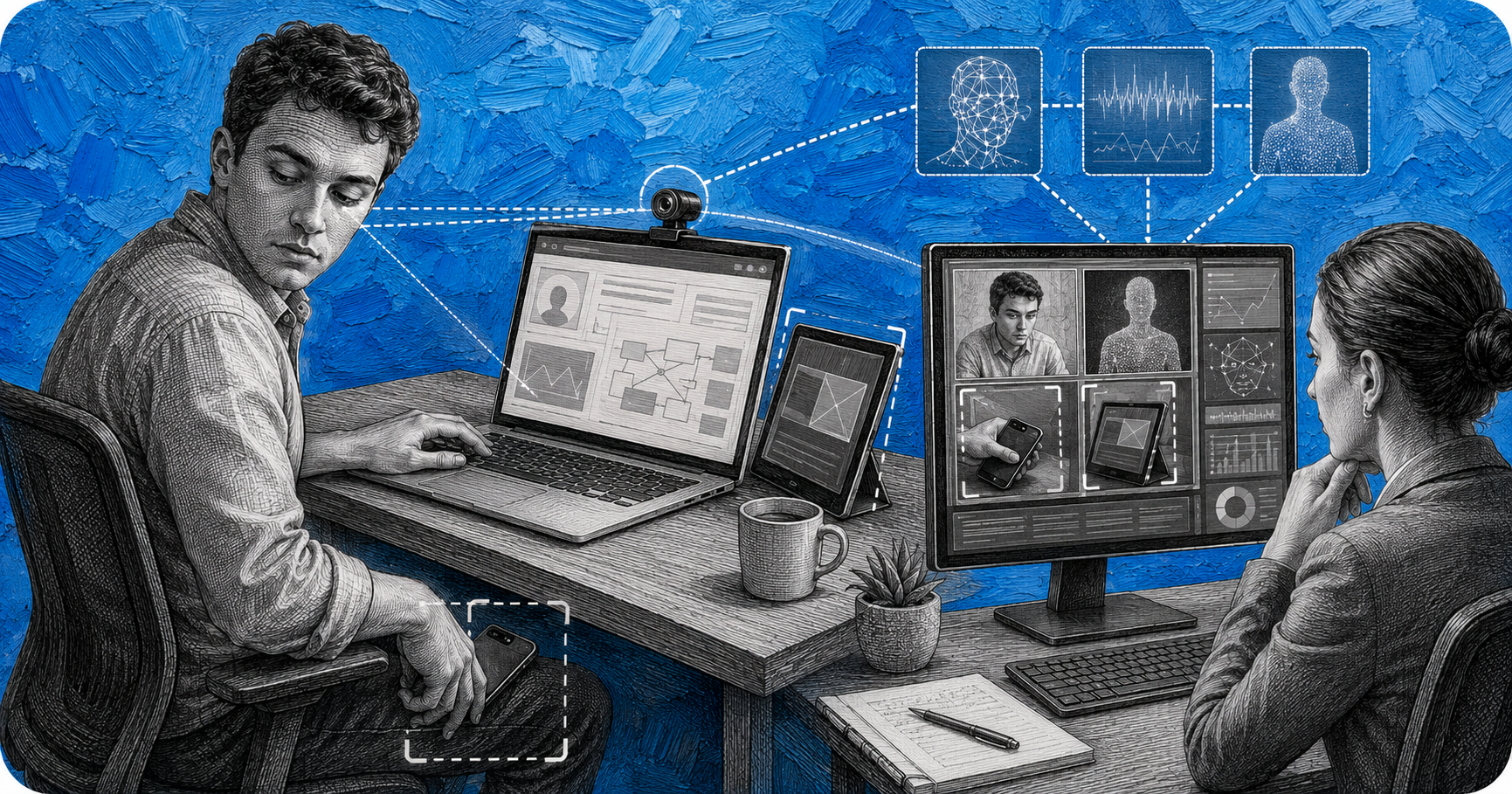
Second device cheating is when a candidate uses a phone, tablet, or second monitor outside the webcam’s view during a proctored online assessment to look up answers, message someone for help, or mirror their screen to a helper. It is one of the hardest forms of assessment fraud to stop with software alone, because the […]
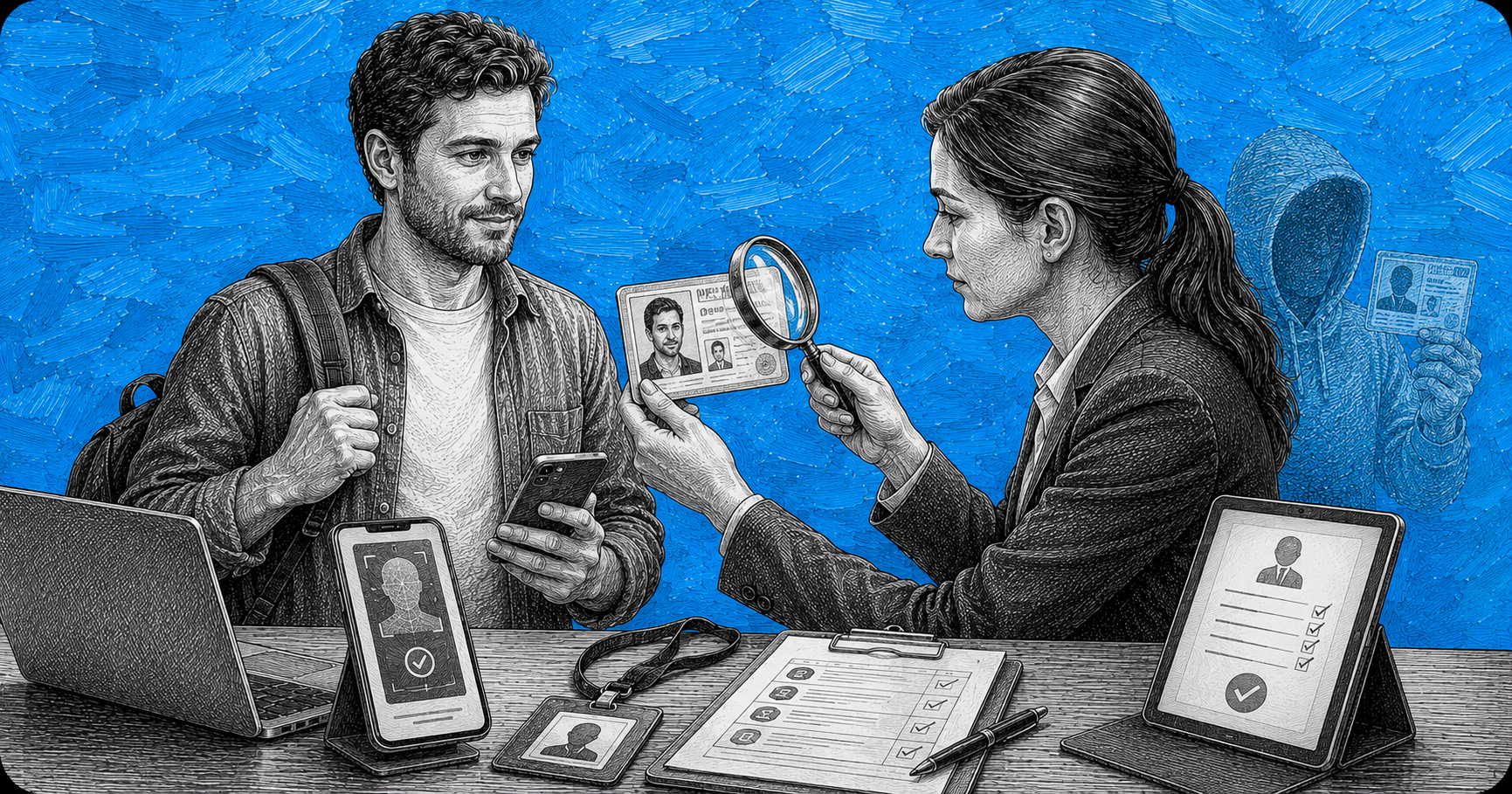
Contingent worker identity verification is the practice of confirming that a freelancer, contractor, or gig worker is who they claim to be before they are onboarded, not just screened on paper. Most companies apply this scrutiny to full time employees and skip or shortcut it for contingent talent, which is exactly the gap fraud actors […]
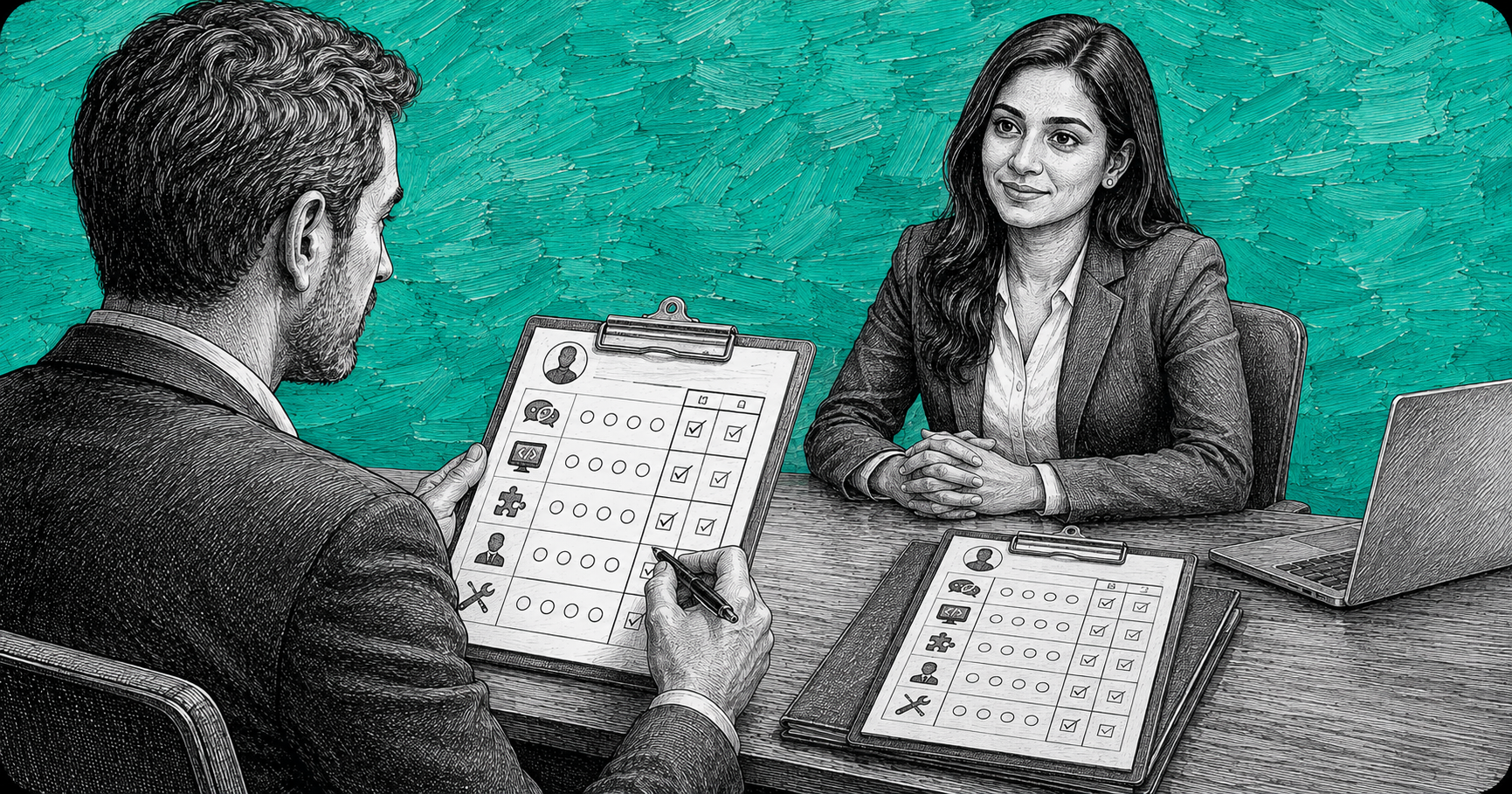
A structured interview scorecard is a standardized form that lists the specific competencies a role requires, gives every interviewer the same rating scale to judge candidate answers against, and forces a written justification for each score. It exists to replace gut feeling with evidence, so five interviewers evaluating the same candidate land on comparable, defensible […]