Make talent quality your leading analytic with skills-based hiring solution.
DE&I in contingent workforce programs must extend beyond statements and one-time campaigns. A meaningful approach connects equal opportunity, inclusive hiring, fair assignment experiences, accountable leadership, and measurable program improvement.
This article revisits five lessons from a Glider AI Q&A webinar with contingent workforce leaders and translates them into practical actions for program owners, staffing partners, recruiters, and hiring managers.
Original guest contributor: Priya Dixit, former Marketing Intern at Glider AI and student at Pomona College.
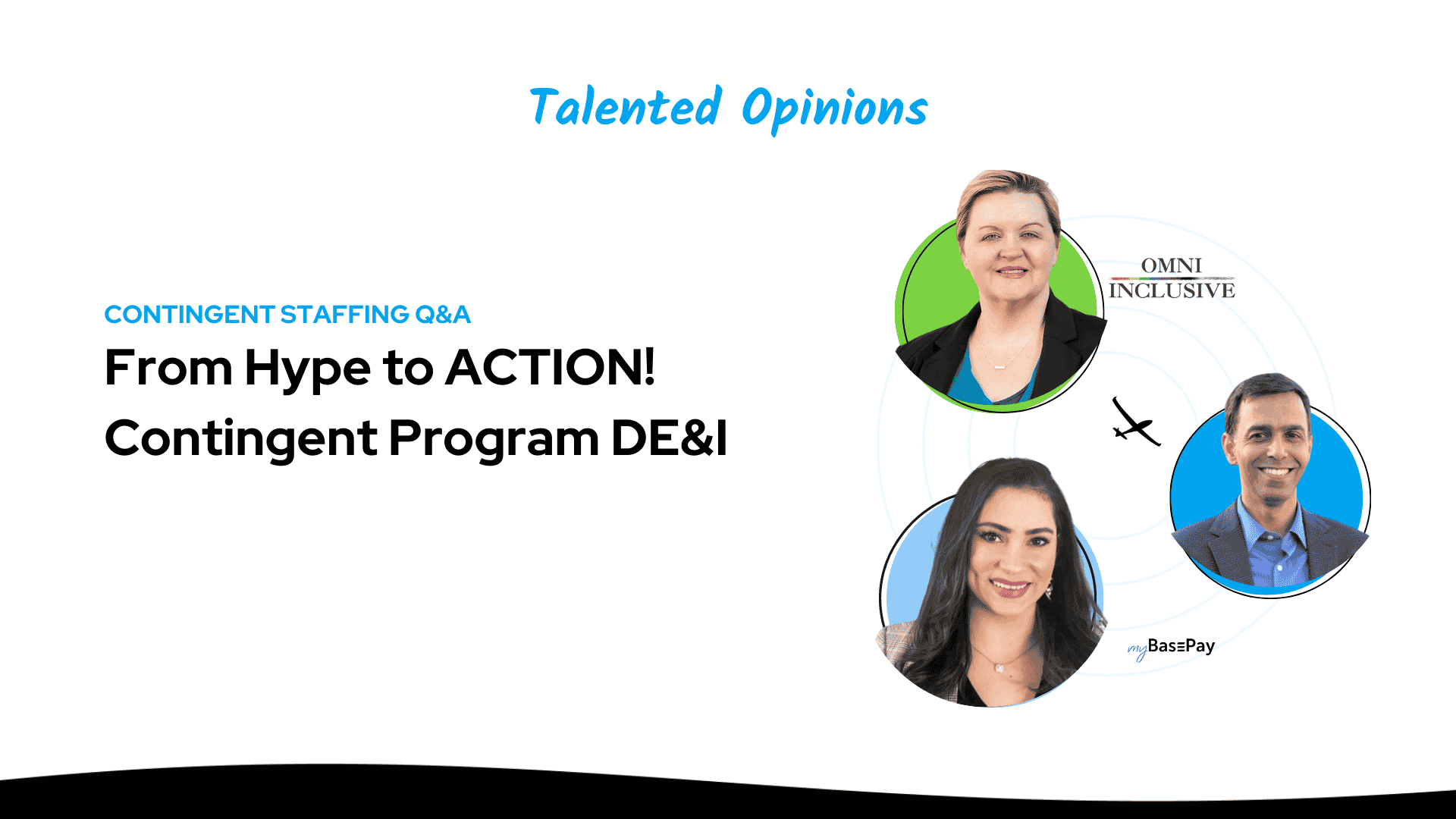
In 2022, Glider AI hosted a live Q&A webinar with Wen Stenger, CEO of Omni Inclusive; Angela Alberty, CBO of myBasePay; and Satish Kumar, CEO of Glider AI. The speakers shared perspectives shaped by their experience in staffing, hiring, and contingent workforce programs.
Audience questions created a practical discussion about moving from broad DE&I commitments to specific decisions, ownership, and accountability. The five takeaways below preserve the core lessons from that conversation while placing them in a clearer, action-oriented framework.
A contingent worker may interact with a client organization, managed service provider, staffing supplier, technology platform, recruiter, and hiring manager during a single assignment. That shared operating model can create gaps when expectations for sourcing, screening, onboarding, accommodations, feedback, pay practices, and workplace inclusion are not aligned.
A strong program defines who owns each decision, applies job-related standards consistently, and gives workers clear ways to ask questions or raise concerns. DE&I and equal employment opportunity efforts should expand access and remove unnecessary barriers without using protected characteristics as individual selection criteria. Organizations should review applicable requirements with qualified HR and legal professionals in every hiring location.
The webinar began with a discussion of fairness, opportunity, and business performance. Wen referenced research available at the time that associated inclusive cultures with stronger performance, agility, innovation, and business outcomes. Satish emphasized that equal opportunity and fair treatment should be rooted in company culture rather than treated only as a business case.
For contingent programs, the practical goal is not simply to increase the number of people from different backgrounds in the applicant pool. It is to remove irrelevant barriers, define success in job-related terms, widen access to opportunities, and evaluate every candidate against consistent criteria.
The takeaway: Treat representation as one outcome of a fair, accessible, and skills-focused process, not as a substitute for job-related decision-making.
“Diversity is being invited to a tournament, and inclusion is being asked to play.” The analogy from the webinar highlights a common program gap: recruiting may broaden access, but the assignment experience determines whether workers can contribute, develop, and succeed.
Contingent workers should receive clear onboarding, role expectations, access to the tools required for their work, appropriate accommodations, respectful day-to-day management, and reliable channels for feedback or concerns. Program leaders should also examine whether avoidable differences in communication, scheduling, recognition, or access to job-relevant learning are creating barriers.
The takeaway: Measure inclusion across the full assignment lifecycle, from onboarding and team participation to extensions, conversions, retention, and offboarding.
Angela explained that leadership is demonstrated through example. In a contingent program, visible executive support matters, but day-to-day progress also depends on program owners, procurement teams, MSP leaders, staffing suppliers, recruiters, and hiring managers understanding their responsibilities.
Effective governance should define:
The takeaway: Leadership sets the expectation, but governance turns that expectation into repeatable practices and accountable ownership.
The speakers stressed that data helps program teams understand where outcomes diverge from expectations. Useful analysis goes beyond a single representation figure and examines the decisions and experiences that occur throughout the contingent talent lifecycle.
Depending on program needs and lawful data availability, teams may review:
Protect privacy, use appropriate group sizes, document the purpose of each measure, and confirm that demographic information is collected and used lawfully. Data should support barrier detection and process improvement; it should not be used to apply different standards or make individual decisions based on protected characteristics.
The takeaway: Measure the process, investigate meaningful differences, and assign owners and deadlines to corrective actions.
The webinar highlighted the GOAL+ Scholarship, created through a partnership among Glider AI, Omni Inclusive, and myBasePay to support LGBTQ+ college students pursuing opportunities in technical and non-technical fields. The initiative illustrated how organizations can connect advocacy with a specific investment in access and opportunity.
Program-level action can also include broader outreach, skills-based job requirements, accessible applications and assessments, structured interviews, supplier development, mentorship, transparent worker communication, and regular review of assignment conditions. Each initiative should have a defined purpose, owner, measure of progress, and compliance review.
Read more about the scholarship here. To follow future conversations and company updates, visit Glider AI on LinkedIn here.
The takeaway: Choose actions that remove barriers or expand access, then track whether those actions improve the worker and program experience.
It means designing sourcing, screening, selection, onboarding, assignment management, and worker support so qualified people have fair access to opportunities and can participate effectively. The process should remain job-related, consistent, accessible, and compliant with applicable law.
Responsibility is shared among client leaders, program owners, procurement, HR, MSPs, staffing suppliers, recruiters, hiring managers, and technology providers. A governance model should state who owns standards, training, data, accommodations, complaints, and corrective actions.
Useful measures may include stage progression, drop-off, time in stage, offers, starts, assignment completion, extensions, conversions, pay, worker feedback, accommodations, and retention. Metrics should be selected for a clear purpose and handled with appropriate privacy and legal controls.
Suppliers can broaden outreach, use clear job-related requirements, provide accessible candidate communication, apply consistent screening standards, train recruiters, document decisions, and share process data that helps the program identify barriers.
Start with a defined barrier or opportunity, choose a practical intervention, assign an owner, establish a timeline, measure the result, and revise the process when evidence shows that the action is not working as intended.
The central lesson from the contingent program DE&I Q&A is that progress depends on more than representation or public commitments. Inclusive assignment experiences, leadership accountability, useful data, shared governance, and specific action all matter.
By applying consistent job-related standards, removing unnecessary barriers, protecting worker access and privacy, and reviewing outcomes across the full contingent talent lifecycle, organizations can build programs that are fairer, more transparent, and more effective for workers and the business.

Global hiring fraud hotspots are the countries and regions where documented candidate fraud and identity verification risk run highest, based on named industry indices rather than assumption. In 2026, that data points consistently in one direction: fraud vulnerability is concentrated in markets with weaker centralized identity infrastructure and fast growing digital hiring volume, led by […]

A synthetic candidate is a job applicant who does not exist as a single real person at all. The persona is assembled, usually by combining stolen or purchased personally identifiable information (PII) with an AI generated resume, an AI generated or composite photo, and an invented work history, into a package that looks, on paper […]

Hiring overqualified candidates is not automatically a mistake, but it is a decision that carries real, well documented risk if the role and the offer are not restructured around it. Recent survey data shows most employers already do this regularly: 70 percent of hiring managers say they typically consider candidates who are overqualified for the […]