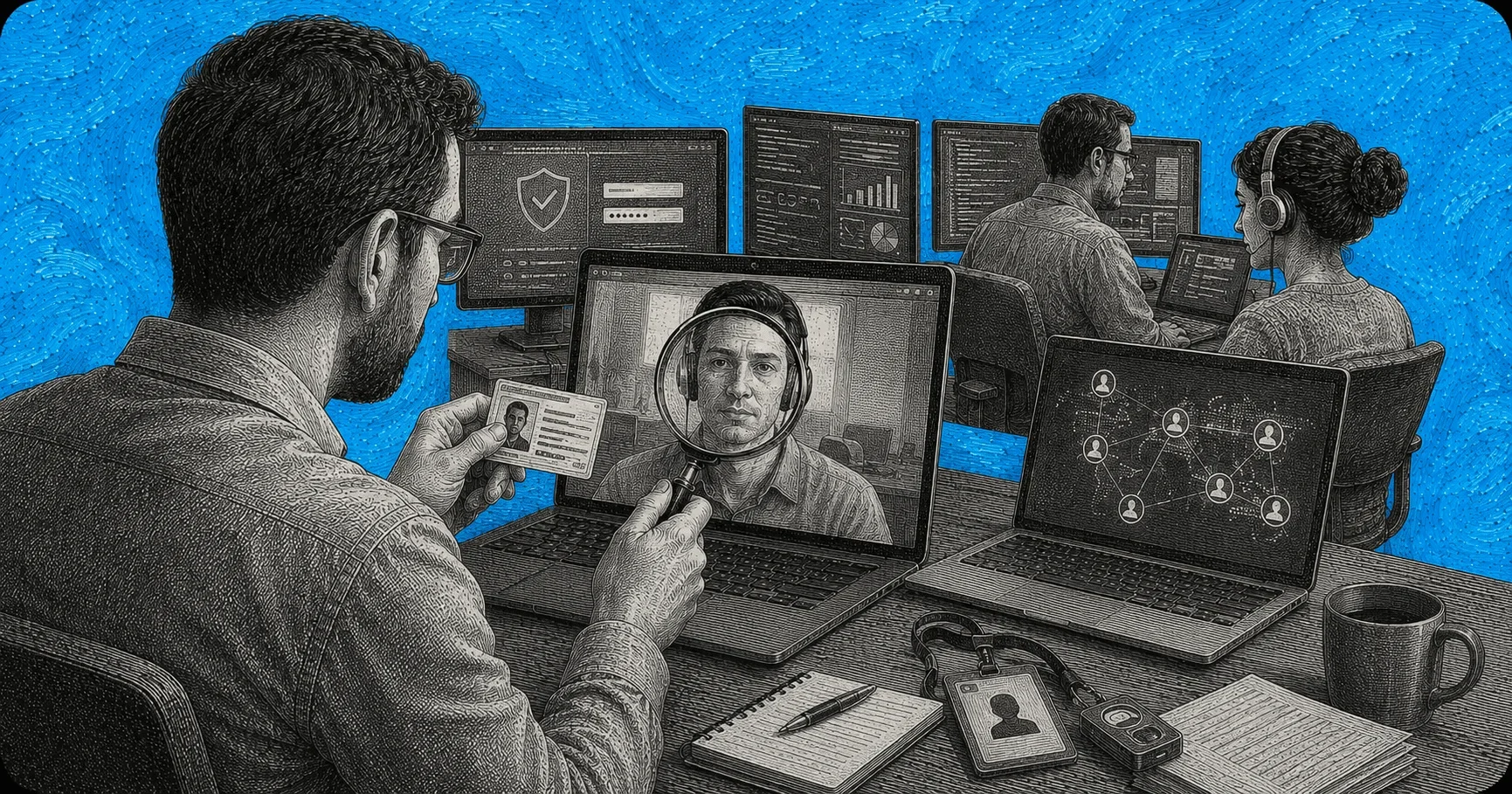



Companies that hire globally now run into this problem constantly. A software team in Austin might be interviewing a backend engineer in Lagos, a customer support lead in Manila, and a contractor in Warsaw, all in the same week. Each of those candidates carries a different kind of identity document, a different level of document security, and a different set of local rules about what an employer is even allowed to ask for. Global hiring identity verification is no longer a compliance afterthought. It is a frontline defense against the same kind of fraud that has already hit named companies, including a well documented case of a candidate applying from North Korea using a fabricated identity to land a remote engineering role.
Why is identity verification harder when hiring across borders?
Cross border identity verification is harder because there is no universal ID standard, no single shared verification database, and wildly different levels of document security from country to country. A passport from Germany carries biometric chips and holographic security features that are difficult to fake. A paper based national ID from some other regions carries none of that, and can be recreated convincingly with commercial photo editing software.
Recruiters evaluating candidates from dozens of countries are, in effect, being asked to become instant experts in the ID formats of every one of those countries. Almost no one can do that reliably by eye. That gap is exactly where fraud gets in, whether it is a fabricated document, a stolen identity, or someone else entirely showing up for the interview and the job.
How do national ID systems differ from country to country?
National ID systems differ in format, security features, government backed verification databases, and even in whether a national ID exists at all. Some countries, like India with Aadhaar or Estonia with its e ID system, have centralized, database backed identity infrastructure that supports real time verification. Others rely on a patchwork of regional documents, employer letters, or informal identification with no central database to check against.
This unevenness means a "one size fits all" verification process breaks down fast. A workflow built around US driver licenses and Social Security numbers will not translate to a candidate whose only available ID is a national identity card with no digital record behind it. A verification approach for global hiring has to account for multiple document types, multiple issuing authorities, and, often, no digital backend to confirm anything against. That is where automated document analysis, cross referencing document security features, liveness checks, and biometric matching between the ID photo and a live selfie or video become essential rather than optional.
What compliance risks come with verifying international candidates?
The biggest compliance risk in international candidate verification is applying the wrong country's rules, whether that means collecting more personal data than local law allows, storing it incorrectly, or skipping a check that a jurisdiction actually requires. Data privacy law is the clearest example. The European Union's GDPR treats biometric identity data as a special category requiring explicit consent and strict handling, while other regions have far lighter requirements or none at all.
Add employment classification on top of that. A worker who is technically a contractor in one country may need to be treated as an employee for hiring and verification purposes in another, depending on local labor law. Verification records, consent language, and data retention periods all need to flex by jurisdiction rather than following a single global template copied from headquarters. Getting this wrong does not just create legal exposure, it can also void the very screening a company relied on if a challenge later surfaces during onboarding or an audit.
How do time zones and language barriers complicate verification?
Time zones and language barriers slow down cross border verification because live document checks and identity interviews depend on real time overlap between a recruiter and a candidate, and that overlap can be thin or nonexistent across a twelve or fourteen hour time difference. A recruiter in Chicago trying to schedule a live ID check with a candidate in Manila is working with a window of maybe two or three usable hours a day, if that.
Language adds a second layer. A verification conversation conducted in a candidate's second or third language introduces room for misunderstanding, whether that is confusion over what document to present or missed nuance during a fraud risk conversation. Asynchronous tools reduce both problems at once. A structured one way video interview, for example, lets a candidate complete an identity supported interview segment on their own schedule, in their own time zone, without requiring a recruiter to be awake and available at the same moment. It also gives the hiring team a recorded, reviewable artifact rather than a live moment that passes and is gone.
Do contractors need the same identity verification as full time employees abroad?
Contractors generally still need identity verification, but the depth and legal basis for that verification can differ from what applies to a full time employee, and that difference varies by country. A full time employee in a country with strong labor protections may trigger mandatory identity and right to work checks as a condition of legal employment. A contractor engaged through a staffing agency or a direct contract may fall under different, sometimes lighter, statutory requirements, even though the actual fraud risk, someone other than the named contractor doing the work, is identical.
This is exactly the gap that contractor identity fraud exploits. A contractor who passes an initial interview can, in some arrangements, quietly hand off day to day work to someone else entirely, a pattern that has shown up repeatedly in remote technical roles. Treating contractor verification as optional because the legal bar is lower is a mistake. The fraud risk does not care about employment classification, and neither should a company's verification standard.
What actually happened when a company skipped this step?
One of the clearest cautionary examples in this space involved a company that unknowingly hired a remote worker operating out of North Korea using a fabricated identity and stolen credentials, a case that surfaced publicly and became a widely cited example of how far identity fraud in remote hiring can go undetected. The case underscored a pattern security teams now watch for directly: candidates using AI generated or borrowed photos, VPN routed connections designed to mask true location, and documents that pass a casual glance but fail once checked against real verification standards.
The lesson is not that global hiring is too risky to pursue. It is that verification has to happen at the point of hiring, not after, and it has to be built for the realities of international candidates rather than adapted from a domestic checklist after the fact.
How does automated ID verification handle cross border hiring?
Automated identity verification handles cross border hiring by combining document analysis, liveness detection, and biometric face matching in a single workflow that works the same way regardless of which country's ID a candidate presents. Instead of asking a recruiter to judge whether a national ID from an unfamiliar country looks legitimate, the system checks the document's security features, verifies the person holding it is physically present and matches the ID photo, and flags anything that fails those checks for human review.
Glider AI's own ID Verify tool was built around this exact problem: a single, consistent verification layer that plugs into the hiring process regardless of where a candidate is applying from. It is designed to sit early in the funnel, before an interview or an offer, so identity confirmation happens at day zero rather than being discovered as a problem after someone has already started working. Teams that want a full walkthrough of how it fits into an existing hiring process can review the recruiter's guide to identity verification in hiring, and the product page has the technical detail on how the document and biometric checks work end to end.
A practical checklist for verifying candidates across borders
- Confirm what type of ID is standard and legally requestable in the candidate's country before the interview stage, not after.
- Use automated document and liveness checks rather than relying on a recruiter's visual judgment of an unfamiliar ID format.
- Match consent language and data retention practices to the strictest applicable jurisdiction, especially for biometric data.
- Apply the same identity verification standard to contractors and full time hires, regardless of which one carries a lighter statutory requirement.
- Use asynchronous or one way video interview formats to remove time zone pressure from identity supported interview steps.
- Flag mismatches between claimed location, IP or connection data, and document issuing country for manual review rather than automatic rejection.
- Document every verification step so it can withstand a later audit or dispute.